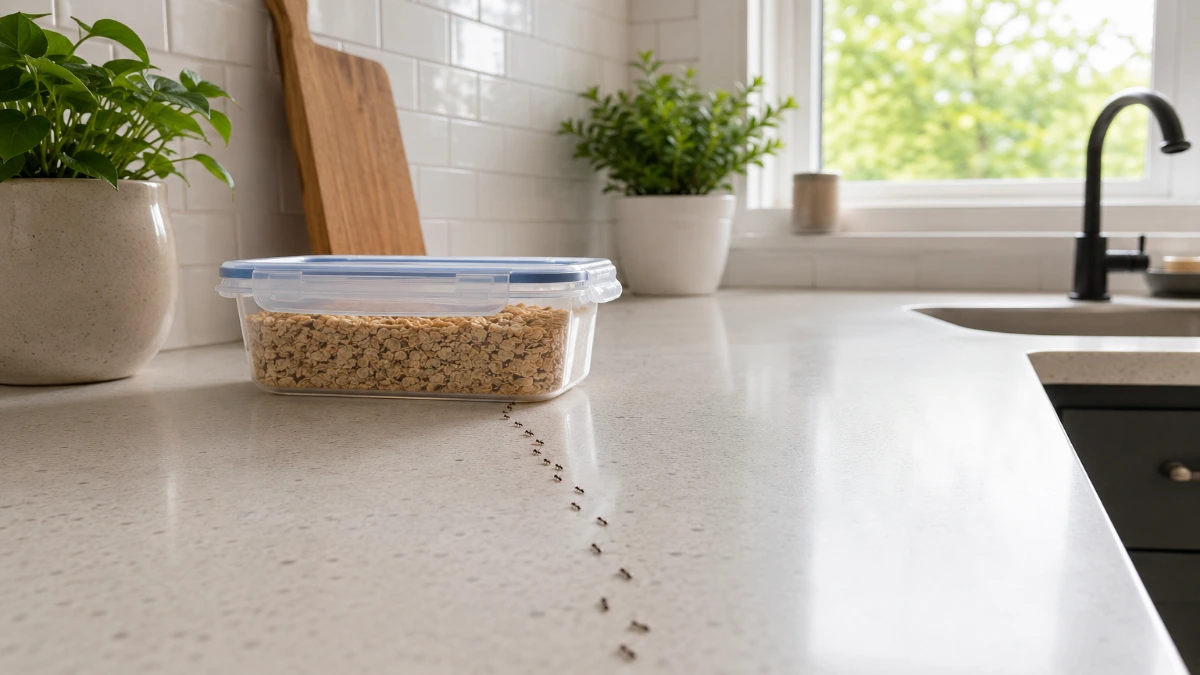
Ants entering your home usually means one thing: a scout found food, water, or shelter and reported back to the colony. Left alone, a handful of ants can turn into a steady trail within days because worker ants leave pheromone trails that guide the rest of the colony straight to the source.
This guide is for homeowners and renters dealing with an active ant problem indoors, from a few scouts on the kitchen counter to visible trails along baseboards or windows.
It covers how to identify what’s drawing ants in, how to eliminate the colony rather than just the ants you can see, and how to keep them from coming back. By the end, you’ll have a plan that addresses the source of the infestation, not just the symptoms.
Featured Snippet
To get rid of ants in your house, locate their trail, clean up food and moisture sources, then set out ant bait (gel or stations) along the trail so workers carry poison back to the colony. Seal entry points with caulk once activity stops, usually within one to two weeks.
Before You Begin
Difficulty: Easy to moderate, depending on colony size and entry points. Time investment: 15–30 minutes for initial cleanup and baiting; 1–2 weeks for full colony elimination. Cost: $10–$40 for bait, cleaning supplies, and caulk; $150–$400 if you hire a pest control service. DIY vs. professional: Most indoor ant problems (odorous house ants, pavement ants, small carpenter ant scouts) are solvable with DIY bait. Large or recurring infestations, carpenter ants damaging wood, or unidentified species warrant a professional inspection. Prerequisites: Ability to identify where ants are entering and trailing, access to the affected areas, and willingness to leave bait undisturbed for one to two weeks (spraying visible ants instead of baiting is the single most common reason DIY treatment fails).
Choosing the Right Approach
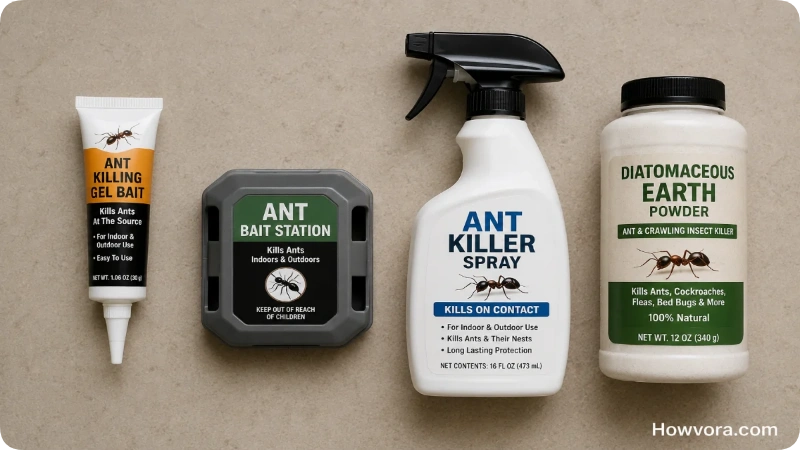
Not every method works for every situation. Pick based on how fast you need results and how confident you are that you’ve found the colony’s entry point.
| Method | Best For | Speed | Colony Elimination | Effort |
| Gel or station baits | Ongoing trails, kitchens, most common ant species | Slower (1–2 weeks) | Yes kills the colony | Low |
| Direct sprays/wipes | Ants you can see right now, isolated scouts | Immediate, visible ants only | No colony survives | Low |
| Natural/home remedies | Light activity, prevention, chemical-sensitive households | Slower, less reliable | Rarely | Medium |
| Professional pest control | Large, recurring, or carpenter ant infestations | 1–3 visits | Yes | Low (outsourced) |
Baiting is the core method for actually solving an ant problem. Sprays and natural remedies have a role, but neither reliably reaches the queen, so treat them as supplements, not replacements.
At a Glance
| Category | Details |
| Difficulty | Easy to moderate |
| Time to see results | 3–14 days |
| Cost | $10–$40 (DIY) / $150–$400 (professional) |
| Skill level | Beginner |
| Best for | Kitchens, bathrooms, pantries, window/door frames |
Things You’ll Need
| Item | Purpose |
| Ant bait stations or gel bait | Delivers slow-acting poison back to the colony |
| All-purpose cleaner or vinegar-water solution | Removes food residue and pheromone trails |
| Caulk or silicone sealant | Seals entry points once activity stops |
| Flashlight | Helps trace trails to entry points along baseboards and pipes |
| Airtight food containers | Removes food sources that attract new scouts |
| Rubber gloves | Protects skin when handling bait or cleaning products |
Safety Precautions
Ant baits and gels contain insecticides (commonly borax, fipronil, or indoxacarb) that are low-risk when used as directed but should still be handled carefully.
- Keep bait stations and gel out of reach of children and pets; place them behind appliances, under sinks, or in areas pets can’t access.
- Wash hands after handling bait, even when using gloves.
- Never mix bait with cleaning chemicals or apply near food prep surfaces.
- Read the product label for reentry times if you use a spray in addition to bait.
- If you have young children, curious pets, or anyone with chemical sensitivities in the home, favor enclosed bait stations over open gel or spray.
Step-by-Step Guide
1. Identify the ant trail and entry point. Follow visible ants back to where they’re entering, commonly along window sills, door thresholds, pipe penetrations, or foundation cracks. Use a flashlight to check dim areas like under the sink or behind appliances. Why it matters: Baiting works best when placed directly on or near the active trail, not scattered randomly around the room.
2. Identify what’s attracting them. Check for spilled food, pet food left out, unsealed containers, standing water (a leaky pipe or condensation tray), and sugary residue. Different ant species prefer different foods: sweets, proteins, or grease, so note what they’re gathering if you’re not sure which bait to buy.
3. Clean the trail, but don’t destroy it completely yet. Wipe up crumbs and spills, but avoid full-strength bleach or vinegar directly on the exact trail line before placing bait; you want a few scouts still finding the bait. Common mistake: Spraying the visible trail with a general cleaner or insecticide the moment you see it. This kills the ants you can see and erases the pheromone trail, but the colony sends new scouts, and you never make progress on the source.
4. Place bait stations or gel along the trail and near entry points. Set bait every few feet along the path ants are using, plus near where they enter the home. Use multiple stations if trails are on more than one side of a room.
5. Store food properly and eliminate standing water. Move to airtight containers, wipe down counters nightly, and fix any leaks or sources of moisture. This removes competing food sources so ants are drawn to the bait instead.
6. Leave the bait undisturbed for 1–2 weeks. Resist the urge to wipe up or spray the ants you see visiting the bait; they need to carry it back to the colony, including the queen. Activity often increases for the first few days as more ants find the bait; that’s expected, not a sign of failure.
7. Seal entry points once activity stops. Once you stop seeing ants for several consecutive days, caulk cracks, gaps around pipes, and window/door frames to prevent the next colony from finding the same route in.
How to Know You Did It Correctly
You’ll know the treatment worked when ant activity drops steadily over 1–2 weeks and then stops entirely, rather than pausing and returning a few days later. No new trails should appear at the same or nearby entry points after sealing. If ants disappear for a few days and then reappear at a different spot, the colony likely relocated a satellite nest; repeat baiting at the new trail rather than assuming the first treatment failed.
Expected Timeline and Results
- Days 1–3: Ant activity at the bait may increase as more workers find it and recruit others.
- Days 4–7: Activity typically peaks, then begins to taper off as the colony is affected.
- Days 7–14: Trails should thin out significantly or stop; this is when most colonies are eliminated.
- After 2 weeks: If ants persist at the same trail with no reduction, switch bait type (sweet vs. protein-based) or consider that you’re dealing with a different species or a larger colony than expected.
Alternative Methods
Natural and home remedies: A mix of equal parts white vinegar and water disrupts pheromone trails and can be used for cleaning, but it doesn’t kill the colony and needs reapplication. Diatomaceous earth (food-grade), applied in a thin layer along entry points, works by dehydrating ants that cross it and is a reasonably low-toxicity option for light activity or homes with pets, though it’s less effective in humid areas since moisture reduces its effectiveness. Cinnamon, coffee grounds, and essential oils (peppermint, tea tree) can deter ants at entry points as a supplementary measure, but are not a standalone fix for an established trail.
Boiling water on outdoor nests: If you can locate an outdoor mound near the foundation, pouring boiling water directly into it can kill a portion of the colony, though it rarely reaches deep chambers and often needs repeating.
Professional pest control: Worth choosing over DIY when ants are carpenter ants (look for wood shavings, larger size, rustling sounds in walls), when infestations recur across multiple seasons, or when you can’t locate the entry point after a reasonable effort.
Common Mistakes to Avoid
- Spraying visible ants instead of baiting kills the workers you see but leaves the colony intact.
- Cleaning the trail too aggressively before the bait has had time to work.
- Placing bait far from the actual trail or entry point.
- Giving up on bait after 2–3 days because activity seems to increase.
- Sealing entry points before activity has actually stopped, trapping remaining ants inside.
- Using multiple bait types with conflicting scents right next to each other can make ants avoid the area altogether.
Troubleshooting & Common Problems
| Problem | Cause | Solution |
| Ants ignore the bait | Wrong bait type for the species (sweet vs. protein/grease preference) | Switch bait formula; test both if unsure which the ants prefer |
| Activity stops, then returns weeks later | Satellite colony or new scouts found a different entry point | Re-trace the new trail and re-bait; reseal any newly found gaps |
| Ants appear in a new room | Colony rerouted around a sealed entry point | Locate the new trail and repeat baiting before sealing |
| Bait dries out or disappears fast | High heat, humidity, or bait being consumed too quickly by a large colony | Replace bait more frequently; add additional stations |
| Ants persist despite 2+ weeks of baiting | Possible carpenter ants or an unusually large/mature colony | Consult a pest control professional for inspection and targeted treatment |
Expert Tips
- Test both sweet and protein-based baits simultaneously in different areas; ant species and even colony needs shift seasonally, so the “wrong” bait can stall results even when your technique is correct.
- If you see large flying ants indoors, especially near wood trim or window frames, treat it as a possible carpenter ant signal and inspect for damaged or hollow-sounding wood before doing anything else.
- Don’t clean the exact bait placement spot with strong-smelling cleaners between applications; competing scents can reduce how many ants find and use the bait.
- Recheck sealed entry points after the first hard rain or seasonal temperature swing; caulk can shrink or crack, reopening the exact gap ants used before.
When to Call a Professional
Bring in a pest control service if you notice: wood shavings or rustling sounds suggesting carpenter ants, ants returning at multiple entry points despite consistent baiting, a colony visible in a wall void or structural area, or activity that persists beyond 3–4 weeks of proper baiting. A professional can also identify the exact species, which changes the most effective bait and treatment approach.
What to Do Next
Once ants are gone, do a seasonal check twice a year: spring and fall are when colonies are most active, looking for new trails near doors, windows, and plumbing. Keep a small stock of bait on hand so you can respond at the first sign of scouts rather than waiting for a full trail to form again.
FAQs
Does killing the ants I see get rid of the problem?
No. Visible ants are a small fraction of the colony. Killing them removes scouts but doesn’t affect the queen or the nest, so new ants typically appear within days.
How long does ant bait take to work?
Most colonies show reduced activity within 3–7 days and are eliminated within 1–2 weeks, though larger colonies can take longer.
Why are there more ants after I put out bait?
This is normal: bait attracts more foragers initially as they recruit nestmates to the food source. Activity should decline after several days.
Should I clean up ant trails right away?
Wipe up food and spills, but avoid destroying the exact trail line with strong cleaners until the bait has had a few days to take effect, since a faint trail helps ants find the bait.
Do essential oils or vinegar actually get rid of ants?
They can deter ants and disrupt trails temporarily, but they don’t kill the colony. Use them as a supplement to baiting or for prevention, not as your primary treatment.
How do I know if I have carpenter ants instead of regular house ants?
Carpenter ants are typically larger, may produce fine wood shavings (frass) near baseboards or window frames, and are sometimes heard rustling inside walls. If you suspect carpenter ants, have a professional inspect the structure rather than relying on standard bait alone.
Can I prevent ants from coming back?
Yes, consistent food storage, prompt cleanup of spills, fixing moisture sources, and sealing cracks around the home’s exterior significantly reduce the chance of a new colony finding its way in.
Is it safe to use ant bait around pets?
Enclosed bait stations are generally safer than open gel or spray around pets, since pets can’t directly access the poison inside. Place stations in areas pets can’t reach as an added precaution.
Final Thoughts
Getting rid of ants for good comes down to patience: let the bait reach the colony instead of reacting to every ant you see, clean up what’s attracting them, and seal entry points only after activity has genuinely stopped. Skip the bait step or rush the sealing, and you’ll likely be back at square one within a few weeks.