
Cockroaches are one of the toughest pests to eliminate because they hide in wall voids, reproduce quickly, and survive on almost nothing. Killing the roaches you see is only part of the job; the real goal is wiping out the hidden population you don’t see, including egg cases that can hatch weeks after you think the problem is solved.
This guide is for homeowners and renters dealing with a light-to-moderate infestation (a few roaches spotted at night, droppings under the sink, or a musty odor near the kitchen). By the end, you’ll have a plan that combines sanitation, baiting, and targeted treatment to reduce the population and keep it from returning.
Featured Snippet
To kill cockroaches, remove food and water sources, then place roach gel bait in cracks, corners, and under appliances. Baits let roaches carry poison back to the nest, killing hidden roaches and eggs. Follow up with crack-and-crevice spray and monitor with sticky traps for 2–4 weeks.
Before You Begin
Difficulty: Moderate requires patience over several weeks, not a one-time fix. Time: 30–60 minutes for initial setup; full elimination typically takes 2–8 weeks. Cost: $20–$60 for a DIY approach (bait stations, gel bait, sticky traps); $150–$400 if you hire a professional. DIY vs. Pro: DIY works well for light-to-moderate infestations in a single room or apartment. Call a professional if roaches are visible during the day, you find them in multiple rooms, or you’ve treated for 4+ weeks without improvement. Prerequisites: Identify where roaches are concentrated (check under the sink, behind the fridge, near water heaters and dishwashers) before buying products, since bait placement is what actually determines success.
Choosing the Right Approach
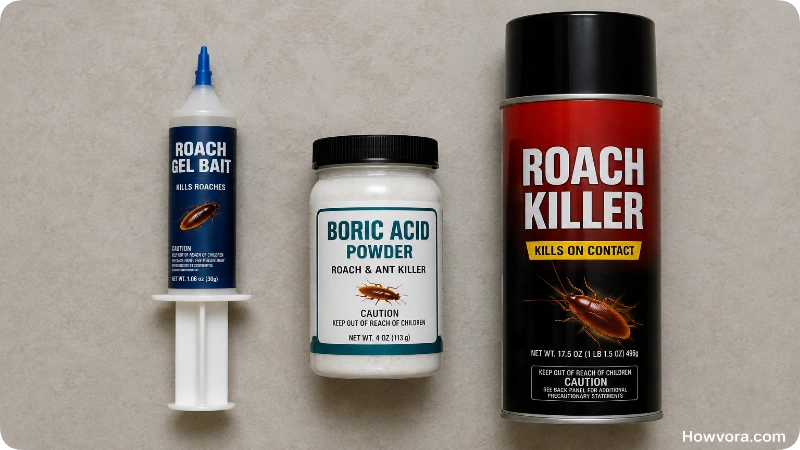
| Method | How It Works | Best For | Downsides |
| Gel bait stations | Roaches eat poisoned bait, return to nest, die; other roaches eat the corpse/feces and die too (secondary kill) | Most infestations kitchens, bathrooms, apartments | Slower than spray; needs 2–4 weeks |
| Boric acid powder | Sticks to roach legs, ingested during grooming, damages digestive/nervous system | Wall voids, under appliances, dry areas | Ineffective if wet; must be applied as a thin, barely-visible layer |
| Insect growth regulators (IGRs) | Prevent nymphs from maturing and reproducing | Long-term population control alongside bait | Doesn’t kill adults directly |
| Contact spray/aerosol | Kills on contact | Roaches you can see right now | Doesn’t reach the nest; can scatter roaches to new hiding spots and reduce bait effectiveness |
| Professional pest control | Combines bait, IGRs, and crack-and-crevice treatment with repeat visits | Heavy or persistent infestations | Higher cost |
The most common mistake is relying only on spray. Spray kills what you see but does nothing for the 90%+ of the population hiding in voids, and it can actually make bait less effective by contaminating the areas roaches would otherwise walk through to reach it. A bait-first strategy, with spray used sparingly for isolated visible roaches, gets the best long-term results.
At a Glance
| Category | Detail |
| Difficulty | Moderate |
| Time to see results | 1–2 weeks for noticeable reduction; 4–8 weeks for full elimination |
| Cost | $20–$60 (DIY) / $150–$400 (professional) |
| Skill level | Beginner-friendly |
| Best for | Kitchens, bathrooms, apartments, light-to-moderate infestations |
Things You’ll Need
| Item | Purpose |
| Roach gel bait (syringe applicator) | Primary kill method: targets hidden nests |
| Boric acid powder | Supplemental treatment for voids and cracks |
| Sticky/glue traps | Monitor roach activity and catch stragglers |
| Flashlight | Inspect dark areas: under sinks, behind appliances |
| Caulk or sealant | Close entry points and cracks |
| Disposable gloves | Protect hands during bait/powder application |
| Trash bags with tight lids | Remove food sources roaches rely on |
| Vacuum with disposable bag | Remove roaches, egg cases, and crumbs from cracks |
Safety Precautions
Roach baits and boric acid are of low toxicity to humans when used as directed, but keep them out of reach of children and pets; treat them like any household chemical. Wear gloves when applying gel bait or powder, wash your hands afterward, and never mix bait with other pesticides or cleaning chemicals. If you use an aerosol spray, ventilate the room and avoid spraying directly onto food-prep surfaces or dishes. Store any leftover product in its original container, away from food storage areas.
Step-by-Step Guide
1. Remove food and water sources
Wipe down counters, sweep up crumbs, and wash dishes each night instead of leaving them to soak. Store dry goods in sealed containers, take out trash daily, and fix any dripping faucets or leaky pipes. Why it matters: Roaches can survive weeks without food but only about a week without water. Cutting off both makes your bait far more attractive than any competing food source, which speeds up the kill.
2. Identify roach activity zones
Use a flashlight at night (roaches are nocturnal) to check under the sink, behind the refrigerator and stove, around the water heater, and inside cabinet corners. Look for droppings (resembling black pepper or coffee grounds), shed skins, and egg cases (oval, brown capsules).
3. Place sticky traps to confirm hot spots
Set 4–6 glue traps in suspected areas and check them after 24–48 hours. This tells you exactly where to concentrate bait instead of guessing.
4. Apply gel bait in the right spots
Place small dots (pea-sized) of gel bait in cracks, corners, under appliances, along baseboards, and near pipe entry points, not out in the open. Apply bait every 12–18 inches in heavily trafficked areas. Common mistake: Cleaning the bait spots with household cleaner right after applying. Residue from cleaners repels roaches and can neutralize the bait’s food-like smell.
5. Dust boric acid in voids and dry cracks
Using a small applicator or folded index card, apply a very thin, barely visible layer of boric acid into wall voids, behind outlet covers, and under appliances. A visible pile of powder will be avoided by roaches, not walked through.
6. Seal entry points
Caulk gaps around pipes, baseboards, and window frames. This reduces new roaches entering from neighboring units or outside and keeps bait effects from being diluted by fresh arrivals.
7. Monitor and reapply
Check sticky traps weekly. Roach counts should drop noticeably within 7–14 days. Reapply gel bait every 2–4 weeks (or per product label) until traps stay empty for two consecutive checks.
How to Know You Did It Correctly
You’re on track if sticky trap counts drop week over week, you stop seeing roaches during the day (daytime sightings usually indicate overcrowding from a heavy infestation), and fresh droppings stop appearing in previously active spots. Full success means two consecutive weeks of empty traps and no new droppings or egg cases.
Expected Timeline and Results
Most people see a 50%+ reduction in roach sightings within the first one to two weeks as bait spreads through the colony. Because roach egg cases can take 6–8 weeks to hatch, depending on the species, plan to keep bait stations active for at least two months even after sightings stop to catch newly hatched nymphs.
Alternative Methods
- Diatomaceous earth (food-grade): Works mechanically by damaging the roach’s exoskeleton, causing dehydration. Slower than gel bait but useful in areas where you don’t want chemical bait, such as near pet food.
- Professional heat or fumigation treatment: For severe, building-wide infestations, pest control companies can use heat treatments or fumigation that penetrate wall voids more thoroughly than DIY methods.
- Natural repellents (essential oils, catnip): These can reduce roach activity in a treated area but do not kill existing populations or nests; treat them as a deterrent, not a solution.
Common Mistakes to Avoid
- Using spray and gel bait in the same area, the spray residue repels roaches from the bait.
- Cleaning bait placement spots with strong cleaners, which remove the bait’s scent trail.
- Giving up after one application: most infestations need 3–4 bait cycles over several weeks.
- Ignoring egg cases, killing adult roaches without addressing the next hatching cycle leads to a “resolved” infestation reappearing a month later.
- Leaving pet food or water bowls out overnight, which gives roaches an alternate food source.
Troubleshooting & Common Problems
| Problem | Cause | Solution |
| Roaches still active after 2 weeks of bait | Bait placed in wrong spots or cleaned away | Re-inspect with a flashlight at night; move bait to confirmed activity zones; avoid cleaning those spots |
| Seeing roaches during the day | Heavy infestation forces overcrowded roaches to forage in daylight | Increase bait density; consider a professional consultation |
| New roaches keep appearing | Entry points from outside or neighboring units | Seal cracks, gaps around pipes, and door thresholds; check shared walls in apartments |
| Bait dries out or hardens | Old product or high heat exposure | Replace with fresh bait; store unused bait in a cool, dry place |
| Roaches avoid boric acid | Powder applied too thickly or in a visible pile | Reapply as a thin, barely-visible dusting |
Expert Tips
- Rotate between two different bait brands or active ingredients (such as fipronil and hydramethylnon) every few months, as roach populations can develop bait aversion or resistance to a single product over time.
- Treat the kitchen and bathroom together, even if you’ve only seen roaches in one room; these two areas share plumbing lines that roaches travel through.
- If you live in an apartment, coordinate with neighbors or your landlord, treating only your unit while an adjacent unit stays infested means roaches will keep migrating back in through shared walls and pipes.
When to Call a Professional
Bring in a licensed pest control service if you still see roaches after 4 weeks of consistent bait application, if you spot roaches during the day (a sign of a large, established colony), if the infestation spans multiple rooms or units, or if you’re dealing with a German cockroach infestation, which reproduces faster and is harder to eliminate with DIY methods alone.
What to Do Next
Set a recurring reminder to check sticky traps weekly and reapply bait every 2–4 weeks. Once traps stay empty for two straight checks, switch to a maintenance routine: keep a few bait stations in place long-term and do a monthly flashlight inspection under the sink and behind appliances to catch any new activity early.
FAQs
How long does it take to kill cockroaches with gel bait?
Most people notice fewer sightings within 1–2 weeks, but full elimination, including newly hatched nymphs, typically takes 4–8 weeks.
Why do I still see roaches after using bait?
Bait needs time to spread through the colony via secondary kill. If activity hasn’t dropped after two weeks, the bait may be placed in the wrong spots or contaminated by cleaning products nearby.
Does killing cockroaches with spray work better than bait?
Spray kills on contact but doesn’t reach the nest, so it only removes the roaches you can see. Bait is more effective for eliminating the hidden population.
Can I use bait and boric acid at the same time?
Yes. They work well together. Boric acid is best in drywall voids and cracks, while gel bait works well along baseboards and near food sources.
Are roach baits safe around pets and children?
Baits are formulated to be low-toxicity, but they should still be placed out of reach or in areas pets and kids can’t access, and hands should be washed after handling them.
Will cleaning my house get rid of roaches completely?
Cleaning removes food and water sources, which helps bait work faster, but it won’t eliminate an existing infestation on its own; you still need bait or another treatment method to kill the roaches already present.
Why do I see more roaches after starting treatment?
This is often mistaken for the problem getting worse, but it can mean bait is disrupting the colony and driving roaches out of hiding a temporary increase in visible activity before numbers drop.
Final Thoughts
Getting rid of cockroaches is less about a single product and more about a consistent process: cut off food and water, bait the right spots, and give it enough time for the bait to reach the hidden colony. Skipping steps or expecting a one-time spray to solve the problem is the most common reason infestations come back. Stick with a bait-and-monitor routine for a full cycle, and don’t hesitate to call a professional if the infestation is heavier than DIY methods can handle.

1 thought on “How to Kill Cockroaches and Eliminate Hidden Infestations”