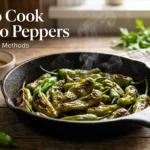
Shishito peppers go from raw to blistered, smoky, and addictive in under 10 minutes no special skill required. The tricky part isn’t the cooking; it’s getting real char without steaming them soggy, and knowing what to do when you bite into the one spicy pepper in the batch (it happens about 1 in 10 times). This guide covers the classic stovetop method plus oven, air fryer, and grill versions, so you can make them with whatever you already have on.
Quick Answer
Toss whole shishito peppers with a little oil, then cook them in a very hot, barely-oiled pan for 5–8 minutes, shaking often, until they’re blistered and charred in spots. Season immediately with flaky salt (and a squeeze of lime or splash of soy sauce, if you like) and eat them whole, stem end excluded. That’s the entire method: high heat, minimal oil, don’t crowd the pan, season while hot.
What You’ll Need
- Shishito peppers 8 oz to 1 lb (one bag/basket), whole, unwashed until right before cooking
- A heavy pan cast iron or stainless steel holds heat best; nonstick works but chars less.
- Neutral or olive oil: 1–2 teaspoons, just enough to coat
- Tongs or a spatula for tossing
- Flaky salt and any finishing touches (soy sauce, lime, bonito flakes, sesame seeds)
- Time: 10 minutes total, mostly hands-on
No need to remove seeds, stems, or cut the peppers open; they’re cooked and eaten whole.
The Steps (Stovetop / Pan-Seared)
1. Wash and dry thoroughly.
Rinse the peppers and pat them completely dry with a towel. Wet peppers will steam instead of blister, so this step matters more than it looks.
2. Heat the pan until it’s almost smoking.
Set a cast iron or heavy stainless pan over high heat for 2–3 minutes before adding anything. Add the oil and swirl to coat. Common mistake: adding peppers to a pan that isn’t hot enough. This is the #1 reason people end up with limp, pale peppers instead of blistered ones.
3. Add peppers in a single layer.
Don’t crowd the pan. If your batch is large, cook in two rounds. Overcrowding traps steam and stops the char from forming.
4. Cook 5–8 minutes, tossing every minute or so.
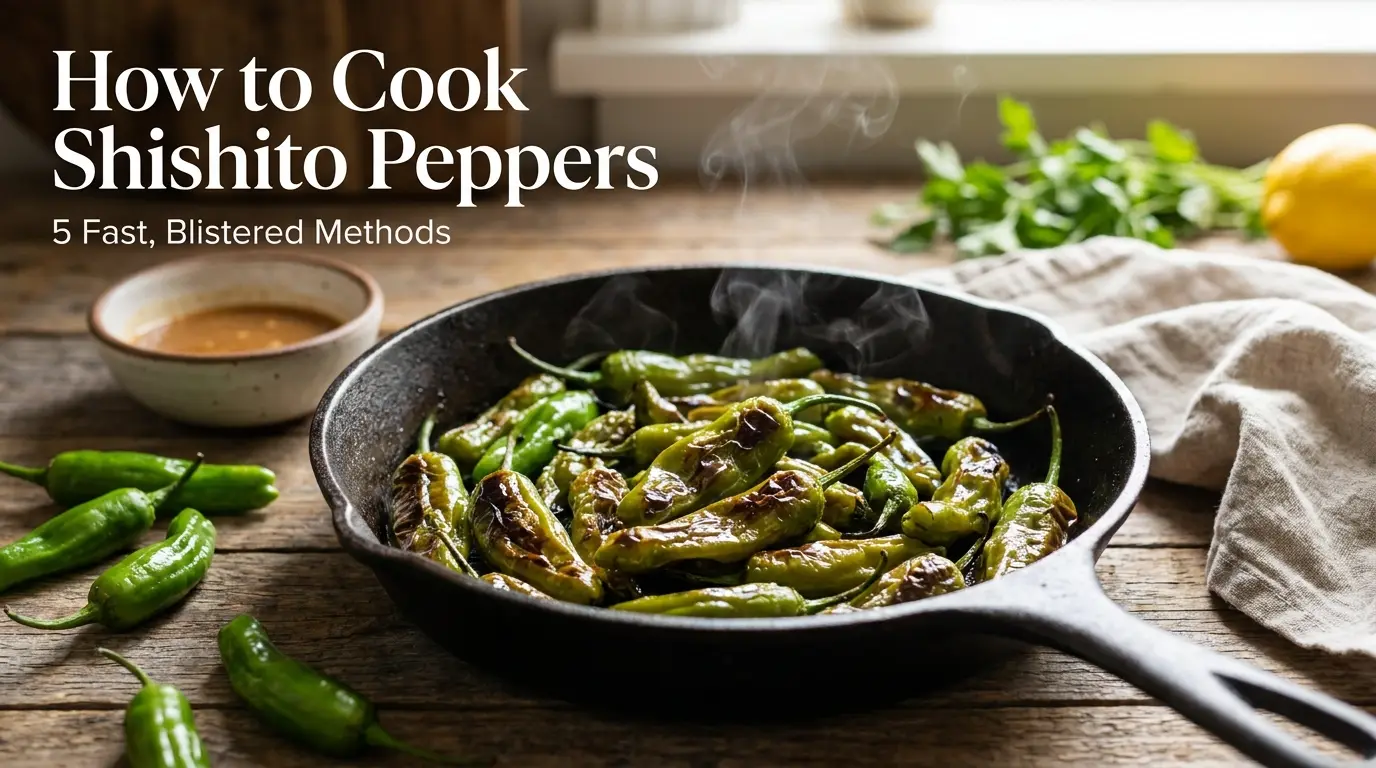
Shake the pan or use tongs to flip the peppers so all sides touch the hot surface. Look for blackened, blistered patches on most peppers and skins that look slightly collapsed; that’s the signal they’re done.
5. Season immediately, while still hot.
Pull the pan off the heat, sprinkle with flaky salt, and add any finishing touches (soy sauce, a squeeze of lime, bonito flakes, or sesame seeds). Hot peppers absorb seasoning far better than cooled ones.
6. Serve right away and eat whole.
Hold each pepper by the stem, bite off the body, and set the stem aside; it’s the only part not eaten. Seeds inside are fine to eat.
Other Cooking Methods
Oven-roasted:
Toss peppers with oil, spread in a single layer on a sheet pan, roast at 450°F for 10–12 minutes, tossing halfway through, until blistered.
Air fryer:
Toss with oil, cook at 400°F for 6–8 minutes, shaking the basket halfway through. This is the fastest hands-off method and needs the least oil.
Grilled:
Toss peppers in oil, then grill directly over high heat in a grill basket or threaded on skewers (they’re too small for grates alone) for 4–6 minutes, turning occasionally, until charred.
Cast iron:
Follow the stovetop steps above. Cast iron is actually the preferred pan for this recipe because it holds heat evenly and chars faster than lighter pans.
Across every method, the goal is the same: high heat, light oil, minimal crowding, and salt while hot.
Troubleshooting
Peppers won’t blister or char.
Cause: pan, oven, or air fryer isn’t hot enough.
Fix: preheat longer; the pan should look faintly smoking before peppers go in, and the oven/air fryer should be fully at temperature, not still climbing.
Peppers turned soggy or watery instead of charred.
Cause: overcrowding or peppers weren’t dried after washing.
Fix: cook in batches with space between peppers, and always pat dry before cooking.
Some peppers are surprisingly spicy.
Cause: this is normal; shishitos are mild by breed, but roughly 1 in 10 develops real heat, especially under stress during growing. There’s no way to tell which one before biting in.
Outside is charred but peppers still taste raw inside.
Cause: heat too high relative to cook time, or peppers weren’t tossed enough.
Fix: lower heat slightly and toss more frequently so the inside has time to soften as the outside chars.
FAQ
What do shishito peppers taste like?
Mild, slightly sweet, and grassy, similar to a green bell pepper but thinner-skinned, with occasional spicy heat in a small percentage of peppers.
Are shishito peppers spicy?
Almost always mild; about 1 in 10 is noticeably hot. There’s no visual way to predict which ones.
Do you eat shishito peppers whole?
Yes, whole, body and seeds included; only the tough stem is left uneaten.
Do you need to cut shishito peppers before cooking?
No. Cooking them whole keeps them juicy inside while the skin blisters and chars.
What is the best way to eat shishito peppers?
Straight off the pan while hot, seasoned with salt and a squeeze of citrus; they’re a finger-food appetizer, not a component you chop into another dish.
What temperature should you cook shishito peppers at?
High heat across the board: a nearly smoking stovetop pan, 450°F in the oven, or 400°F in an air fryer.
How do you know when shishito peppers are done?
The skins look blistered and blackened in patches and have visibly collapsed slightly; this usually takes 5–8 minutes depending on the method.
What’s the Japanese-style way to cook shishito peppers?
The pan-blistered method above is the traditional izakaya style, finished simply with salt, or with soy sauce, bonito flakes, and a squeeze of citrus.
Can you cook shishito peppers without oil?
Yes, in a very hot, dry pan or air fryer, though a light coating of oil helps them blister more evenly and prevents sticking.
What should you serve with shishito peppers?
They work well as a starter with a squeeze of lime, alongside grilled meats or fish, or as part of a shared small-plates spread.
Safety Note
Cooking at high heat can cause oil to spatter and pans to smoke; keep a lid nearby, use a splatter screen if you have one, and don’t leave the pan unattended. Let peppers cool slightly before eating whole, since the interior holds heat.