
Grubs are the larvae of various beetles that live beneath the soil and feed on grass roots. A small number of grubs is normal, but a large population can weaken or kill sections of your lawn. If left untreated, damaged turf becomes easier to pull up, attracts animals like skunks and raccoons, and struggles to recover.
This guide is for homeowners, gardeners, and anyone dealing with brown patches or suspected grub damage. You’ll learn how to identify a grub problem, choose the right treatment, eliminate grubs effectively, and prevent them from returning.
Featured Snippet
To get rid of grubs, first confirm they are causing the damage by inspecting the soil. If grub numbers exceed the damage threshold, apply an appropriate grub treatment, water it into the soil as directed, and maintain healthy lawn care practices. Monitor results over the following weeks and use preventive treatments at the correct time of year to reduce future infestations.
Before You Begin
Before treating your lawn, determine whether grubs are actually responsible for the damage.
| Factor | Details |
| Difficulty | Easy to Moderate |
| Time Required | 1-3 hours for inspection and treatment |
| Cost | Approximately $20-$100 depending on lawn size |
| Best For | Homeowners with grub-damaged lawns |
| DIY or Professional? | DIY for most lawns; professional for severe or recurring infestations |
Inspect several damaged areas by cutting and lifting a small square of turf about one foot wide. Count the grubs in the top few inches of soil.
Generally:
- Fewer than 5 grubs per square foot often require no treatment.
- Around 6-10 grubs may justify treatment if damage is visible.
- More than 10 grubs per square foot usually indicate a significant infestation.
Treat only when necessary to avoid unnecessary pesticide use.
Choosing the Right Approach
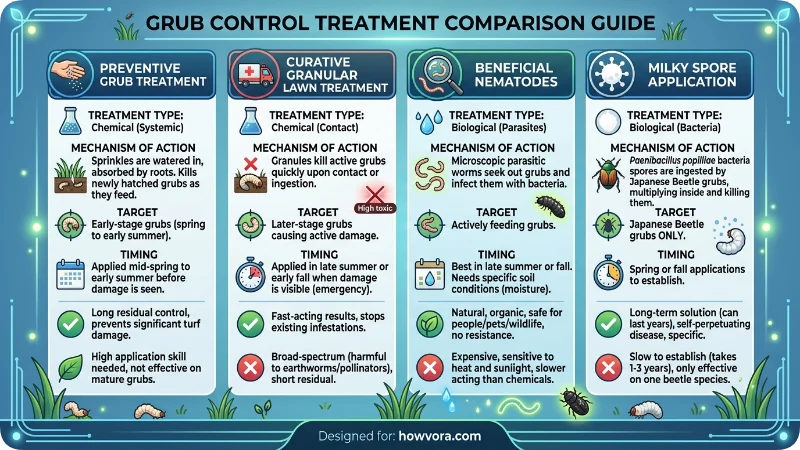
Different methods work best depending on the season, infestation level, and your preference for natural or chemical control.
| Method | Pros | Cons | Best For |
| Preventive grub treatment | Long-lasting control | Must be timed correctly | Preventing annual infestations |
| Curative grub treatment | Kills existing grubs | Less effective on older grubs | Active infestations |
| Beneficial nematodes | Natural option | Requires proper soil conditions | Organic lawn care |
| Milky spore | Long-term control for certain beetle species | Slow results | Areas with recurring Japanese beetles |
| Healthy lawn maintenance | Improves recovery | Doesn’t eliminate heavy infestations | Long-term prevention |
Which Method Is Best?
For most homeowners with an active infestation, a curative treatment combined with proper watering provides the quickest results. Preventive treatments work better before newly hatched grubs begin feeding. Natural methods are excellent for ongoing management but often take longer to show results.
At a Glance
| Category | Details |
| Difficulty | Easy to Moderate |
| Treatment Time | 1-3 hours |
| Visible Results | 2-4 weeks |
| Lawn Recovery | Several weeks to a few months |
| Estimated Cost | $20-$100 |
Things You’ll Need
| Item | Purpose |
| Garden shovel | Inspect soil for grubs |
| Lawn spreader | Apply granular treatment evenly |
| Garden hose or sprinkler | Water treatment in soil |
| Gloves | Protect hands |
| Beneficial nematodes or grub treatment | Eliminate grubs |
| Lawn rake | Remove dead grass if needed |
Safety Precautions
- Always follow the product label exactly.
- Wear gloves when handling lawn treatments.
- Keep children and pets off treated areas until the label states it is safe.
- Avoid applying treatments immediately before heavy rainfall unless directed.
- Store lawn products in their original containers away from heat and moisture.
- Water products only as instructed to prevent runoff.
Step-by-Step Guide
Step 1: Confirm Grub Damage
What to Do
Inspect brown or thinning areas by cutting a one-foot square section of turf. Lift it carefully and count the white, C-shaped grubs beneath the grass roots.
Why It Matters
Brown patches may also result from drought, fungal diseases, pet urine, or poor soil conditions. Proper identification prevents unnecessary treatment.
What Success Looks Like
You identify both the number of grubs and the extent of root damage.
Common Beginner Mistakes
- Treating without inspecting.
- Assuming every brown patch is caused by grubs.
Step 2: Choose the Correct Treatment
What to Do
Select a treatment appropriate for your situation.
- Preventive products work best on newly hatched grubs.
- Curative products target active infestations.
- Beneficial nematodes provide a natural solution.
Why It Matters
Using the wrong type at the wrong time greatly reduces effectiveness.
What Success Looks Like
Your treatment matches both the infestation stage and the season.
Common Beginner Mistakes
- Apply preventive products after grubs have matured.
- Expecting natural treatments to work overnight.
Step 3: Apply the Treatment
What to Do
Spread the product evenly according to label directions. Water thoroughly if required.
Why It Matters
Most grub treatments need moisture to move into the soil where grubs feed.
What Success Looks Like
The product reaches the root zone without washing away.
Common Beginner Mistakes
- Uneven application.
- Skipping watering.
- Applying more than recommended.
Step 4: Monitor Lawn Recovery
What to Do
Continue watering appropriately, mow correctly, and monitor damaged areas over the next several weeks.
Why It Matters
Killing grubs stops additional damage, but the grass still needs time to recover.
What Success Looks Like
New green growth appears, and damaged patches gradually improve.
Common Beginner Mistakes
- Expecting instant recovery.
- Overwatering damaged areas.
- Reapplying products too soon.
How to Know You Did It Correctly
Successful grub control usually includes:
- Fewer live grubs during follow-up inspections.
- Grassroots become firmly anchored again.
- Brown patches stop expanding.
- Wildlife digs less frequently in the lawn.
- New grass growth gradually fills damaged areas.
Expected Timeline and Results
| Time | Expected Results |
| First Week | Grubs begin dying after treatment |
| 2-4 Weeks | Feeding damage decreases |
| 1-2 Months | Grass begins recovering |
| Following Season | Preventive treatments help reduce future infestations |
If grub counts remain high after several weeks, inspect again to confirm proper application and determine whether another treatment approach is needed.
Alternative Methods
Beneficial Nematodes
Advantages
- Natural
- Safe for many beneficial organisms
- Suitable for organic lawns
Disadvantages
- Sensitive to heat and sunlight
- RRequiresmoist soil
Best For
Environmentally conscious homeowners.
Milky Spore
Advantages
- Long-lasting
- Targets certain beetle larvae
Disadvantages
- Slow acting
- Limited to specific grub species
Best For
Areas with repeated Japanese beetle problems.
Lawn Renovation
Advantages
- Restores severely damaged lawns
Disadvantages
- Higher cost
- More labor
Best For
Lawns with widespread root loss.
Common Mistakes to Avoid
- Treating without confirming grubs.
- Applying products during the wrong season.
- Forgetting to water after treatment.
- Using excessive amounts.
- Ignoring lawn maintenance after treatment.
- Treating every year without checking grub populations.
- Assuming all wildlife digging automatically means grubs.
Why Many Attempts Fail
Many grub control efforts fail because homeowners:
- Misidentify the cause of lawn damage.
- Apply treatments too late in the grub’s life cycle.
- Skip watering instructions.
- Use uneven application methods.
- Expect dead grass to recover immediately without proper lawn care.
- Ignore soil health and mowing practices.
Troubleshooting & Common Problems
| Problem | Possible Cause | Solution |
| Brown patches remain | Grass recovering slowly | Continue proper lawn care |
| Wildlife still digging | Remaining food source | Reinspect lawn and confirm grub numbers |
| Product seems ineffective | Wrong treatment timing | Match treatment to grub stage |
| Uneven lawn recovery | Patchy application | Overseed damaged areas if necessary |
| New grub damage next year | No preventive treatment | Apply preventive control during the appropriate season |
Expert Tips
- Water deeply but less frequently to encourage stronger roots.
- Keep mower blades sharp to reduce lawn stress.
- Inspect multiple locations before deciding to treat.
- Healthy lawns tolerate small grub populations much better than stressed lawns.
- Avoid excessive nitrogen fertilizer during periods of lawn stress.
- Record treatment dates so future preventive applications are timed correctly.
When to Call a Professional
DIY treatment is usually sufficient for small and moderate infestations.
Consider professional help if:
- Large portions of the lawn continue dying.
- Grub populations remain high after proper treatment.
- You cannot determine the cause of lawn damage.
- The lawn has multiple problems such as disease, poor drainage, and insect damage.
- You manage large commercial landscapes where precise diagnosis is important.
What to Do Next
Once your grub problem is under control:
- Continue monitoring the lawn each season.
- Water deeply during dry periods.
- Fertilize according to your grass type.
- Mow at the recommended height.
- Repair bare spots with seed or sod.
- Check for grubs annually before applying treatments.
FAQs
What causes grubs in lawns?
Adult beetles lay eggs in the soil during the growing season. The eggs hatch into grubs, which feed on grass roots before eventually developing into adult beetles.
Can grass recover after grub damage?
Yes. If enough healthy roots remain and the infestation is controlled, many lawns recover with proper watering, fertilization, and maintenance.
Are grubs harmful to people or pets?
Grubs themselves are generally harmless to people and pets. However, always follow safety instructions when using lawn treatment products.
Can I get rid of grubs naturally?
Yes. Beneficial nematodes and good lawn care practices can reduce grub populations naturally, although results may take longer than with chemical treatments.
What time of year is best to treat grubs?
The best timing depends on the product. Preventive treatments target newly hatched grubs, while curative treatments work best on actively feeding grubs before they mature.
Will birds help eliminate grubs?
Birds may eat some grubs, but they rarely reduce heavy infestations enough to prevent lawn damage.
How often should I inspect my lawn?
Inspect once or twice each year, especially if your lawn has experienced grub problems before.
Final Thoughts
Learning how to get rid of grubs starts with confirming that grubs are actually causing the damage. Once identified, choosing the correct treatment, applying it properly, and maintaining a healthy lawn will provide the best chance of long-term success. Regular inspections and seasonal prevention help reduce future infestations and keep your lawn healthy year after year.
