
Ants in your yard can quickly become a frustrating problem. Whether they’re creating unsightly mounds, invading outdoor spaces, or building nests near your home’s foundation, an ant infestation demands action. The good news is that you have several effective options to reclaim your yard without necessarily calling in professionals.
This guide walks you through proven methods to eliminate ants from natural solutions to targeted chemical treatments. You’ll learn to identify what you’re dealing with, choose the right approach for your situation, and execute a plan that actually works.
By the end, you’ll know exactly how to tackle your ant problem, avoid common mistakes that waste time and money, and keep your yard ant-free going forward.
Featured Snippet
The fastest way to kill ants in your yard is to use targeted ant baits near active mounds, which poison the entire colony within days. Alternatively, pour boiling water directly on nests for immediate but incomplete results, or apply granular insecticides around affected areas. For prevention, eliminate food sources and maintain proper yard drainage.
Before You Begin
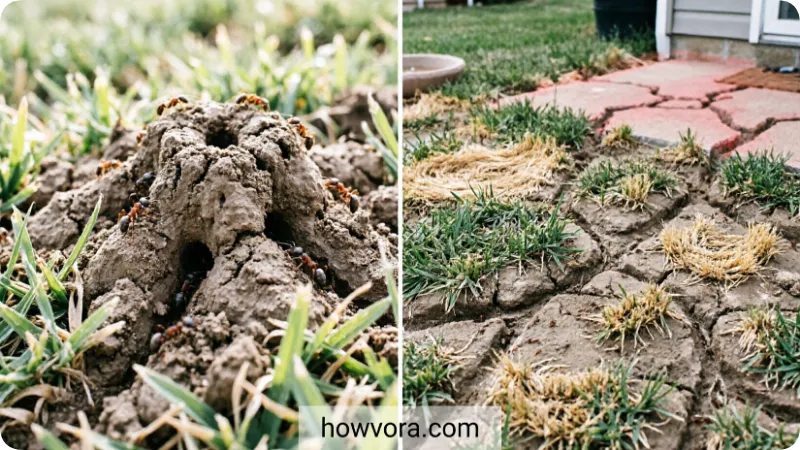
Difficulty Level: Beginner to Intermediate (depends on method chosen)
Time Required: 30 minutes to 2 hours for initial setup; results take 3-14 days
Estimated Cost: $10–$50 (DIY) vs. $150–$400 (professional treatment)
DIY vs. Professional: Most homeowners can handle ant problems themselves using baits or boiling water. Call a pest professional if you have fire ants (painful stings), massive infestations covering over 500 square feet, or nests within 3 feet of your home’s foundation.
Prerequisites: Identify the ant species (black garden ants, carpenter ants, fire ants, etc.), locate active nests, wear protective gloves and shoes, and ensure the area is away from children’s play zones if using chemical treatments.
Choosing the Right Approach
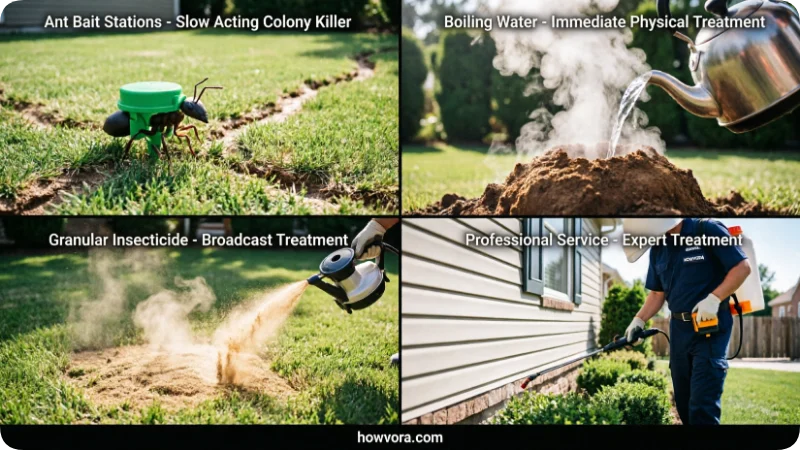
Not all ant problems require the same solution. Here’s how four popular methods compare:
Method Comparison Table:
| Method | Pros | Cons | Best For |
| Ant Baits | Kills entire colony; slower poison avoids alerting ants; works in 3-7 days | Takes longer; requires patience and placement accuracy | Large colonies; prevention; inexperienced users |
| Boiling Water | Instant results; free or nearly free; no chemicals | Doesn’t kill entire colony; may damage plants; safety hazard; high failure rate | Small, accessible nests; immediate relief; chemical-free approach |
| Granular Insecticide | Fast-acting; covers large areas; affordable | Can harm beneficial insects; requires reapplication; weather-dependent | Moderate infestations; quick results needed |
| Professional Service | Guaranteed results; targets entire infestation; safe application | High cost; scheduling required; less control over methods | Fire ants; massive infestations; structural concerns |
Why Baits Are Recommended: Baits are the most reliable DIY solution because ants carry poisoned food back to the colony, eliminating the queen and workers simultaneously. Boiling water kills visible ants but misses the nest, leaving survivors to rebuild within days.
At a Glance
Quick Reference Table:
| Aspect | Details |
| Difficulty | Beginner–Intermediate |
| Time to Start | 15–30 minutes |
| Time to Full Results | 3–14 days |
| Estimated Cost | $10–$50 |
| Safety Gear Needed | Gloves, closed-toe shoes, eye protection |
| Reapplication Needed? | Yes, typically once after 2 weeks |
Things You’ll Need
Supplies and Their Purpose:
| Item | Purpose | Notes |
| Ant Baits (liquid or granular) | Primary weapon: poison carried to the colony | Liquid works faster; granular lasts longer |
| Gloves (latex or rubber) | Hand protection from chemicals and ant bites | Essential for fire ants |
| Closed-toe Shoes | Foot protection while walking in the yard | Ants can enter via socks/pant legs |
| Small Container or Applicator | Applying baits to the nest vicinity | Provided with many bait products |
| Flashlight (optional) | Locating nests in shaded areas or in the evening | Helps spot mound activity |
| Rake or Shovel | Moving soil when accessing deep nests | Useful for the boiling water method |
| Kettle or Pot (for boiling water) | Heating water to 200°F+ | Only if using the boiling water method |
| Ant Dust or Powder (optional) | Alternative for dry conditions | For areas where liquid baits won’t stay put |
Safety Precautions
Real Hazards and When Extra Caution Matters:
Fire Ant Risk: Fire ants deliver painful, burning stings that can trigger allergic reactions. If you’re allergic to insect stings or treating large fire ant infestations, wear long sleeves, tuck pants into socks, and consider hiring a professional. Never apply treatments barefoot.
Chemical Exposure: Most over-the-counter ant baits and granules are low-toxicity to humans but can harm pets and wildlife if ingested. Keep children and pets away from treated areas for at least 48 hours. Store products in original containers, out of reach, in a cool, dry place.
Water Safety: Boiling water can cause severe burns. Never pour directly toward people, pets, or near areas where someone might trip. Let water cool slightly in a bucket before applying it to minimize vapor burns.
Plant Damage: Boiling water and some granular insecticides can kill grass and garden plants. Apply only to ant mounds, not broadcast across the lawn. Spot-treat to minimize landscape damage.
Weather Conditions: Don’t apply baits during heavy rain (they’ll wash away) or extreme heat (they degrade faster). Apply in the early morning or late evening for best results.
Step-by-Step Guide
Step 1: Locate Active Ant Nests
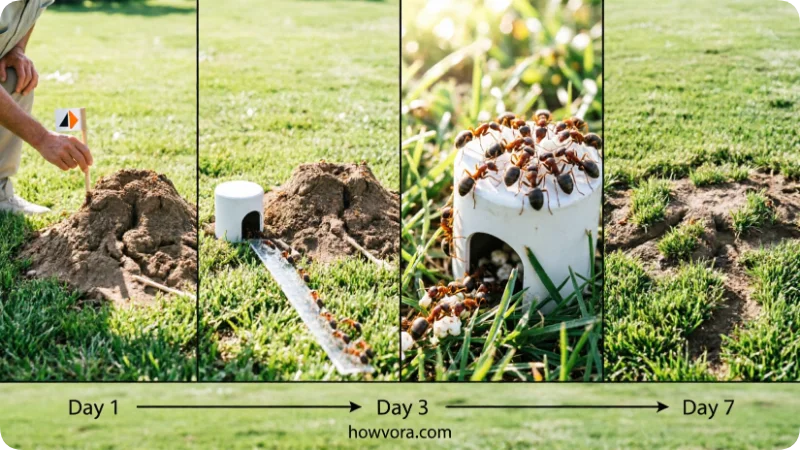
What to Do: Walk your yard carefully, looking for small mounds or dirt piles. Mark each location with a flag, chalk, or small stake. Look under the following places: near the foundation, under mulch, around garden beds, along fence lines, and in compacted soil areas.
Why It Matters: You can’t kill what you can’t find. Active nests have worker ants visibly entering and exiting. Locate all major nests before treating, or ants will simply relocate to untreated areas.
What Success Looks Like: You’ve identified 3-8 primary nests and can walk to each one without difficulty.
Common Beginner Mistakes:
- Treating only visible mounds while missing satellite nests that one colony maintains.
- Assuming all mound-like soil is an ant nest, some are just compacted dirt.
- Treating at night when ants are less active; treat early morning for the highest activity.
Step 2: Choose Your Treatment (Baits Recommended)
What to Do: Select an ant bait product suitable for your climate and ant type. Liquid baits work best in cool/moderate temperatures; granular baits work better in dry heat. Read the product label and confirm it targets your ant species. If you’re unsure of the species, granular baits work on the most common yard ants.
Why It Matters: Different baits work on different ant species. Some ants prefer protein-based baits; others prefer sugar-based. Wrong bait type means wasted effort.
What Success Looks Like: You’ve purchased a bait product with clear application instructions and a list of targeted ant species that matches yours.
Common Beginner Mistakes:
- Buying the cheapest option without checking effectiveness reviews.
- Choosing aerosol sprays instead of baits (sprays kill individual ants but miss the colony).
- Treating with multiple products at once, which confuses results and increases chemical exposure.
Step 3: Apply Baits Around Active Nests
What to Do: Place small amounts of bait (about a teaspoon or per product instructions) in a small container or directly on soil near, but not directly on, the ant mound. Place 3-5 bait stations around each primary nest. Liquid baits can be placed on cardboard pieces; granular baits go directly on dry soil. Space stations 12-18 inches apart for better coverage.
Why It Matters: Baits need to be accessible so ants discover them quickly. Too close to the mound, and ants may ignore it for their natural food sources. Too far, and they’ll never find it.
What Success Looks Like: Within 2-4 hours, you see ants collecting bait and carrying it back to the nest. This is working as intended.
Common Beginner Mistakes:
- Placing bait directly on the mound can alert ants to danger and cause them to relocate the colony.
- Disturbing the mound before or after baiting can split the colony.
- Using too much bait at once can cause it to go bad or attract more ants than intended.
- Treating after rain when the bait is wet and less effective.
Step 4: Wait and Monitor
What to Do: Check bait stations every 24 hours. Refill bait that’s been consumed. Observe ant activity levels. Take note of how many ants visit stations and whether activity is decreasing. Plan to wait 3-7 days for full colony elimination.
Why It Matters: Poison baits work on a delayed timeline. Ants must consume bait and return to the nest to poison the queen. Premature intervention (like spraying) interrupts the process.
What Success Looks Like: Activity peaks at 24-48 hours, then gradually declines. By day 5-7, mounds are visibly less active or abandoned.
Common Beginner Mistakes:
- Assuming failure after 2-3 days and switching methods.
- Refilling bait too frequently, which extends the timeline.
- Applying additional treatments (sprays, granules) during the bait phase can repel ants.
Step 5: Second Application
What to Do: After 10-14 days, inspect the yard. If you see activity at original nests or new mounds have appeared, apply baits again using the same method.
Why It Matters: Some colonies survive the first application, or secondary nests were too small to notice initially. A second round catches stragglers and satellite colonies.
What Success Looks Like: After the second application, mound activity ceases, and no new nests appear for at least 4 weeks.
Common Beginner Mistakes:
- Skipping the second application and wondering why ants return.
- Over-treating with bait (using more than twice is unnecessary and wasteful).
How to Know You Did It Correctly
Success Signs:
- Visible mounds have flattened or disappeared entirely.
- Ant traffic around treated areas has stopped; no ants are entering or exiting the nest.
- New mounds don’t appear in the treated zone within 3-4 weeks.
- Worker ants are no longer visible on sidewalks or near the treated yard.
Verification Methods:
Inspect each treated area 7 days after application. Gently poke the mound with a stick. If ants don’t swarm out, it’s dead or abandoned. Walk your yard again after 2-3 weeks and compare ant activity to pre-treatment levels. If activity has dropped by 80-90%, treatment was successful.
Expected Results:
Full colony elimination typically takes 5-10 days with baits. Boiling water provides immediate visible results but rarely eliminates the entire colony. Granular insecticides show results within 2-3 days but may require reapplication.
Expected Timeline and Results
When Results Appear:
- Day 1: Ants discover bait; activity may increase as they feed and collect bait.
- Days 2-4: Peak ant traffic to bait stations; first signs of colony weakness (fewer foraging ants).
- Days 5-7: Significant decline in nest activity; mound appearance changes (flattened or sinking).
- Days 7-14: Complete colony death or abandonment; no visible ant activity.
Normal Progress:
Ant elimination is not instant. You should see a gradual decline, not an immediate cessation of activity. Impatience leads to repeated applications that waste product and confuse results.
When to Repeat:
If mounds remain active after 10 days, apply baits again. If new colonies appear 2+ weeks after treatment, your yard may have multiple infestations. Treat each one independently.
When to Switch Methods:
If baits show no effect after 10 days and you’ve correctly identified the ant species, switch to granular insecticide or call a professional. Some resistant populations exist, though they’re rare.
Alternative Methods
Boiling Water Method
How It Works: Pour boiling water (200°F+) directly onto ant mounds early in the morning. Water penetrates soil and kills ants on contact.
Advantages:
- Zero cost (or minimal cost for water heating).
- No chemicals involved.
- Immediate visible results: ants die instantly.
- Safe around pets after the water cools.
Disadvantages:
- Kills only ants in the immediate area; the colony survives in deeper tunnels.
- Failure rate of 70-80% (ants rebuild within days or weeks).
- High risk of burns to hands, feet, or plants.
- May damage grass or garden plants.
Best Use Case: Emergency relief for a single, small, accessible nest. Not recommended as primary treatment for widespread infestations.
Granular Insecticide Method
How It Works: Spread granular insecticide (containing bifenthrin, fipronil, or similar) directly on mounds and surrounding soil. Ants contact the powder and carry it to the nest.
Advantages:
- Fast-acting (results in 2-3 days).
- Covers large areas efficiently.
- Long-lasting (effects persist 2-4 weeks).
- Effective in hot, dry conditions.
Disadvantages:
- Requires reapplication in wet climates.
- Can harm beneficial insects like bees if applied near flowers.
- Less precise than baits; more product is used overall.
- Not suitable if rain is forecasted within 24 hours.
Best Use Case: Large infestations covering multiple areas; quick results needed; dry climate.
Diatomaceous Earth
How It Works: Food-grade diatomaceous earth is a powder that damages an ant’s exoskeleton, causing dehydration and death.
Advantages:
- Fully natural and non-toxic.
- Safe around children and pets.
- Works on many insect types.
Disadvantages:
- Slow-acting (takes 7-10 days).
- Loses effectiveness when wet.
- Less reliable than chemical or bait options.
- Requires reapplication every 2-3 days if rain occurs.
Best Use Case:
Chemical-sensitive households, small infestations, yards with pets, or frequent use.
Common Mistakes to Avoid
Mistake 1: Destroying the Mound Before Applying Bait
What It Is: Digging into or breaking apart the mound immediately before or after bait application.
Why It Happens: Frustration and the desire to “attack” the nest directly.
Consequences: Ants panic and scatter, relocating the queen and workers to new nests elsewhere in the yard. Treatment becomes ineffective.
How to Prevent: Never disturb the mound during treatment. Let baits work undisturbed for at least 7 days.
Mistake 2: Using Spray Insecticides as Primary Treatment
What It Is: Applying aerosol or liquid sprays directly to mounds.
Why It Happens: Sprays provide instant visible results, which feel like progress.
Consequences: Surface ants die, but the queen and deep colony survive. Ants rebuild within days or spread to new areas.
How to Prevent: Use baits or granules that kill the entire colony, not sprays for superficial treatment.
Mistake 3: Treating Only Part of the Infestation
What It Is: Baiting visible mounds while ignoring satellite nests.
Why It Happens: Some nests are less obvious or hidden under mulch or dense vegetation.
Consequences: Remaining untreated colonies expand and reinvest treated areas within weeks.
How to Prevent: Thoroughly scout the entire yard and mark all active nests before beginning treatment.
Mistake 4: Applying Bait in Wet Conditions
What It Is: Using liquid baits during rain or immediately after watering.
Why It Happens: Lack of planning or not checking the weather forecast.
Consequences: Bait washes away or dilutes before ants can consume it.
How to Prevent: Apply bait during dry conditions, ideally in early morning or late evening, with no rain forecasted for 24 hours.
Mistake 5: Mixing Multiple Treatment Types
What It Is: Using baits, sprays, and granules simultaneously.
Why It Happens: Impatience or the belief that more product equals faster results.
Consequences: Ants are repelled by concentrated chemical presence and relocate before consuming poison. Results are delayed or negative.
How to Prevent: Stick to one primary method. Wait 10-14 days before evaluating effectiveness.
Why Many Attempts Fail
Reason 1: Wrong Ant Species Identification
Different ant species have different food preferences, activity patterns, and vulnerabilities. Fire ants require different treatment from black garden ants. Misidentification leads to choosing ineffective baits.
Solution: If possible, identify the ant species before purchasing treatment. Most common yard ants respond to broad-spectrum baits, so a generic bait is a safe starting point.
Reason 2: Incomplete Colony Treatment
Visible ants are workers. The actual threat to the queen and her eggs lives deep in the nest. Surface treatments (sprays, boiling water) kill workers but leave the colony intact.
Solution: Use baits that poison the entire colony via worker ants returning to the nest.
Reason 3: Secondary Infestations
One property can host multiple ant colonies. Treating one nest while leaving others untouched results in reinfestation.
Solution: Scout the entire yard and treat all active nests, not just the most visible ones.
Reason 4: Inadequate Bait Placement
Bait placed too close to the mound is avoided; bait placed too far is never discovered.
Solution: Place bait 12-18 inches from the mound in areas where you’ve observed ant traffic.
Reason 5: Treating During Peak Rain Season
Rain washes away baits and prevents ants from accessing treatments. Timing matters.
Solution: Apply treatments during dry seasons or wait for a 3-5 day dry forecast before starting.
Troubleshooting & Common Problems
| Problem | Cause | Solution |
| Ants are still active after 10 days of bait | Wrong ant species; poor bait placement; ants rejected bait flavor | Reidentify ant species; relocate baits 12-18 inches from the mound; switch to a different bait brand with a protein base instead of sugar (or vice versa) |
| New mounds appear after treatment | Secondary colonies; ants relocated; incomplete first application | Scout the entire yard for all active nests; treat newly discovered nests; allow 14 days before the second application |
| Ant mounds return 3-4 weeks later | Surviving ants rebuilt the colony; reinfestation from neighboring properties | Apply preventive measures (remove food sources, fix drainage); treat again if infestation reoccurs |
| Pets or children showing irritation near the treated area | Chemical sensitivity; bait placed in a high-traffic area | Move baits away from frequent-use zones; switch to natural alternatives like diatomaceous earth |
| Bait washed away after the rain | Applied during wet conditions; the weather changed unexpectedly | Reapply after 48 hours of dry weather; use granular baits in rainy climates instead of liquid |
| Massive die-off of grass near the mound | The boiling water method is used, or a high concentration of granular insecticide | Apply treatments to mounds only, not broadcast; use bait stations to contain product; overseed grass after treatment succeeds |
| No ants observed at the bait station | Bait placed directly on mound (ants avoid it); wrong product for species; baits expired | Move bait 12-18 inches away; check product expiration date; try different bait flavor |
Expert Tips
Tip 1: Use Liquid Baits in Shade, Granular in Sun
Liquid baits work better in cooler, shaded areas where ants prefer to feed. Granular baits hold up better in hot, sunny yards. Match the product to your yard’s microclimate for faster results.
Tip 2: Apply Bait Early Morning (6-8 AM)
Ants are most active foraging in early morning before the heat peaks. Baits applied at this time are discovered and distributed to the colony faster, shortening the timeline to 5-7 days instead of 10-14 days.
Tip 3: Place Bait on Cardboard Scraps
For liquid baits, place a small amount on a scrap of cardboard or index card instead of directly on soil. This prevents soil from absorbing the bait and makes it easier to reposition or remove if needed.
Tip 4: Check for Mound Activity by Poking Gently
A quick poke with a stick before treatment tells you if a nest is active. Active nests erupt with ants; abandoned or dead nests show no response. This helps you prioritize which mounds to treat first.
Tip 5: Prevent Future Infestations with Yard Maintenance
Remove food sources (fallen fruit, garbage, pet food left outside), fix water drainage (ants need moisture), and keep mulch 12 inches away from your home’s foundation. These steps reduce ant habitat appeal and slow reinfestation.
Tip 6: Treat in Spring or Early Summer
Ant colonies are most active and concentrated in their nests during spring and early summer. Treatment during this window is 20-30% faster and more reliable than fall treatment.
When to Call a Professional
Call a Professional If:
- You have fire ants. Fire ants are aggressive, painful, and harder to eliminate. Professionals have access to fire ant-specific baits and methods that DIY options don’t offer.
- Infestation covers over 500 square feet. Large infestations suggest multiple colonies. Professional inspection identifies all nests and applies coordinated treatment.
- Ants are within 3 feet of your home’s foundation or entry points. Carpenter ants or nests near your home require precision. Professionals can treat the structural perimeter safely.
- You’ve tried DIY treatment twice and failed. If two rounds of baits or alternative methods didn’t work, the infestation may be resistant or more complex than expected.
- You’re allergic to insect stings. Let professionals handle treatment to avoid the risk of exposure during application.
- You prefer guaranteed results over DIY uncertainty. Professional services typically come with a warranty; if ants return within 30-60 days, they retreat at no cost.
Cost Expectation: Professional ant control typically costs $150–$400 for initial treatment, with follow-up visits at $75–$200 each if needed.
What to Do Next
Immediate Follow-Up (Days 1-7):
Monitor bait stations and refill as needed. Observe mound activity and document changes. Avoid disturbing treated areas.
Short-Term (Weeks 2-4):
Inspect treated mounds for activity. If mounds are dead or abandoned, success is likely. If activity continues, apply bait again. Begin prevention measures.
Long-Term Prevention:
- Remove Food Sources: Pick up fallen fruit, keep garbage in sealed containers, and don’t leave pet food outside overnight.
- Fix Drainage Issues: Fill low spots where water collects; ants are attracted to moist soil.
- Maintain Yard Gaps: Keep mulch 12 inches away from your foundation; seal cracks where ants might enter your home.
- Monitor Regularly: Do a monthly yard check during warm months. Treat small populations immediately before they establish.
- Consider Perimeter Treatment: Some homeowners apply preventive granules around the foundation’s edge each spring to deter new colonies.
Signs You Need Retreatment:
New mounds appearing 3+ weeks after initial treatment, increased ant activity in treated areas, or ants entering your home. Treat immediately to prevent full reinfestation.
FAQs
Q1: How long does it take to kill an ant colony?
With baits, expect 5-10 days for full colony death. Boiling water kills visible ants instantly, but rarely eliminates the colony. Granular insecticides show results in 2-3 days but may need reapplication.
Q2: Can I use cinnamon or other home remedies to kill ants?
Cinnamon, coffee grounds, and citrus peels can repel ants but won’t kill colonies. They’re useful for prevention (keeping ants out of specific areas) but not for eliminating existing infestations. Baits and granules are far more effective.
Q3: Are ant baits safe for dogs and cats?
Most over-the-counter ant baits are low-toxicity to pets if ingested in small amounts. However, keep pets away from treated areas for 48 hours as a precaution. If your pet ingests bait, contact your vet. Diatomaceous earth is the safest option for households with frequent pet/child contact.
Q4: Why do ants keep coming back even after I treat them?
Ants may be returning because (1) the colony wasn’t fully eliminated, (2) new colonies from neighboring properties are moving in, or (3) your yard still has conditions that attract ants (moisture, food sources). Use prevention methods alongside treatment.
Q5: Should I treat ant nests near my home’s foundation?
Yes, but carefully. Nests within 3 feet of your foundation or entry points should be treated to prevent ants from entering your home. Use targeted baits rather than broad-spectrum sprays. For nests very close to the foundation, contact a professional to avoid damaging siding or introducing chemicals near entry points.
Q6: What’s the difference between carpenter ants and regular yard ants?
Carpenter ants are large (0.5 inches) and nest inside wood, potentially damaging structures. Regular yard ants (like black garden ants) are smaller and live in soil. Carpenter ants require different treatment, and professional help is recommended if found. Identify the species before treating.
Q7: Can I use ant baits in my vegetable garden?
Yes, but place baits away from crops and in contained stations to minimize contact. Most ant baits are safe for food gardens in small quantities. However, if ants in the garden aren’t causing damage, consider leaving them alone; they aerate soil and prey on other pests.
Q8: How often should I reapply bait or granules?
Apply baits once, then wait 10-14 days to evaluate effectiveness. If nests are still active, apply a second time. Avoid treating more than twice in a season; overtreatment is wasteful and can harm non-target organisms. For granules, reapply every 2-4 weeks if rain washes away the initial application.
Q9: What attracts ants to yards in the first place?
Moisture (leaky irrigation, poor drainage), food sources (fallen fruit, garbage, pet food), and shelter (mulch piles, wood debris). Eliminating these reduces ant habitat appeal and slows future infestations.
Q10: Can weather affect ant treatment results?
Yes. Rain washes away liquid baits, extreme heat degrades some products, and cold slows ant activity. Apply baits during dry conditions in temperate weather (60–85°F) for best results. Avoid treatment during heavy rain forecasts or heat waves.
Final Thoughts
Killing ants in your yard is achievable without professional help in most cases. The key is choosing the right method (baits for reliability, boiling water for emergencies, granules for large areas), placing treatments correctly, and having patience while the poison works through the colony.
Most homeowners see success within 7-10 days using ant baits. Expect a slight surge in ant activity during days 2-3 as ants carry poison to the nest. This is normal and a sign that treatment is working. By day 7, activity should noticeably decline.
Combine active treatment with prevention: remove food sources, fix drainage, and maintain yard clearance near your foundation. This two-pronged approach eliminates current infestations and slows future ones.
If DIY methods fail after two attempts, or if you’re dealing with fire ants or structural concerns, professional pest control is worth the investment. A single professional visit often prevents months of frustration.
Your yard can be ant-free. Start treatment today, and you’ll likely enjoy the results within 1-2 weeks.
