A canker sore is that small, shallow ulcer that shows up inside your cheek, on your gums, or under your tongue and somehow always lands right where your teeth keep bumping it. These sores aren’t contagious, but they can make eating, talking, and even smiling uncomfortable for a week or more.
This guide is for anyone dealing with an active canker sore right now and wants it to heal faster with less pain, using remedies backed by basic oral-care practice rather than guesswork. By the end, you’ll know exactly which steps actually speed healing, which popular “fixes” do nothing, and when a sore needs a dentist or doctor instead of a home remedy.
Featured Snippet
Rinse the sore with warm salt water or a baking soda solution several times a day, apply an over-the-counter numbing gel or protective paste, avoid acidic and spicy foods, and keep the area clean. Most canker sores heal in 7–14 days with this routine; a cold compress and OTC pain relievers help manage discomfort in the meantime.
Before You Begin
Difficulty: Easy Time commitment: 2–3 minutes per treatment, 3–4 times a day Cost: $0–$15 (most people already have salt and baking soda; OTC gels run $6–$12) DIY vs. professional care: DIY is appropriate for a typical canker sore. See a dentist or doctor if a sore lasts longer than three weeks, is unusually large, or keeps recurring. Prerequisites: None, just confirm it’s actually a canker sore (aphthous ulcer) and not a cold sore. Canker sores are open ulcers inside the mouth; cold sores are fluid-filled blisters that form outside the mouth, usually on or near the lips, and are caused by a different virus (herpes simplex). This distinction matters because cold sore treatments (antiviral creams) don’t work on canker sores, and vice versa.
Choosing the Right Approach
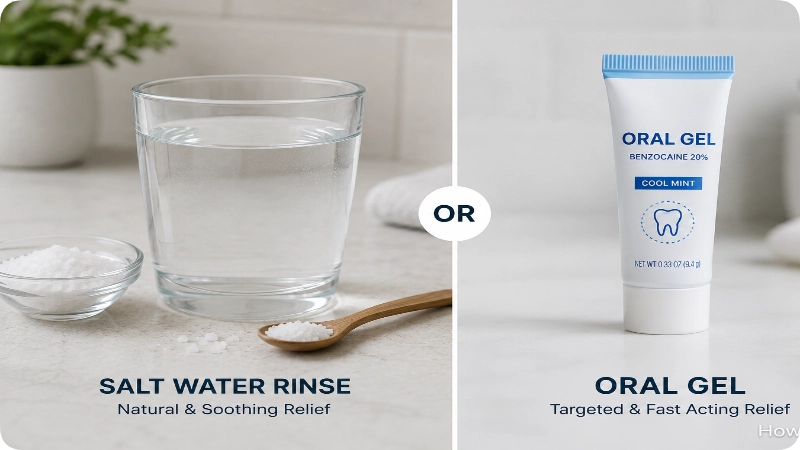
There isn’t one single “best” remedy;y the right combination depends on how much pain you’re in and what you have on hand.
| Method | Best For | Speed of Relief | Notes |
| Salt water or baking soda rinse | Everyone, as a daily base treatment | Slow but steady (days) | Cheap, reduces bacteria, mildly irritates the sore itself |
| OTC numbing gel (benzocaine) | Pain relief during meals or talking | Fast, temporary (minutes) | Doesn’t speed healing, only masks pain |
| Protective oral paste (e.g., containing benzocaine + a barrier agent) | Sores that get irritated by teeth or braces | Fast pain relief + some healing support | Forms a physical barrier over the ulcer |
| Hydrogen peroxide rinse (diluted) | Sores with visible debris or early-stage cleaning | Moderate | Must be diluted 1:1 with water; never used full-strength |
| Milk of magnesia dab | Reducing acidity around the sore | Moderate | Also can be mixed with a liquid antihistamine as a rinse |
Most people get the best results combining a rinse (for healing) with a topical gel or paste (for pain), rather than relying on just one.
At a Glance
| Difficulty | Time per Session | Cost | Skill Level | Best For |
| Easy | 2–3 minutes | $0–$15 | Beginner | Anyone with an active canker sore |
Things You’ll Need
| Item | Purpose |
| Warm water | Base for rinses |
| Salt or baking soda | Reduces bacteria and inflammation |
| OTC benzocaine gel or oral paste | Numbness pain protects the sore |
| Soft-bristled toothbrush | Prevents further irritation while brushing |
| Ice cube or cold water | Reduces swelling and pain on contact |
| Hydrogen peroxide (3%) | Optional cleaning rinse, diluted |
| OTC pain reliever (ibuprofen or acetaminophen) | Manages background pain, especially with eating |
A Step-by-Step Guide
Rinse with warm salt water first.
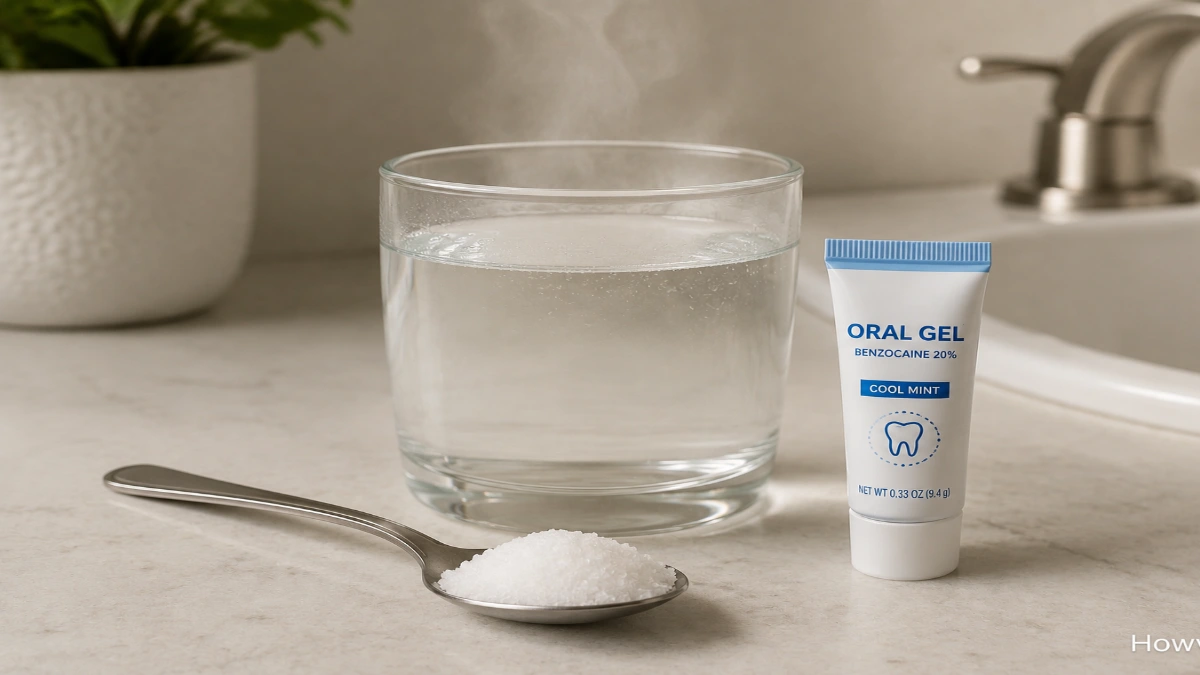
Dissolve half a teaspoon of salt in a cup of warm water and swish for 15–30 seconds, then spit. Do this 3–4 times a day. Why it matters: salt draws out fluid and reduces the bacterial load around the ulcer, which shortens healing time. It will sting for a few seconds; that’s expected, not a sign you’re doing it wrong.
Alternate with a baking soda rinse.
Mix one teaspoon of baking soda in half a cup of water and swish for 15–30 seconds. This neutralizes acid in the mouth, which reduces irritation from food and saliva.
Apply a numbing gel or protective paste directly to the sore.
Use a clean fingertip or cotton swab, and apply after rinses and before meals. This won’t heal the sore, but it makes eating and talking tolerable in the meantime.
Dab with diluted hydrogen peroxide if the area looks dirty or crusted.
Mix equal parts 3% hydrogen peroxide and water, apply with a cotton swab directly on the sore for a few seconds, then rinse with plain water. Skip this step if the sore is small and clean;n it’s optional, not required.
Use a cold compress or suck on ice for immediate pain relief.
Hold ice or a cold, wet cloth against the outside of your cheek near the sore, or let a small ice chip melt near the ulcer itself, for a few minutes at a time.
Avoid trigger foods until it heals.
Skip citrus, tomatoes, vinegar, spicy food, salty snacks, and anything crunchy or sharp-edged (chips, crusty bread) that could scrape the sore. Common mistake: people often keep eating normally and re-irritate the same spot daily, which resets the healing clock.
Switch to a soft-bristled toothbrush and brush gently around the area.
Don’t skip brushing, as poor oral hygiene slows healing. Just be gentle near the ulcer itself.
Take an OTC pain reliever if discomfort is interfering with eating or sleeping.
Ibuprofen also reduces inflammation, which can help beyond just numbing pain.
Repeat the rinse-and-treat routine daily until the sore closes.
Consistency matters more than any single remedy; most improvement comes from doing this 3–4 times a day, every day, not from finding one “magic” step.
How to Know You Did It Correctly
You’re on the right track if the sore’s size stops increasing within 2–3 days, the white or yellow center starts to shrink, and pain decreases even before the sore is fully closed. A shrinking red halo around the ulcer is a good sign; the area actively getting bigger or spreading after several days of treatment is not.
Expected Timeline and Results
- Days 1–3: Peak pain and size; rinses and gels mainly manage discomfort.
- Days 4–7: Sore begins shrinking, pain noticeably decreases, a thin film may form over it.
- Days 7–14: Full closure for most canker sores. Minor sores (under ¼ inch) often resolve by day 10; larger ones can take the full two weeks.
If there’s no improvement by day 10–14, that’s the point to consider seeing a professional rather than continuing home care indefinitely.
Alternative Methods
- Milk of magnesia dab: Apply directly to the sore 3–4 times a day, alone or mixed 1:1 with liquid diphenhydramine (Benadryl) as a rinse-and-spit solution. This combination is commonly recommended for reducing pain from multiple or widespread sores.
- Honey application: Dabbing a small amount of raw honey on the sore several times a day has a soothing, mildly protective effect for some people, though it’s messier and less studied than OTC options.
- Chamomile tea bag compress: Pressing a cooled, damp chamomile tea bag against the sore for a few minutes can reduce irritation as a low-cost alternative to gels.
None of these replace the core rinse-and-protect routine;e they’re add-ons for people who want extra options or don’t have access to OTC gels.
Common Mistakes to Avoid
- Popping or picking at the sore. It’s not a pimple; this only delays healing and increases infection risk.
- Using full-strength hydrogen peroxide. Undiluted, it can burn healthy tissue around the ulcer.
- Stopping treatment as soon as pain fades. Pain often drops before the sore is fully closed. Keepep rinsing until it’s visibly healed.
- Ignoring toothpaste as a trigger. Toothpastes containing sodium lauryl sulfate (SLS) are linked to more frequent canker sores in some people; switching to an SLS-free toothpaste can reduce recurrence.
- Assuming it’s a cold sore and using antiviral cream. This won’t help a true canker sore and wastes time better spent on the right treatment.
Troubleshooting & Common Problems
| Problem | Cause | Solution |
| Sore keeps getting re-irritated | Sharp tooth edge, braces, or repeated biting in the same spot | Apply a protective paste as a physical barrier; ask a dentist about dental wax for braces |
| Multiple sores appear at once | Stress, minor mouth injury, acidic food binge, or nutrient gaps (iron, B12, folate) | Continue routine care; if recurrent, consider a diet review or ask a doctor about a vitamin deficiency check |
| The sore isn’t shrinking after a week. | Continued exposure to trigger foods, or the sore is simply larger/deeper than average | Strengthen food avoidance, increase rinse frequency, and monitor for two more days before seeing a professional |
| Pain worsens with fever or swelling | Possible secondary infection | Stop home treatment and see a doctor or dentist promptly |
| Sore lasts more than 3 weeks | May not be a typical canker sore | Requires professional evaluation to rule out other causes |
Expert Tips
- Apply the numbing gel right before meals, not right after; it gives you a pain-free eating window instead of relief you don’t need while resting.
- Drinking through a straw temporarily reduces contact between liquids and a sore on the inner cheek or lip.
- If sores show up in the same spot repeatedly, check for a rough filling edge or a chipped tooth. A five-minute dental smoothing can prevent recurring irritation-based sores entirely.
- Keep a rinse schedule tied to existing habits (after each meal, before bed) so you don’t forget the dose. Consistency drives most of the results here, not remedy choice.
When to Call a Professional
See a dentist or doctor if:
- The sore lasts longer than 3 weeks without improvement
- It’s unusually large (over half an inch) or spreading
- You develop a fever, swollen lymph nodes, or difficulty swallowing
- Canker sores recur frequently (several times a year), which can point to an underlying nutrient deficiency or other condition worth checking
- Pain is severe enough that you can’t eat or drink normally
What to Do Next
Once the sore heals, focus on prevention: switch to an SLS-free toothpaste if you suspect it’s a trigger, keep a soft-bristled toothbrush in rotation, and pay attention to whether stress or specific foods (citrus, chocolate, nuts) tend to precede outbreaks for you. If sores are frequent, a short log of what you ate or how stressed you were in the 24 hours before each outbreak can help you spot a pattern worth adjusting.
FAQs
Is a canker sore the same as a cold sore?
No. Canker sores form inside the mouth and aren’t contagious; cold sores form outside the mouth (usually on the lip) and are caused by a contagious virus.
Can I speed up healing overnight?
Not fully canker sores typically take at least a week to heal, regardless of treatment. Home remedies manage pain and shorten the timeline slightly, but there’s no true overnight cure.
Why do I keep getting canker sores?
Common triggers include stress, minor mouth injuries (biting your cheek, braces), acidic or spicy foods, SLS-containing toothpaste, and in some cases nutrient deficiencies like iron, B12, or folate.
Is toothpaste really a trigger?
For some people, yes, sodium lauryl sulfate (SLS), a foaming agent in many toothpastes, is associated with more frequent canker sores. Switching to an SLS-free formula is worth trying if you get them often.
Does stress actually cause canker sores?
Stress is one of the most commonly reported triggers, though it’s not the only cause. It often works alongside other factors like minor mouth trauma or diet.
Can children use the same remedies?
Salt water and baking soda rinses are generally fine for children old enough to reliably spit rather than swallow. For younger children or if you’re unsure about OTC gel dosing, check with a pediatrician or pediatric dentist first.
Should I avoid brushing near the sore entirely?
No skipping oral hygiene near the sore can slow healing. Brush gently with a soft-bristled brush instead of avoiding the area completely.
Final Thoughts
Most canker sores heal on their own within one to two weeks, and the fastest path through them is a consistent routine: rinse, protect, avoid triggers, and manage pain, repeated daily rather than relying on any single product. If a sore doesn’t follow that expected timeline, or comes with symptoms like fever or spreading, that’s your cue to move from home care to a dentist or doctor rather than pushing home remedies further.