
Finding ticks inside your home can be alarming, especially if you have pets or spend time outdoors. Ticks can hide in carpets, pet bedding, furniture, cracks, and other secluded areas while waiting for a host.
Removing them quickly is important because some tick species can carry diseases and continue reproducing if left untreated.
This guide explains how to get rid of ticks in house environments safely and effectively. You’ll learn how to identify problem areas, eliminate existing ticks, prevent future infestations, and know when professional help may be necessary.
Featured Snippet
Ticks in a house can be eliminated by treating pets, thoroughly vacuuming carpets and furniture, washing bedding in hot water, applying appropriate indoor tick treatments, and sealing entry points. Consistent cleaning and prevention measures are essential because ticks can survive in hidden areas and reappear if eggs or untreated hosts remain.
Before You Begin
Difficulty: Moderate
Estimated Time: 1–3 days for initial treatment
Cost: $20–$200 depending on treatment method
DIY or Professional?
- DIY works well for small to moderate infestations.
- Professional pest control is often recommended for severe infestations, recurring problems, or large properties.
Before starting:
- Inspect pets for ticks.
- Identify areas where ticks are commonly found.
- Gather cleaning and treatment supplies.
- Plan to repeat inspections for several weeks.
Choosing the Right Approach
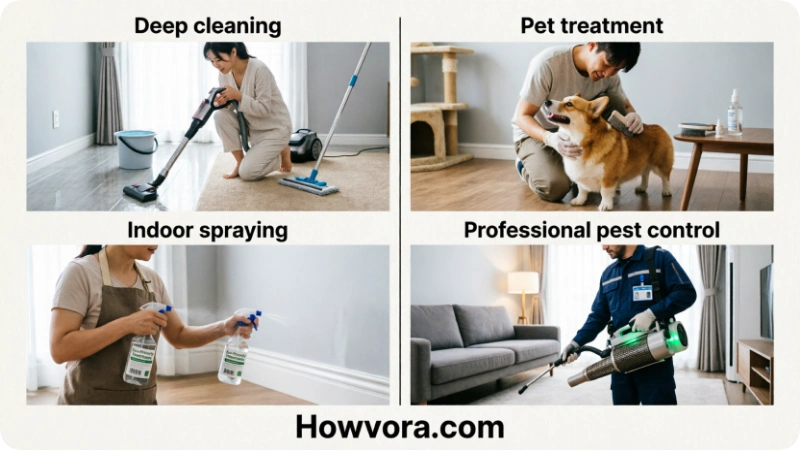
| Method | Pros | Cons | Best For |
| Deep Cleaning | Low cost, safe | Labor intensive | Minor infestations |
| Indoor Tick Spray | Fast results | Requires careful application | Moderate infestations |
| Pet Treatment | Prevents reinfestation | Does not eliminate indoor ticks alone | Homes with pets |
| Professional Extermination | Most thorough | Higher cost | Severe infestations |
Recommended Approach
A combination of pet treatment, deep cleaning, and targeted indoor treatment provides the most reliable results. Using only one method often leaves hidden ticks behind.
At a Glance
| Factor | Details |
| Difficulty | Moderate |
| Time Required | 1–3 days initially |
| Follow-Up Monitoring | 2–8 weeks |
| Estimated Cost | $20–$200 |
| Success Rate | High when multiple methods are combined |
Things You’ll Need
| Item | Purpose |
| Vacuum cleaner | Remove ticks and eggs |
| Laundry detergent | Clean fabrics and bedding |
| Hot water washer | Kill ticks on washable items |
| Indoor tick spray | Treat infested areas |
| Pet tick treatment | Eliminate ticks on pets |
| Disposable gloves | Safe handling |
| Trash bags | Dispose of vacuum contents |
Safety Precautions
- Follow all pesticide label directions.
- Keep children and pets away from treated areas until dry.
- Wear gloves when handling ticks.
- Avoid crushing ticks with bare fingers.
- Wash hands after cleaning or treatment.
- Use ventilation when applying sprays indoors.
Step-by-Step Guide
Step 1: Identify Tick Hotspots
What to Do
Inspect:
- Pet bedding
- Carpets
- Rugs
- Upholstered furniture
- Baseboards
- Cracks and crevices
- Areas where pets rest
Why It Matters
Treating visible ticks without locating hiding spots often results in reinfestation.
Success Looks Like
You have identified all areas where ticks may be living or hiding.
Common Beginner Mistakes
- Checking only floors
- Ignoring pet sleeping areas
- Overlooking furniture seams
Step 2: Treat Pets Immediately
What to Do
Use veterinarian-approved tick prevention products such as:
- Tick collars
- Oral medications
- Spot-on treatments
Why It Matters
Pets are the most common way ticks enter homes.
Success Looks Like
No live ticks are found on pets after treatment.
Common Beginner Mistakes
- Treating the home but not pets
- Using expired products
- Skipping follow-up doses
Step 3: Vacuum Thoroughly
What to Do
Vacuum:
- Carpets
- Rugs
- Furniture
- Baseboards
- Pet areas
- Cracks and corners
Immediately dispose of vacuum contents outside.
Why It Matters
Vacuuming removes many ticks before chemical treatment.
Success Looks Like
Dust, debris, and visible ticks are removed from key areas.
Common Beginner Mistakes
- Emptying the vacuum indoors
- Missing furniture edges
- Vacuuming only once
Step 4: Wash Bedding and Fabrics
What to Do
Wash all:
- Pet bedding
- Blankets
- Sheets
- Throw covers
Use hot water and high heat drying cycles.
Why It Matters
Heat effectively kills ticks and many eggs.
Success Looks Like
All washable materials have been cleaned and dried thoroughly.
Common Beginner Mistakes
- Using cold water
- Air-drying infested items
Step 5: Apply Indoor Tick Treatment
What to Do
Apply a labeled indoor tick control product to:
- Carpets
- Baseboards
- Cracks
- Pet resting areas
Follow label instructions carefully.
Why It Matters
Chemical treatments target hidden ticks that cleaning may miss.
Success Looks Like
No live ticks are observed after treatment.
Common Beginner Mistakes
- Overapplying pesticides
- Skipping follow-up treatments
- Ignoring hidden areas
Step 6: Monitor and Repeat
What to Do
Inspect weekly for several weeks.
Repeat cleaning and treatment if necessary.
Why It Matters
Some ticks may emerge after the initial treatment.
Success Looks Like
No ticks are found during multiple inspections.
Common Beginner Mistakes
- Assuming one treatment is enough
- Stopping inspections too early
How to Know You Did It Correctly
Signs of success include:
- No live ticks found indoors
- Pets remain tick-free
- No new tick bites occur
- Tick activity does not return after several weeks
- Regular inspections reveal no evidence of infestation
Expected Timeline and Results
| Time | Expected Result |
| Day 1 | Cleaning and treatment completed |
| Days 2–7 | Significant reduction in tick activity |
| Weeks 2–4 | Few or no ticks observed |
| Weeks 4–8 | Infestation is fully eliminated if prevention continues |
Alternative Methods
Natural Approaches
Advantages
- Lower chemical exposure
- Safer for sensitive households
Disadvantages
- Often slower
- Less effective for severe infestations
Professional Pest Control
Advantages
- Comprehensive treatment
- Expert inspection
Disadvantages
- Higher cost
Yard Treatment
Advantages
- Reduces outdoor tick populations
Disadvantages
- Does not eliminate indoor ticks by itself
Common Mistakes to Avoid
Ignoring Pets
Untreated pets continuously reintroduce ticks.
Skipping Follow-Up Treatments
Some ticks survive initial efforts.
Failing to Vacuum Thoroughly
Hidden ticks remain protected.
Treating Only Visible Areas
Ticks often hide in cracks and furniture.
Stopping Monitoring Too Soon
Reinfestations may not appear immediately.
Why Many Attempts Fail
- Pets are not treated properly.
- Tick eggs remain hidden.
- Vacuum bags are not disposed of correctly.
- Outdoor sources continue to introduce ticks.
- Follow-up inspections are skipped.
- Homeowners rely on a single treatment method.
The most successful strategy combines cleaning, pet protection, monitoring, and targeted treatments.
Troubleshooting & Common Problems
| Problem | Possible Cause | Solution |
| Ticks keep appearing | Untreated pets | Apply effective pet treatment |
| Ticks return after spraying | Eggs survived | Repeat treatment as directed |
| Ticks found near furniture | Hidden nesting areas | Vacuum and treat seams thoroughly |
| Outdoor ticks entering the home | Yard infestation | Treat outdoor areas |
| Bites continue | Missed infestation area | Conduct a full inspection |
Expert Tips
- Focus on pet resting areas first.
- Use a flashlight when inspecting furniture seams.
- Vacuum daily during active infestations.
- Treat yards to reduce future introductions.
- Keep grass trimmed and vegetation controlled.
- Schedule monthly pet tick prevention year-round.
When to Call a Professional
Consider professional pest control if:
- Ticks continue appearing after multiple treatments.
- Infestations affect multiple rooms.
- You discover large numbers of ticks.
- Household members experience repeated bites.
- You cannot locate the infestation source.
DIY methods are usually sufficient for minor infestations, but persistent problems often require expert intervention.
What to Do Next
After eliminating ticks:
- Continue pet prevention treatments.
- Inspect pets after outdoor activities.
- Vacuum regularly.
- Wash pet bedding frequently.
- Maintain your yard.
- Seal cracks and gaps around the home.
- Monitor for signs of recurrence.
Consistent prevention is easier than dealing with another infestation.
FAQs
Can ticks live in a house without pets?
Yes. Ticks can survive indoors for extended periods and may feed on people or other animals if available.
How long can ticks survive inside a home?
Depending on species and conditions, some ticks can survive for weeks or months without feeding.
Do ticks lay eggs indoors?
Some species can lay eggs indoors if conditions are favorable.
Does vacuuming kill ticks?
Vacuuming removes many ticks, but disposing of vacuum contents immediately is important.
Can I get rid of ticks without chemicals?
Small infestations may respond to cleaning, washing, and vacuuming, but larger infestations often require additional treatment.
What room is most likely to have ticks?
Areas where pets sleep or spend time are typically the most common hotspots.
Should I treat my yard too?
Yes. Outdoor tick populations often cause recurring indoor infestations.
How often should I inspect for ticks after treatment?
Weekly inspections for at least one month are recommended.
Final Thoughts
Learning how to get rid of ticks in house environments requires more than simply removing visible pests. The most effective approach combines pet treatment, thorough cleaning, targeted indoor treatment, and ongoing monitoring. By addressing both the indoor infestation and potential outdoor sources, you can eliminate ticks and significantly reduce the chances of them returning.

2 thoughts on “How to Get Rid of Ticks in House Naturally and Safely”