
Armadillos dig because they’re hunting for grubs, earthworms, and other insects just beneath the surface of your lawn, and a single animal can leave a dozen or more shallow, cone-shaped holes in one night.
This is a common problem for homeowners across the southern and southeastern United States, where the nine-banded armadillo is the only species found, and it affects anyone with lawns, flower beds, or foundations near wooded or brushy edges.
This guide covers how to correctly identify armadillo damage, remove the food source drawing them in, exclude or trap the animal responsibly, and keep your yard armadillo-free afterward, all while staying inside your state’s wildlife regulations, which many guides skip entirely.
Featured Snippet
To get rid of armadillos, treat your lawn for grubs and insects to remove their food source, install an angled exclusion fence buried 12–18 inches deep around gardens or foundations, and set a live cage trap along their travel path rather than relying on bait. Check your state’s wildlife rules before trapping or relocating one.
Before You Begin
Difficulty: Moderate. Armadillos aren’t strongly food-motivated, so bait-based trapping advice made for other animals often fails, and trapping/relocation rules vary by state. Time: A few hours for grub treatment and fencing setup; trapping success ranges from a few nights to a few weeks. Cost: $20–$60 for grub control, $50–$150 for a live cage trap, $150–$400+ for exclusion fencing materials, $150–$500 for professional wildlife removal. DIY vs. Professional: Food-source removal and trapping in open yard areas are DIY-friendly. Get professional help if an armadillo is burrowing under a foundation, slab, or deck, or if your state restricts DIY trapping. Prerequisites: Confirm the damage is actually from an armadillo (not moles or voles) and check your state wildlife agency’s rules before buying a trap. This single step prevents most of the wasted effort people run into.
Choosing the Right Approach
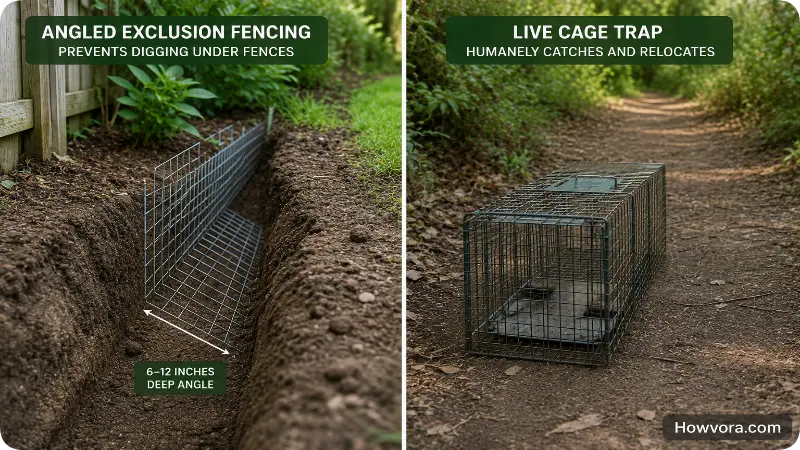
No single method removes armadillos on its own; the methods below work together, not as substitutes for each other.
| Method | Pros | Cons | Best Use Case |
| Grub/insect control | Removes the root food source; reduces repeat visits long-term | Doesn’t remove an armadillo already established nearby | Ongoing prevention |
| Exclusion fencing | Physically blocks access to gardens, foundations, or crawl spaces | Doesn’t evict animals already inside the fenced area; upfront cost | Long-term protection of a specific area |
| Live cage trapping | Removes the specific animal causing damage | Bait-based advice for other animals often fails; legal limits on relocation | A confirmed animal is actively damaging one yard |
| Repellents (castor oil, ammonia) | Cheap, fast to try | Inconsistent; washes away with rain; not a fix on its own | Short-term deterrent while other steps take effect |
| Professional wildlife removal | Handles burrows near structures; knows state-specific rules | Highest cost | Burrowing under a foundation, slab, or deck |
Recommended approach: Pair grub control with exclusion fencing for lasting prevention, then add trapping if an armadillo is already established. Repellents alone rarely solve the problem because armadillos are digging for food rather than reacting to a scent the way some pests do.
At a Glance
| Detail | Estimate |
| Difficulty | Moderate |
| Time required | Hours for setup; days to weeks for trapping |
| Estimated cost | $20–$60 DIY / $150–$500 professional |
| Skill level | Beginner–Intermediate |
| Best for | Homeowners with active digging near lawns, gardens, or foundations |
Things You’ll Need
| Item | Purpose |
| Grub/insect control product or beneficial nematodes | Removes the food source, drawing armadillos in |
| Live cage trap (roughly 10″ x 12″ x 32″) | Safely captures the animal without harming it |
| Funnel boards or wing panels | Guide the armadillo into the trap along its travel path |
| Hardware cloth or galvanized fencing | Builds a physical barrier around gardens or foundations |
| Work gloves | Protects hands when handling traps or fencing |
| Flashlight | Helps spot fresh burrows and digging at dusk or dawn |
Safety Precautions
Never handle an armadillo with bare hands. Armadillos are among the few animals besides humans known to carry the bacteria linked to leprosy (Hansen’s disease); the CDC notes the transmission risk to humans is low, but recommends avoiding direct contact and washing hands after yard work in areas with armadillo activity. Wear gloves whenever you handle a trap with an animal inside, and never try to corner or grab a fleeing armadillo; they move quickly, and their claws can scratch. If you find a burrow under a foundation or slab, stay off the excavated ground, since undermined soil can collapse.
Step-by-Step Guide
Step 1: Confirm it’s actually an armadillo
Look for shallow, cone-shaped holes 1–3 inches wide with soil pushed to one side, typically appearing in clusters overnight. Armadillo burrows are usually 7–8 inches wide with a rounded entrance noticeably larger than the tunnel ridges left by moles or the pencil-width holes voles leave. Confirming this before buying anything saves you from treating the wrong animal entirely.
Step 2: Reduce the grub and insect population
Apply a grub control product labeled for your lawn type, or use beneficial nematodes as a non-chemical option, following label directions. Timing late spring or early summer usually works best when grubs feed closest to the surface. This is the step most homeowners skip, and it’s the reason digging often returns even after a successful trapping.
Step 3: Install exclusion fencing around vulnerable areas
Bury hardware cloth or galvanized fencing 12–18 inches deep, angled outward at roughly 40 degrees, around garden beds, foundation perimeters, or crawl space openings, extending at least 12 inches above ground. The angle matters: a fence buried straight down can still be tunneled under, while an angled one blocks the animal’s digging approach.
Common mistake: Burying the fence straight down instead of angled, which armadillos can dig under far more easily.
Step 4: Set a live cage trap along the travel path
Place the trap along a fence line, burrow entrance, or well-worn path; armadillos tend to reuse the same routes nightly and use funnel boards to guide the animal in, since food bait is unreliable for this species. Check the trap every morning.
Common mistake: Placing the trap in an open patch of lawn instead of a known travel path, which is the single biggest reason DIY trapping fails.
How to Know You Did It Correctly
Success looks like no new digging holes over one to two weeks, no fresh burrow entrances forming, and any trapped animal handled according to your state’s rules. Once the grub population drops and fencing is in place, digging usually stops even before every individual armadillo is caught, since the yard is no longer worth digging in.
Expected Timeline and Results
Grub control typically shows reduced digging within one to two weeks. Exclusion fencing works immediately once installed, though only within the fenced area. Trapping success varies; some armadillos are caught in a few nights; others take two to three weeks if multiple travel routes exist. If heavy digging continues past a month despite grub control and trapping, recheck trap placement or consider that a nearby active burrow needs to be addressed directly.
Alternative Methods
Repellents (castor oil-based granules or sprays): Low cost and easy to apply, but effectiveness is inconsistent, and repellents wash away after rain, so they work best as a short-term measure while grub control and fencing take effect.
Habitat modification: Clearing brush piles and dense ground cover near the foundation removes shelter and potential burrow sites, addressing the underlying attraction rather than just the symptom, a step most competing guides leave out entirely.
One-way exclusion doors: Installed over an active, single-entrance burrow, these let an armadillo leave but not return, useful for burrows under decks or sheds where trapping access is limited. Confirm the animal has left before sealing the entrance permanently.
Common Mistakes to Avoid
Trapping without checking state regulations: Many states classify armadillos as nuisance wildlife with specific relocation-distance rules or require euthanasia instead of release. Check your state wildlife agency’s website before setting a trap, not after catching one.
Relying on bait alone: Armadillos aren’t strongly food-motivated the way raccoons or squirrels are, so bait-heavy trapping advice built for other species often fails here. Prioritize trap placement along travel paths over bait selection.
Skipping grub control: Trapping one armadillo without addressing the food source often just clears space for the next one to move in.
Burying fencing straight down: A vertical fence can still be tunneled under; angle the buried portion outward at roughly 40 degrees instead.
Troubleshooting & Common Problems
| Problem | Possible Cause | Solution |
| Trap keeps triggering with nothing inside | Trigger plate too sensitive or misaligned | Adjust sensitivity per the trap’s instructions, or reposition along a narrower section of the path |
| Digging continues despite grub treatment | The grub population hasn’t dropped yet, or a new armadillo has moved in | Wait out the full treatment window, then recheck for fresh burrow entrances |
| Armadillo still entering fenced garden | Fence isn’t buried deep enough or isn’t angled outward | Re-dig the trench to 12–18 inches and angle the buried section at roughly 40 degrees |
| No trap activity after a week | Trap placed in an open area, not a known path | Move it to a confirmed burrow entrance or worn travel route, using funnel boards |
| Burrow found under a foundation or slab | Long-term denning site, not just feeding activity | Contact a professional wildlife removal service. Excavation near structures carries a collapse risk |
Expert Tips
Set traps at dusk and check them at dawn, since armadillos are almost entirely nocturnal. Use funnel boards or fencing panels to create a narrow “chute” leading into the trap, rather than relying on open placement. This single change improves capture rates more than any bait choice. Treat for grubs in late spring or early summer, when insect populations are closest to the surface. If you spot several burrow entrances close together, they likely connect to one burrow system rather than signaling multiple animals, so one trap in the right spot may be enough.
When to Call a Professional
DIY methods are usually enough for lawn and garden damage from one or two animals. Call a professional wildlife removal service if an armadillo is burrowing under a foundation, slab, deck, or other structure, since excavation there carries collapse risk and often needs specialized equipment. It’s also worth calling one if your state prohibits DIY trapping or relocation, since a licensed operator will know the current legal requirements and handle removal compliantly. Your state wildlife agency can point you to a licensed nuisance wildlife control operator.
What to Do Next
Once digging stops, keep up a regular grub control schedule (typically annual, depending on lawn conditions) so the food source doesn’t return. Check fencing periodically for gaps or erosion that could open new entry points, and clear brush piles or dense ground cover near the foundation to limit shelter options for future animals. A quick dusk walk-through during spring and summer, when activity peaks, helps you catch new digging before it spreads.
FAQs
What time of year are armadillos most active?
Armadillos are most active in spring and early summer, when grub and insect populations near the soil surface peak, though in warmer southern climates they can stay active nearly year-round.
Do armadillos come out during the day?
They’re primarily nocturnal, most active from dusk to dawn, though cooler weather or shade can occasionally bring one out during daylight without it being unusual.
What smells keep armadillos away?
Castor oil and ammonia are common short-term deterrents, but results are inconsistent and wash away with rain, so they work best alongside grub control and fencing rather than on their own.
Can I relocate an armadillo myself?
Rules vary by state, and many restrict or prohibit relocating trapped wildlife, especially across county lines, due to disease spread and habitat concerns. Check your state wildlife agency’s regulations first.
Do armadillos carry diseases dangerous to humans?
Armadillos are among the few animals known to carry the bacteria linked to leprosy (Hansen’s disease), though the CDC notes transmission risk to humans is low. Avoiding direct contact and washing hands after yard work are reasonable precautions.
How do I know if a burrow is still active?
Lightly place loose soil or a leaf across the entrance in the evening; if it’s disturbed by morning, the burrow is likely still in use.
Final Thoughts
Getting rid of armadillos for good comes down to three things working together: removing the grubs and insects that attract them, physically blocking access with properly angled exclusion fencing, and trapping along their actual travel paths instead of relying on bait. Skip any one of these, and the same digging tends to return within weeks. Check your state’s wildlife rules before trapping or relocating, give grub treatment time to work, and call a professional if burrowing threatens a foundation. Combined, these steps produce lasting results rather than a temporary fix.
