
Snakes play an important role in the ecosystem by helping control rodents and other pests. However, many homeowners prefer to keep snakes away from areas where children, pets, and family members spend time outdoors.
The good news is that most snake problems can be solved by making your yard less attractive to them. This guide explains how to keep snakes out of your yard using practical, proven methods.
You’ll learn how to eliminate common snake attractants, modify your landscape, install barriers, and maintain a snake-resistant property over time.
Featured Snippet
To keep snakes out of your yard, remove food sources such as rodents, eliminate hiding places like brush piles and tall grass, seal gaps around structures, reduce standing water, and install snake-proof fencing where needed. Regular yard maintenance and habitat modification are the most effective long-term methods for preventing snakes from entering your property.
Before You Begin
Keeping snakes away is usually a low-to-moderate difficulty DIY project that focuses on prevention rather than removal.
DIY vs. Professional
| Option | Best For |
| DIY Prevention | Most homeowners with occasional snake sightings |
| Professional Wildlife Control | Frequent snake activity, venomous snake concerns, or severe infestations |
Prerequisites
- Ability to perform basic yard maintenance
- Access to lawn care tools
- Time for regular inspections
- Understanding of local wildlife regulations
Choosing the Right Approach
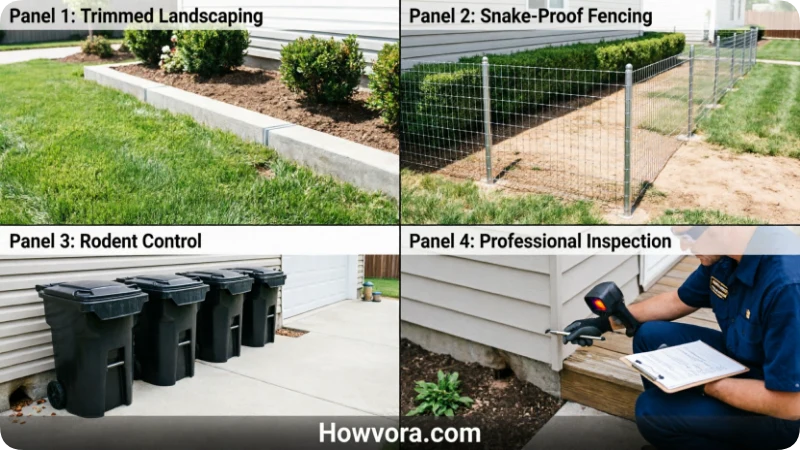
Different methods work best depending on why snakes are visiting your yard.
| Method | Pros | Cons | Best Use Case |
| Habitat Modification | Long-term, highly effective | Requires ongoing maintenance | Most homeowners |
| Rodent Control | Removes food source | May take time to see results | Yards with rodents |
| Snake Fencing | Immediate physical barrier | Higher cost | High-risk areas |
| Professional Removal | Expert assistance | More expensive | Venomous snake concerns |
| Natural Deterrents | Easy to try | Often inconsistent | Supplemental use only |
Recommended Approach
Habitat modification combined with rodent control provides the best long-term results. Snakes usually enter yards because they find food, shelter, water, or suitable hiding places. Removing these attractants addresses the root cause rather than temporarily driving snakes elsewhere.
At a Glance
| Factor | Details |
| Difficulty | Easy to Moderate |
| Time Required | Several hours initially; ongoing maintenance |
| Estimated Cost | Low to Moderate |
| Results Timeline | Days to several weeks |
| Maintenance Frequency | Weekly to monthly |
Things You’ll Need
| Item | Purpose |
| Lawn mower | Keep the grass short |
| Pruning tools | Remove overgrown vegetation |
| Gloves | Safe yard cleanup |
| Trash bags | Dispose of debris |
| Hardware cloth or mesh | Seal openings |
| Gravel or mulch alternatives | Reduce hiding areas |
| Flashlight | Inspect dark areas |
| Snake fencing (optional) | Physical barrier |
Safety Precautions
Be Careful Around Unknown Snakes
Never attempt to handle, catch, or kill a snake unless you are trained to do so. Even nonvenomous snakes may bite when threatened.
Wear Protective Gear
Use gloves, long pants, and closed-toe shoes when working in areas where snakes may hide.
Check Before Reaching
Inspect woodpiles, rocks, dense shrubs, and storage areas before placing your hands near them.
Know Local Species
Learn which snakes are common in your area and whether any venomous species are present.
Step-by-Step Guide
Step 1: Eliminate Rodent Problems
What to Do
Inspect your property for signs of rats, mice, or other rodents. Secure garbage containers, store pet food indoors, and address rodent infestations promptly.
Why It Matters
Rodents are a primary food source for many snake species.
What Success Looks Like
You notice fewer signs of rodents, such as droppings, burrows, or gnaw marks.
Common Beginner Mistakes
Ignoring minor rodent activity and focusing only on snake deterrents.
Step 2: Keep Grass and Vegetation Trimmed
What to Do
Mow your lawn regularly and trim tall weeds, shrubs, and ground cover.
Why It Matters
Tall vegetation provides shelter, shade, and hunting opportunities for snakes.
What Success Looks Like
The yard remains open and visible with fewer hiding spots.
Common Beginner Mistakes
Allowing fence lines and corners to become overgrown.
Step 3: Remove Hiding Places
What to Do
Clear brush piles, leaf piles, stacked lumber, unused equipment, and clutter.
Why It Matters
Snakes prefer protected areas where they can hide from predators and the weather.
What Success Looks Like
Fewer shaded, undisturbed locations throughout the yard.
Common Beginner Mistakes
Leaving debris piles untouched for long periods.
Step 4: Manage Water Sources
What to Do
Repair leaks, improve drainage, and eliminate standing water.
Why It Matters
Water attracts frogs, insects, and other prey that snakes may hunt.
What Success Looks Like
No persistent puddles or leaking outdoor fixtures.
Common Beginner Mistakes
Ignoring small leaks or birdbaths that are rarely cleaned.
Step 5: Seal Gaps Around Structures
What to Do
Inspect foundations, sheds, garages, and crawl spaces for openings.
Why It Matters
Snakes often use small gaps to access sheltered areas.
What Success Looks Like
Cracks and openings are sealed with appropriate materials.
Common Beginner Mistakes
Overlooking utility penetrations and door gaps.
Step 6: Store Firewood Properly
What to Do
Keep firewood elevated and away from the home.
Why It Matters
Woodpiles provide excellent snake shelter and attract rodents.
What Success Looks Like
Firewood remains dry, organized, and elevated.
Common Beginner Mistakes
Stacking wood directly on the ground.
Step 7: Install Snake Fencing if Necessary
What to Do
Install specialized fencing around vulnerable areas.
Why It Matters
A physical barrier can prevent snakes from entering.
What Success Looks Like
The fence has no gaps and extends properly into the ground.
Common Beginner Mistakes
Using fencing with openings large enough for snakes to pass through.
How to Know You Did It Correctly
Look for these signs:
- Reduced snake sightings
- Fewer rodent sightings
- Less yard clutter
- Well-maintained vegetation
- No obvious hiding places
- Improved drainage and fewer wet areas
Successful snake prevention typically results from making the yard unattractive rather than directly targeting snakes.
Expected Timeline and Results
| Timeframe | Expected Results |
| First Week | Yard cleanup and habitat reduction completed |
| Two to Four Weeks | Reduced rodent activity and fewer attractants |
| One to Three Months | Noticeable decline in snake visits |
| Ongoing | Continued prevention through maintenance |
If snakes continue appearing regularly after several months, reassess the property for overlooked attractants or consider professional assistance.
Alternative Methods
Snake Fencing
Advantages
- Immediate barrier
- Effective when installed correctly
Disadvantages
- Higher installation cost
- Requires maintenance
Professional Wildlife Management
Advantages
- Expert assessment
- Identification of hidden attractants
Disadvantages
- More expensive than DIY
Habitat Conversion
Replacing dense landscaping with more open designs can reduce snake-friendly environments.
Advantages
- Long-term effectiveness
Disadvantages
- May require landscaping investment
Common Mistakes to Avoid
Relying Solely on Repellents
Many commercial and homemade repellents provide inconsistent results.
Ignoring Rodents
Removing snakes without addressing food sources often fails.
Allowing Yard Clutter
Even small debris piles can create a suitable shelter.
Skipping Regular Maintenance
Prevention works best when maintained consistently.
Leaving Pet Food Outdoors
Food attracts rodents, which may attract snakes.
Why Many Attempts Fail
The Root Cause Is Not Addressed
People often focus on the snake rather than the habitat attracting it.
Maintenance Stops Too Soon
Yards can quickly become attractive again if upkeep declines.
Food Sources Remain Available
Rodents, insects, and amphibians continue drawing snakes.
Hidden Shelter Areas Are Missed
Areas behind sheds, under decks, and along fence lines are commonly overlooked.
Troubleshooting & Common Problems
| Problem | Possible Cause | Solution |
| Snakes keep returning | Food source remains | Improve rodent control |
| Snakes near the shed | Clutter or shelter nearby | Clean and organize the area |
| Snakes near a water feature | Prey attracted to water | Reduce attractants and improve maintenance |
| Snake sightings after cleanup | Nearby habitat remains | Inspect neighboring areas and property edges |
| Frequent sightings of large snakes | Abundant prey population | Focus on food source reduction |
Expert Tips
Create a Gravel Buffer Zone
A strip of coarse gravel around structures can reduce shelter opportunities.
Inspect Property Edges First
Many snakes enter from overgrown perimeter areas.
Elevate Outdoor Storage
Raised storage reduces hiding spaces underneath.
Use Tight-Fitting Door Sweeps
Small gaps beneath doors can provide access to garages and sheds.
Schedule Seasonal Inspections
Spring and summer are ideal times to inspect for snake attractants.
When to Call a Professional
DIY prevention is usually sufficient when:
- You see occasional snakes
- The species are nonvenomous
- The problem is limited to outdoor areas
Contact a licensed wildlife professional when:
- You suspect venomous snakes
- Snakes repeatedly enter structures
- You cannot identify the species
- You have pets or family members at increased risk
- Snake activity remains high despite prevention efforts
You can also consult local wildlife agencies or university extension services for region-specific guidance.
What to Do Next
Once your yard becomes less attractive to snakes:
- Continue mowing regularly.
- Monitor for rodent activity.
- Remove new debris promptly.
- Inspect fences and barriers seasonally.
- Check foundations and structures annually.
- Maintain good drainage.
- Reassess landscaping each season.
Consistent maintenance provides the best long-term protection.
FAQs
What smells do snakes dislike?
Many scents are marketed as snake repellents, but scientific evidence supporting consistent effectiveness is limited. Habitat modification remains more reliable.
Does mowing the lawn help keep snakes away?
Yes. Short grass reduces cover and makes the environment less attractive to snakes.
Can snakes climb fences?
Some species can climb certain fences. Snake-proof fencing must be designed specifically to prevent climbing and crawling underneath.
Do bird feeders attract snakes?
Indirectly, yes. Bird feeders can attract rodents, which may attract snakes.
Are snakes attracted to mulch?
Certain mulch types can provide shelter and moisture. Thick mulch layers may create favorable hiding spots.
How often should I inspect my yard?
Monthly inspections are generally sufficient, with additional checks during warmer seasons.
Will removing a snake solve the problem?
Not necessarily. If attractants remain, other snakes may eventually use the same habitat.
What is the most effective long-term solution?
Reducing food, water, shelter, and access points is typically the most effective long-term strategy.
Should I kill snakes in my yard?
Many snakes are beneficial and protected by local regulations. Wildlife professionals generally recommend prevention and relocation by qualified experts when necessary.
How do I keep snakes away from my house foundation?
Keep vegetation trimmed, remove debris, seal cracks, and maintain a clear perimeter around the structure.
Final Thoughts
Learning how to keep snakes out of your yard starts with understanding why snakes visit in the first place. Most snake problems can be prevented by removing food sources, eliminating hiding places, maintaining the landscape, and sealing access points. Consistent maintenance is far more effective than relying on repellents alone.
By making your property less attractive to snakes and the animals they prey on, you can create a safer, cleaner, and more enjoyable outdoor environment for your family and pets.
