Mosquitoes aren’t just an itchy nuisance; they breed fast, bite repeatedly, and can carry diseases like West Nile virus and Zika. If you’re dealing with a yard you can’t sit in, a bedroom buzz that wakes you at 2 a.m., or bites that show up faster than you can slap them away, the problem usually isn’t a lack of bug spray. It’s an unaddressed breeding source.
This guide is for homeowners and renters who want a real, lasting fix rather than a one-night spray. Whether your issue is indoors, outdoors, or both, you’ll learn how to find and eliminate breeding sites, choose the right combination of control methods, and keep mosquitoes from coming back. By the end, you’ll have a specific action plan instead of a shelf of half-used repellents.
Featured Snippet
To get rid of mosquitoes, eliminate standing water where they breed, treat your yard with larvicide and an approved outdoor insecticide, use screens and fans to block entry indoors, and apply EPA-registered repellent on skin when outdoors. Consistency over 1–2 weeks breaks the breeding cycle.
Before You Begin
Difficulty: Easy to moderate, depending on yard size and infestation level Time: 2–4 hours for initial setup, plus 10–15 minutes weekly maintenance Cost: $30–$150 for DIY supplies; $75–$400 per treatment if hiring a professional service DIY vs. Pro: Most residential mosquito problems are solvable with DIY methods. Consider a professional if you have standing water you can’t drain (a pond, wetland, or drainage easement), a severe infestation, or a mosquito-borne illness has been reported in your area.
Prerequisites:
- A walk-through of your property to spot water sources
- Basic outdoor tools (gloves, a stiff brush, a garden hose)
- Willingness to repeat mosquito-source checks weekly, since eggs can hatch within days of a rainfall
Choosing the Right Approach
There’s no single fix; different situations call for different combinations of methods. Use this table to match your situation to a strategy.
| Method | Best For | Effort | Cost | Speed of Results |
| Source reduction (removing standing water) | Any yard with containers, gutters, or drainage issues | Low–Medium | Free–$20 | 3–7 days |
| Larvicide (Bti dunks/granules) | Water features you can’t drain (ponds, rain barrels) | Low | $10–$30 | 1–2 weeks |
| Outdoor adulticide spray/fogging | Established mosquito populations before events or peak season | Medium | $20–$60 DIY, $75–$150 pro | Same day–3 days |
| Mosquito traps (CO2 or UV) | Ongoing yard reduction over a season | Low (after setup) | $60–$300 | 2–4 weeks |
| Physical barriers (screens, netting, fans) | Indoor spaces and patios | Low | $20–$100 | Immediate |
| Professional mosquito control service | Large properties, chronic problems, wooded lots | Very Low (you) | $75–$400/treatment | Same day, ongoing |
Most people get the best results by combining source reduction with one active-control method (spray, traps, or a service) rather than relying on any single tactic alone. This is the step competing guides most often skip.
At a Glance
| Details | |
| Difficulty | Easy to moderate |
| Time required | 2–4 hours initial, 10–15 min/week upkeep |
| Cost | $30–$150 DIY; $75–$400 professional |
| Skill level | Beginner-friendly |
| Best for | Homeowners, renters with outdoor access, and anyone with recurring bites or standing water nearby |
Things You’ll Need
| Item | Purpose |
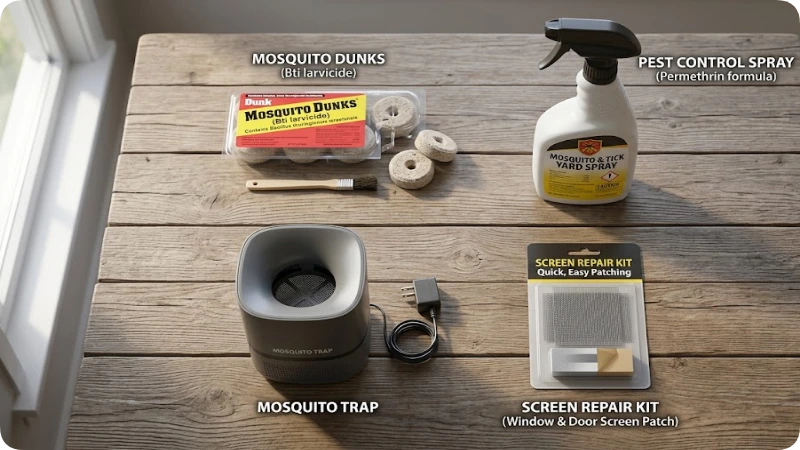
| Bti (Bacillus thuringiensis israelensis) dunks or granules | Kills mosquito larvae in standing water without harming pets, fish, or beneficial insects |
| Outdoor mosquito spray (permethrin- or pyrethrin-based) | Knocks down adult mosquitoes in vegetation and resting areas |
| Gloves and a stiff brush | Clearing debris and scrubbing containers where eggs stick to surfaces |
| Window and door screens (or repair tape) | Blocks entry into the home |
| Outdoor fan | Disrupts mosquito flight near seating areas |
| EPA-registered repellent (DEET, picaridin, or oil of lemon eucalyptus) | Personal protection when outdoors |
| Garden hose or pressure washer | Flushing gutters and clearing clogged drainage |
Safety Precautions
- Read every pesticide label before use. Application rates, protective equipment, and re-entry times vary by product and are legally binding instructions, not suggestions.
- Keep children and pets away from treated areas until the product label states it’s safe to re-enter (commonly 30 minutes to a few hours for most yard sprays).
- Never apply outdoor insecticide near ponds, streams, or open water unless the label specifically states it’s safe for aquatic environments. Many adulticides are toxic to fish and amphibians.
- Store all products in original, labeled containers, out of reach of children.
- Wear gloves when handling Bti dunks or granules and wash hands afterward, even though Bti is considered low-toxicity to humans and pets.
- If anyone in the household is pregnant, has asthma, or has chemical sensitivities, consider mechanical and source-reduction methods first and consult a doctor before using sprays indoors.
Step-by-Step Guide
Step 1: Walk your property and map standing water
Check anywhere water can collect: gutters, plant saucers, tarps, tire swings, birdbaths, clogged drains, kiddie pools, and even bottle caps. Mosquitoes can breed in as little as a bottle cap’s worth of water, and eggs can hatch in 7–10 days. Why it matters: A single overlooked container can reseed your whole yard with mosquitoes even after you treat everything else.
Step 2: Eliminate what you can drain or remove
Empty, scrub, and either store upside down or discard containers holding water. Scrubbing matters because mosquito eggs stick to the inner walls and can survive being dumped out. Common mistake: Only dumping the water without scrubbing eggs can remain viable on the container’s walls.
Step 3: Treat water you can’t remove
For features like rain barrels, ornamental ponds, or French drains, add a Bti dunk or granules according to the label. Bti targets larvae specifically and is safe for fish, pets, and pollinators.
Step 4: Fix drainage and clear gutters
Clean clogged gutters and redirect downspouts so water doesn’t pool. Fill in low spots in the yard where water collects after rain.
Step 5: Treat vegetation and resting areas
Apply an outdoor mosquito spray to shaded vegetation, under decks, and other resting spots, following label directions for concentration and reentry time. Focus on shady, humid areas where mosquitoes rest during the heat of the day.
Step 6: Seal indoor entry points
Repair torn screens, install door sweeps, and make sure screens fit snugly in window frames. Even a small screen gap is enough for mosquitoes to enter.
Step 7: Add mechanical and personal protection
Set up an outdoor fan near seating areas (mosquitoes are weak fliers and struggle against airflow), place traps if you’re targeting an ongoing population, and apply EPA-registered repellent to skin when spending time outside.
Step 8: Set a weekly maintenance routine
Recheck containers and gutters weekly, especially after rain, and reapply Bti or sprays according to label intervals (commonly every 30 days for larvicide and per product for adulticides).
How to Know You Did It Correctly
- You no longer find standing water anywhere on your property during a walk-through.
- Bites and mosquito sightings drop noticeably within 1–2 weeks
- Fewer mosquitoes are resting on shaded vegetation when you check in the early morning or evening
- Indoor mosquito encounters stop once screens and entry points are sealed
Expected Timeline and Results
Source reduction shows results within days, since you’re removing places for mosquitoes to lay eggs. Larvicide takes about 1–2 weeks to break the breeding cycle, since it targets larvae rather than adults already flying. Outdoor sprays reduce adult populations within hours to a few days but need reapplication every few weeks. Full control, where your yard is consistently comfortable, typically takes 2–3 weeks of combined effort, with ongoing weekly maintenance afterward.
Alternative Methods
- Natural repellent plants (citronella, lemongrass, marigolds): These have a mild, localized effect at best and work better as a supplement to other methods than as a standalone solution.
- Bug zappers: Popular but largely ineffective against mosquitoes specifically, studies show they kill far more beneficial, non-biting insects than mosquitoes.
- Essential oil diffusers can offer short-term personal protection in a small area, but don’t address the yard-wide population.
- Mosquito misting systems: Automated yard-wide spray systems offer convenience and strong control but come with a higher upfront cost ($1,500–$5,000 installed) and require careful attention to chemical use around kids, pets, and pollinators.
Common Mistakes to Avoid
- Treating only for adult mosquitoes while ignoring larvae in standing water, which lets the population rebound within days
- Dumping water from containers without scrubbing the eggs off the walls
- Spraying once and expecting lasting control, most products need reapplication every 2–4 weeks
- Overlooking small water sources like saucers, toys, and tarp folds
- Applying repellent to skin under clothing instead of exposed skin only, which wastes product and reduces effectiveness
- Using citronella candles as a sole defense at a large gathering, where they cover only a few feet of protection
Troubleshooting & Common Problems
| Problem | Cause | Solution |
| Mosquitoes persist despite spraying | The larvae source wasn’t addressed | Recheck for standing water and add larvicide |
| Bites keep happening indoors | Gaps in screens or door seals | Inspect and repair screens, add door sweeps |
| Treatment wears off quickly | Rain washed away the spray, or the reapplication interval was skipped | Reapply after heavy rain and follow label reapplication schedule |
| Mosquitoes concentrated in one yard area | Undetected microhabitat (tarp, clogged drain, dense shade) | Do a slower, more thorough walk-through focusing on shaded, damp spots |
| Neighbors’ yard seems to be the source | Breeding site on adjacent property | Politely inform neighbors; mosquitoes can travel several hundred feet, so treat your own yard’s edges more heavily |
Expert Tips
- Treat gutters even if they look dry. A few tablespoons of trapped water after rain is enough to breed mosquitoes.
- Apply larvicide before a rainy stretch, not after, since eggs already present will hatch as soon as water appears.
- Position outdoor fans to blow across seating areas rather than upward. Mosquitoes fly close to the ground and are most affected by horizontal airflow.
- If using a spray service, ask specifically whether they treat the underside of leaves and shaded resting areas, not just open lawn, where adult mosquitoes actually rest during the day.
When to Call a Professional
Call a licensed pest control service if you have a wooded or large property that’s hard to fully inspect, a chronic infestation that doesn’t improve after 2–3 weeks of consistent DIY effort, a water feature or wetland you can’t treat yourself, or if mosquito-borne illness has been reported in your area and you want a stronger, monitored treatment plan.
What to Do Next
Start with the property walk-through in Step 1 this week, since finding and removing breeding sources gives you the fastest visible results. Set a recurring weekly reminder to recheck for standing water and reapply larvicide or spray according to your product’s label. If bites continue after three weeks of consistent effort, that’s your signal to bring in a professional.
FAQs
How fast do mosquitoes go away after treatment?
Adult mosquito numbers typically drop within a few days of spraying, but full control, including breaking the breeding cycle, takes about 1–2 weeks.
Do mosquito-repelling plants actually work?
They offer mild, localized protection at best and work best combined with source reduction and other methods, not as a standalone fix.
Why do I keep getting bitten even after spraying my yard?
The most common reason is an unaddressed source of larvae. Sprays kill adult mosquitoes but don’t stop new ones from hatching in standing water.
Is it safe to use mosquito spray around pets?
Most permethrin-based sprays are toxic to cats specifically, even after drying, so check the label and keep pets off treated areas until it’s fully dry or the label-specified time has passed.
How often should I reapply mosquito treatment?
Larvicide typically needs reapplication every 30 days; outdoor adulticide sprays usually need reapplication every 2–4 weeks or after heavy rain.
Can I get rid of mosquitoes without chemicals?
Yes, through consistent source reduction, screens, fans, and traps, though full chemical-free control takes more ongoing effort and works best on smaller properties.
Do bug zappers help with mosquitoes?
Not much, they’re more effective at killing other flying insects than mosquitoes, which aren’t strongly attracted to UV light.
Why does one part of my yard have more mosquitoes than the rest?
Mosquitoes rest in shaded, humid areas during the day, so dense shrubs, tall grass, and shaded corners often harbor more of them than open lawn.
Final Thoughts
Lasting mosquito control comes down to breaking the breeding cycle, not just knocking down the mosquitoes you can see. Start with source reduction, layer in larvicide or spray where needed, seal up your home’s entry points, and stay consistent with weekly checks. Do that for two to three weeks, and most yards see a dramatic, lasting improvement.