Quick Answer
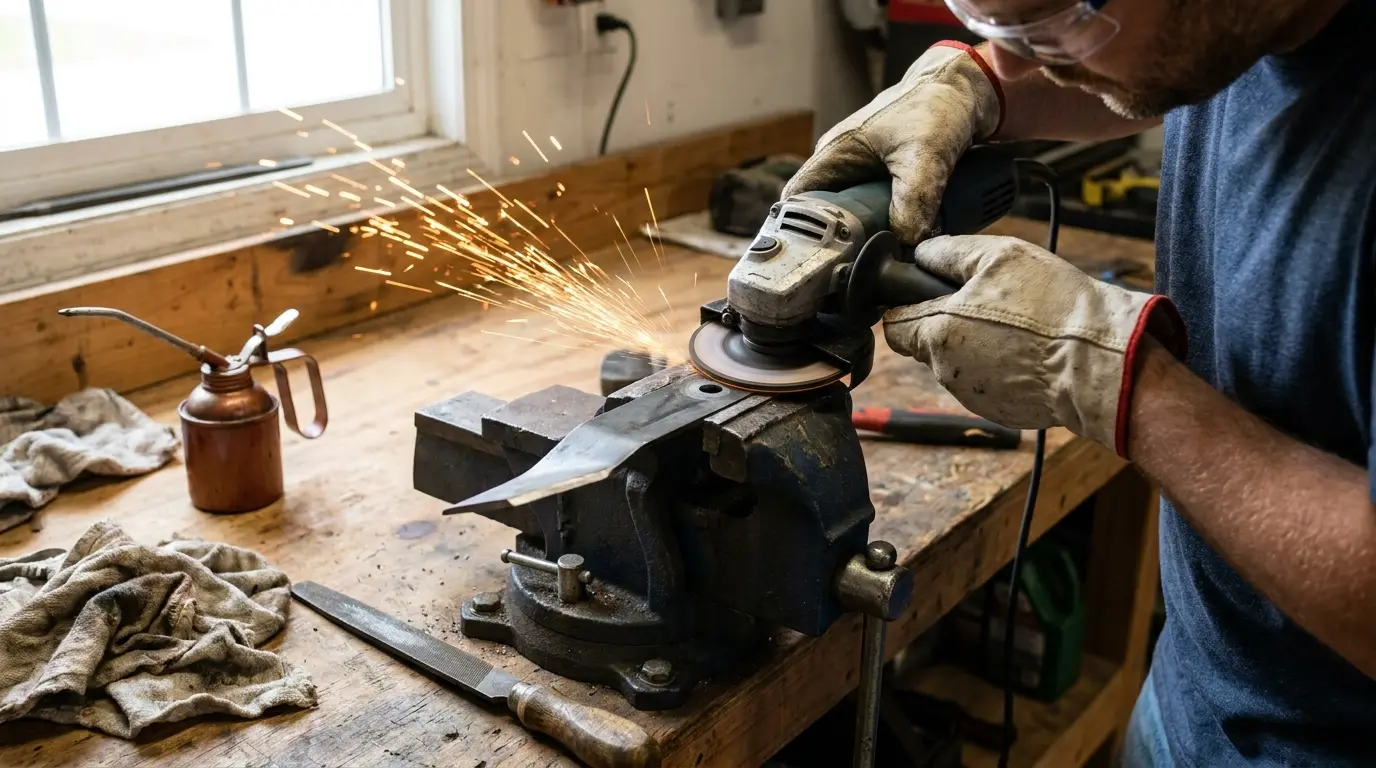
The most effective way to sharpen a lawn mower blade is to remove it, clean it, secure it, and sharpen the cutting edge with a metal file, angle grinder, or bench grinder while keeping the original blade angle. Most blades only need sharpening when they become dull, damaged, or after roughly 20–25 hours of mowing. A sharp mower blade should create clean cuts on grass without leaving torn, brown-looking tips.
Why Sharpening Lawn Mower Blades Matters
A lawn mower does not cut grass like scissors. The blade spins at high speed and slices through grass using a sharp cutting edge. When that edge becomes dull, the mower may still cut, but the results are usually worse.
A dull blade tends to:
- Tear grass instead of making clean cuts
- Leave ragged or brown grass tips
- Require more passes to achieve an even lawn
- Put additional strain on the mower engine
- Increase fuel or battery use
A properly maintained blade helps your mower work efficiently and keeps your lawn looking healthier.
Signs Your Lawn Mower Blade Needs Sharpening
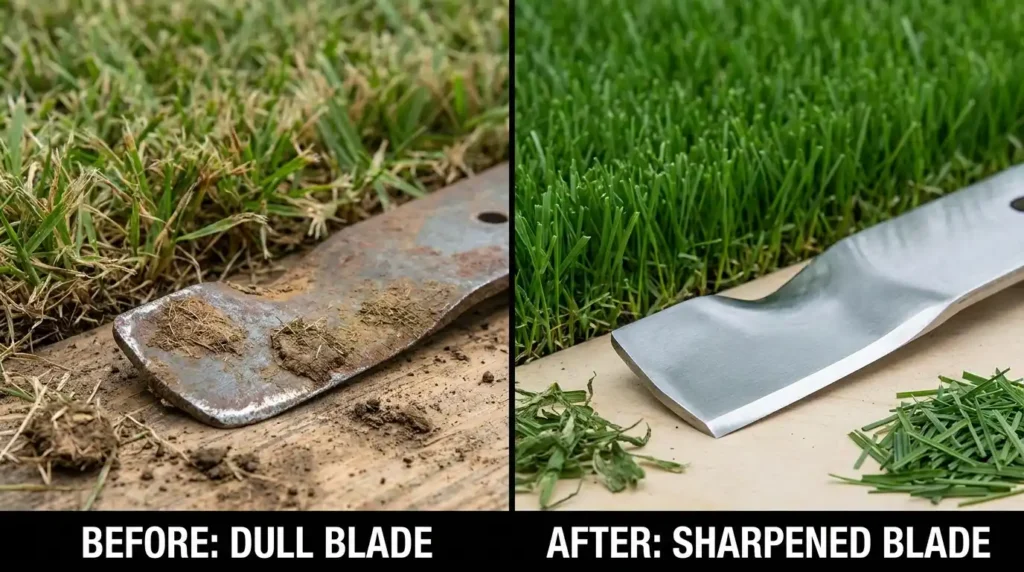
Many homeowners wait until the mower performance becomes noticeably worse, but checking the blade regularly can prevent poor cutting results.
Grass Has Torn or Brown Tips
A sharp blade creates a clean cut across the grass blade. A dull blade damages the grass, leaving uneven, shredded ends.
After mowing, look closely at the grass:
- Clean, even tips: Blade is likely sharp enough.
- White, brown, or ragged tips: Blade may need sharpening.
The Lawn Looks Uneven After Mowing
If certain areas look taller than others despite mowing at the same height setting, the blade may have:
- A dull cutting edge
- Uneven wear
- A balance problem
- Damage from hitting objects
The Mower Requires More Effort
A dull blade forces the engine to work harder, especially when cutting thick or wet grass.
Possible signs include:
- Slower cutting speed
- The mower bogging down
- Reduced battery runtime on electric models
The Blade Edge Feels Rounded
A new or sharp mower blade has a defined cutting edge. A dull blade usually has a rounded, worn edge that no longer slices efficiently.
Turn the mower off completely, disconnect power, and inspect the blade carefully before touching it.
Tools Needed to Sharpen a Lawn Mower Blade
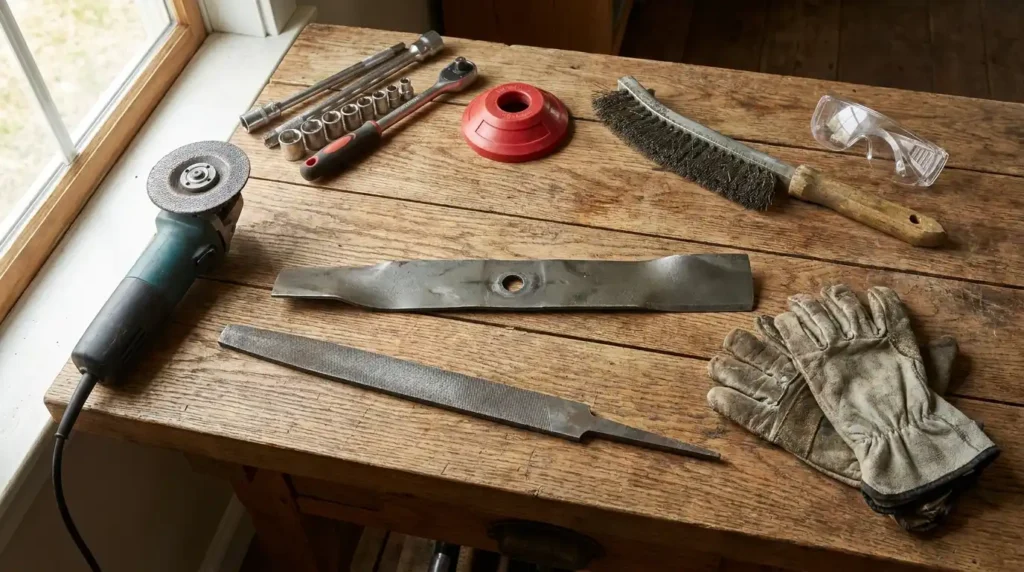
You do not need expensive equipment to sharpen a mower blade. The right tool depends on how often you sharpen blades and how much damage the blade has.
Metal File
A hand file is one of the safest options for beginners.
Advantages:
- Low cost
- Good control
- Less chance of removing too much metal
- Works well for routine sharpening
Best for: Slightly dull blades and regular maintenance.
Angle Grinder
An angle grinder is faster and works well for blades with small chips or heavy dulling.
Advantages:
- Removes metal quickly
- Saves time
- Useful for frequent maintenance
Disadvantages:
- Easier to over-sharpen
- Can change the blade shape if used incorrectly
Use light pressure and avoid overheating the metal.
Bench Grinder
A bench grinder is useful if you maintain multiple blades or sharpen frequently.
Advantages:
- Fast sharpening
- Consistent results when used properly
Disadvantages:
- Removes metal quickly
- Requires more control
Additional Helpful Tools
Other useful items include:
- Socket wrench for removing the blade
- Blade balancer for checking balance
- Wire brush for cleaning debris
- Vise or clamp for holding the blade
- Safety gloves and eye protection
How to Sharpen a Lawn Mower Blade Step by Step
1. Disconnect Power and Prepare the Mower
Safety comes first before touching the blade.
For a gas mower:
- Turn off the engine.
- Disconnect the spark plug wire.
- Move the wire away from the plug.
For an electric mower:
- Unplug the mower.
- Remove the battery if applicable.
Wear gloves because mower blades can remain sharp even when dull.
2. Remove the Lawn Mower Blade
Removing the blade gives you better access and allows you to inspect it properly.
Steps:
- Tilt the mower carefully.
- Place a block of wood between the blade and mower deck to stop movement.
- Use a socket wrench to loosen the blade bolt.
- Remove the blade.
Before removing it, take a photo or mark the blade position so you reinstall it correctly.
Inspect the Blade
Check for:
- Cracks
- Deep dents
- Large chips
- Bending
- Excessive wear
Sharpening cannot fix structural damage. Replace the blade if it is cracked or severely damaged.
3. Clean the Blade
Grass, mud, and rust can hide the actual condition of the cutting edge.
Use:
- A wire brush
- A scraper
- A stiff brush
Remove buildup from both sides of the blade.
A clean blade makes it easier to maintain the correct sharpening angle.
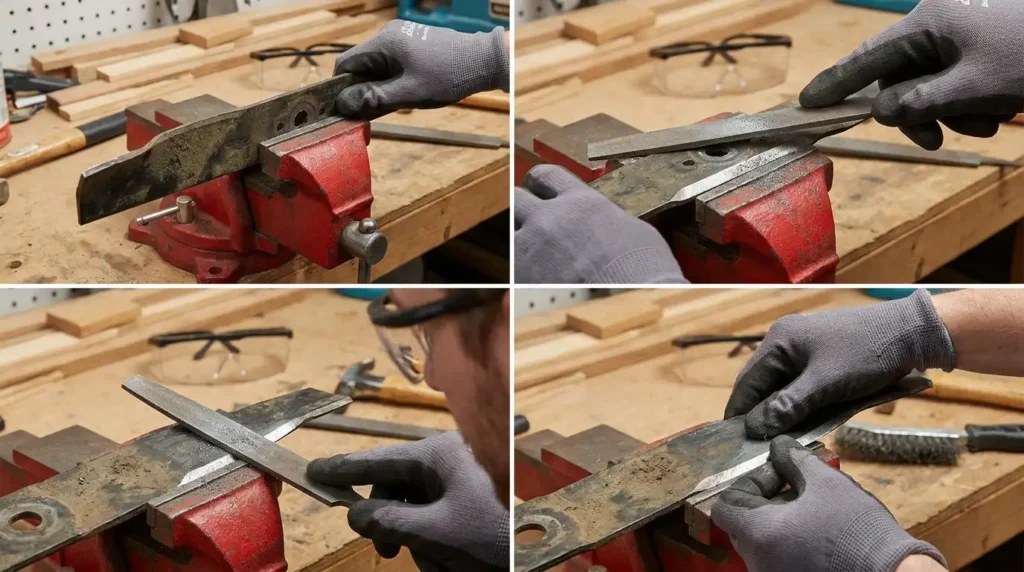
4. Secure the Blade Before Sharpening
Never hold the blade in your hand while sharpening.
Place it in:
- A bench vise
- A sturdy clamp
- A blade-holding tool
The cutting edge should face upward and be easy to access.
A stable blade helps you create a smoother, more even edge.
5. Sharpen the Blade Edge
The goal is not to create a razor blade. The goal is to restore the original cutting edge.
Using a File
- Hold the file at the same angle as the existing bevel.
- Push the file along the cutting edge in one direction.
- Continue until the damaged or rounded edge disappears.
Using an Angle Grinder
- Match the existing blade angle.
- Use light passes across the edge.
- Avoid staying in one spot too long.
What to Look For
Stop sharpening when:
- The edge looks smooth
- Small nicks disappear
- The cutting surface is even
- The blade has a consistent bevel
Avoid grinding away unnecessary metal.
How Sharp Should a Lawn Mower Blade Be?
A common mistake is trying to make a mower blade as sharp as a knife.
A mower blade should have:
- A clean cutting edge
- A smooth bevel
- Enough thickness to resist damage
A slightly durable edge is better than an extremely thin one because mower blades regularly contact tough grass, dirt, and small debris.
6. Balance the Blade
Blade balance is just as important as sharpness.
An unbalanced blade can cause:
- Excessive vibration
- Strange noises
- Stress on mower components
How to Check Balance
Place the blade on:
- A blade balancer, or
- A nail/screw fixed horizontally
If one side drops lower, that side is heavier.
Remove a small amount of metal from the heavier side until the blade sits evenly.
7. Reinstall the Blade
Install the blade in the same direction it was removed.
Make sure:
- The correct side faces downward
- The bolt is tightened securely
- The blade sits flat against the mounting area
Reconnect the spark plug wire or battery only after the blade is fully installed.
How to Sharpen a Lawn Mower Blade Without Removing It
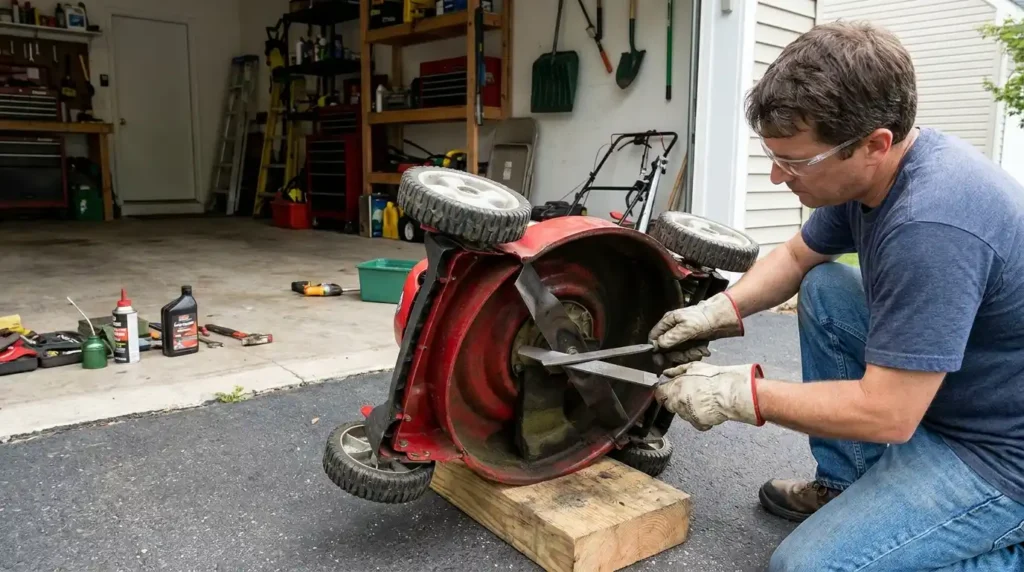
It is possible to sharpen a mower blade without removing it, but it has limitations.
This method is mainly useful for quick maintenance when the blade is only slightly dull.
Steps:
- Disconnect the mower from power.
- Tilt the mower safely.
- Block the blade so it cannot spin.
- Use a mower blade sharpening tool or file.
- Follow the existing cutting angle.
Advantages:
- Faster
- No need to remove the blade
- Useful for minor touch-ups
Disadvantages:
- Harder to inspect damage
- Difficult to balance afterward
- Less control over sharpening consistency
For a blade that has visible damage or heavy dulling, removing it is the better approach.
How Often Should You Sharpen Lawn Mower Blades?
There is no universal schedule because mowing conditions vary.
Many homeowners sharpen blades about once or twice per mowing season, while heavier use may require more frequent maintenance.
You may need sharpening sooner if you:
- Mow large areas frequently
- Cut thick grass
- Hit rocks or sticks
- Mow sandy soil
Instead of relying only on a calendar, check the quality of your grass cut.
Are Lawn Mower Blades Worth Sharpening?
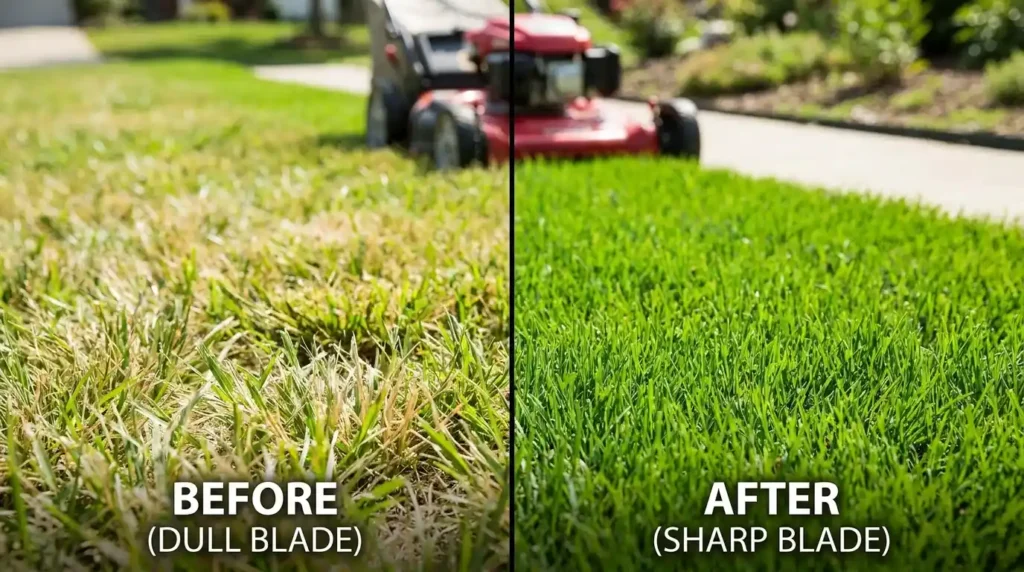
In most cases, yes. Sharpening is cheaper and faster than replacing a blade that is still in good condition.
Sharpening makes sense when the blade:
- Is only dull
- Has minor chips
- Is not bent
- Has enough metal remaining
Replacement is better when the blade:
- Has cracks
- Is severely bent
- Has major missing sections
- Has become too thin from repeated sharpening
A damaged blade can affect mower safety and cutting performance.
Common Lawn Mower Blade Sharpening Mistakes
Sharpening at the Wrong Angle
Changing the factory bevel can reduce cutting performance.
Fix: Follow the existing angle instead of creating a new one.
Removing Too Much Metal
Aggressive grinding can weaken the blade.
Fix: Use light passes and stop once the edge is restored.
Forgetting to Balance the Blade
A sharp but unbalanced blade can still cause problems.
Fix: Always check balance after sharpening.
Installing the Blade Upside Down
A blade installed incorrectly may fail to cut properly.
Fix: Mark the blade position before removal.
Troubleshooting Lawn Mower Blade Problems
Problem: Mower Vibrates After Sharpening
Likely cause: Blade imbalance or incorrect installation.
Solution: Remove the blade, check balance, and reinstall it correctly.
Problem: Grass Still Looks Torn After Sharpening
Likely cause: The blade is still dull or the cutting edge was damaged.
Solution: Inspect the edge and sharpen again while maintaining the original angle.
Problem: Blade Becomes Dull Quickly
Likely cause: Contact with hard materials such as rocks, dirt, or debris.
Solution: Clear the mowing area before cutting and inspect the blade regularly.
Problem: Mower Makes Strange Noises
Likely cause: Loose blade, bent blade, or imbalance.
Solution: Turn off the mower, inspect the blade, and tighten or replace parts if needed.
FAQ
What is the best tool for sharpening a lawn mower blade?
For beginners, a metal file is usually the easiest and safest option. Angle grinders and bench grinders are faster but require more control.
Can I sharpen a lawn mower blade with a drill?
Yes, drill-powered sharpening attachments can help maintain a blade, but they may not handle heavily damaged edges or replace proper balancing.
How do I know if my mower blade is sharp enough?
The blade should have a smooth, even cutting edge without large chips or a rounded edge. It does not need to be razor sharp.
Can a rusty lawn mower blade be sharpened?
Light surface rust can usually be cleaned and sharpened. Severe rust damage, cracks, or thinning means replacement is safer.
How long does sharpening a mower blade take?
Most homeowners can complete the process in around 20–45 minutes, including removing, sharpening, balancing, and reinstalling the blade.
Conclusion
A properly sharpened lawn mower blade helps your mower cut cleaner, work more efficiently, and leave your lawn looking healthier. The key is maintaining the original cutting angle, removing only enough metal to restore the edge, and checking blade balance before reinstalling it.
Inspect the blade whenever your grass sta