
June bugs, also called June beetles, are common lawn and garden pests that emerge in late spring and summer. Adult beetles are attracted to lights and can damage leaves, while their larvae (white grubs) feed on grass roots beneath the soil.
Learning how to get rid of June bugs helps protect your lawn, garden plants, and outdoor spaces from ongoing damage.
By following the steps in this guide, you can reduce current infestations, prevent future outbreaks, and keep your yard healthy throughout the season.
Featured Snippet Answer
To get rid of June bugs, reduce outdoor lighting, remove adult beetles by hand, use traps when appropriate, and treat lawns for white grubs if they are present. Maintaining a healthy lawn, watering properly, and monitoring for damage helps prevent future infestations and breaks the June bug life cycle.
Before You Begin

June bug control works best when you target both adult beetles and their underground larvae. Eliminating only the adults may reduce visible activity, but it often does not stop future infestations.
| Factor | Details |
| Difficulty | Easy to Moderate |
| Time Required | Several days to several weeks |
| Estimated Cost | Low to Moderate |
| DIY Friendly | Yes |
| Professional Help Needed | Only for severe infestations |
Choosing the Right Approach
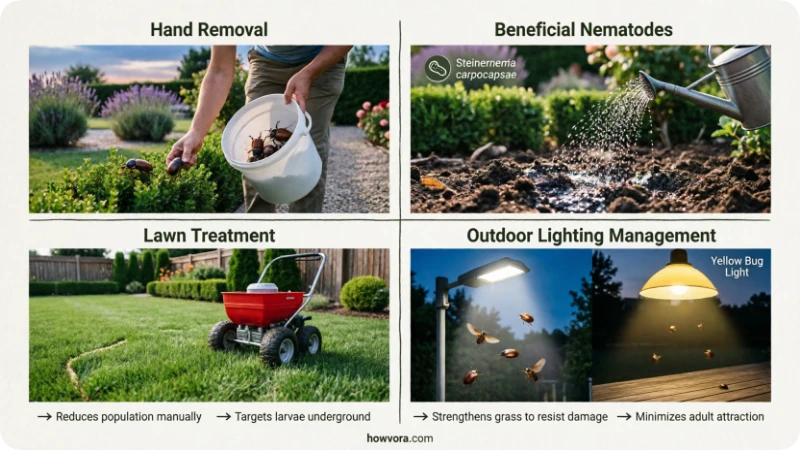
Different situations require different control methods.
| Method | Pros | Cons | Best For |
| Hand Removal | Low cost, immediate results | Labor intensive | Small infestations |
| Light Reduction | Prevents attraction | Does not remove existing beetles | Prevention |
| Traps | Helps monitor activity | May attract more beetles if poorly placed | Moderate infestations |
| Beneficial Nematodes | Targets grubs naturally | Requires proper soil conditions | Lawn protection |
| Chemical Grub Treatments | Effective against heavy grub populations | Must follow label directions carefully | Severe infestations |
| Professional Pest Control | Comprehensive treatment | Higher cost | Large recurring infestations |
For most homeowners, combining adult control with grub management provides the most reliable results.
At a Glance
| Category | Details |
| Difficulty | Easy to Moderate |
| Time | 1–8 Weeks |
| Cost | $10–$200+ |
| Best Season | Late Spring Through Early Fall |
| Success Rate | High When Both Adults and Grubs Are Addressed |
Things You’ll Need
| Item | Purpose |
| Garden gloves | Safe beetle removal |
| Bucket of soapy water | Kill collected beetles |
| Flashlight | Night inspections |
| Lawn shovel | Check for grubs |
| Beneficial nematodes | Natural grub control |
| Grub treatment (if needed) | Severe infestations |
| Outdoor light timers | Reduce attraction |
Safety Precautions
- Follow all pesticide label instructions carefully.
- Wear gloves when handling treatments.
- Keep children and pets away from treated areas until safe.
- Avoid applying products before heavy rain unless specified.
- Store pest control products securely.
Step-by-Step Guide
Step 1: Confirm You Have June Bugs
Inspect your yard during the evening. Adult June bugs are active after sunset and often gather around porch lights, windows, and illuminated landscaping.
Why It Matters
Proper identification prevents wasting time on ineffective treatments designed for other insects.
What Success Looks Like
You observe brown or reddish-brown beetles flying around lights or feeding on vegetation.
Common Beginner Mistakes
- Assuming every beetle is a June bug.
- Ignoring signs of grub damage in the lawn.
Step 2: Reduce Outdoor Lighting
Replace bright white bulbs with warm-colored bulbs and turn off unnecessary exterior lights at night.
Why It Matters
June bugs are strongly attracted to light sources.
What Success Looks Like
Fewer beetles gather around doors, patios, and windows.
Common Beginner Mistakes
- Leaving landscape lighting on all night.
- Installing brighter bulbs during peak June bug season.
Step 3: Remove Adult Beetles
Early in the morning or evening, shake beetles from plants into a bucket of soapy water.
Why It Matters
Removing adults reduces mating and egg-laying opportunities.
What Success Looks Like
Visible beetle numbers decrease over time.
Common Beginner Mistakes
- Waiting until populations become very large.
- Removing beetles without destroying them.
Step 4: Inspect for White Grubs
Cut a small section of turf and examine the soil beneath.
Why It Matters
The larval stage causes the most lawn damage.
What Success Looks Like
You identify whether grubs are present and determine their population level.
Common Beginner Mistakes
- Treating adults only.
- Ignoring thinning or dying patches of grass.
Step 5: Treat Grubs if Necessary
Apply beneficial nematodes or an appropriate grub-control product according to label directions.
Why It Matters
Breaking the life cycle prevents future adult populations.
What Success Looks Like
Fewer grubs are found during follow-up inspections.
Common Beginner Mistakes
- Applying treatments at the wrong time.
- Failing to water products into the soil when required.
Step 6: Improve Lawn Health
Mow at the recommended height, water deeply but infrequently, and maintain proper fertilization.
Why It Matters
Healthy lawns tolerate grub feeding better and recover faster.
What Success Looks Like
Grass remains dense and resilient.
Common Beginner Mistakes
- Overwatering.
- Cutting grass too short.
How to Know You Did It Correctly
Look for these signs:
- Fewer beetles around outdoor lights.
- Reduced feeding damage on plants.
- Healthy, green lawn growth.
- Fewer grubs were found during soil inspections.
- No new dead patches developing in turf.
Expected Timeline and Results
| Timeframe | Expected Results |
| 1 Week | Reduced adult activity |
| 2–4 Weeks | Noticeable decline in beetle populations |
| 1–3 Months | Reduced grub populations |
| Following Season | Significant decrease in recurring infestations |
Alternative Methods
Natural Controls
Advantages:
- Environmentally friendly
- Targets pests without broad pesticide use
Disadvantages:
- Slower results
Best For:
- Organic lawn care programs
Chemical Controls
Advantages:
- Fast action
- Effective against severe infestations
Disadvantages:
- Requires careful application
Best For:
- Large grub populations are causing lawn damage
Common Mistakes to Avoid
- Ignoring the grub stage.
- Using traps too close to valuable plants.
- Overwatering the lawn.
- Applying treatments at the wrong season.
- Expecting overnight elimination.
- Failing to reduce outdoor lighting.
Why Many Attempts Fail
Many homeowners focus only on adult June bugs. Since larvae live underground for much of their life cycle, untreated grubs eventually mature into new adults. Another common problem is poor timing, as grub treatments are most effective during specific stages of development.
Troubleshooting & Common Problems
| Problem | Possible Cause | Solution |
| Beetles keep returning | Nearby breeding areas | Continue integrated control methods |
| Brown lawn patches | Grub feeding damage | Inspect soil and treat grubs |
| Traps seem ineffective | Poor placement | Move traps away from plants |
| New beetles appear nightly | Outdoor lighting attraction | Reduce or modify lighting |
| Lawn recovery is slow | Root damage | Improve watering and lawn care |
Expert Tips
- Check lawns for grubs before applying treatments.
- Install motion-activated lighting instead of constant lighting.
- Water beneficial nematodes immediately after application.
- Monitor lawns annually for early signs of infestation.
- Treat small grub populations before they become severe.
When to Call a Professional
DIY methods are usually sufficient for small and moderate infestations.
Consider professional pest control when:
- Large sections of lawn are dying.
- Grub populations remain high after treatment.
- Multiple seasons of infestations occur.
- Damage affects valuable landscaping.
Professionals can identify the pest species, evaluate lawn conditions, and implement targeted treatment plans.
What to Do Next
After reducing June bug activity:
- Continue monitoring your lawn.
- Inspect soil annually for grubs.
- Maintain healthy grass growth.
- Limit unnecessary nighttime lighting.
- Address new infestations quickly.
Preventive maintenance is often easier and less expensive than treating a major outbreak.
FAQs
What attracts June bugs to my yard?
Outdoor lighting, moist soil, healthy turf, and suitable egg-laying areas attract June bugs.
Do June bugs bite humans?
No. June bugs do not bite or sting people.
Are June bugs harmful to lawns?
Adult beetles cause minor plant damage, but grubs can severely damage grass roots.
What kills June bug grubs naturally?
Beneficial nematodes and certain naturally occurring soil organisms can help reduce grub populations.
When should I treat for grubs?
Treatment timing depends on local conditions, but younger grubs are generally easier to control than mature ones.
Why are June bugs attracted to lights?
They use light as a navigation cue and are naturally drawn to bright outdoor lighting.
Can I get rid of June bugs without pesticides?
Yes. Hand removal, light reduction, healthy lawn practices, and beneficial nematodes can provide effective control.
How long do June bugs live?
Adult June bugs typically live only a few weeks, but the complete life cycle can take one to several years, depending on the species.
Final Thoughts
Learning how to get rid of June bugs requires addressing both the flying adults and the underground grubs that eventually replace them. By reducing outdoor lighting, removing adult beetles, monitoring your lawn, and treating grubs when necessary, you can significantly reduce infestations and protect your yard in the long term. Consistent monitoring and preventive lawn care are the keys to lasting success.
