
Deodorant stains can leave white marks, yellow discoloration, or stiff residue on shirts, blouses, workout gear, and dark clothing. These stains often develop when deodorant ingredients mix with sweat and fabric fibers. The good news is that most deodorant stains can be removed at home using the right method for your fabric and stain type.
By following this guide, you’ll learn how to remove deodorant stains safely, choose the best cleaning method, avoid damaging your clothes, and prevent the stains from returning.
Featured Snippet
To remove deodorant stains, gently brush away surface residue, apply a stain remover or a mixture of mild dish soap and warm water, let it sit for 10 to 15 minutes, then wash according to the garment’s care label. For stubborn yellow stains, use oxygen bleach on color-safe fabrics. Always test any cleaning solution on a hidden area first.
Before You Begin
Removing deodorant stains is usually a beginner-friendly task, but success depends on the fabric type and how long the stain has been present.
| Factor | Details |
| Difficulty | Easy |
| Time | 15 to 45 minutes (plus washing time) |
| Estimated Cost | Low |
| DIY or Professional | DIY for most stains; professional cleaning for delicate fabrics or valuable garments |
Before starting:
- Read the garment’s care label.
- Identify whether the stain is white residue or yellow discoloration.
- Treat the stain before machine drying whenever possible.
- Test cleaning products on a hidden area.
Choosing the Right Approach
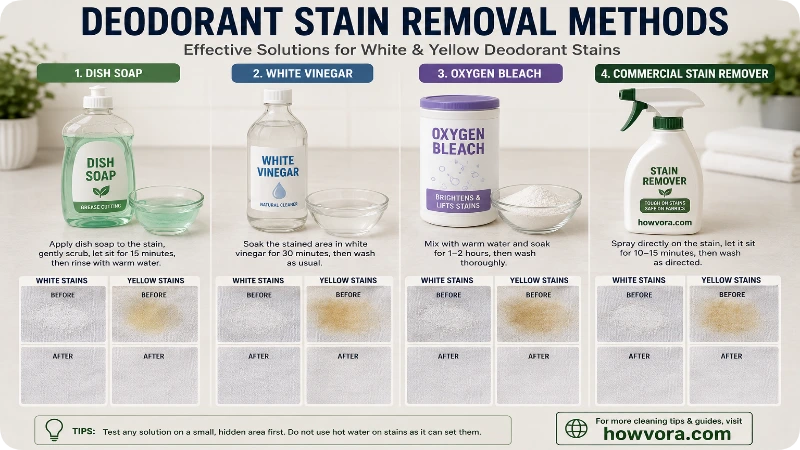
Different deodorant stains require different treatments.
| Method | Pros | Cons | Best For |
| Mild dish soap | Safe, inexpensive | May require repeat treatments | Fresh stains |
| White vinegar | Helps dissolve mineral buildup | Strong odor until washed | White residue |
| Oxygen bleach | Effective on yellow stains | Not suitable for wool or silk | Older stains on washable fabrics |
| Commercial stain remover | Convenient | Costs more | Heavy or repeated stains |
| Professional dry cleaning | Safest for delicate garments | Higher cost | Silk, wool, structured clothing |
Recommended Approach
For most washable clothes, start with mild dish soap or a stain remover. If yellow stains remain after washing, use oxygen bleach according to the product instructions. Reserve stronger treatments only when gentler methods do not work.
At a Glance
| Item | Details |
| Difficulty | Easy |
| Total Time | 30 to 60 minutes |
| Drying Time | Air dry until stain is gone |
| Estimated Cost | Under $10 for most supplies |
Things You’ll Need
| Item | Purpose |
| Soft-bristled brush | Loosen residue |
| Mild dish soap | Break down oils |
| White vinegar | Dissolve buildup |
| Oxygen bleach | Remove yellow stains |
| Soft cloth or sponge | Apply cleaning solution |
| Laundry detergent | Wash garment |
| Warm water | Rinse and soak |
| Clean towel | Blot excess moisture |
Safety Precautions
- Always follow the garment care label.
- Never mix bleach with vinegar or ammonia.
- Test cleaning products on an inconspicuous area first.
- Avoid using chlorine bleach on colored fabrics unless the care label specifically allows it.
- Air dry until you’re sure the stain is gone. Heat from a dryer can permanently set remaining stains.
Step-by-Step Guide
Step 1: Identify the Type of Stain
Look closely at the affected area.
- White, chalky marks usually come from deodorant residue.
- Yellow or brown stains often result from sweat and deodorant ingredients reacting together.
Why it matters
Different stains respond better to different treatments.
Success looks like
You know which cleaning method to use.
Common beginner mistake
Using harsh bleach immediately without identifying the stain.
Step 2: Remove Loose Residue
Use a soft brush, a clean cloth, or gently rub the fabric together to remove surface buildup.
Why it matters
Removing loose residue allows cleaning products to reach the fabric fibers.
Success looks like
Visible powder or residue has been removed.
Common beginner mistake
Scrubbing aggressively and damaging delicate fabric.
Step 3: Apply the Cleaning Solution
Choose one:
- A few drops of mild dish soap mixed with warm water
- White vinegar for white residue
- Commercial stain remover
- Oxygen bleach solution for stubborn yellow stains
Let the solution sit for 10 to 15 minutes.
Why it matters
Time allows the cleaner to loosen stain-causing deposits.
Success looks like
The stain begins to fade before washing.
Common beginner mistake
Let the solution dry completely on the fabric.
Step 4: Gently Agitate the Fabric
Lightly rub the stained area with your fingers, a soft cloth, or a soft brush.
Why it matters
Gentle agitation lifts loosened residue without damaging fibers.
Success looks like
The stain appears lighter.
Common beginner mistake
Using excessive force.
Step 5: Wash According to the Care Label
Wash the garment using the warmest water recommended on the label.
Why it matters
Proper washing removes the remaining residue.
Success looks like
The stain is no longer visible after washing.
Common beginner mistake
Using water that is hotter than recommended.
Step 6: Air Dry and Inspect
Let the garment air dry completely.
Why it matters
Heat can permanently set stains that remain.
Success looks like
No visible white or yellow marks remain.
Common beginner mistake
Machine drying before checking the results.
How to Know You Did It Correctly
You successfully removed the deodorant stain if:
- No visible residue remains.
- The fabric color appears even.
- There is no stiff texture.
- The stain does not reappear after drying.
- The garment smells fresh.
Expected Timeline and Results
| Stage | Expected Result |
| After pretreatment | The stain begins to loosen |
| After washing | Most fresh stains disappear |
| After second treatment | Older stains usually fade significantly |
| After complete drying | Final inspection confirms removal |
If the stain remains after two treatments, try an alternative method before drying the garment with heat.
Alternative Methods
Baking Soda Paste
Advantages
- Gentle
- Affordable
Disadvantages
- Works slowly
Best For
Light yellow stains.
White Vinegar Soak
Advantages
- Helps dissolve residue
Disadvantages
- Less effective on severe yellow staining
Best For
White deodorant buildup.
Oxygen Bleach
Advantages
- Excellent for older stains
Disadvantages
- Not suitable for all fabrics
Best For
White or color-safe washable clothing.
Common Mistakes to Avoid
- Putting stained clothes in the dryer too soon.
- Ignoring garment care labels.
- Scrubbing delicate fabrics aggressively.
- Using chlorine bleach on unsuitable fabrics.
- Applying too much deodorant before dressing.
- Waiting weeks before treating stains.
- Skipping the pretreatment step.
Why Many Attempts Fail
Many deodorant stain removal attempts fail because:
- The stain has already been heat-set.
- The wrong cleaning product was used.
- The treatment wasn’t left on long enough.
- Too much force damaged the fibers.
- Residue was never fully rinsed away.
- Multiple stain layers accumulated over time.
Treat stains as soon as possible for the best results.
Troubleshooting & Common Problems
| Problem | Possible Cause | Solution |
| White marks remain | Surface residue | Repeat pretreatment and wash |
| Yellow stain won’t fade | Older buildup | Use oxygen bleach if fabric allows |
| Fabric feels stiff | Cleaner not rinsed completely | Wash again with detergent |
| Color fading | Cleaner too strong | Use gentler products next time |
| Stain returns | Residue not fully removed | Repeat treatment before drying |
| Ring around stain | Product spread unevenly | Treat the entire affected area |
Expert Tips
- Turn garments inside out before washing to improve stain removal.
- Treat stains while they’re fresh whenever possible.
- Allow deodorant to dry before getting dressed.
- Use only the amount of deodorant you need.
- Wash workout clothes soon after wearing them.
- Air dry until you’re certain the stain is gone.
- Keep a stain remover handy for quick pretreatment.
When to Call a Professional
DIY methods work for most washable garments.
Consider professional cleaning if:
- The garment is silk, wool, velvet, or another delicate fabric.
- The item is expensive or sentimental.
- Multiple home treatments have failed.
- The stain covers a large area.
- The care label recommends dry cleaning only.
What to Do Next
To prevent future deodorant stains:
- Apply deodorant sparingly.
- Let deodorant dry before putting on clothing.
- Wash frequently worn shirts regularly.
- Pretreat new stains immediately.
- Store stain removal supplies in your laundry area for quick access.
FAQs
Can old deodorant stains be removed?
Yes. Older stains may require repeated treatments or oxygen bleach, but many can still be removed if they have not been permanently set by high heat.
Does vinegar remove deodorant stains?
White vinegar works well for dissolving deodorant residue and mineral buildup. It is often less effective than oxygen bleach for deep yellow stains.
Can baking soda remove deodorant stains?
Yes. A baking soda paste can help lift light stains and deodorant residue, especially when gently rubbed into the fabric.
Why do deodorant stains turn yellow?
Yellow stains often form when sweat reacts with certain deodorant ingredients, especially aluminum-based compounds, creating discoloration over time.
Can I use bleach?
Chlorine bleach is not appropriate for many fabrics and colors. Oxygen bleach is generally a safer choice for washable, color-safe garments.
Should I use hot water?
Always follow the garment’s care label. Warm water is often effective, but some fabrics require cold water.
How can I remove white deodorant marks quickly?
Lightly rubbing the fabric together, using a damp cloth, or pretreating with mild dish soap usually removes fresh white marks.
How do I prevent deodorant stains?
Allow deodorant to dry before dressing, use only the recommended amount, and wash stained clothing promptly.
Final Thoughts
Learning how to remove deodorant stains is easier when you match the cleaning method to the type of stain and fabric. Fresh stains usually come out with mild soap or a stain remover, while older yellow stains may need oxygen bleach and a second treatment. Avoid machine drying until you’re sure the stain is gone, and follow the garment’s care instructions to keep your clothes looking their best.
