
Raccoons are intelligent, adaptable animals that often enter residential areas in search of food, water, and shelter. While they may seem harmless, they can damage gardens, tip over trash cans, tear shingles, invade attics, and spread diseases through their droppings. Learning how to keep raccoons away helps protect your home, pets, and property without harming wildlife.
This guide explains proven prevention methods, when to use deterrents, how to identify why raccoons keep returning, and how to stop future visits.
Featured Snippet
The best way to keep raccoons away is to remove food and water sources, secure trash cans, block access to shelters, install motion-activated deterrents, and maintain your yard. Combining several preventive methods is more effective than relying on a single solution because raccoons quickly adapt to weak or inconsistent deterrents.
Before You Begin
| Factor | Details |
| Difficulty | Easy to Moderate |
| Time Required | 2 to 6 hours for initial prevention |
| Cost | Approximately $20 to $250, depending on deterrents used |
| DIY or Professional | DIY works for most situations; professionals are recommended for animals inside structures or recurring infestations |
Before starting:
- Inspect your property during daylight.
- Look for food sources.
- Check for possible entry points.
- Identify signs of raccoon activity.
- Make sure no young raccoons are trapped before sealing any openings.
Choosing the Right Approach
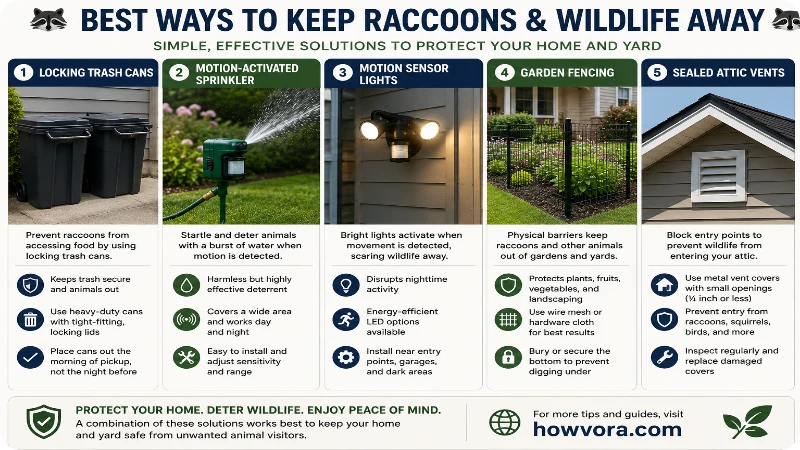
| Method | Pros | Cons | Best For |
| Remove food sources | Long-term solution | Requires consistency | Every property |
| Secure trash cans | Highly effective | May require locking lids | Urban and suburban homes |
| Motion-activated sprinklers | Humane and reliable | Less effective in freezing weather | Lawns and gardens |
| Motion lights | Easy installation | Some raccoons become accustomed | General yard protection |
| Fencing | Excellent garden protection | Higher installation cost | Vegetable gardens |
| Professional wildlife removal | Solves difficult cases | Most expensive option | Attics, chimneys, repeated problems |
Why This Approach Works Best
Removing food and shelter while adding deterrents addresses the reasons raccoons visit in the first place. Deterrents alone often fail if food remains available, while food removal alone may not stop animals already using your property for shelter.
At a Glance
| Category | Information |
| Best Overall Method | Eliminate food sources and secure entry points |
| Difficulty | Easy to Moderate |
| Time | Several hours initially, then weekly maintenance |
| Cost | Low to Moderate |
| Long-Term Success | High when multiple methods are combined |
Things You’ll Need
| Item | Purpose |
| Locking trash cans | Prevent food access |
| Heavy-duty garbage straps | Secure lids |
| Motion-activated sprinkler | Startle visiting raccoons |
| Motion sensor lights | Discourage nighttime activity |
| Hardware cloth or wire mesh | Seal entry points |
| Pruning tools | Remove climbing access |
| Gloves | Safe cleanup |
| Cleaning supplies | Remove attractants |
Safety Precautions
- Never approach or corner a raccoon.
- Keep pets indoors during raccoon activity.
- Wear gloves when cleaning droppings.
- Avoid handling sick or injured wildlife.
- Do not trap animals where relocation is prohibited by local regulations.
- Never seal entry holes if young raccoons may still be inside.
Step-by-Step Guide
Step 1: Remove Food Sources
Walk around your property and remove anything that attracts raccoons.
Common attractants include:
- Pet food
- Bird seed
- Fallen fruit
- Compost
- Outdoor grills with grease residue
- Accessible garbage
Why It Matters
Food is the primary reason raccoons repeatedly visit homes.
Success Looks Like
No easily accessible food remains overnight.
Common Beginner Mistakes
- Leaving pet food outside overnight
- Allowing birdseed to accumulate on the ground
- Using unsecured compost bins
Step 2: Secure Your Trash
Use trash cans with locking lids or secure lids using straps or bungee cords.
Place trash outside only on collection day whenever possible.
Why It Matters
Garbage is among the strongest raccoon attractants.
Success Looks Like
Trash remains untouched overnight.
Common Beginner Mistakes
- Assuming heavy lids are enough
- Leaving garbage bags outside without containers
Step 3: Eliminate Shelter Opportunities
Inspect your home for openings around:
- Roof vents
- Chimneys
- Crawl spaces
- Decks
- Sheds
- Attics
Seal openings using durable materials after confirming no animals remain inside.
Why It Matters
Raccoons seek safe nesting locations.
Success Looks Like
No accessible entry points larger than a few inches remain.
Common Beginner Mistakes
- Sealing active dens
- Ignoring damaged soffits
Step 4: Install Motion-Activated Deterrents
Install motion-activated sprinklers or lights in areas where raccoons frequently appear.
Move devices occasionally so animals do not become accustomed to them.
Why It Matters
Unexpected movement and water discourage nighttime visits.
Success Looks Like
Raccoons avoid treated areas.
Common Beginner Mistakes
- Installing only one deterrent
- Leaving dead batteries in devices
Step 5: Protect Gardens
Install fencing around gardens.
For additional protection:
- Harvest produce promptly.
- Pick up fallen vegetables.
- Cover ponds containing fish.
Why It Matters
Gardens provide easy food.
Success Looks Like
Plants remain undisturbed overnight.
Common Beginner Mistakes
- Using fencing that is too short
- Leaving ripe produce on plants
Step 6: Trim Trees and Vegetation
Trim branches that hang over roofs.
Remove dense vegetation near structures.
Why It Matters
Trees provide easy roof access.
Success Looks Like
No easy climbing routes remain.
Common Beginner Mistakes
- Ignoring nearby fences that also aid climbing
Step 7: Maintain Prevention
Inspect your property weekly.
Continue removing attractants and repairing new damage.
Why It Matters
Raccoons quickly exploit neglected areas.
Success Looks Like
No recurring signs of activity.
Common Beginner Mistakes
- Stopping prevention after only a few days
How to Know You Did It Correctly
Successful raccoon prevention usually includes:
- Trash remains untouched.
- Gardens show no fresh damage.
- No new tracks or droppings.
- No nighttime noises from attics.
- Motion devices activate without repeated visits.
- Entry points remain sealed.
Expected Timeline and Results
| Time | Expected Results |
| First night | Reduced visits if food sources are removed |
| First week | Noticeable decrease in activity |
| Two to four weeks | Most raccoons establish new feeding routes |
| Ongoing | Weekly maintenance prevents future problems |
If activity continues after several weeks, inspect for overlooked food or shelter sources.
Alternative Methods
Motion-Activated Sprinklers
Advantages
- Humane
- Effective
- Covers large areas
Disadvantages
- Needs a water supply
Best For
Gardens and lawns.
Motion Lights
Advantages
- Easy installation
- Low maintenance
Disadvantages
- Less effective alone
Best For
Driveways and yards.
Physical Barriers
Advantages
- Long-lasting
- Reliable
Disadvantages
- Higher upfront cost
Best For
Gardens and crawl spaces.
Professional Wildlife Exclusion
Advantages
- Comprehensive
- Solves structural problems
Disadvantages
- Higher cost
Best For
Persistent infestations.
Common Mistakes to Avoid
- Feeding wildlife intentionally.
- Leaving pet food outdoors overnight.
- Forgetting fallen fruit.
- Ignoring roof damage.
- Depending on one deterrent only.
- Failing to inspect regularly.
- Sealing active dens with animals inside.
Why Many Attempts Fail
Most unsuccessful raccoon control efforts fail because homeowners:
- Remove only one attractant.
- Use deterrents inconsistently.
- Forget hidden food sources.
- Leave entry points open.
- Stop maintenance too early.
Long-term success comes from combining prevention, exclusion, and regular inspections.
Troubleshooting & Common Problems
| Problem | Possible Cause | Solution |
| Trash still tipped over | Lid not secured | Install locking lids or straps |
| Garden damage continues | Fence too short or gaps present | Upgrade fencing and harvest crops promptly |
| Raccoons on roof | Overhanging branches | Trim tree limbs |
| Noises in attic | Active den | Contact a wildlife professional |
| Motion sprinkler ineffective | Poor placement | Reposition toward travel routes |
| Raccoons keep returning | Food source remains | Conduct another full property inspection |
Expert Tips
- Combine at least three deterrent methods for better results.
- Clean outdoor grills after every use.
- Store birdseed in sealed containers.
- Feed pets indoors whenever possible.
- Rotate deterrent locations occasionally.
- Inspect your roof after storms.
- Remove fallen fruit daily during harvest season.
- Install chimney caps to prevent nesting.
- Cover fish ponds with protective netting if raccoons visit frequently.
When to Call a Professional
DIY methods are usually enough when raccoons are simply visiting your yard.
Consider hiring a wildlife removal professional if:
- Raccoons live inside your attic.
- Young raccoons are present.
- Structural damage is extensive.
- Animals repeatedly enter despite prevention.
- You suspect an injured or sick animal.
- Local regulations restrict trapping or relocation.
What to Do Next
Continue inspecting your property every week.
Maintain secure trash storage, trim vegetation regularly, repair new entry points immediately, and remove food sources before nightfall. Seasonal inspections before spring and fall help prevent future nesting.
FAQs
What smells keep raccoons away?
Strong odors may temporarily discourage raccoons, but removing food and shelter is much more effective for long-term control.
Will motion lights alone keep raccoons away?
Motion lights help but work best when combined with food removal, secure trash, and exclusion methods.
Do raccoons come back after being scared away?
Yes. If food or shelter remains available, raccoons often return despite temporary deterrents.
What attracts raccoons the most?
Accessible garbage, pet food, bird seed, fallen fruit, compost, fish ponds, and sheltered nesting locations are among the biggest attractants.
Can raccoons climb fences?
Yes. They are excellent climbers. Standard fences alone may not stop determined raccoons.
Are raccoons dangerous to pets?
They generally avoid confrontation but may defend themselves if cornered. Keep pets away from raccoons and never allow direct interaction.
What time are raccoons most active?
They are primarily active from dusk through dawn, although daytime activity can occasionally occur.
Should I trap and relocate raccoons?
Regulations vary by location. In many areas, relocation is restricted or discouraged because it may spread disease or reduce the animal’s survival chances.
Final Thoughts
Knowing how to keep raccoons away starts with understanding why they visit. Removing food sources, securing trash, blocking entry points, and using humane deterrents together provide the most reliable protection. Consistent maintenance is the key to preventing future problems and keeping your home and yard raccoon-free.

3 thoughts on “How to Keep Raccoons Away from Your Home and Garden”