
Fruit flies can quickly take over your kitchen when they find ripe fruit, food scraps, or sugary liquids. Fortunately, making a fruit fly trap is simple, inexpensive, and highly effective when combined with proper cleaning.
This guide explains how to make several DIY fruit fly traps, when to use each method, how to maximize results, and how to prevent fruit flies from returning.
Featured Snippet
To make a fruit fly trap, fill a small bowl or jar with apple cider vinegar and add a few drops of dish soap. Cover the container with plastic wrap, poke several small holes in the top, and place it near fruit flies. The vinegar attracts them, while the soap breaks the liquid’s surface tension, causing the flies to sink and drown.
Before You Begin
Fruit fly traps work best when they are part of a complete elimination plan rather than the only solution.
| Factor | Details |
| Difficulty | Easy |
| Time to Make | 2-5 minutes |
| Time to See Results | A few hours to 2 days |
| Estimated Cost | Under $5 |
| DIY or Professional? | DIY is suitable for nearly all household infestations |
Before making your trap:
- Remove overripe fruit.
- Empty kitchen trash.
- Clean recycling bins.
- Wipe sugary spills.
- Check sink drains for food buildup.
Without removing breeding sources, new fruit flies will continue to hatch.
Choosing the Right Approach
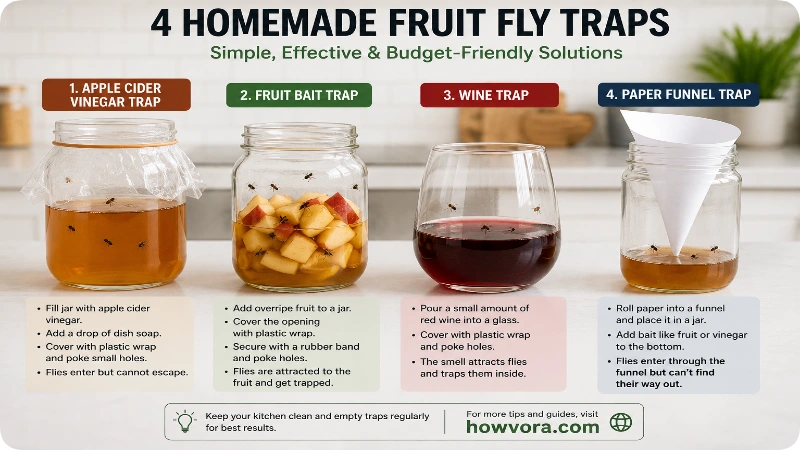
Different traps work better depending on what materials you already have.
| Method | Pros | Cons | Best For |
| Apple cider vinegar trap | Very effective, inexpensive | Requires vinegar | Most households |
| Fruit bait jar | Uses ripe fruit | Can smell after several days | No vinegar available |
| Wine or beer trap | Uses leftover drinks | Less attractive than vinegar | Occasional infestations |
| Paper funnel trap | Reusable, no plastic wrap needed | Slightly slower | Eco-friendly option |
Which Method Is Best?
The apple cider vinegar trap is usually the best choice because fruit flies naturally seek fermented fruit odors. Adding dish soap greatly increases effectiveness by preventing flies from standing on the liquid.
Choose a fruit bait trap if vinegar is unavailable. A paper funnel trap is ideal if you prefer reusable materials.
At a Glance
| Item | Details |
| Difficulty | Easy |
| Total Time | 5 minutes |
| Active Work | 2-5 minutes |
| Cost | $2-$5 |
| Skill Level | Beginner |
Things You’ll Need
| Item | Purpose |
| Small jar, bowl, or cup | Holds the bait |
| Apple cider vinegar | Primary attractant |
| Dish soap | Breaks surface tension |
| Plastic wrap (optional) | Prevents escape |
| Toothpick or fork | Makes entry holes |
| Rubber band | Holds plastic wrap in place |
| Ripe fruit (optional) | Alternative bait |
| Paper | Funnel trap option |
Safety Precautions
Although DIY fruit fly traps are generally safe:
- Keep vinegar traps away from small children and pets.
- Do not mix household cleaners with vinegar.
- Replace traps before mold develops.
- Wash hands after handling old bait.
- Dispose of trapped insects in sealed trash.
Step-by-Step Guide
Step 1: Choose Your Container
Select a small jar, bowl, drinking glass, or disposable cup.
Why it matters
A smaller opening concentrates fruit fly activity and makes the trap more effective.
Success looks like
The container is clean and placed where fruit flies gather.
Common beginner mistakes
Using a container that is too large or too shallow.
Step 2: Add the Attractant
Pour about ½ cup of apple cider vinegar into the container.
If you don’t have vinegar, use:
- Overripe banana
- Old wine
- Beer
- Fruit juice
Why it matters
Fruit flies are attracted to fermenting sugars.
Success looks like
You can smell the vinegar or fruit aroma.
Common beginner mistakes
Using plain water or fresh fruit that produces little scent.
Step 3: Add Dish Soap
Mix in 2 to 3 drops of liquid dish soap.
Do not stir aggressively.
Why it matters
Soap removes the liquid’s surface tension, causing flies to sink instead of floating.
Success looks like
The mixture looks mostly unchanged.
Common beginner mistakes
Adding too much soap, which reduces the attractive smell.
Step 4: Cover the Trap (Optional but Recommended)
Cover the container with plastic wrap.
Secure it with a rubber band.
Poke several small holes using a toothpick.
Why it matters
Fruit flies can easily enter but struggle to escape.
Success looks like
The holes are just large enough for fruit flies.
Common beginner mistakes
Making holes too large.
Step 5: Place the Trap Correctly
Place traps:
- Besides fruit bowls
- Near garbage cans
- Next to compost bins
- Close to the sink drains
- Near recycling containers
Avoid placing traps in the center of the room.
Why it matters
Fruit flies rarely travel far from food sources.
Success looks like
Flies begin gathering around the trap within several hours.
Common beginner mistakes
Putting traps in areas without fruit fly activity.
Step 6: Replace the Trap Regularly
Refresh the liquid every 2 to 4 days.
Dispose of old bait before mold develops.
Why it matters
Fresh bait remains much more attractive.
Success looks like
The trap continues catching flies daily.
Common beginner mistakes
Leaving the same bait for over a week.
How to Know You Did It Correctly
A properly made fruit fly trap should show these signs:
- Dead fruit flies inside the container
- Fewer flies are flying around the kitchen
- Reduced activity after one to three days
- Continued catches over several days
If no flies appear in the trap after 24 hours, move it closer to where fruit flies are most active.
Expected Timeline and Results
| Time | Expected Result |
| First few hours | Flies begin investigating |
| 24 hours | Several flies trapped |
| 2-3 days | Noticeable reduction |
| 5-7 days | Most household infestations greatly reduced |
| Ongoing | Continue replacing traps until no new flies appear |
Remember that eggs already laid may continue hatching for several days.
Alternative Methods
Fruit Bait Trap
Advantages
- Uses common kitchen waste
- No vinegar required
Disadvantages
- Can spoil quickly
Best for
Using leftover fruit.
Paper Funnel Trap
Place fruit inside a jar and insert a rolled paper funnel.
Advantages
- Reusable
- No plastic wrap
Disadvantages
- Slightly slower than vinegar traps.
Wine Trap
Leave a small amount of old wine in a bottle overnight.
Advantages
- Very easy
Disadvantages
- Less attractive than apple cider vinegar.
Common Mistakes to Avoid
- Forgetting to remove breeding sources
- Using too much dish soap
- Leaving overripe fruit exposed
- Not cleaning sink drains
- Using fresh fruit instead of fermented bait
- Waiting too long before replacing traps
- Placing traps far from fruit fly activity
Why Many Attempts Fail
Most DIY fruit fly traps fail because the trap is not the real problem.
Common reasons include:
- Food residue remains on countertops.
- Garbage bins contain fruit scraps.
- Recycling containers hold sugary bottles.
- Drain buildup provides breeding sites.
- Hidden potatoes or onions are rotting inside cabinets.
A trap removes adult flies, but sanitation stops new generations.
Troubleshooting & Common Problems
| Problem | Possible Cause | Solution |
| Trap catches nothing | Wrong location | Move closer to fruit flies |
| Flies escape | Holes are too large | Make smaller holes |
| Trap smells bad | Old bait | Replace every few days |
| New flies keep appearing | Active breeding site | Find and remove the source |
| Many flies near sink | Dirty drain | Clean drain thoroughly |
| Trap dries out | Warm environment | Refill with fresh vinegar |
Expert Tips
- Place several small traps instead of one large trap.
- Use apple cider vinegar rather than white vinegar for better attraction.
- Replace bait before it becomes moldy.
- Clean drain openings with a brush to remove organic buildup.
- Refrigerate ripe fruit when possible.
- Empty indoor compost containers daily during warm weather.
- Place traps where you see the highest fruit fly activity instead of guessing.
When to Call a Professional
DIY methods are enough for most fruit fly problems.
Consider professional pest control if:
- Fruit flies continue for several weeks despite cleaning.
- Large infestations repeatedly return.
- The source cannot be located.
- The infestation appears to involve drain flies or another insect species rather than fruit flies.
- Commercial kitchens or food businesses require ongoing pest management.
What to Do Next
After eliminating the infestation:
- Wash produce before storing it.
- Store ripe fruit in the refrigerator when practical.
- Empty trash frequently.
- Clean recycling containers regularly.
- Wipe spills immediately.
- Keep sink drains free of food residue.
- Check cabinets for forgotten produce every week.
Preventive cleaning is much easier than eliminating another infestation.
FAQs
Does apple cider vinegar work better than white vinegar?
Yes. Apple cider vinegar has a fermented fruit aroma that attracts fruit flies much more effectively than white vinegar.
Why do I need dish soap?
Dish soap breaks the liquid’s surface tension, so fruit flies sink instead of landing safely on top.
Can I make a fruit fly trap without vinegar?
Yes. Overripe fruit, wine, beer, or fruit juice can also attract fruit flies, although apple cider vinegar is usually the most effective option.
How many traps should I use?
One trap may work for a small infestation. Larger kitchens often benefit from placing two to four traps near different breeding areas.
How long should I leave the trap out?
Leave traps in place until you no longer see fruit flies for several consecutive days, replacing the bait every two to four days.
Why are fruit flies still appearing after several days?
Eggs and larvae may still be developing. Continue trapping while removing breeding sources to stop the life cycle.
Can fruit fly traps attract more fruit flies?
The trap attracts flies already inside your home. It is unlikely to bring in fruit flies from outdoors if windows and doors remain closed.
Are homemade fruit fly traps safe around pets?
The ingredients are generally low risk, but keep traps out of reach to prevent pets from drinking the vinegar mixture or knocking over the container.
Final Thoughts
Learning how to make a fruit fly trap is one of the fastest and most affordable ways to reduce fruit fly populations indoors. The apple cider vinegar and dish soap method consistently provides excellent results, especially when paired with thorough cleaning and removal of breeding sources. Keep replacing the bait, eliminate food residue, and maintain good kitchen hygiene to prevent future infestations.

1 thought on “How to Make a Fruit Fly Trap and Stop Fruit Fly Infestations”