
Scorpions are unwanted pests that can pose a safety risk to people and pets, especially in warm and dry regions. While most species are not life-threatening, their stings can be painful and may require medical attention in some cases.
The good news is that you can significantly reduce or eliminate scorpions by removing their food sources, sealing entry points, reducing outdoor hiding places, and using targeted control methods.
This guide is designed for homeowners, renters, and property managers who want a practical, effective, and safe approach to eliminating scorpions and preventing future infestations.
Featured Snippet
To get rid of scorpions, eliminate their food sources, seal cracks and entry points, reduce clutter and hiding spots, control moisture, and use appropriate pest-control products when necessary. Consistent prevention, regular inspections, and targeted treatment of high-risk areas are the most effective ways to eliminate scorpions and prevent their return.
Before You Begin
| Factor | Details |
| Difficulty | Moderate |
| Time Required | Several hours initially, ongoing maintenance |
| Cost | Low to Moderate |
| DIY Friendly | Yes, for most situations |
| Professional Needed | Severe infestations or dangerous species |
DIY control works well for occasional scorpion sightings. However, large infestations, repeated indoor sightings, or concerns about highly venomous species may require professional pest management.
Choosing the Right Approach
| Method | Pros | Cons | Best Use Case |
| Exclusion (Sealing Entry Points) | Long-term solution | Time-consuming | Most homes |
| Habitat Reduction | Prevents future infestations | Requires ongoing maintenance | Yards and gardens |
| Insect Control | Reduces food supply | May take time | Areas with many insects |
| Chemical Treatments | Fast results | Requires careful use | Moderate infestations |
| Professional Pest Control | Comprehensive treatment | Higher cost | Severe infestations |
The most effective strategy combines exclusion, habitat modification, and insect control. Chemical treatments can provide additional support but should not replace prevention measures.
At a Glance
| Category | Details |
| Main Goal | Eliminate scorpions and prevent re-entry |
| Typical Results | Reduced sightings from days to weeks |
| Long-Term Success | Requires prevention and maintenance |
| Best Time to Act | Immediately after sightings |
Things You’ll Need
| Item | Purpose |
| Flashlight or UV flashlight | Locate scorpions at night |
| Caulk or sealant | Seal cracks and gaps |
| Weatherstripping | Seal doors and windows |
| Gloves | Personal protection |
| Broom or vacuum | Remove scorpions safely |
| Insect traps | Monitor activity |
| Pest-control products | Target infestations |
| Yard tools | Remove debris and hiding spots |
Safety Precautions
Scorpions can sting when disturbed. Follow these safety measures:
- Wear gloves when moving rocks, wood, or debris.
- Shake out shoes, clothing, and towels before use.
- Use caution when reaching into dark storage areas.
- Keep children and pets away from treatment areas.
- Never handle live scorpions with your bare hands.
- Seek medical attention if severe reactions occur after a sting.
If you live in an area with medically significant scorpion species, exercise extra caution and consider professional assistance.
Step-by-Step Guide
Step 1: Inspect Your Property
What to Do
Conduct a thorough inspection indoors and outdoors. Focus on:
- Foundation cracks
- Door and window gaps
- Basements and crawl spaces
- Garages and storage areas
- Woodpiles and landscaping features
A UV flashlight can help locate scorpions after dark because many species fluoresce under ultraviolet light.
Why It Matters
You cannot effectively eliminate scorpions without identifying where they are hiding and entering the property.
What Success Looks Like
You have identified potential entry points, hiding areas, and high-activity zones.
Common Beginner Mistakes
- Inspecting only indoors
- Ignoring small cracks
- Overlooking cluttered storage areas
Step 2: Eliminate Food Sources
What to Do
Scorpions feed primarily on insects. Reduce insect populations by:
- Fixing leaks
- Removing standing water
- Storing food properly
- Cleaning crumbs and spills
- Using insect-control measures when needed
Why It Matters
A property with abundant insects attracts scorpions.
What Success Looks Like
Fewer insects and reduced scorpion activity over time.
Common Beginner Mistakes
- Treating scorpions while ignoring insects
- Leaving outdoor lights on unnecessarily
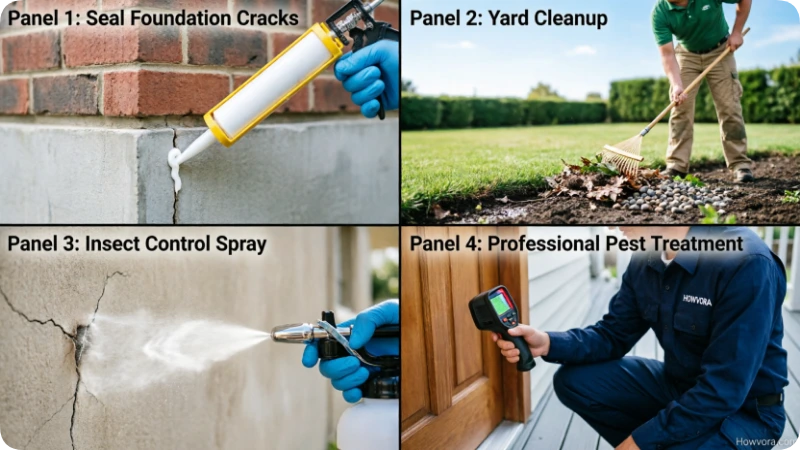
Step 3: Seal Entry Points
What to Do
Seal all gaps and openings, including:
- Foundation cracks
- Utility penetrations
- Window frames
- Door thresholds
- Vent openings
Install weatherstripping and door sweeps where needed.
Why It Matters
Even a small opening can allow scorpions to enter.
What Success Looks Like
No visible gaps around doors, windows, and foundations.
Common Beginner Mistakes
- Missing utility line openings
- Ignoring damaged weatherstripping
Step 4: Remove Outdoor Hiding Places
What to Do
Reduce shelter opportunities by:
- Removing woodpiles
- Trimming vegetation
- Clearing debris
- Organizing stored materials
- Keeping mulch away from foundations
Why It Matters
Scorpions prefer dark, protected environments.
What Success Looks Like
A cleaner yard with fewer potential hiding spots.
Common Beginner Mistakes
- Storing firewood against the house
- Allowing dense vegetation near foundations
Step 5: Reduce Moisture
What to Do
Fix water issues such as:
- Leaking faucets
- Broken irrigation systems
- Poor drainage
- Standing water
Use dehumidifiers in damp indoor areas if necessary.
Why It Matters
Moisture attracts insects, which attract scorpions.
What Success Looks Like
Dry conditions around the home and fewer insect populations.
Common Beginner Mistakes
- Ignoring minor leaks
- Overwatering landscaping
Step 6: Apply Targeted Treatments
What to Do
Use pest-control products according to label directions around:
- Foundations
- Entry points
- Crawl spaces
- Garages
- Outdoor harborage areas
Consider sticky traps for monitoring activity.
Why It Matters
Targeted treatments can reduce populations when prevention alone is insufficient.
What Success Looks Like
Fewer sightings and reduced trap activity.
Common Beginner Mistakes
- Overapplying products
- Treating random areas instead of high-risk locations
How to Know You Did It Correctly
Signs of success include:
- Fewer or no scorpion sightings
- Reduced insect activity
- Sealed entry points remain intact
- No new scorpions found during nighttime inspections
- Sticky traps show declining activity
Expected Timeline and Results
| Time Frame | Expected Results |
| First Few Days | Reduced activity in treated areas |
| 1–2 Weeks | Noticeable decrease in sightings |
| 1 Month | Significant reduction in population |
| Ongoing | Prevention measures maintain control |
If sightings continue after several weeks, reassess entry points and food sources.
Alternative Methods
Natural Control Methods
Advantages
- Lower chemical exposure
- Environmentally friendly
Disadvantages
- May work more slowly
Best For
- Mild infestations
- Prevention-focused homeowners
Chemical Control Methods
Advantages
- Faster results
- Effective for larger populations
Disadvantages
- Requires careful handling
Best For
- Moderate infestations
Professional Treatment
Advantages
- Comprehensive inspection and treatment
- Access to specialized products
Disadvantages
- Higher cost
Best For
- Persistent infestations
Common Mistakes to Avoid
Ignoring Insect Problems
Scorpions follow food sources. Insect control is essential.
Focusing Only Indoors
Most scorpion problems originate outdoors.
Leaving Clutter Around the Home
Debris creates an ideal shelter.
Failing to Seal Small Openings
Tiny gaps can provide access.
Skipping Follow-Up Inspections
Ongoing monitoring helps prevent reinfestation.
Why Many Attempts Fail
Incomplete Exclusion
Homeowners often miss small cracks and gaps.
Lack of Consistency
Prevention measures must be maintained.
Ignoring Outdoor Conditions
Yard conditions frequently support scorpion populations.
Treating Symptoms Instead of Causes
Eliminating visible scorpions without addressing food and shelter rarely solves the problem.
Troubleshooting & Common Problems
| Problem | Possible Cause | Solution |
| Scorpions keep appearing indoors | Unsealed entry points | Inspect and seal gaps |
| Increased sightings after treatment | Disturbance of hiding areas | Continue monitoring |
| Frequent yard sightings | Excess shelter outdoors | Remove debris and vegetation |
| Recurring infestations | High insect populations | Improve insect control |
| Scorpions in the garage | Clutter and storage areas | Organize and inspect regularly |
Expert Tips
Use a UV Flashlight at Night
Night inspections often reveal hidden activity that daytime inspections miss.
Keep Firewood Elevated
Store firewood off the ground and away from structures.
Install Door Sweeps
Many scorpions enter through gaps beneath doors.
Monitor With Sticky Traps
Traps help identify activity hotspots and track progress.
Reduce Outdoor Lighting
Bright lights attract insects, which attract scorpions.
When to Call a Professional
DIY control is usually sufficient when:
- Sightings are occasional
- Entry points are easily identified
- No dangerous species are involved
Contact a professional if:
- Infestations persist despite prevention efforts
- Scorpions are frequently found indoors
- Stings have occurred
- You suspect a medically significant species
- Large numbers are present on the property
What to Do Next
After reducing scorpion activity:
- Continue monthly inspections.
- Maintain insect control measures.
- Repair new cracks promptly.
- Keep storage areas organized.
- Monitor with traps.
- Reassess landscaping annually.
Consistent maintenance is the key to long-term success.
FAQs
What attracts scorpions to a house?
Scorpions are attracted by food, water, shelter, and access points. Insect infestations and cluttered areas are common attractants.
Can scorpions climb walls?
Many scorpion species can climb rough surfaces, walls, and foundations, making exclusion important.
Do scorpions come up through drains?
It is possible in some situations, especially if drains are damaged or poorly maintained.
How long does it take to get rid of scorpions?
Many homeowners see improvement within one to four weeks, depending on infestation severity and prevention efforts.
Are scorpions active during the day?
Most scorpions are nocturnal and are more active at night.
Does removing insects help control scorpions?
Yes. Reducing insect populations removes a major food source.
Are sticky traps effective?
Sticky traps can help monitor and reduce activity, but work best as part of a broader control strategy.
Can scorpions survive indoors?
Yes. They can survive indoors if they find shelter, moisture, and food.
Should I kill every scorpion I see?
Removing visible scorpions can help, but long-term control requires addressing entry points and habitat conditions.
Is professional pest control worth it?
Professional services can be highly effective for persistent or severe infestations and may provide faster results.
Final Thoughts
Getting rid of scorpions requires more than eliminating the ones you see. The most effective approach combines inspection, exclusion, insect control, habitat reduction, and ongoing maintenance. By sealing entry points, reducing food sources, removing hiding places, and monitoring activity, you can significantly reduce the risk of scorpions around your home and prevent future infestations.
