
Drugstore beetles are small pantry pests that can contaminate stored food, spices, pet food, dried herbs, and other household products. Although they do not bite or spread disease.
They can quickly become a frustrating nuisance if left unchecked. If you have noticed tiny brown beetles around your pantry, kitchen cabinets, or stored products.
This guide will show you exactly how to get rid of drugstore beetles, find the source of the infestation, eliminate affected items, and prevent future outbreaks.
Featured Snippet Answer
To get rid of drugstore beetles, locate and discard infested food or household products, thoroughly clean shelves and storage areas, vacuum cracks and crevices, store susceptible items in airtight containers, and monitor for new activity. Most infestations disappear once the source is removed and proper sanitation measures are maintained.
Before You Begin
Difficulty
Easy to Moderate
Time Required
1–4 hours for inspection and cleaning, plus several weeks of monitoring.
Estimated Cost
Low to moderate, depending on storage containers and monitoring traps.
DIY vs. Professional
| Option | Best For |
| DIY Treatment | Most pantry infestations |
| Professional Pest Control | Large, recurring, or difficult-to-locate infestations |
Most drugstore beetle infestations can be eliminated without professional help if the source is identified and removed.
Choosing the Right Approach

Drugstore beetles can be controlled using several methods.
| Method | Pros | Cons | Best Use Case |
| Source Removal and Cleaning | Most effective long-term solution | Requires careful inspection | Most infestations |
| Freezing Infested Items | Kills beetles and larvae | Not suitable for all products | Valuable dry goods |
| Heat Treatment | Effective for some products | Requires caution | Small batches of stored items |
| Insecticides | Can reduce adult beetles | Does not solve the source problem | Severe infestations |
| Professional Treatment | Comprehensive inspection | Higher cost | Persistent infestations |
The recommended approach is source removal combined with thorough cleaning because drugstore beetles continue reproducing as long as infested materials remain available.
At a Glance
| Factor | Details |
| Difficulty | Easy to Moderate |
| Time | 1–4 Hours Initial Cleanup |
| Cost | $10–$100 |
| Success Rate | High When Source Is Removed |
| Maintenance | Ongoing Monitoring |
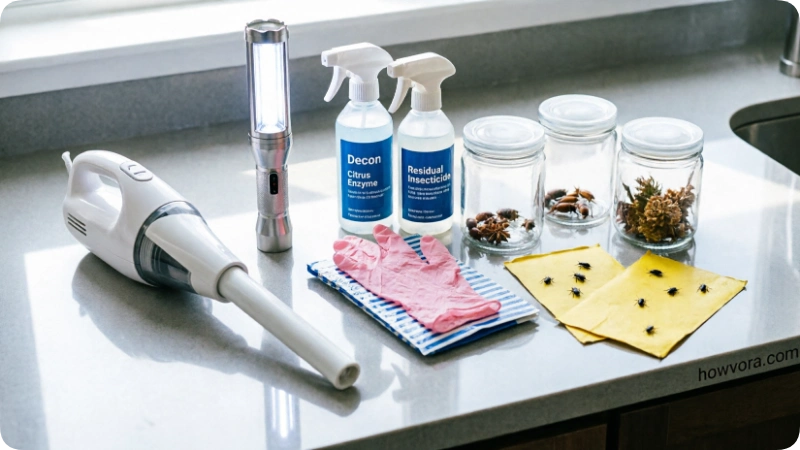
Things You’ll Need
| Item | Purpose |
| Trash Bags | Dispose of infested products |
| Vacuum Cleaner | Remove beetles, eggs, and debris |
| Soap and Water | Clean shelves and cabinets |
| Airtight Containers | Protect stored foods |
| Flashlight | Inspect dark areas |
| Sticky Monitoring Traps | Detect remaining beetles |
| Cleaning Cloths | Wipe surfaces |
Safety Precautions
While drugstore beetles are not dangerous, follow these precautions:
- Wear gloves when handling heavily infested materials.
- Avoid consuming contaminated food products.
- Wash your hands after cleaning infested areas.
- Follow label instructions if using insecticides.
- Keep cleaning products away from food preparation surfaces until rinsed.
Step-by-Step Guide
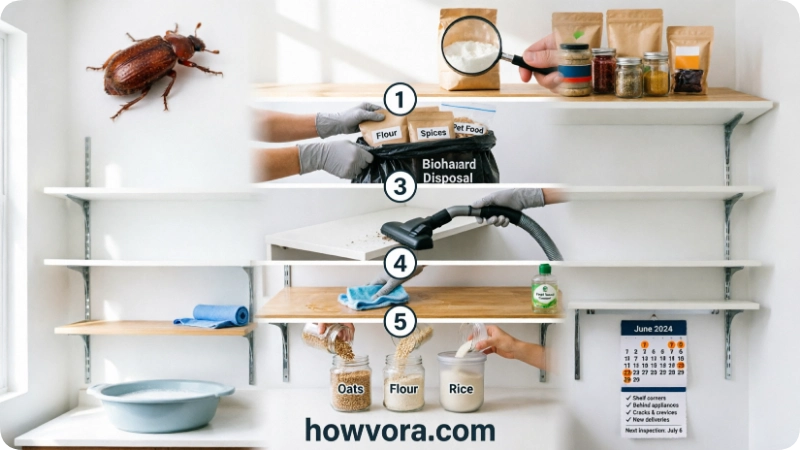
Step 1: Identify Drugstore Beetles
What to Do
Look for small reddish-brown beetles approximately 2–3 mm long around:
- Pantry shelves
- Food storage areas
- Pet food containers
- Spice racks
- Dried flower arrangements
Why It Matters
Correct identification prevents wasting time treating the wrong pest.
What Success Looks Like
You confirm that drugstore beetles are the insects present rather than cigarette beetles, grain beetles, or weevils.
Common Beginner Mistakes
- Assuming all pantry beetles are the same.
- Ignoring hidden storage locations.
Step 2: Locate the Source
What to Do
Inspect all susceptible products, including:
- Flour
- Rice
- Pasta
- Cereal
- Pet food
- Bird seed
- Dried herbs
- Tea
- Spices
- Decorative dried plants
Look for:
- Beetles
- Larvae
- Fine powder
- Small holes in the packaging
Why It Matters
Removing only visible beetles rarely solves the infestation.
What Success Looks Like
You find one or more contaminated products.
Common Beginner Mistakes
- Checking only recently purchased foods.
- Overlooking rarely used spices and herbs.
Step 3: Remove and Dispose of Infested Items
What to Do
Place infested products into sealed bags and remove them from the home immediately.
Why It Matters
This eliminates the breeding source.
What Success Looks Like
No infested materials remain inside the house.
Common Beginner Mistakes
- Leaving contaminated items in indoor trash bins.
- Attempting to save heavily infested products.
Step 4: Clean the Infested Area Thoroughly
What to Do
- Vacuum shelves, corners, and cracks.
- Remove food debris.
- Wash surfaces with warm soapy water.
- Dispose of vacuum contents immediately.
Why It Matters
Eggs and larvae may remain hidden in crevices.
What Success Looks Like
Shelves are clean and free of debris.
Common Beginner Mistakes
- Cleaning only visible surfaces.
- Forgetting shelf supports and cabinet corners.
Step 5: Protect Remaining Food
What to Do
Transfer pantry goods into airtight containers made of:
- Glass
- Thick plastic
- Metal
Why It Matters
Drugstore beetles can chew through thin cardboard and paper packaging.
What Success Looks Like
All vulnerable products are sealed securely.
Common Beginner Mistakes
- Storing food in its original paper packaging.
- Leaving pet food in open bags.
Step 6: Monitor for Continued Activity
What to Do
Place pantry pest monitoring traps near affected areas.
Why It Matters
Monitoring confirms whether beetles remain.
What Success Looks Like
Trap captures decrease steadily over time.
Common Beginner Mistakes
- Removing traps too early.
- Assuming the infestation is gone after one week.
How to Know You Did It Correctly
You have likely eliminated the infestation when:
- No live beetles are seen for several weeks.
- No new damage appears in stored products.
- Monitoring traps remain mostly empty.
- Pantry shelves stay clean and pest-free.
Expected Timeline and Results
| Time Period | Expected Results |
| Day 1 | Source removed and area cleaned |
| Week 1 | Significant reduction in beetle activity |
| Weeks 2–4 | Few or no adult beetles observed |
| Month 1+ | Infestation is fully controlled if no hidden source remains |
If activity continues beyond one month, conduct another inspection.
Alternative Methods
Freezing
Place suspect products in a freezer for at least several days.
Advantages
- Chemical-free
- Effective against eggs and larvae
Disadvantages
- Not suitable for every product
Heat Treatment
Some dry goods can be heated according to product-specific recommendations.
Advantages
- Effective when performed properly
Disadvantages
- Risk of damaging products
Insecticides
Can be applied to cracks and crevices according to label instructions.
Advantages
- May reduce adult populations
Disadvantages
- Does not eliminate the source of infestation
Common Mistakes to Avoid
Ignoring Non-Food Sources
Drugstore beetles may infest dried flowers, herbs, pet food, and decorative items.
Keeping Contaminated Products
Even small infestations can continue reproducing.
Failing to Use Airtight Containers
New infestations can develop in vulnerable packaging.
Missing Hidden Storage Areas
Check basements, garages, utility rooms, and closets.
Why Many Attempts Fail
The Source Is Never Found
Adult beetles are visible, but larvae remain hidden in infested materials.
Cleaning Is Incomplete
Eggs may survive in cracks and shelf corners.
New Products Become Infested
Unprotected food remains accessible.
Monitoring Ends Too Soon
Remaining beetles may continue emerging for several weeks.
Troubleshooting & Common Problems
| Problem | Possible Cause | Solution |
| Beetles Keep Appearing | The hidden source remains | Reinspect all stored products |
| New Pantry Damage | Unprotected food | Use airtight containers |
| Beetles in Multiple Rooms | Infested decorative items | Inspect dried flowers and crafts |
| Traps Continue Catching Beetles | Ongoing emergence | Continue monitoring and inspection |
| Infestation Returns | New contaminated products introduced | Inspect purchases before storage |
Expert Tips
Buy Smaller Quantities
Long-term storage increases infestation risk.
Freeze High-Risk Items
Spices, grains, and pet food can be frozen briefly after purchase as a preventive measure.
Label Purchase Dates
Rotate older products first.
Inspect Rarely Used Items
Many infestations begin in products that sit untouched for months.
Vacuum Shelf Crevices Regularly
Routine cleaning removes food particles that attract pests.
When to Call a Professional
DIY treatment is usually sufficient when:
- The infestation is limited to pantry products.
- The source has been identified.
- Beetle numbers are relatively low.
Consider professional pest control when:
- Infestations repeatedly return.
- The source cannot be located.
- Beetles are spreading throughout the home.
- Multiple storage areas are affected.
A pest management professional can conduct a more detailed inspection and recommend targeted treatments.
What to Do Next
After eliminating drugstore beetles:
- Store susceptible products in airtight containers.
- Clean pantry shelves regularly.
- Inspect groceries before storage.
- Rotate food stock frequently.
- Continue monitoring for several weeks.
- Remove expired products promptly.
These habits significantly reduce the risk of future infestations.
FAQs
What causes drugstore beetles in homes?
Drugstore beetles are usually introduced through infested food products, spices, pet food, dried herbs, or decorative plant materials.
Are drugstore beetles harmful?
They do not bite or transmit diseases, but they can contaminate stored products and cause food waste.
Can drugstore beetles infest unopened packages?
Yes. They can enter through tiny openings and may already be present inside products before purchase.
How long does it take to get rid of drugstore beetles?
Most infestations can be controlled within a few weeks after the source is removed and sanitation measures are completed.
Do drugstore beetles live in furniture?
They typically prefer stored food and dried organic materials rather than furniture.
Will throwing away infested food solve the problem?
Often yes, provided all infested materials are removed, and storage areas are thoroughly cleaned.
Can I use natural methods to control drugstore beetles?
Yes. Cleaning, source removal, freezing, and proper food storage are highly effective non-chemical solutions.
How can I prevent drugstore beetles from coming back?
Store food in airtight containers, inspect purchases, clean shelves regularly, and rotate stored products.
Final Thoughts
Learning how to get rid of drugstore beetles starts with finding and removing the source of the infestation. Thorough cleaning, proper storage practices, and ongoing monitoring are far more effective than simply killing visible beetles. By eliminating contaminated products and protecting pantry goods in airtight containers, most homeowners can successfully control drugstore beetles and prevent future outbreaks without extensive pesticide use.
