
Carpet beetle larvae are one of the most destructive household pests because they feed on natural fibers, fabrics, carpets, rugs, clothing, upholstery, pet hair, and stored textiles.
Unlike adult carpet beetles, the larvae cause the actual damage. If left untreated, they can create holes in clothing, damage carpets, and spread throughout the home.
This guide is for homeowners, renters, and anyone dealing with carpet beetle larvae. By following these steps, you will learn how to identify the infestation, remove larvae, eliminate food sources, treat affected areas, and prevent future outbreaks.
Featured Snippet Answer
To get rid of carpet beetle larvae, thoroughly vacuum infested areas, wash or dry-clean affected fabrics, remove lint and pet hair, treat cracks and hidden spaces, and store susceptible items in sealed containers. Continue cleaning and monitoring for several weeks to eliminate remaining larvae and prevent reinfestation.
Before You Begin
Difficulty
Easy to Moderate
Time Required
Several hours for initial treatment, plus ongoing monitoring for 2–6 weeks.
Estimated Cost
Low to Moderate, depending on cleaning supplies and treatment methods.
DIY vs. Professional
| Option | Best For | Pros | Cons |
| DIY Treatment | Small to moderate infestations | Affordable, immediate action | Requires thorough cleaning |
| Professional Pest Control | Severe or recurring infestations | Comprehensive treatment | Higher cost |
Choosing the Right Approach
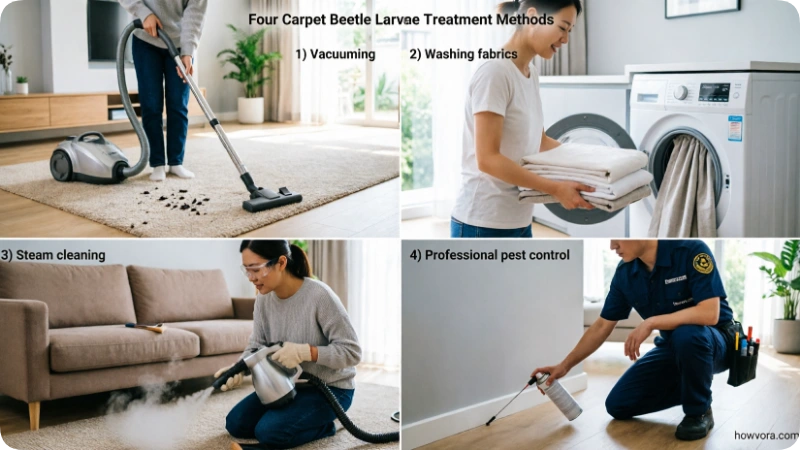
Carpet beetle larvae can be controlled using different methods. The best approach depends on the infestation size and location.
| Method | Pros | Cons | Best Use Case |
| Deep Cleaning | Safe, inexpensive | Labor-intensive | Most infestations |
| Heat Treatment | Effective on fabrics | Limited to washable items | Clothing and bedding |
| Insecticides | Kills hidden larvae | Requires careful use | Large infestations |
| Professional Treatment | Thorough coverage | More expensive | Persistent infestations |
Recommended Approach
A combination of deep cleaning, fabric treatment, and removal of food sources is usually the most effective strategy. Chemical treatments should be considered only when cleaning alone does not resolve the problem.
At a Glance
| Factor | Details |
| Difficulty | Easy to Moderate |
| Time | Several hours initially |
| Cost | Low to Moderate |
| Skill Level | Beginner |
| Results | Days to weeks |
| Maintenance | Regular cleaning and monitoring |
Things You’ll Need
| Item | Purpose |
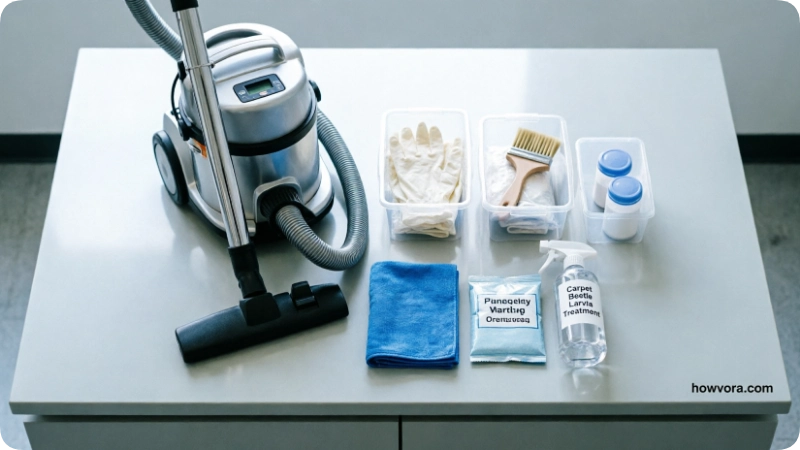
| Vacuum cleaner with attachments | Remove larvae and debris |
| Laundry detergent | Wash infested fabrics |
| Garbage bags | Dispose of contaminated materials |
| Storage containers | Protect cleaned items |
| Soft brush | Clean cracks and corners |
| Sticky traps | Monitor activity |
| Optional insecticide | Treat hidden infestations |
Safety Precautions
- Read and follow all pesticide label instructions.
- Keep children and pets away from treated areas.
- Wear gloves when handling contaminated materials.
- Avoid mixing cleaning chemicals.
- Use adequate ventilation when applying insecticides.
- Dispose of heavily damaged materials responsibly.
Step-by-Step Guide
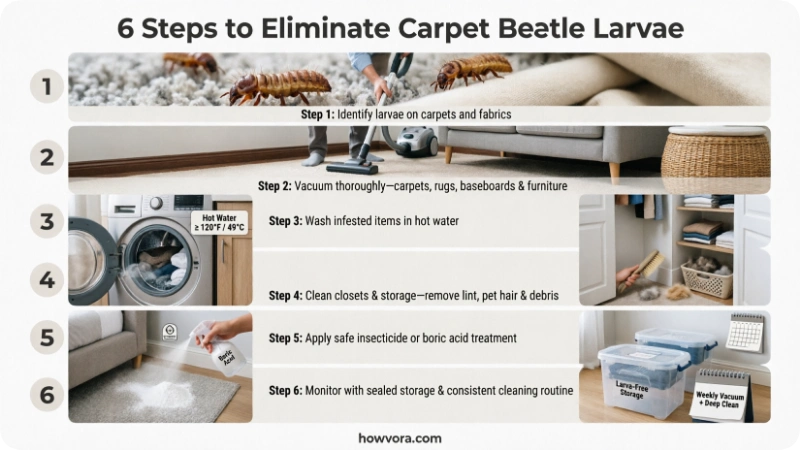
Step 1: Confirm the Presence of Carpet Beetle Larvae
What to Do
Inspect carpets, rugs, closets, stored fabrics, upholstered furniture, air vents, and baseboards. Look for small, brown, hairy larvae or shed skins.
Why It Matters
Correct identification prevents wasting time treating the wrong pest.
What Success Looks Like
You locate larvae, shed skins, damaged fabrics, or feeding areas.
Common Beginner Mistakes
- Confusing larvae with clothing moths.
- Ignoring hidden storage areas.
- Focusing only on visible damage.
Step 2: Vacuum Thoroughly
What to Do
Vacuum carpets, rugs, upholstery, baseboards, vents, closets, corners, and underneath furniture. Use crevice attachments whenever possible.
Why It Matters
Vacuuming removes larvae, eggs, food sources, and shed skins.
What Success Looks Like
Areas are visibly clean with reduced signs of activity.
Common Beginner Mistakes
- Skipping edges and corners.
- Vacuuming only once.
- Forgetting under furniture.
Step 3: Wash or Treat Infested Fabrics
What to Do
Wash washable items using the hottest safe water setting recommended by the manufacturer. Dry-clean delicate items.
Why It Matters
Heat and cleaning remove larvae and eggs hidden in fabrics.
What Success Looks Like
Affected clothing and textiles are cleaned and protected.
Common Beginner Mistakes
- Returning items to contaminated storage.
- Washing only visibly damaged items.
- Ignoring blankets and stored clothing.
Step 4: Eliminate Food Sources
What to Do
Remove lint, pet hair, feathers, dead insects, and natural-fiber debris from the home.
Why It Matters
Larvae survive by feeding on organic materials.
What Success Looks Like
Food sources become scarce, slowing larval development.
Common Beginner Mistakes
- Ignoring pet bedding.
- Forgetting air vents and attic spaces.
- Overlooking stored wool or silk items.
Step 5: Treat Hidden Areas
What to Do
Inspect cracks, wall voids, storage areas, attics, crawl spaces, and behind furniture. Apply approved treatments if necessary.
Why It Matters
Many larvae remain hidden where routine cleaning cannot reach.
What Success Looks Like
No signs of larvae in previously infested areas.
Common Beginner Mistakes
- Treating only visible locations.
- Using excessive insecticides.
- Skipping follow-up inspections.
Step 6: Store Vulnerable Items Properly
What to Do
Place clean clothing, blankets, rugs, and seasonal items in sealed plastic containers or garment bags.
Why It Matters
Protected storage prevents reinfestation.
What Success Looks Like
Stored items remain free of damage.
Common Beginner Mistakes
- Storing items before cleaning.
- Using damaged storage containers.
- Leaving containers partially open.
Step 7: Monitor for Continued Activity
What to Do
Use sticky traps and conduct weekly inspections.
Why It Matters
Early detection prevents a small problem from becoming a large infestation.
What Success Looks Like
No new larvae, shed skins, or fabric damage appear.
Common Beginner Mistakes
- Stopping inspections too soon.
- Assuming one cleaning session solves the problem.
- Ignoring rarely used rooms.
How to Know You Did It Correctly
Look for these signs:
- No live larvae are found.
- No new fabric damage appears.
- Sticky traps remain empty.
- Shed skins stop appearing.
- Previously infested areas remain clean.
A successful treatment should show noticeable improvement within a few weeks.
Expected Timeline and Results
| Time Period | Expected Results |
| First Week | Reduced larval activity |
| Weeks 2–4 | Few or no new signs |
| Weeks 4–6 | Infestation largely eliminated |
| Beyond 6 Weeks | Continued prevention and monitoring |
If activity continues after six weeks, reassess hidden areas or consider professional treatment.
Alternative Methods
Freezing Infested Items
Advantages
- Chemical-free
- Effective for delicate items
Disadvantages
- Requires freezer space
- Not practical for large objects
Best For
Small textiles and collectibles.
Steam Cleaning
Advantages
- Kills larvae with heat
- Cleans carpets simultaneously
Disadvantages
- Requires equipment
- May not reach all hiding spots
Best For
Carpets, rugs, and upholstery.
Insecticides
Advantages
- Reaches hidden areas
- Useful for severe infestations
Disadvantages
- Requires safety precautions
- Not suitable for all situations
Best For
Large or persistent infestations.
Common Mistakes to Avoid
| Mistake | Why It Happens | Consequence | Prevention |
| Vacuuming only once | Underestimating infestation | Reinfestation | Repeat weekly |
| Ignoring storage areas | Hidden larvae overlooked | Continued activity | Inspect all storage spaces |
| Skipping fabric treatment | Focus on carpets only | Larvae survive in clothing | Wash or dry-clean fabrics |
| Storing unclean items | Lack of preparation | Reinfestation | Clean before storage |
| Ending treatment early | Activity appears reduced | Remaining eggs hatch | Continue monitoring |
Why Many Attempts Fail
Incomplete Cleaning
Larvae often hide in overlooked locations.
Untreated Fabrics
Clothing, blankets, and rugs can harbor surviving larvae.
Hidden Food Sources
Pet hair, feathers, and dead insects sustain infestations.
Lack of Follow-Up
Eggs may hatch after initial cleaning.
Misidentification
Treating the wrong pest leads to ineffective control.
Troubleshooting & Common Problems
| Problem | Possible Cause | Solution |
| Larvae keep appearing | The hidden source remains | Inspect less-accessible areas |
| New fabric damage | Untreated textiles | Wash and store properly |
| Traps continue catching beetles | Adult beetles entering home | Seal entry points |
| Infestation returns | Eggs survived | Repeat cleaning cycle |
| Damage spreads | Delayed treatment | Act immediately and thoroughly |
Expert Tips
- Vacuum along baseboards and under furniture where larvae commonly hide.
- Inspect air vents because lint accumulation attracts larvae.
- Clean pet bedding frequently to reduce food sources.
- Store wool, silk, fur, and natural-fiber items in sealed containers.
- Inspect secondhand furniture and clothing before bringing them indoors.
- Continue monitoring for at least one month after activity stops.
When to Call a Professional
DIY methods are usually sufficient for small infestations.
Consider professional pest control if:
- Damage is extensive.
- Larvae continue appearing after several weeks.
- Multiple rooms are affected.
- Infestations repeatedly return.
- Hidden structural spaces are involved.
Professional treatment may include targeted insecticides, inspection of hidden areas, and long-term monitoring.
What to Do Next
Once the infestation is under control:
- Vacuum regularly.
- Store susceptible fabrics properly.
- Reduce lint and pet hair buildup.
- Inspect seasonal clothing before storage.
- Monitor vulnerable areas periodically.
- Address signs of new activity immediately.
FAQs
What kills carpet beetle larvae instantly?
Direct contact with heat, steam, or appropriately labeled insecticides can kill larvae quickly. Thorough cleaning remains essential because eggs and hidden larvae may survive.
Can carpet beetle larvae live in beds?
Yes. They may be found in bedding, mattresses, blankets, and areas where natural fibers accumulate.
How long do carpet beetle larvae live?
Depending on conditions and food availability, larvae can develop over several months before becoming adults.
Are carpet beetle larvae harmful to humans?
They do not bite, but some people experience skin irritation from larval hairs.
Will vacuuming alone get rid of carpet beetle larvae?
Vacuuming helps significantly, but complete control usually requires fabric treatment and removal of food sources.
Can carpet beetles infest clean homes?
Yes. Even clean homes can provide food sources such as lint, pet hair, natural fibers, and dead insects.
Do carpet beetles prefer certain fabrics?
They are especially attracted to wool, silk, fur, feathers, leather, and other natural materials.
Should I throw away infested items?
Not necessarily. Most items can be cleaned, washed, frozen, or dry-cleaned successfully.
Final Thoughts
Learning how to get rid of carpet beetle larvae starts with identifying the infestation, thoroughly cleaning affected areas, treating vulnerable fabrics, and eliminating food sources. Consistent follow-up is often the difference between temporary relief and complete eradication. By combining careful cleaning, proper storage, and ongoing monitoring, you can eliminate carpet beetle larvae and significantly reduce the risk of future infestations.

1 thought on “How to Get Rid of Carpet Beetle Larvae Fast”