Finding a writhing mass of maggots in your trash can, kitchen, or backyard is one of those household problems that demands an immediate response. Maggots are fly larvae, and they show up wherever flies find rotting food, moisture, and warmth to lay their eggs, most often in trash cans, but also in pet waste areas, compost bins, and occasionally kitchens with forgotten food scraps.
This guide is for anyone dealing with an active maggot problem right now, not just a future prevention plan. You’ll learn how to kill the maggots you can see, how to eliminate the eggs and residue that cause reinfestation within days, and how to stop the cycle for good.
Whether you’re dealing with a few dozen maggots in a trash can or a recurring problem that keeps returning no matter what you try, this guide walks through the fastest methods first and explains exactly why maggots keep coming back if you skip the cleanup step.
Featured Snippet
To get rid of maggots, pour boiling water directly on them for an instant kill, then scrub the area with hot, soapy water or a diluted bleach solution to remove eggs and residue. Let everything dry completely, since moisture and leftover food waste are what invite flies back.
Before You Begin
Difficulty: Easy; no special skills are required, though thoroughness matters more than speed.
Time: 15–30 minutes for the initial kill-and-clean; ongoing prevention takes just a few minutes with each trash disposal.
Cost: Free to under $10; most methods use items already in your home (boiling water, vinegar, dish soap, bleach). Optional long-term products like insect-repelling pods run $10–$15.
DIY vs. Professional: Nearly always a DIY job. Professional pest control is only worth calling for large-scale or recurring infestations tied to a structural issue, like a dead animal in a wall or a persistent fly problem you can’t source.
Prerequisites: Access to boiling water, a scrub brush or sponge, disposable gloves, and a way to bag and remove the source material (food waste, animal waste, or other organic debris) that the maggots are feeding on.
Choosing the Right Approach
Not every method works equally well for every situation. Some are built for speed, some for lasting prevention, and the right choice depends on how bad the infestation is and where it’s happening.
| Method | Speed | Effort | Best For | Downside |
| Boiling water | Instant kill on contact | Low | Small to moderate infestations in trash cans or hard surfaces | Won’t reach hidden pockets; can warp thin plastic bins if poured directly and repeatedly |
| Vinegar solution (1 part vinegar to 3 parts hot water) | Kills within minutes | Low | Anyone wanting a non-toxic option can also deodorize | Slower than boiling water or bleach; needs weekly repeats in ongoing problem areas |
| Diluted bleach (1 part bleach to 10 parts water) | Kills within minutes | Low–Moderate | Severe or recurring infestations; also disinfects | Toxic fumes if mixed with ammonia-based cleaners; not for use near pets, plants, or drains that feed septic systems |
| Salt | Kills over 30–60 minutes via dehydration | Low | Spot-treating visible maggots outdoors or in dry areas | Doesn’t kill eggs; slower than other methods |
| Household insecticide spray | Kills within minutes | Low | Persistent trash can or outdoor infestations | Chemical residue; not ideal near food-prep areas or pets |
| Long-release repellent pod (e.g., insect-control trash pod) | No instant kill; continuous prevention | Very low | Outdoor bins or dumpsters with recurring fly problems | Doesn’t address an infestation already in progress; must be paired with an initial kill method |
For an active infestation you want gone right now, boiling water is the fastest first move. For a problem that keeps returning, pair an initial kill (boiling water, vinegar, or bleach) with a deep clean and, if needed, a longer-term repellent product.
At a Glance
| Category | Details |
| Difficulty | Easy |
| Time | 15–30 minutes |
| Cost | Free–$15 |
| Skill level | Beginner-friendly |
| Best for | Trash cans, outdoor bins, kitchens, pet waste areas, compost bins |
Things You’ll Need
| Item | Purpose |
| Boiling water (kettle or large pot) | Kills maggots instantly on contact |
| White vinegar | Non-toxic kill method; also deodorizes to reduce fly attraction |
| Household bleach | Kills maggots and disinfects surfaces for severe or recurring cases |
| Table salt | Dehydrates and kills maggots without chemicals |
| Dish soap | Breaks down grease and residue; helps solutions penetrate faster |
| Scrub brush or long-handled brush | Removes eggs and residue from seams, corners, and lid edges |
| Disposable gloves | Protects your hands during cleanup and disposal |
| Heavy-duty trash bags | Safely bagging and disposing of dead maggots and infested waste |
Safety Precautions
- Never mix bleach with ammonia or other cleaning products. The combination produces toxic fumes. Use bleach solutions in a well-ventilated area.
- Handle boiling water carefully, especially with thin plastic trash cans, which can warp or crack under repeated direct pours of near-boiling water.
- Wear gloves when handling maggots or infested waste directly, since the waste they’re feeding on may carry bacteria.
- Keep bleach and insecticide sprays away from pets and children until surfaces are fully rinsed and dry.
- Avoid insecticides near food-prep surfaces or areas where pets eat.
Step-by-Step Guide
Step 1: Remove Everything You Can
Before treating anything, empty the trash can, bag, or affected area as completely as possible. Bag loose trash and any visible dead maggots for disposal.
Why it matters: Treating maggots while they’re buried under trash means many will survive untouched. Clearing the area first ensures your kill method actually reaches them.
Step 2: Kill the Visible Maggots
Choose one of these based on speed and what you have on hand:
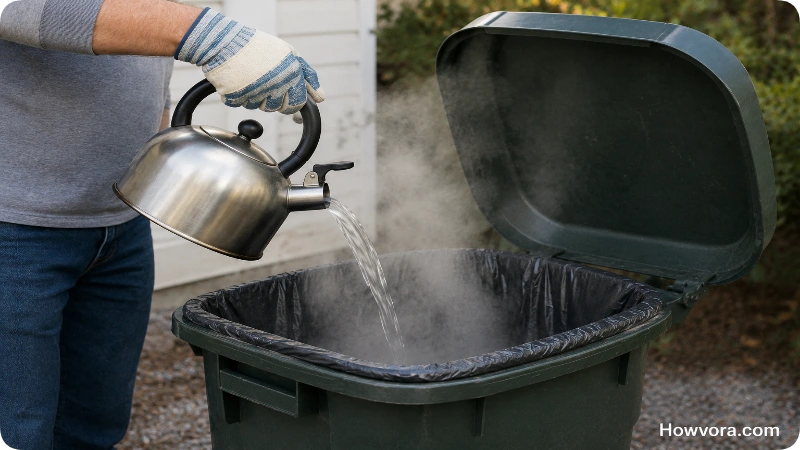
- Boiling water: Pour it directly and thoroughly over every visible maggot. Repeat if you see continued movement.
- Vinegar solution: Mix 1 part vinegar with 3 parts hot water, and pour or spray it directly onto the maggots. Let it sit for at least 30 minutes.
- Diluted bleach: Mix 1 part bleach with 10 parts water, pour it over the area, and let it sit for 10–30 minutes before rinsing.
Common mistake: Only treating the maggots you can see in the open. Check seams, corners, and the underside of the lid, where maggots and eggs often cluster out of sight.
Step 3: Scrub the Entire Surface
Using hot, soapy water and a scrub brush, clean every interior surface, walls, floor, seams, and lid of the container or area. This physically removes eggs and food residue that a liquid treatment alone might miss.
Why it matters: Fly eggs are microscopic and can survive a liquid treatment that only touches the surface. Scrubbing is what actually removes them, not just kills what’s visible.
Step 4: Disinfect
Wipe down the area with a diluted bleach solution (1 part bleach to 10 parts water) or a full-strength vinegar rinse. This step targets any remaining bacteria, eggs, or odor residue that could attract new flies.
Step 5: Rinse and Dry Completely
Rinse away all soap, bleach, or vinegar residue, then let the area air dry fully, ideally in direct sunlight if it’s an outdoor trash can. Do not close the lid or add new trash until it’s completely dry.
Why it matters: Moisture is one of the biggest reasons maggot infestations return. A damp trash can, even a clean one, is still an inviting environment for flies looking for a place to lay eggs.
Step 6: Dispose of Waste Properly Going Forward
Once the area is clean, bag food waste tightly, take out trash regularly, and avoid letting organic material sit for more than a day or two, especially in warm weather.
How to Know You Did It Correctly
- No maggots or eggs are visible after a close inspection of corners, seams, and lid edges.
- The area is fully dry, with no lingering odor of rot or decay.
- No new maggots appear within 3–5 days, which is roughly the time it would take for any surviving eggs to hatch.
Expected Timeline and Results
Killing visible maggots takes just a few minutes with any of the methods above. Full elimination, including eggs and residue, typically takes one thorough cleaning session of 15 to 30 minutes. If the infestation is recurring, expect to repeat the process weekly for two to three weeks while you also address the root cause (usually food waste storage or trash can moisture), since new flies can lay eggs again within 24 hours of finding an attractive spot.
Alternative Methods
Freezing works well for indoor or portable trash cans. Place the can (or a bag of the infested material) in a freezer for a few hours; the cold effectively stops maggots without chemicals. This is a solid option if you’d rather not use boiling water or bleach.
Long-release repellent pods are worth considering for outdoor bins or dumpsters with a recurring fly problem. These attach to the inside of the lid and release a slow, deep-penetrating vapor that keeps killing new arrivals for weeks or months. They don’t replace an initial cleaning, but they cut down on how often you have to repeat one.
Diatomaceous earth, a natural powder made from fossilized algae, can be sprinkled in dry areas prone to maggots (like around outdoor bins) as an ongoing deterrent, though it’s less effective once an area is wet.
Common Mistakes to Avoid
- Killing the maggots but skipping the scrub-and-disinfect step. Eggs and food residue left behind will produce a new generation within days.
- Closing the lid on a still-damp trash can. Moisture is one of the top reasons infestations return.
- Mixing bleach with other cleaning chemicals. This creates dangerous fumes and should never be done.
- Treating only the trash can and ignoring the surrounding ground. Maggots that crawl out in search of moisture can survive nearby and return.
- Waiting too long to act. Maggots can appear within 24 hours of flies gaining access to food waste, so a fast response limits how large the problem gets.
Troubleshooting & Common Problems
| Problem | Cause | Solution |
| Maggots reappear a few days after cleaning | Eggs survived the initial treatment | Scrub all seams and corners thoroughly, not just visible surfaces, and repeat weekly until the cycle breaks |
| Maggots keep showing up even after the can is clean | Ongoing food waste or moisture is still attracting flies | Bag food scraps tightly, take out trash more frequently, and let the can dry fully between uses |
| Maggots are crawling outside the trash can | Overcrowding or disturbance inside the can pushed them out in search of moisture | Treat the surrounding ground with boiling water or salt, and identify and remove any nearby moisture source.e |
| Bad odor persists after cleaning | Residue or bacteria remain in seams or under the lid rim | Do a second scrub with a vinegar or bleach solution, focused specifically on odor-trapping crevices |
| Infestation returns every summer | Warm weather increases fly activity and speeds up the egg-to-maggot cycle | Set up a preventive routine before summer: weekly trash can cleaning and a long-release repellent pod |
Expert Tips
- Boiling water works fastest, but it only kills what it directly touches; always follow it with a scrub, not just a rinse, to catch eggs in corners and seams.
- If odor is part of the problem, vinegar does double duty: it kills maggots and removes the smell that draws flies back in the first place.
- For trash cans with a recurring problem, adding a thin layer of baking soda to the bottom before inserting a new bag helps control odor between cleanings without adding moisture.
- Clean trash cans on a schedule at least monthly, and weekly during hot summer months rather than only after an infestation appears; this keeps the egg-to-maggot cycle from ever getting a foothold.
When to Call a Professional
Most maggot problems are simple DIY fixes, but call a pest control professional if the infestation is large-scale, keeps recurring despite consistent cleaning and prevention, or seems to be coming from a source you can’t identify, such as a dead animal inside a wall or crawl space. A professional can also help if flies are entering through structural gaps you haven’t been able to locate and seal.
What to Do Next
Once the maggots are gone, shift your focus to prevention: take out trash regularly, bag food scraps tightly before disposing of them, keep trash cans dry, and clean bins on a monthly (or weekly, in summer) schedule. If outdoor bins are a recurring problem, a long-release repellent pod can cut down on how often you need to repeat the full cleaning process.
FAQs
How fast do maggots appear after flies get into my trash?
Flies can lay eggs that hatch into maggots within about 24 hours, especially in warm weather.
Does bleach really kill maggots?
Yes. A diluted bleach solution (roughly 1 part bleach to 10 parts water) kills maggots on contact and disinfects the surface at the same time.
Can maggots survive in a clean trash can?
Not for long. Without food waste or moisture, maggots have nothing to feed on or thrive in, which is why a full scrub-and-dry cleaning is more effective than just killing the visible maggots.
Are maggots harmful to touch?
Maggots themselves aren’t venomous or aggressive, but the decaying material they’re found in can carry bacteria, so gloves are recommended during cleanup.
Why do maggots keep coming back even after I clean the trash can?
Usually, because eggs survived in seams or corners, moisture wasn’t fully dried out, or new food waste attracted more flies. Address all three, not just the visible maggots.
Is it better to use boiling water or bleach?
Boiling water is faster and chemical-free, making it ideal for a quick kill. Bleach adds disinfecting power and is better suited to severe or recurring infestations.
Can maggots get into my house from an outdoor trash can?
It’s uncommon but possible if maggots crawl short distances searching for moisture, or if flies breeding in an outdoor bin make their way indoors. Keeping the outdoor can clean and sealed reduces this risk.
Final Thoughts
Maggots look alarming, but they’re one of the more straightforward pest problems to solve; the key is treating both the maggots you see and the eggs and moisture you don’t. Kill what’s visible with boiling water, vinegar, or bleach, then scrub and dry the area completely so there’s nothing left to attract flies back. Pair that with a regular cleaning routine, and a maggot infestation becomes a rare, quickly-handled inconvenience rather than a recurring problem.
Image Prompts
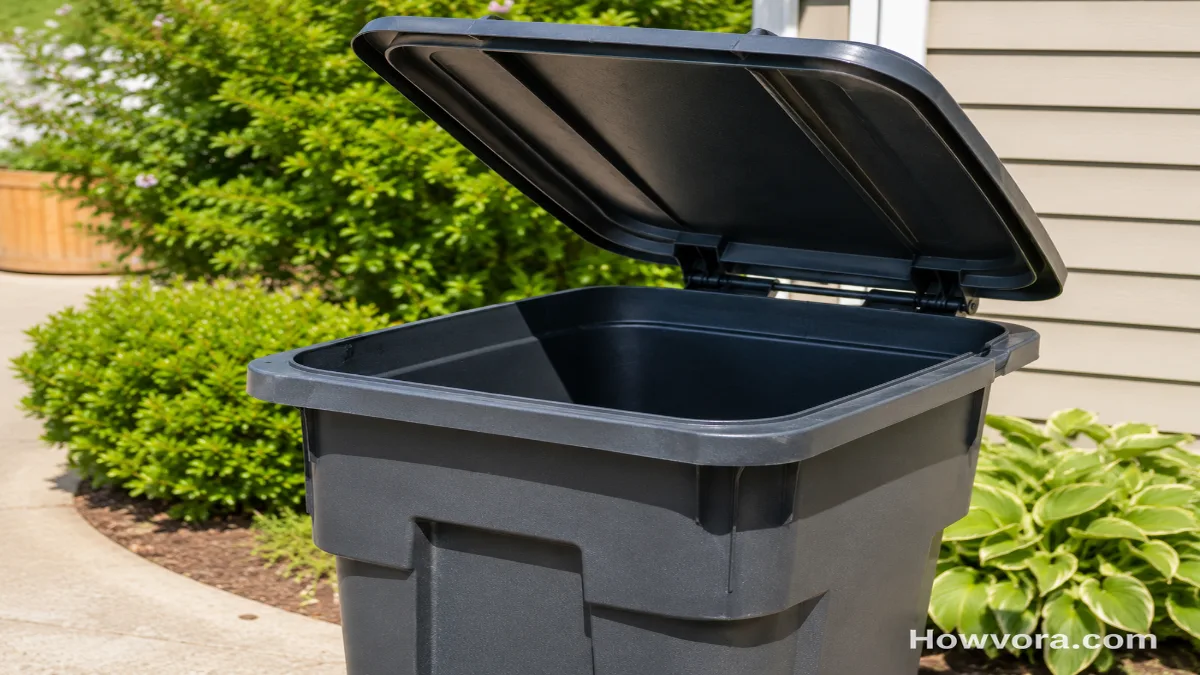
Feature Image: A clean, empty outdoor trash can with its lid open, sitting in bright daylight, no visible pests, realistic photography style suggesting a “problem solved” moment. Watermark: “Howvora.com”
Before You Begin: A flat-lay of cleaning supplies for maggot removal: a kettle, a white vinegar bottle, dish soap, a scrub brush, and rubber gloves, arranged on a concrete surface. Watermark: “Howvora.com”
Step-by-Step Guide: A gloved hand pours boiling water from a kettle into an outdoor trash can, steam visible, realistic daylight photography. Watermark: “Howvora.com”
Meta Description (character count verified: 143): Get rid of maggots fast with proven methods for killing them and stopping fly infestations from coming back in trash cans and around your home.