Introduction
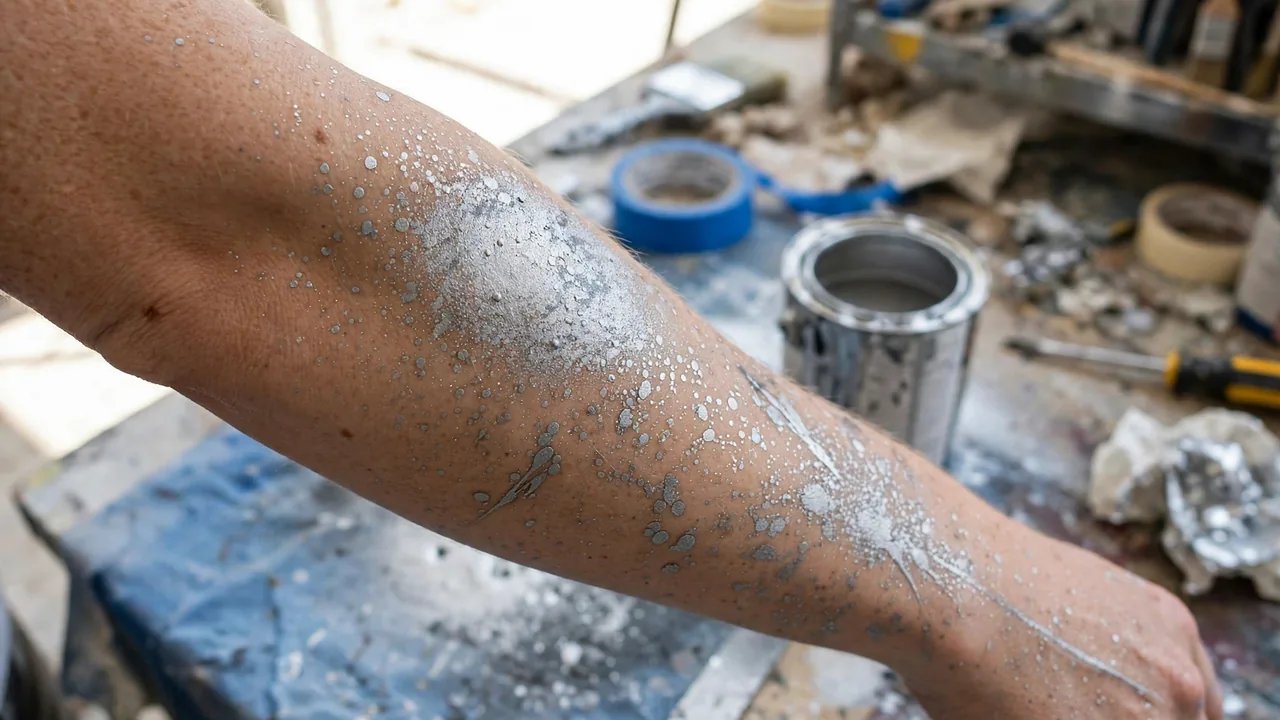
Spray paint does not respect boundaries. You mask the project, aim carefully, and still end up with a colored film across your fingers, your wrists, and sometimes your face. The good news is that paint on skin is a surface problem, not a permanent one, and the gentlest tools in your kitchen usually beat the harsh chemicals under the sink.
This guide shows you how to get spray paint off skin the safe way: oil first to loosen the paint binder, then soap and gentle friction to lift it away. It covers dried paint that has had hours to set, paint under fingernails, and the common shortcuts, like paint thinner and gasoline, that damage skin and never belong on your body. If the paint is still wet, you can be clean in five minutes. If it dried overnight, the same method works, it just asks for a little more soaking time.
Featured Snippet Answer
To get spray paint off skin, rub a food oil such as olive or coconut oil over the paint for one to two minutes, then wash with dish soap and warm water while scrubbing gently with a washcloth. The oil loosens the paint binder, so the paint lifts away without harsh solvents touching your skin.
Before You Begin
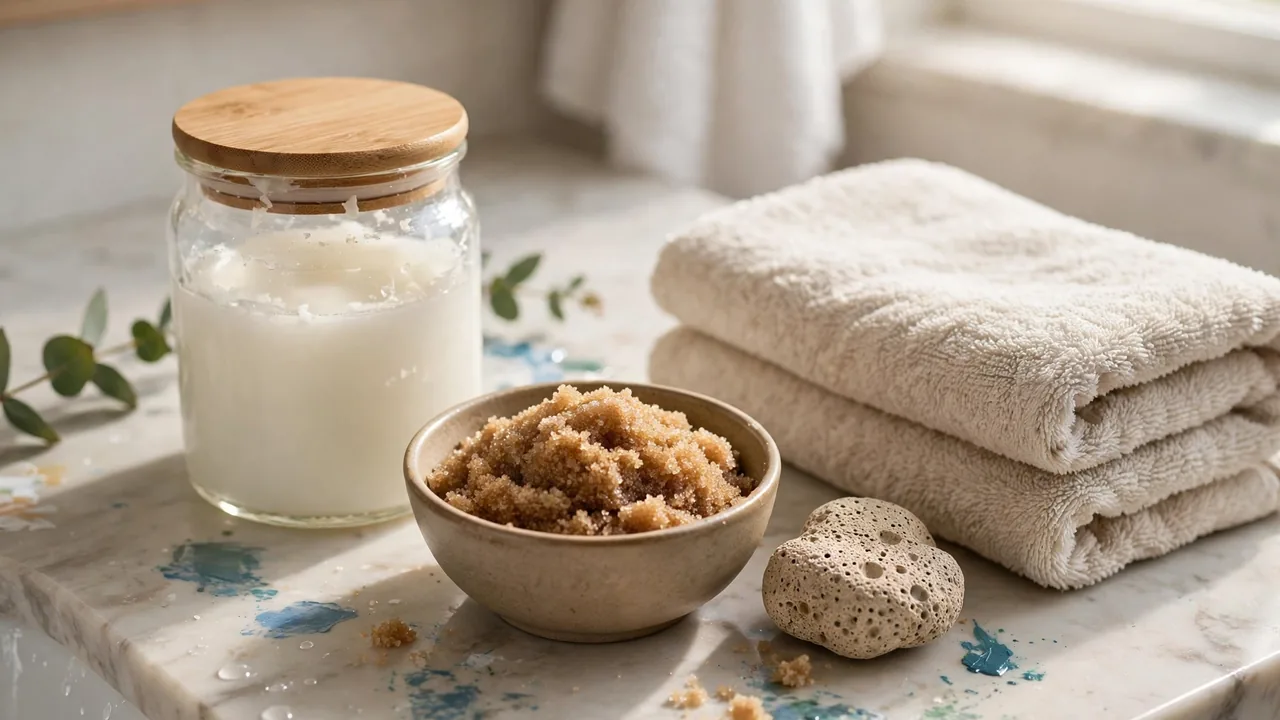
Take ten seconds to identify what you are removing, because the paint type sets your expectations. Water-based spray paints, usually labeled latex or acrylic, release fairly easily with oil and soap. Enamel and oil-based spray paints bond tighter and dry harder, so they need a longer oil soak. The can label tells you which you used, and its listed cleanup solvent hints at how stubborn the dried film will be.
Check the skin underneath as well. If the painted area has cuts, cracked skin, eczema, or a rash, skip the scrubbing steps and use only oil and gentle washing, since friction and soap sting broken skin and slow healing. Work on children and on faces with oil and a soft cloth only. If paint has reached your eyes, stop here and rinse with clean water for several minutes, then seek medical advice if irritation continues.
At a Glance
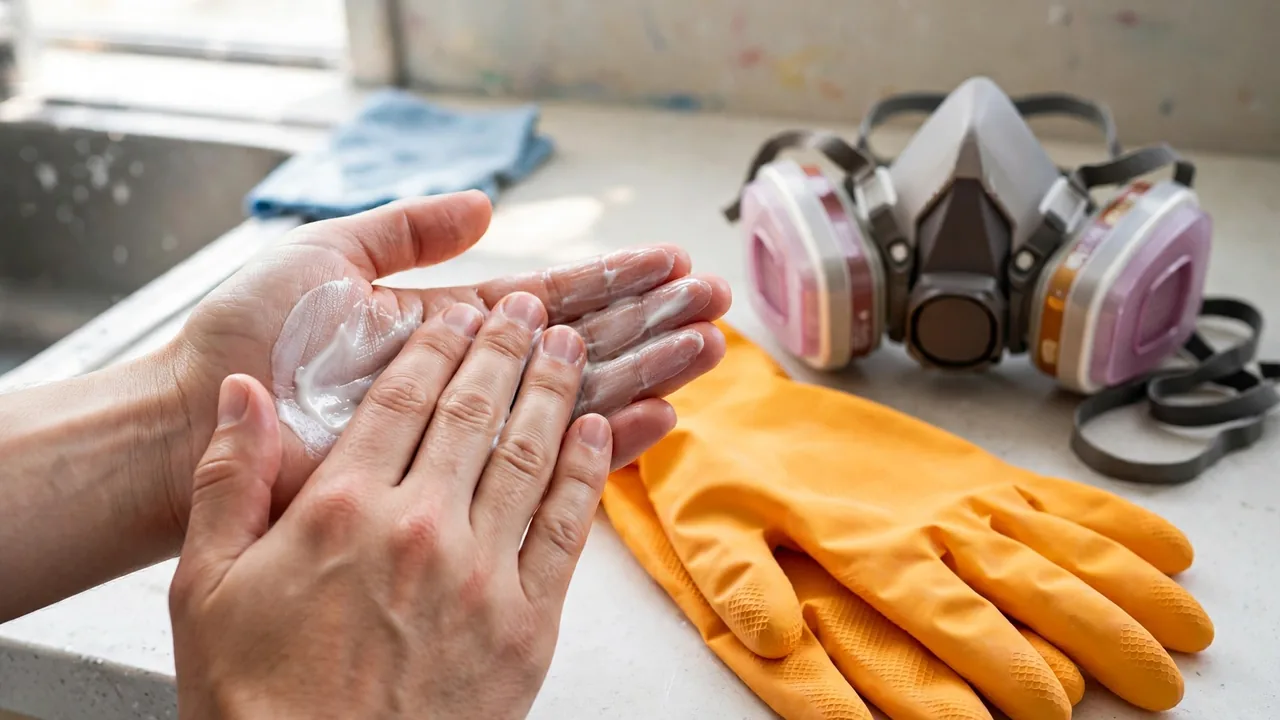
| Detail | What to know |
|---|---|
| Difficulty | Easy |
| Time needed | 5 minutes for fresh paint, 10 to 20 minutes for dried paint |
| Cost | Almost nothing; uses kitchen and bathroom basics |
| Skill level | Beginner, no experience needed |
| Best for | Hands, arms, and legs after spray painting projects |
Things You’ll Need
| Item | Purpose |
|---|---|
| Olive, coconut, or baby oil | Loosens the paint binder so the film releases from skin |
| Dish soap | Cuts through the oil and carries the loosened paint away |
| Warm water | Softens dried paint and helps soap rinse clean |
| Washcloth or soft nail brush | Adds gentle friction without tearing skin |
| Baking soda | Forms a mild abrasive paste for stubborn patches |
| Pumice stone | For thick skin on palms and heels only, never on thin skin |
| Moisturizer | Restores skin after repeated washing and scrubbing |
| Old towel | Protects surfaces from colored rinse water |
Safety Precautions
- Never use gasoline, paint thinner, lacquer thinner, or turpentine on skin. These solvents strip skin oils, cause irritation and dermatitis, and absorb through skin. They are tool cleaners, not body cleaners.
- Keep acetone and nail polish remover off large areas, faces, and children. A tiny dab on one fingertip is one thing; soaking hands in it dries and cracks skin fast.
- Stop if you feel burning, stinging that builds, or see spreading redness. Rinse with plain water, pat dry, and moisturize. Pain is information, not a step to push through.
- Keep scrubbing tools gentle. Steel wool, scouring pads, and stiff brushes tear the skin surface and can push pigment into tiny cuts.
- Keep paint away from eyes and lips throughout. Wash hands before eating, and do not rub your face with painted hands.
Step-by-Step Guide
- Step 1: Wash first with soap and warm water. Fresh paint that has not set often comes off with dish soap alone. Work up a lather, rub for thirty seconds, and rinse. This removes the loose outer layer and tells you how much paint actually bonded.
- Step 2: Massage oil into the painted skin. Pour a small amount of olive, coconut, or baby oil over the area and rub it in with your fingers for one to two minutes. The oil works its way under the paint film and softens the binder that glues paint to skin. You should see the color start to smear and lift at the edges.
- Step 3: Add dish soap and scrub gently. Without rinsing the oil off, add a drop of dish soap and scrub with a washcloth or soft nail brush in small circles. The soap breaks down the oil while the cloth carries the loosened paint away. Rinse with warm water and check your progress.
- Step 4: Repeat the oil step for dried paint. Dried enamel rarely leaves in one round. Apply oil again and let it sit for three to five minutes this time, keeping the area coated. Patience here replaces the hard scrubbing that damages skin.
- Step 5: Use a baking soda paste on stubborn patches. Mix baking soda with a little water or oil into a paste, and rub it gently over spots that resist. The fine grit adds mild abrasion that helps the oil lift the last of the film. Keep pressure light and skip this on your face or on broken skin.
- Step 6: Use a pumice stone only on palms and heels. Thick skin tolerates a pumice stone well. Wet the stone, rub lightly over remaining paint on calloused areas, and rinse often so you can see what is left. Never use pumice on the backs of hands, arms, or any thin skin.
- Step 7: Clean under fingernails. Paint hides under nails and along cuticles. Soak your fingertips in warm soapy water with a drop of oil for a few minutes, then work a nail brush or the edge of a soft toothbrush along the nail line. An orange wood stick wrapped in a bit of damp cloth reaches under the nail tip without scratching.
- Step 8: Rinse, dry, and moisturize. Rinse everything with warm water, pat dry with the old towel, and apply moisturizer. Oil, soap, and scrubbing remove your skin oils along with the paint, and moisturizer keeps the cleaned skin from drying and cracking.
How to Know You Did It Correctly
Run a clean white cloth or tissue over the area. If it comes away clean, the paint is gone, since even a thin remaining film transfers color. Check in bright light, ideally daylight, because bathroom lighting hides faint traces, especially with light colors like white, grey, and pastel shades. Your skin should feel normal, not tight, stinging, or raw. Faint color in knuckle lines or under a nail edge is usually a trace in dead surface skin, and it fades within a day of normal washing.
Expected Timeline and Results
Fresh water-based paint usually clears in two to five minutes with soap and a short oil rub. Fresh enamel takes five to ten minutes. Paint that dried for hours needs ten to twenty minutes, most of it soaking time rather than scrubbing time. The exceptions are pigment lodged under fingernails and color settled into deep skin lines, and both fade on their own within a day or so as skin sheds its surface cells. If a large area still looks painted after two rounds, rest the skin, moisturize, and repeat later instead of scrubbing harder in one sitting.
Alternative Methods
Waterless hand cleaner. The pumice or citrus based hand cleaners sold for mechanics work well on hands and are formulated for skin. Follow the label, use them on hands only, and rinse after.
Makeup remover and cleansing oils. These are designed to dissolve stubborn pigments on facial skin, so they handle spray paint overspray on cheeks and foreheads gently. Apply with a cotton pad, let it sit briefly, and wipe.
Mayonnaise or butter. Both are oil with emulsifiers, and in a pinch they loosen paint the same way bottled oil does. They are messy, but they work when nothing else is at hand.
Rubbing alcohol, as a last resort on hands only. A small amount on a cloth can lift a stubborn spot on the back of a hand. It dries skin quickly, so use it sparingly, rinse, and moisturize. Keep it away from faces, children, and broken skin.
Common Mistakes to Avoid
- Reaching for paint thinner or gasoline. This is the most common and worst mistake. Solvents that strip paint from metal also strip and irritate skin, and they add a health risk the paint itself never posed.
- Scrubbing harder instead of soaking longer. Pressure is not what releases paint; oil and time do. Hard scrubbing produces raw skin with paint still sitting in it.
- Starting with soap alone on dried enamel. Soap cannot dissolve a set enamel film. Oil has to soften the binder first, which is why the order in the steps matters.
- Using hot water. Hot water dries skin and sets you up for cracking. Warm water softens paint just as well and is far kinder.
- Skipping moisturizer. Clean but dried-out skin cracks around knuckles and nails, and cracked skin grabs the next round of paint even tighter.
Troubleshooting & Common Problems
| Problem | Cause | Solution |
|---|---|---|
| Paint survives the first oil wash | Dried enamel or several heavy layers | Repeat the oil soak for a full five minutes, add the baking soda paste, and work in rounds instead of scrubbing harder |
| Skin turns red and sore | Too much friction or too many rounds at once | Stop, rinse with plain water, moisturize, and let the skin rest. Finish the job the next day with oil only |
| Color stays under the nails | Pigment packed into the nail edge | Soak fingertips in warm soapy water with oil, then brush along the nail line. Leftover traces grow out within a day |
| Paint on the face will not shift | Facial skin limits you to gentle methods | Use cleansing oil or makeup remover on a cotton pad with no scrubbing. Repeat patiently rather than switching to solvents |
| Hands smell of paint after cleaning | Solvent residue from the paint itself | Wash once more with dish soap, then rub hands with a spoonful of baking soda and rinse. Moisturize after |
Expert Tips
- Oil your hands before the next project, not just after. Rubbing a thin layer of oil or barrier cream into hands and under nails before painting means overspray sits on the oil, not your skin, and washes off in seconds.
- Wear nitrile gloves for the messy stages. Most spray paint on skin arrives during nozzle clearing, can shaking mishaps, and cleanup. Gloves during those two minutes prevent the whole problem.
- Trim and clean nails before you paint. Short, clean nails give pigment nowhere to hide. A quick brush before you start saves ten minutes of soaking afterward.
- Treat the paint while it is fresh whenever you can. A thirty second rinse between coats beats twenty minutes of soaking at the end of the day. Keep a damp soapy cloth at the work area for quick wipe downs.
When to Call a Professional
Most paint on skin is a home problem, but a few situations need medical help. Contact a doctor, an urgent care clinic, or your local poison control line if paint got into your eyes and irritation continues after rinsing, if a rash spreads or blisters, if skin swells, or if a child swallowed paint or got a large amount on sensitive skin. Bring the paint can or a photo of its label, since the product details help staff advise you quickly.
What to Do Next
Once your skin is clean and moisturized, set up a small cleanup kit where you paint: nitrile gloves, a bottle of oil, dish soap, a nail brush, and an old towel. Check the project too, because overspray that reached your skin often reached nearby surfaces, and fresh overspray wipes off tools, glasses, and handles easily now and resists later. If you spray paint often, barrier cream and waterless hand cleaner in the garage cut cleanup time to almost nothing.
FAQs
Does hand sanitizer remove spray paint from skin?
Sometimes, on fresh paint, because the alcohol softens the film. It is unreliable on dried paint and dries skin quickly. Oil and dish soap work better, so treat sanitizer as a field shortcut, not the method.
Is nail polish remover safe for removing spray paint?
Only in the smallest way: a dab on a cotton bud for one spot on a fingertip. Acetone strips skin oils aggressively, and soaking or large areas lead to dryness, cracking, and irritation. Never use it on faces or children.
How do I get spray paint off a child’s skin?
Use food oil and a soft cloth with gentle washing, and nothing harsher. Rub the oil in, let it sit a minute, then wash with mild soap and warm water. Repeat patiently. Skip pumice, baking soda scrubs, alcohol, and all solvents on children.
Will spray paint wear off skin on its own?
Yes. Skin constantly sheds its surface layer, so any paint film wears away within a few days even if you do nothing. The oil method simply speeds the process to minutes and removes the paint evenly instead of leaving it to flake.
Why does oil work better than soap alone?
Spray paint sticks through its binder, the resin that hardens into a film. Soap lifts dirt and grease but cannot soften that set film. Oil seeps under and into the binder and loosens its grip, and then soap can wash everything away.
How do I remove spray paint from my hair?
Work olive or coconut oil through the painted strands, let it sit for several minutes, then comb gently with a fine comb before shampooing. Repeat the shampoo if needed. Do not use solvents in hair, and cut out a small matted strand only as a last resort.
Can spray paint on skin make me sick?
Brief contact with a small area is a minor irritation risk for most people, not a poisoning risk. Problems come from harsh removal solvents, prolonged contact, or getting paint in eyes or mouth. If you develop spreading redness, swelling, or blistering, get medical advice.
Final Thoughts
Paint on skin feels alarming and turns out simple: soften the binder with oil, lift it with soap and gentle friction, and give dried paint soaking time instead of force. Keep solvents on your tools and off your body, moisturize when you finish, and glove up before the next coat. Clean skin, no damage.