
Introduction
Finding a snake in your yard, garage, or home can be alarming. However, most snakes are beneficial because they help control rodents and other pests.
The safest approach is to remove the snake without handling it directly and make your property less attractive to future visitors.
This guide explains how to safely get rid of a snake, prevent future encounters, and know when professional help is needed.
Featured Snippet
To get rid of a snake safely, keep your distance, identify its location, remove people and pets from the area, provide an escape route if possible, and contact a wildlife removal professional if the snake does not leave on its own. Prevent future problems by eliminating hiding spots, controlling rodents, and sealing entry points around your home.
Before You Begin
| Factor | Details |
| Difficulty | Easy to Moderate |
| Time | 15 minutes to several hours |
| Cost | Low to Moderate |
| DIY or Professional | DIY for observation and prevention; professional for removal when needed |
Choosing the Right Approach
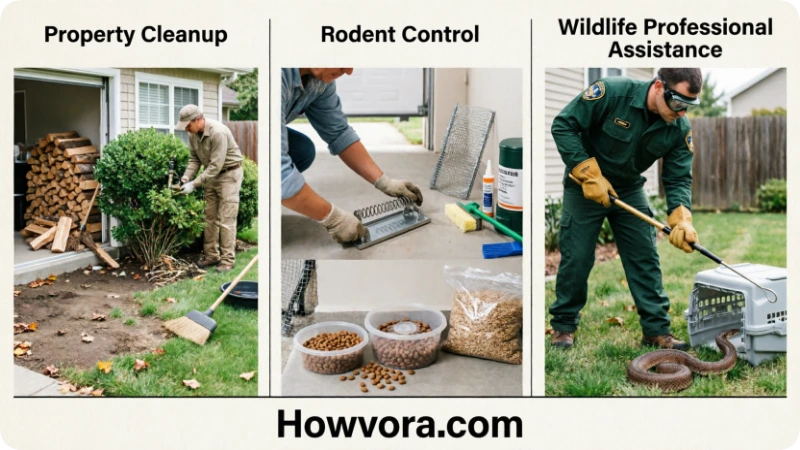
| Method | Pros | Cons | Best Use Case |
| Allow Natural Exit | No cost, minimal risk | May take time | Snake outdoors with a clear escape route |
| Property Cleanup | Long-term prevention | Requires ongoing maintenance | Repeated snake sightings |
| Professional Removal | Safest option | Service cost | Venomous or indoor snakes |
| Rodent Control | Addresses root cause | Results take time | Properties attracting snakes |
The preferred approach is safe removal combined with habitat modification because it reduces future encounters without unnecessary harm to wildlife.
At a Glance
| Category | Details |
| Skill Level | Beginner |
| Typical Time | 1–7 days for prevention measures |
| Estimated Cost | $0–$300+ depending on professional services |
Things You’ll Need
| Item | Purpose |
| Flashlight | Inspect dark areas |
| Work gloves | Property cleanup tasks |
| Pruning tools | Remove overgrown vegetation |
| Hardware cloth or mesh | Seal openings |
| Rodent-control measures | Reduce food sources |
| Trash containers with lids | Limit attraction for pests |
Safety Precautions
- Never attempt to handle or corner a snake.
- Keep children and pets away from the area.
- Assume an unidentified snake could be venomous.
- Do not attempt removal if the snake is inside living spaces and cannot safely exit.
- Contact local wildlife authorities or professional wildlife removal services when necessary.
Step-by-Step Guide
Step 1: Stay Calm and Keep Your Distance
Why It Matters
Most bites occur when people try to handle or approach snakes.
What Success Looks Like
The snake remains undisturbed, and everyone stays safe.
Common Beginner Mistakes
- Moving too close.
- Attempting to pick up the snake.
- Trying to trap it without proper experience.
Step 2: Secure the Area
Why It Matters
Preventing access reduces the risk of accidental encounters.
What Success Looks Like
Children and pets are safely indoors or away from the area.
Common Beginner Mistakes
- Leaving pets outside.
- Allowing multiple people to gather around the snake.
Step 3: Provide an Escape Route
Why It Matters
Many snakes will leave on their own when they feel safe.
What Success Looks Like
The snake moves away from structures and exits the area.
Common Beginner Mistakes
- Blocking escape paths.
- Chasing the snake.
Step 4: Remove Attractants
Why It Matters
Snakes usually follow food sources and shelter.
What Success Looks Like
The property becomes less appealing to snakes.
Common Beginner Mistakes
- Ignoring rodent problems.
- Leaving clutter near buildings.
Step 5: Seal Entry Points
Why It Matters
Small gaps allow snakes to enter garages, sheds, and homes.
What Success Looks Like
Openings around foundations, doors, and utility lines are secured.
Common Beginner Mistakes
- Missing crawl spaces.
- Forgetting damaged door sweeps.
How to Know You Did It Correctly
Signs of success include:
- No snake sightings for an extended period.
- Reduced rodent activity.
- Clean, uncluttered landscaping.
- Secured openings around structures.
Expected Timeline and Results
| Time Frame | Expected Result |
| Same Day | Immediate safety improvements |
| 1–7 Days | Habitat cleanup completed |
| 2–4 Weeks | Reduced snake activity |
| Ongoing | Long-term prevention |
Alternative Methods
Professional Wildlife Removal
Advantages: Highest level of safety.
Disadvantages: Additional cost.
Best For: Venomous snakes or indoor sightings.
Habitat Modification
Advantages: Long-term prevention.
Disadvantages: Requires maintenance.
Best For: Repeated snake encounters.
Common Mistakes to Avoid
- Attempting to catch snakes without training.
- Ignoring rodent infestations.
- Allowing vegetation to become overgrown.
- Leaving debris piles near buildings.
- Failing to inspect foundations and entry points.
Why Many Attempts Fail
- The root cause is never addressed.
- Rodents remain available as prey.
- Hiding spots are left untouched.
- Entry points stay open.
- Property maintenance is inconsistent.
Troubleshooting & Common Problems
| Problem | Possible Cause | Solution |
| Snakes keep returning | Food source nearby | Implement rodent control |
| Snake in the garage | Open gaps or doors | Seal openings and install door sweeps |
| Frequent yard sightings | Dense vegetation | Trim landscaping and remove debris |
| Snake under shed | Shelter available | Block access and clean surrounding area |
| Unsure if snake is venomous | Difficult identification | Contact a professional |
Expert Tips
- Focus on rodent control first.
- Store firewood away from structures.
- Keep grass trimmed regularly.
- Use mesh barriers around vulnerable areas.
- Inspect sheds, garages, and crawl spaces seasonally.
When to Call a Professional
Contact a wildlife removal professional if:
- The snake is inside your home.
- You suspect it may be venomous.
- The snake refuses to leave.
- Multiple snakes are appearing regularly.
- You cannot safely maintain distance.
What to Do Next
After the snake is gone:
- Inspect the property for entry points.
- Remove clutter and debris.
- Control rodent populations.
- Maintain landscaping regularly.
- Monitor for future activity.
FAQs
What attracts snakes to a yard?
Food sources such as rodents, insects, and sheltered hiding spots attract snakes.
Will removing rodents help?
Yes. Reducing rodent populations often reduces snake activity.
Can snakes enter homes?
Yes. Small gaps around foundations, doors, and utility openings can allow entry.
Should I try to move a snake myself?
No. Direct handling increases the risk of injury.
How do professionals remove snakes?
Professionals use specialized equipment and training to relocate or remove snakes safely according to local regulations.
Are all snakes dangerous?
No. Most snake species are nonvenomous and avoid human contact.
What is the best long-term prevention method?
Combining habitat cleanup, rodent control, and exclusion measures provides the best results.
Final Thoughts
The safest way to deal with a snake is to avoid direct contact, allow it to leave when possible, and make your property less attractive to future visitors. Long-term prevention focuses on removing food sources, eliminating shelter, and sealing entry points. When safety is uncertain, professional wildlife removal is the best choice.
