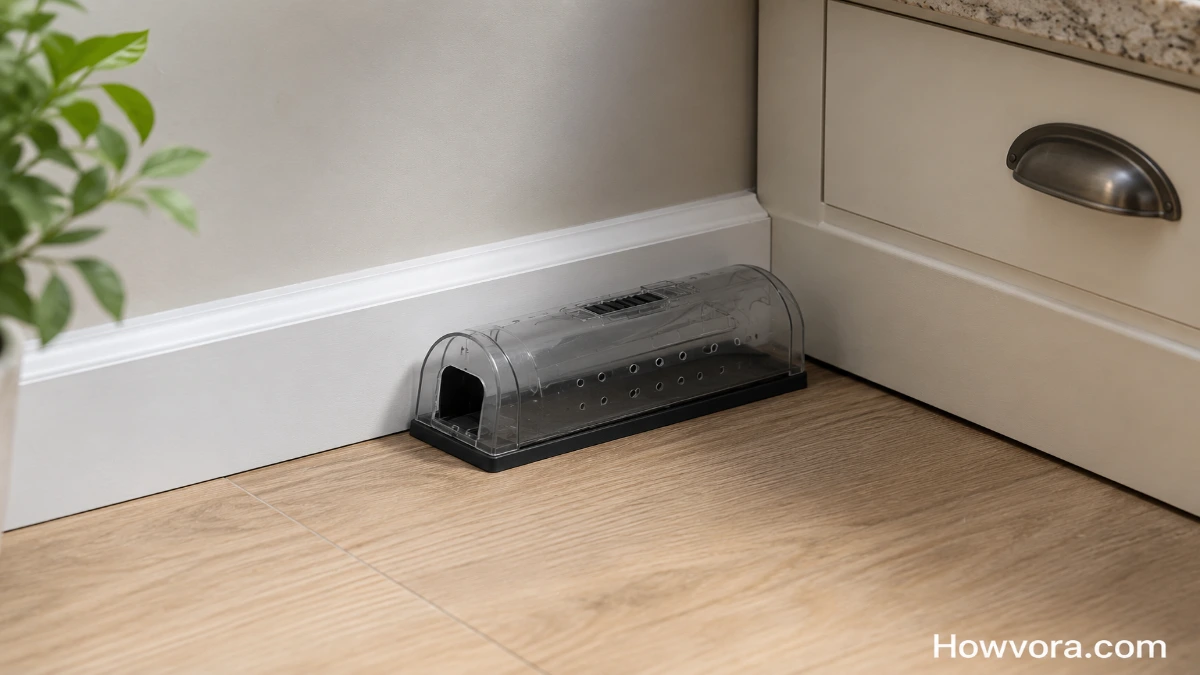
Finding mouse droppings in a kitchen drawer or hearing scratching in the walls at night is unsettling, but reaching for a snap trap or poison bait isn’t the only option. Humane mouse removal relies on live-catch trapping, scent deterrents, and, most importantly, sealing the entry points that let mice in to begin with.
This guide is for homeowners and renters who want mice gone without killing them, whether for ethical reasons, to avoid the risk of poisoned mice dying inside walls (which causes a lasting odor problem), or because pets or children make snap traps unsafe. By the end, you’ll have a full removal plan and, more importantly, a mouse-proofed home so the problem doesn’t return.
Featured Snippet
To get rid of mice humanely, seal all entry points larger than a quarter-inch, remove food and water sources, and set live-catch traps baited with peanut butter or seeds. Check traps twice daily and release mice at least two miles from your home, ideally near a wooded area with water access.
Before You Begin
Difficulty: Moderate. Trapping is easy; finding and sealing every entry point takes patience. Time investment: 1–3 weeks for full removal, plus an afternoon for exclusion work. Cost: $20–$80 for live traps and sealing materials; $150–$400 if you hire a wildlife control professional for exclusion. DIY vs. Professional: Trapping a handful of mice is a reasonable DIY project. A heavy infestation, mice in wall voids you can’t access, or signs of a larger rodent (rats) are better handled by a licensed pest control or wildlife exclusion company. Prerequisites: Know local wildlife relocation laws before you start; some states and provinces restrict how far you can relocate a trapped animal or require release on the same property.
Choosing the Right Approach
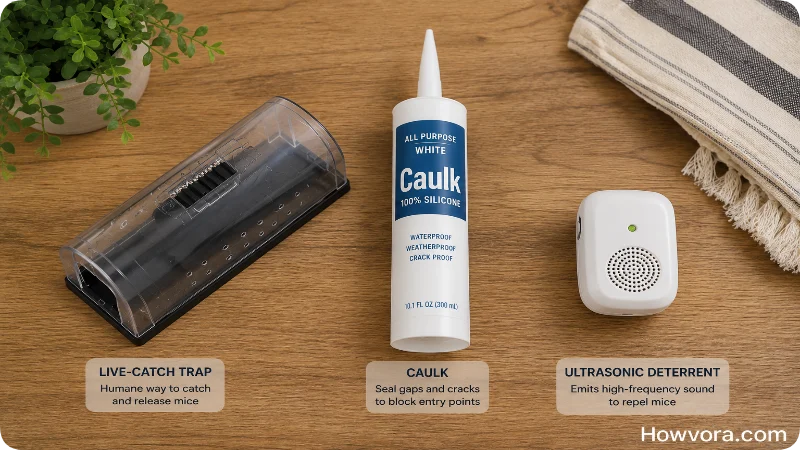
Not every humane method fits every situation. Compare the main options before committing.
| Method | Best For | Kill-Free? | Effort | Cost |
| Live-catch traps | Active mice you can see or hear | Yes | Low–Moderate | $ |
| Exclusion (sealing entry points) | Preventing new mice and stopping repeat problems | Yes | Moderate | $–$$ |
| Scent/ultrasonic deterrents | Light activity, supplementing other methods | Yes | Low | $ |
| Professional wildlife removal | Heavy infestations, inaccessible nests, rats | Yes | Low (for you) | $$$ |
Exclusion is the only method on this list that actually solves the underlying problem; traps and deterrents remove or repel the mice currently inside, but new mice will keep entering until gaps are sealed. Most effective plans combine trapping with exclusion rather than relying on one alone.
At a Glance
| Factor | Details |
| Difficulty | Moderate |
| Time to complete | 1–3 weeks |
| Cost | $20–$80 (DIY) |
| Skill level | Beginner-friendly |
| Best for | 1–10 mice, accessible entry points |
Things You’ll Need
| Item | Purpose |
| Live-catch (humane) traps | Capture mice without killing them |
| Peanut butter, oats, or sunflower seeds | Bait that outperforms cheese for mice |
| Steel wool or copper mesh | Plug small gaps mice can’t chew through |
| Caulk or expanding foam | Seal cracks and gaps around pipes and cables |
| Flashlight | Inspect dark corners, behind appliances, and the foundation |
| Disposable gloves | Handle traps and droppings without direct contact |
| Disinfectant spray | Clean areas of droppings or urine safely |
| Airtight food storage containers | Remove the food source that attracts mice |
Safety Precautions
Mice can carry hantavirus and other pathogens in their droppings and urine, so cleanup matters as much as removal. Never sweep or vacuum dry droppings, since this can aerosolize particles. Instead, spray the area with disinfectant, let it soak for five minutes, then wipe it up with a paper towel while wearing gloves. Ventilate the room before you start. Wash your hands thoroughly after handling any trap, whether or not it caught a mouse.
Step-by-Step Guide
1. Inspect your home for entry points. Walk the interior and exterior with a flashlight, checking around pipes, vents, the foundation, and where utility lines enter the house. Mice can squeeze through gaps as small as a quarter-inch, roughly the width of a pencil. Why it matters: Skipping this step means you’ll keep trapping mice indefinitely as new ones replace the ones you catch.
2. Remove food and water sources. Store dry goods in airtight containers, wipe down counters nightly, and fix any dripping faucets. Pet food left out overnight is a common overlooked attractant.
3. Set live-catch traps along walls. Mice travel along edges rather than open floor space, so place traps flush against baseboards, behind appliances, and near droppings you’ve found. Bait with a small amount of peanut butter or seeds. Common mistake: Using too much bait lets mice eat without triggering the trap.
4. Check traps at least twice daily. A trapped mouse can become highly stressed and dehydrated within hours, so frequent checks are both humane and effective.
5. Release captured mice at least two miles from your home. Choose a wooded or brushy area with nearby water. Releasing too close to your house means the mouse or its scent trail may simply return.
6. Seal every gap you identified in Step 1. Stuff larger gaps loosely with steel wool (mice can chew through plastic and rigid foam, but not steel wool), then seal over it with caulk or expanding foam for a finished, weatherproof seal.
7. Continue monitoring for one to two weeks. Leave traps set in high-activity areas even after you stop catching mice to confirm the population is fully cleared.
How to Know You Did It Correctly
You’ve succeeded when you go five to seven consecutive days without a new catch, no fresh droppings appear, and you don’t hear scratching in walls or ceilings at night. A quick way to test for remaining activity: lightly dust suspected entry points with flour or baby powder and check for footprints after 24 hours.
Expected Timeline and Results
Most light infestations (1–5 mice) clear within one to two weeks of consistent trapping. Heavier infestations can take three to four weeks, especially if exclusion work is incomplete. Once entry points are fully sealed, most homes see no new activity for a year or more, though seasonal changes, particularly the drop in temperature each fall, can prompt new mice to seek entry, so an annual inspection is worthwhile.
Alternative Methods
Trapping and sealing solve most infestations on their own, but a few supplementary methods are worth understanding in more depth.
Scent deterrents. Peppermint oil, dryer sheets, and commercial rodent repellent sprays work by overwhelming a mouse’s sense of smell near suspected entry points, which they rely on to navigate safely. The catch is that scent fades: cotton balls soaked in peppermint oil lose potency within two to three days, so this only works if you’re willing to refresh them regularly. Treat scent as a way to make an area less inviting while your traps do the real work, not as a standalone fix.
Ultrasonic repellers. These plug-in devices emit high-frequency sound above the human hearing range that’s meant to be uncomfortable for rodents. Independent testing on these devices is inconsistent: some homes report reduced activity; others see no change at all, likely because sound doesn’t travel through walls or around furniture well, and mice can habituate to a constant tone over time. If you already own one, keep it running as a secondary layer, but don’t delay trapping or exclusion while waiting to see if it works alone.
Adopting a cat. A resident cat deters mice mostly through scent; mice can detect predator pheromones and tend to avoid areas a cat frequents, even without direct encounters. This is a long-term deterrent, not a removal method, and it won’t help with mice already established inside wall voids or attics.
Professional wildlife exclusion. A technician’s advantage over DIY inspection is access and experience: they’ll check areas like roofline junctions, weep holes, and crawl spaces that are easy to miss from the ground, and they typically install one-way exclusion doors at main entry points. These let mice already inside leave to feed but block their return, which clears a home over one to two weeks without trapping every individual mouse. This is the right call when self-inspection hasn’t stopped new activity.
Common Mistakes to Avoid
- Trapping without sealing entry points. This is the single biggest reason people feel stuck in an endless trapping cycle. A house with an active mouse problem usually has more than one entry point, and removing individual mice does nothing to stop the next one from following the same scent trail in. Sealing should start in week one, not after trapping “finishes.”
- Releasing mice too close to home. Mice have homing instincts and can travel back over surprisingly long distances if released nearby, and even if the exact mouse doesn’t return, releasing within a few hundred feet often just relocates the problem to a neighbor’s property. Two miles, ideally with a natural landmark like a creek or tree line between the release point and your home, is the accepted minimum.
- Using cheese as bait. This one’s more myth than mistake, but it’s worth correcting: cheese dries out quickly, and mice generally prefer high-fat, high-calorie foods like peanut butter or foraged foods like oats and seeds. A trap baited with cheese overnight is often just a dried-out trap by morning.
- Ignoring gaps around utility lines. Where pipes, cables, or vents pass through an exterior wall, the sealing material used during construction often shrinks or crumbles over the years, leaving a gap most homeowners never think to check because it’s not an obvious “hole.” These are consistently among the most common entry points found during professional inspections.
- Leaving traps unchecked for days. Beyond the welfare issue, a mouse left in a live trap too long becomes dehydrated and stressed, and a stressed, weakened mouse is more likely to injure itself trying to escape or to die in the trap, defeating the purpose of using a humane method in the first place.
Troubleshooting & Common Problems
| Problem | Cause | Solution | |
| Mice avoid the trap entirely | Trap placed in open space, not along a wall | Move trap flush against baseboards or known travel paths | |
| Bait is gone, but the trap didn’t spring | Too much bait, or the trap is not sensitive enough | Use a pea-sized amount; test trap sensitivity by hand | |
| New mice keep appearing after trapping stops | Entry points weren’t fully sealed | Re-inspect the exterior at night with a flashlight for light leaks, which reveal gaps | |
| Mice trapped but appear distressed | Trap left unchecked too long | Check traps every 8–12 hours, especially in hot weather | |
| Persistent droppings despite trapping | Nest located inside a wall or attic void, you can’t access it | Bring in a professional for wall/attic access and exclusion. |
Expert Tips
- Place traps perpendicular to the wall, not parallel; mice run along the wall and are more likely to walk directly into the trap opening.
- Cotton balls or nesting material work well alongside food bait, since mice are drawn to both food and shelter.
- Inspect your home’s exterior at dusk, when gaps are easiest to spot, by watching for light leaking through from outside.
- Address exclusion work in early fall, before mice actively seek indoor shelter for winter.
When to Call a Professional
Call a wildlife control or pest management professional if you’re catching more than five to ten mice without a decline in activity, if you hear movement inside walls or the attic that you can’t access, or if droppings suggest a larger rodent like a rat rather than a mouse. A professional can also help if local law restricts DIY relocation of wildlife in your area.
What to Do Next
Once your home is mouse-free, do a seasonal check each fall at the point mice most often attempt entry by re-inspecting the exterior and touching up any caulk or foam that’s cracked or shrunk. Keep a couple of live traps on hand so you can respond quickly if activity resumes.
FAQs
Is it actually more humane to release mice outside, or does that just mean they die elsewhere?
Released mice do face natural risks like predators and weather, but this is generally considered more humane than killing them directly, since it gives them a chance at survival rather than none.
How far away do I need to release a trapped mouse?
At least two miles is the commonly recommended minimum distance, since mice have been shown to find their way back from shorter distances.
Will peppermint oil alone get rid of mice?
No deterrents can reduce activity temporarily but rarely eliminate an infestation on their own. Combine them with trapping and exclusion for real results.
Do humane traps work as well as snap traps?
Yes, when placement follows the same rules that make snap traps effective, flush against baseboards, perpendicular to the wall, along known travel paths. The real difference isn’t catch rate; it’s maintenance: a snap trap works passively until triggered, while a live trap holds a stressed, living animal that needs checking every 8–12 hours. If you can commit to that schedule, live traps are just as effective.
How do I know if I have mice or rats?
Mouse droppings are about the size of a grain of rice, while rat droppings are noticeably larger, closer to the size of an olive pit. Rats also leave larger gnaw marks and footprints.
Can I use a humane trap if I have pets?
Yes, but placement matters more than with snap traps. A curious dog or cat can flip a live trap, block its entrance, or frighten the captured mouse into injuring itself against the trap walls. Place traps behind furniture, inside cabinets with a small gap, or in utility areas pets can’t access, rather than in open floor space.
Why do mice keep coming back after I’ve trapped several?
Almost always because entry points haven’t been fully sealed. Trapping without exclusion only removes the current mice, not the access that lets them in.
Is it legal to relocate mice where I live?
Rules vary by state and country. Some jurisdictions restrict relocating wildlife across property lines. Check local regulations before releasing a trapped mouse.
Final Thoughts
Humane mouse removal works best as a two-part process: trap and release the mice currently inside, then seal the entry points that let them in. Skipping the second step is the most common reason people feel like they’re catching mice indefinitely. With consistent trap checks, patient inspection, and thorough sealing, most homes are mouse-free within a few weeks and stay that way.