
Fresh strawberries are sweet, juicy, and packed with flavor, but they’re also one of the most delicate fruits you can buy. Without proper storage, they often become soft, moldy, or spoiled within just a few days.
The good news is that you can significantly extend their freshness with a few simple techniques. Whether you buy strawberries from the grocery store, a farmers market, or pick them yourself, the right storage method helps preserve their texture, flavor, and appearance while reducing food waste.
In this guide, you’ll learn how to keep strawberries fresh longer, when to wash them, the best storage containers to use, and common mistakes that cause them to spoil too soon.
Featured Snippet
To keep strawberries fresh longer, remove any damaged berries, avoid washing them until you’re ready to eat them, store them in a breathable container lined with paper towels, and refrigerate them immediately. For even longer freshness, rinse them in a diluted vinegar solution, dry them completely, and refrigerate in a container with airflow.
Before You Begin
Before storing your strawberries, gather a few basic supplies and understand the best practices. Proper preparation only takes a few minutes and can add several extra days to your berries’ shelf life.
| Item | Details |
| Difficulty | Easy |
| Time Required | 10–15 minutes |
| Estimated Cost | Under $5 (if buying supplies) |
| Skill Level | Beginner |
| DIY or Professional | DIY |
| Best For | Grocery store, farmers market, or homegrown strawberries |
Prerequisites
- Fresh strawberries
- Refrigerator set between 34°F and 38°F (1°C–3°C)
- Clean hands and workspace
- Paper towels
- Breathable food storage container
Choosing the Right Approach
Not every storage method works equally well. The best choice depends on how quickly you plan to eat your strawberries.
| Method | Best For | Freshness | Pros | Cons |
| Store Dry (Unwashed) | Eating within 3–5 days | ★★★★☆ | Fast, simple, preserves natural bloom | Mold may spread if bad berries aren’t removed |
| Vinegar Wash + Thorough Drying | Keeping berries 5–7+ days | ★★★★★ | Removes many mold spores and bacteria | Requires careful drying before storage |
| Glass Jar Storage | Already dry strawberries | ★★★★☆ | Helps reduce bruising | Must ensure berries are completely dry |
| Freeze for Long-Term Storage | Smoothies and baking | Months | Prevents waste | Texture changes after thawing |
Recommendation: For most households, a diluted vinegar rinse followed by complete drying and refrigerated storage provides the longest freshness without affecting taste.
At a Glance
| Factor | Information |
| Primary Goal | Prevent mold and extend freshness |
| Storage Temperature | 34°F–38°F (1°C–3°C) |
| Best Container | Breathable container lined with paper towels |
| Wash Before Storage? | Only if using the vinegar method and drying completely |
| Leave Stems On? | Yes, until ready to eat |
| Average Freshness | 5–7 days (sometimes longer with ideal storage) |
Things You’ll Need
| Item | Purpose |
| Fresh strawberries | Fruit to preserve |
| Large bowl | Sorting berries |
| White vinegar | Optional sanitizing rinse |
| Cool water | Diluting vinegar |
| Colander | Draining berries |
| Clean kitchen towels or paper towels | Thorough drying |
| Airtight or vented storage container | Refrigerated storage |
| Extra paper towels | Absorb excess moisture |
| Refrigerator | Maintain safe storage temperature |
Keeping these items ready before you begin makes the process quicker and helps prevent unnecessary handling that can bruise delicate berries.
Safety Precautions
Although storing strawberries is simple, following a few food safety practices helps prevent spoilage and reduces the risk of harmful bacteria.
- Wash your hands before handling fresh fruit.
- Use a clean bowl, colander, and storage container.
- Refrigerate strawberries as soon as possible after purchasing them. Avoid leaving them at room temperature for more than two hours.
- Discard any berries with visible mold. Mold spreads quickly through soft fruits, and removing only the moldy spot is not enough.
- If you use a vinegar rinse, dry the strawberries completely before refrigerating. Excess moisture encourages mold growth.
- Keep strawberries away from raw meat, seafood, and other foods that may cause cross-contamination.
Step-by-Step Guide
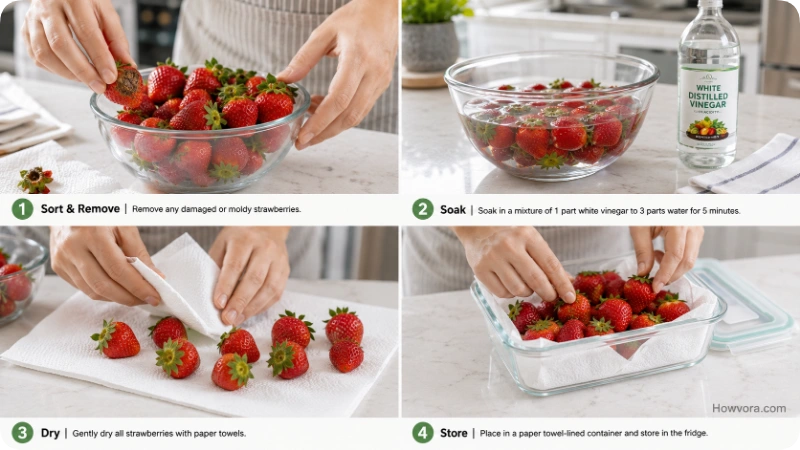
Step 1: Sort the Strawberries
As soon as you bring your strawberries home, spread them out on a clean surface or in a large bowl and inspect each berry.
Remove any strawberries that are:
- Moldy
- Soft or mushy
- Leaking juice
- Badly bruised
- Damaged or split
One spoiled strawberry can quickly spread mold to the rest of the container.
Why this matters
Mold spores spread rapidly in moist environments. Removing damaged berries immediately helps keep the remaining strawberries fresh for much longer.
Common mistake
Many people leave strawberries in the original grocery container without checking them first. Hidden mold often causes the entire package to spoil within a day or two.
Step 2: Decide Whether to Wash Them
There are two effective storage methods.
Option A: Store Them Dry (Best for 3–5 Days)
If you expect to eat the strawberries within a few days, do not wash them.
Simply:
- Remove damaged berries.
- Line a container with paper towels.
- Place the strawberries inside in a single layer if possible.
- Refrigerate immediately.
Option B: Use a Vinegar Rinse (Best for Maximum Freshness)
If you want strawberries to stay fresh as long as possible:
- Mix 1 part white vinegar with 3 parts cool water.
- Soak the strawberries for about 2 minutes.
- Drain them thoroughly.
- Rinse briefly with cool water to remove any vinegar residue.
- Dry every berry completely using paper towels or clean kitchen towels.
When done correctly, this method helps remove many mold spores without affecting the flavor.
Why this matters
Most strawberries spoil because mold begins growing on the surface. A diluted vinegar solution helps reduce those mold spores before storage.
Common mistake
Leaving strawberries in the vinegar solution for too long or failing to dry them completely afterward can reduce their quality.
Step 3: Dry the Strawberries Completely
This is one of the most overlooked steps and one of the most important.
Spread the strawberries on clean towels in a single layer.
Allow them to air-dry for several minutes, then gently pat away any remaining moisture.
Check areas around:
- The stem
- The bottom of the berry
- Small creases where water may collect
The strawberries should feel completely dry before they go into the refrigerator.
Why this matters
Moisture trapped on the fruit creates the perfect environment for mold to grow.
Common mistake
Many people place damp strawberries directly into a sealed container, which often causes condensation and rapid spoilage.
Step 4: Prepare the Storage Container
Choose a shallow container that allows some airflow.
Line the bottom with one or two layers of paper towels.
Arrange the strawberries in a single layer whenever possible.
If you must stack them, place another paper towel between layers to absorb excess moisture and reduce bruising.
Avoid tightly packing the container because compressed berries become soft much faster.
Why this matters
Paper towels absorb condensation while allowing the strawberries to remain dry. Less moisture means slower mold growth.
Common mistake
Using a deep bowl or tightly sealed plastic bag traps humidity, shortening the berries’ shelf life.
Step 5: Refrigerate Immediately
Place the container in the main compartment of your refrigerator rather than the refrigerator door.
The center shelves maintain a more consistent temperature than the door, which warms every time it is opened.
Store strawberries between 34°F and 38°F (1°C–3°C).
Leave the stems attached until you’re ready to eat them. Removing the stems early allows moisture to enter the fruit and shortens freshness.
Every day or two, quickly inspect the container and remove any berries that begin to soften.
Why this matters
Stable refrigeration slows both mold growth and natural fruit breakdown, helping strawberries maintain their texture and flavor.
Common mistake
Leaving strawberries on the kitchen counter for several hours before refrigerating dramatically reduces how long they’ll stay fresh.
How to Know You Did It Correctly
After storing your strawberries, watch for these signs that your method is working:
- The berries remain firm instead of becoming soft or mushy.
- They keep their bright red color without developing dark, sunken spots.
- There is little to no moisture collecting inside the storage container.
- The paper towels stay mostly dry, with only slight dampness over time.
- No white or gray fuzzy mold appears after several days.
- The strawberries still smell fresh and sweet rather than sour or fermented.
If your strawberries still look and smell fresh after five to seven days, you’ve successfully extended their shelf life.
Expected Timeline and Results
While freshness depends on how ripe the strawberries were when you bought them, proper storage generally provides the following results.
| Time After Storage | What to Expect |
| Day 1–2 | Strawberries remain firm, juicy, and at peak freshness. |
| Day 3–5 | Most berries are still fresh with excellent flavor if stored properly. |
| Day 5–7 | Vinegar-treated berries often remain in good condition, though a few may begin to soften. |
| Beyond 7 Days | Quality gradually declines. Check daily and remove any berries showing signs of spoilage. |
Remember that strawberries purchased very ripe may not last as long, even with perfect storage.
Alternative Methods
If the standard refrigerator method doesn’t fit your needs, consider one of these alternatives.
Store in a Glass Jar
Some people store completely dry strawberries in a large glass jar with a loose-fitting lid.
Pros
- Protects berries from being crushed.
- Reduces exposure to excess moisture.
- Easy to organize inside the refrigerator.
Cons
- Works only if the strawberries are completely dry.
- Moisture trapped inside the jar can speed up spoilage.
Freeze for Long-Term Storage
If you won’t use your strawberries within a week, freezing is the best option.
- Wash and dry the berries.
- Remove the stems.
- Arrange them on a baking sheet in a single layer.
- Freeze until solid.
- Transfer to a freezer-safe bag or container.
Frozen strawberries are excellent for:
- Smoothies
- Baking
- Sauces
- Homemade jams
Keep in mind that thawed strawberries become softer, making them less suitable for eating fresh.
Vacuum-Sealed Storage
A vacuum sealer can help extend freshness, but only when the strawberries are perfectly dry and handled gently.
Because strawberries are delicate, excessive vacuum pressure can crush them. If your vacuum sealer has a gentle mode, use that setting.
Common Mistakes to Avoid
Avoid these common errors if you want your strawberries to stay fresh as long as possible.
- Leaving spoiled berries mixed with healthy ones.
- Storing strawberries while they’re still wet.
- Using airtight containers without any moisture absorption.
- Packing too many berries into one container.
- Removing the green stems before storage.
- Leaving strawberries on the kitchen counter for several hours.
- Forgetting to inspect the container every day or two.
- Storing strawberries next to fruits that produce high amounts of ethylene gas, such as apples or bananas, which can speed ripening.
Troubleshooting & Common Problems
| Problem | Likely Cause | Solution |
| Strawberries become moldy quickly | Damaged berry left in container | Remove spoiled berries immediately and replace damp paper towels. |
| Berries feel mushy | Stored while wet or overripe | Dry completely before refrigerating and buy firmer berries next time. |
| Water collects inside the container | Excess humidity | Use fresh paper towels and improve airflow. |
| Strawberries lose flavor | Stored too long | Eat within the first five days for the best taste. |
| White fuzzy mold appears | High moisture or contaminated berry | Discard affected berries and inspect the remaining fruit carefully. |
| Berries wrinkle slightly | Natural moisture loss | Eat soon or use them in smoothies or baking. |
Expert Tips
These simple techniques can make an even bigger difference.
- Buy strawberries with fresh, green caps and bright red color. Firmer berries naturally last longer.
- Choose containers without crushed berries at the bottom.
- Replace damp paper towels if they become wet during storage.
- Keep strawberries in a shallow container rather than a deep bowl.
- Handle berries gently to avoid bruising.
- Refrigerate strawberries as soon as you get home from the store.
- Leave the stems attached until you’re ready to wash and eat them.
- Wash only the amount you’ll use immediately if you choose the dry-storage method.
- If one berry starts spoiling, remove it right away before mold spreads.
- Plan meals around the ripest strawberries first and save the firmer ones for later in the week.
When to Call a Professional
Most strawberry storage issues don’t require professional help. However, contact your grocery store or produce supplier if:
- Multiple packages spoil within a day despite proper refrigeration.
- The strawberries appear moldy or fermented immediately after purchase.
- The fruit shows signs of improper handling before you open the package.
- You suspect a food safety issue involving contaminated produce.
For home gardeners, consult your local agricultural extension office if strawberries consistently develop mold before harvest, as this may indicate a growing or disease problem rather than a storage issue.
What to Do Next
Now that you know how to keep strawberries fresh longer, put these techniques into practice every time you bring home a new batch.
Here’s a simple routine to follow:
- Inspect the strawberries and remove any damaged berries.
- Decide whether to store them dry or use a vinegar rinse.
- Dry them completely if washed.
- Store them in a paper towel-lined container.
- Refrigerate immediately.
- Check the container every couple of days and remove any soft berries.
If you often buy fresh berries, these habits will quickly become second nature and help reduce food waste while keeping your fruit fresher for longer.
Frequently Asked Questions
1. Should I wash strawberries before storing them?
It depends on the storage method. For short-term storage, it’s best to leave strawberries unwashed until you’re ready to eat them. If you use a diluted vinegar rinse to extend freshness, make sure the berries are completely dry before refrigerating.
2. Does soaking strawberries in vinegar make them taste like vinegar?
No. When you use the correct ratio of one part white vinegar to three parts water, followed by a quick rinse and thorough drying, the berries should not have a vinegar taste.
3. How long do strawberries last in the refrigerator?
Properly stored strawberries typically stay fresh for about 5 to 7 days. Their exact shelf life depends on how ripe they were when purchased and how well they’re stored.
4. Can I store strawberries in their original plastic container?
Yes, if the container has ventilation holes and you remove any damaged berries first. For even better results, transfer the strawberries to a clean container lined with paper towels.
5. Should I remove the stems before storing strawberries?
No. Keeping the stems attached helps reduce moisture loss and keeps the berries fresh longer. Remove them only when you’re ready to wash and eat the fruit.
6. Why do my strawberries get moldy so quickly?
Common causes include storing wet berries, leaving moldy strawberries in the container, poor air circulation, and inconsistent refrigerator temperatures.
7. Can strawberries be frozen?
Yes. Wash, dry, remove the stems, freeze the berries on a baking sheet, then transfer them to a freezer-safe container. Frozen strawberries are ideal for smoothies, desserts, and baking.
8. What is the best container for storing strawberries?
A shallow container lined with paper towels works best. It absorbs excess moisture, improves air circulation, and helps prevent bruising.
Final Thoughts
Learning how to keep strawberries fresh longer doesn’t require expensive storage systems or complicated techniques. A few small changes sorting the berries, controlling moisture, using the right container, and refrigerating them promptly can make a noticeable difference in how long they stay fresh.
The biggest takeaway is simple: moisture is the enemy of fresh strawberries. Whether you choose the dry-storage method or a vinegar rinse, keeping the berries dry and checking them regularly will help preserve their flavor, texture, and appearance.
With these easy steps, you’ll enjoy fresher strawberries, reduce food waste, and get the most value from every container you buy.
