
A good honeydew melon is juicy, fragrant, and sweet all the way to the rind. A bad one is watery, bland, or mealy, and you usually can’t tell the difference until you’ve already cut it open. The good news is that honeydews give off clear signals of ripeness before you buy, if you know where to look.
This guide walks you through exactly what to check at the store: rind color and texture, aroma, weight, and a simple touch test. It’s for anyone standing in the produce aisle who wants to stop guessing and start picking melons that taste good.
Featured Snippet
To pick a good honeydew melon, choose one with a creamy yellow (not white or green) rind, a slightly waxy or velvety feel, a sweet smell at the blossom end, and noticeable heft for its size. The blossom end should give slightly when pressed.
At a Glance
| Category | Details |
| Difficulty | Easy |
| Time needed | Under 2 minutes per melon |
| Cost | No extra cost; same price as any melon at the store |
| Skill level | Beginner |
| Best for | Grocery shoppers, farmers market buyers, meal preppers |
Things You’ll Need
| Item | Purpose |
| Your hands | To judge weight and feel the rind and blossom end |
| Your nose | To check for a sweet aroma at the blossom end |
| A few minutes to compare melons | Ripeness is relative; comparing 2–3 melons side by side makes the signs easier to spot. |
Step-by-Step Guide
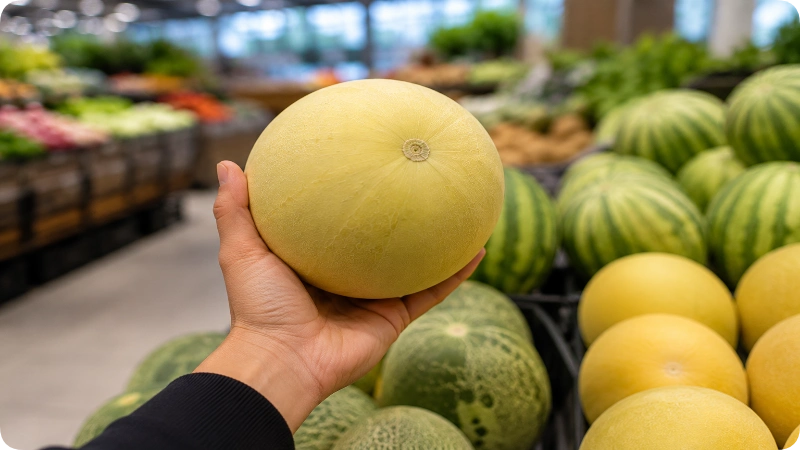
- Check the rind color. Look for a creamy or pale yellow rind. A honeydew that’s still white or greenish-white was picked too early and won’t ripen much further off the vine. A rind that’s turning deep yellow or has soft brown spots is likely overripe.
- Feel the surface texture. Ripe honeydews have a slightly waxy, velvety feel rather than a shiny or fuzzy one. Run your palm over the rind; it should feel smooth with a faint texture, not slick like plastic.
- Smell the blossom end. This is the end opposite the stem scar, often slightly flattened. A ripe honeydew smells lightly sweet and floral there. No smell at all usually means it’s underripe; a strong, almost fermented smell means it’s overripe. Common mistake: Smelling the stem end instead; that side rarely carries the aroma, even on a ripe melon.
- Weigh it in your hand. Pick up two melons of similar size. The heavier one has more water content and is usually juicier. A honeydew that feels light for its size is often dry or underdeveloped inside.
- Press the blossom end gently with your thumb. It should give slightly, similar to pressing the pad of your palm below your thumb. If it’s rock-hard, the melon needs more time. If your thumb sinks in easily or leaves a bruise, it’s overripe.
- Check the stem scar. Look at the end where the stem was attached. A smooth, slightly indented scar (not a jagged stub with stem still attached) means the melon separated naturally from the vine when ripe, which is a good sign.
How to Know You Did It Correctly
You’ve picked well if the melon has a creamy yellow rind, a faint sweet smell at the blossom end, noticeable weight, and slight give when pressed there. When you cut it open, the flesh should be pale green, firm but tender, and fragrant, with no mushy or watery spots near the rind.
Expected Timeline and Results
A honeydew that’s ripe but firm at the store will typically be ready to eat within 2–4 days if left at room temperature, and it will continue to soften slightly during that time. Refrigerating it slows ripening, so keep it at room temperature until it’s ready, then refrigerate after cutting.
Common Mistakes to Avoid
- Judging ripeness by size instead of weight. A large melon isn’t automatically riper; heft relative to its size matters more.
- Relying only on color. Some honeydew varieties stay pale even when ripe, so combine color with smell and touch rather than color alone.
- Buying a rock-hard melon expecting it to ripen fully. Honeydews sweeten somewhat after picking but don’t gain much more sugar once off the vine, so a bland, underripe melon often stays bland.
- Skipping the blossom-end smell test. It’s the single most reliable sign and the one most shoppers skip.
Troubleshooting & Common Problems
| Problem | Cause | Solution |
| Melon smells fine but is flavorless when cut | Picked underripe before enough sugar developed | Buy from a source with faster turnover, or prioritize weight and blossom-end give next time |
| Rind is yellow,w but flesh is mushy near the edge | Melon was overripe or stored too long after ripening | Use it quickly in smoothies or eat the unaffected center; buy a firmer one next time |
| Can’t find a fragrant melon in the store | Melons refrigerated too early, which dulls aroma | Ask if any are unrefrigerated, or prioritize weight and blossom-end firmness instead |
Expert Tips
- Compare several melons side by side rather than judging one in isolation; ripeness cues like weight and smell are easier to notice by contrast.
- If you must choose between a slightly underripe and a slightly overripe melon, pick the underripe one and let it sit at room temperature for a day or two.
- Store an unripe honeydew stem-side down at room temperature; this can help it ripen more evenly.
What to Do Next
Once you’ve picked a ripe honeydew, let it finish softening at room temperature if needed, then rinse the rind before cutting (bacteria on the rind can transfer to the flesh when you slice through it). Refrigerate cut melon in an airtight container and eat within 3–4 days for best flavor.
FAQs
How do I know if a honeydew melon is ripe without cutting it?
Check the rind color (creamy yellow, not white or green), smell the blossom end for a sweet aroma, feel for slight give when pressed there, and compare weight against similarly sized melons.
Why does my honeydew smell like nothing?
No aroma at the blossom end usually means the melon is underripe and was likely picked too early. Choose a different one or let it sit at room temperature for a few more days.
Is a heavier honeydew always better?
A heavier melon (relative to its size) generally has more water content and is often juicier, but weight alone isn’t a complete ripeness signal; pair it with smell and touch.
Can a honeydew ripen more after I buy it?
It can soften and become slightly juicier, but it won’t develop significantly more sweetness once picked, so starting with a good one matters.
Should I refrigerate a honeydew before it’s ripe?
No. Refrigeration slows ripening and can dull the aroma you need for future ripeness checks. Keep it at room temperature until ripe, then refrigerate.
What does a bad stem scar look like?
A jagged edge with part of the stem still attached suggests the melon was cut from the vine before it was ready, rather than separating naturally when ripe.
Final Thoughts
Picking a good honeydew melon comes down to a quick, repeatable check: look at the rind color, feel the texture, smell the blossom end, weigh it in your hand, and press gently for give. None of these steps take more than a few seconds, and together they’re far more reliable than guessing by size or color alone.
