
A ripe peach is easy to eat whole, but slicing one cleanly without mangling the flesh or fighting the pit takes a bit of technique. This guide covers the two situations you’ll actually run into: freestone peaches, where the pit lifts right out, and clingstone peaches, where it doesn’t. Whether you’re prepping peaches for a salad, a pie, or just breakfast, you’ll get clean slices in under two minutes.
Featured Snippet
Cut around the peach lengthwise through the natural seam, twist the halves apart, and pull or cut out the pit. For clingstone peaches, slice wedges directly off the pit instead of twisting. Rinse first, and cut on a stable board with a sharp paring knife.
At a Glance
| Detail | Info |
| Difficulty | Easy |
| Time needed | 1–2 minutes per peach |
| Cost | $0 (uses tools you likely own) |
| Skill level | Beginner |
| Best for | Fresh eating, salads, baking, freezing |
Things You’ll Need
| Item | Purpose |
| Paring knife | Small, sharp blade for precise cuts around the pit |
| Cutting board | Stable surface to cut on safely |
| Bowl of water (optional) | Rinsing the peach, or holding slices in lemon water to slow browning |
Choosing the Right Approach: Freestone vs. Clingstone
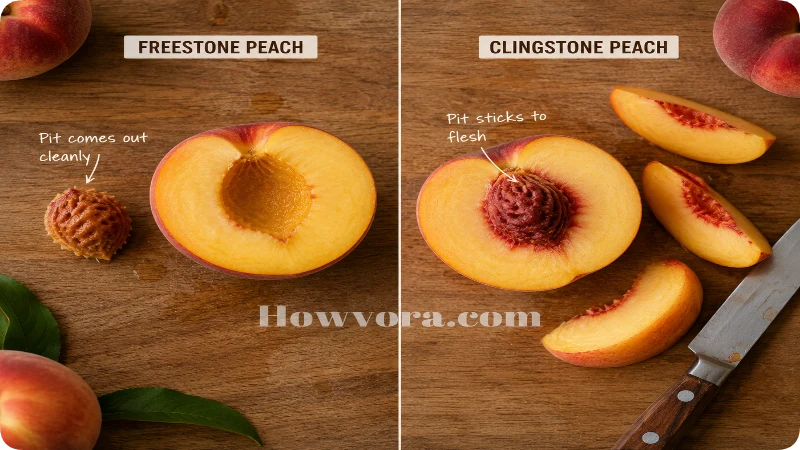
Not all peaches cut the same way, and using the wrong method on the wrong type is the most common reason people struggle. Before you cut, know which kind you have.
| Peach Type | How to Tell | Best Cutting Method |
| Freestone | Common in mid-to-late summer; pit separates easily when ripe | Cut around the seam, twist apart, lift out pit |
| Clingstone | Common early in the season; flesh clings tightly to the pit | Slice wedges off the pit instead of twisting |
If you’re not sure which one you have, try the twist method first. If the halves won’t separate cleanly, switch to slicing wedges off the pit; forcing a twist on a clingstone peach is what tears the flesh.
Step-by-Step Guide
1. Rinse the peach. Peach skin can carry dirt and residue, and most people eat the skin, so a quick rinse under cool water is worth doing.
2. Find the seam. Every peach has a natural indentation running from the stem to the bottom. This marks where the two halves separate.
3. Cut around the seam. Hold the peach upright and cut lengthwise along the seam, all the way around, until your knife touches the pit on all sides.
4. Twist to separate (freestone only). Grip both halves and twist in opposite directions. A ripe freestone peach will pull apart, leaving the pit in one half.
5. Remove the pit. Pop or pry the pit out with the tip of your knife or your fingers.
If the peach is clingstone and won’t twist apart: skip step 4. Instead, starting from the seam cut, slice wedges downward along the curve of the pit, working around the fruit until all the flesh is removed in wedges.
6. Slice or dice as needed. Lay the pitted halves or wedges flat-side down and cut into slices, chunks, or dice depending on your recipe.
How to Know You Did It Correctly
You’ve cut the peach correctly if the pit came out clean with minimal flesh clinging to it, the slices hold their shape instead of turning to mush, and there’s no bitter pit fragment mixed into the fruit.
Expected Timeline and Results
Cutting one peach takes about 1–2 minutes once you’ve located the seam. You’ll get 8–16 slices per peach depending on size and slice thickness. Cut peaches start browning within 15–20 minutes of exposure to air; if you’re not serving immediately, toss slices in a little lemon or lime juice to slow oxidation.
Common Mistakes to Avoid
- Forcing a twist on a clingstone peach. This tears the flesh instead of separating it cleanly; check the type first, or switch to wedge-slicing if the twist doesn’t work.
- Cutting through the pit instead of around it. Always cut down to the pit and follow its curve, not straight through the center.
- Using a dull knife. A dull blade slips more and bruises the flesh instead of slicing it.
- Skipping the rinse. Skin residue transfers to the flesh once you start cutting.
Expert Tips
- If a peach isn’t fully ripe, it will behave like a clingstone even if it’s technically a freestone variety; wedge-cutting works better on slightly underripe fruit.
- For pie or salad prep, cut wedges rather than the twist method even on freestone peaches; wedges give more uniform pieces for cooking or plating.
- To peel a peach first, score a shallow X on the bottom, blanch 20–30 seconds in boiling water, then transfer to ice water; the skin will slip off before you cut.
What to Do Next
Use your sliced peaches fresh in salads or yogurt, bake them into a pie or cobbler, or freeze them in a single layer on a tray before bagging for smoothies later.
FAQs
Do you need to peel a peach before cutting it?
No. Peach skin is edible, and most recipes call for slicing with the skin on. Peel first only if a recipe specifically requires it, like a smooth pie filling.
Why won’t the pit come out of my peach?
The peach is likely clingstone, or it’s not fully ripe. Switch to slicing wedges off the pit instead of twisting the halves apart.
How do you keep cut peaches from turning brown?
Toss the slices in lemon, lime, or orange juice, or store them submerged in water with a splash of citrus juice until ready to serve.
Can you cut a peach without a cutting board?
You can hold it in your hand, but a cutting board is safer and gives you more control, especially when cutting around the pit.
What’s the difference between freestone and clingstone peaches?
Freestone peaches release the pit easily when halved and twisted; clingstone peaches hold the pit tightly and need to be sliced in wedges instead.
How long do sliced peaches last in the fridge?
Cut peaches keep for about 3–5 days in an airtight container in the refrigerator, though they’ll brown over time unless treated with citrus juice.
Final Thoughts
Cutting a peach is simple once you identify whether it’s freestone or clingstone; that one detail determines which method will give you clean results. Rinse, cut around the seam, and either twist or wedge-slice depending on the fruit, and you’ll have neatly cut peaches ready for eating, baking, or freezing in under two minutes.
