
Fresh strawberries are sweet, juicy, and packed with flavor, but they can also carry dirt, tiny insects, and surface bacteria picked up during growing, harvesting, packaging, and transportation. A quick rinse with plain water removes visible debris, but many people prefer using a diluted vinegar solution for a deeper clean before eating or storing their berries.
Learning how to clean strawberries with vinegar the right way helps remove surface residue while reducing the chance of mold developing too quickly during storage. The key is using the correct vinegar-to-water ratio and drying the berries thoroughly afterward.
This guide walks you through every step, explains when to wash strawberries, compares different cleaning methods, and shares practical tips to help your strawberries stay fresh for as long as possible.
Featured Snippet Answer
To clean strawberries with vinegar, mix 1 part white vinegar with 3 parts cold water in a large bowl. Soak the strawberries for 5–10 minutes, gently stir them once or twice, then rinse thoroughly under cold running water. Pat the berries completely dry before eating or storing to help maintain freshness and reduce moisture that can encourage mold.
Before You Begin
Cleaning strawberries is a simple DIY kitchen task that requires only a few inexpensive household items.
| Item | Details |
| Difficulty | Easy |
| Time Required | 10–15 minutes |
| Cost | Less than $2 |
| Skill Level | Beginner |
| DIY or Professional | DIY |
| Best Time to Clean | Right before eating or after purchasing, if drying completely before storage |
Before you start:
- Choose firm, fresh strawberries.
- Remove any berries with visible mold.
- Leave the green stems attached until after washing.
- Use cool or cold water instead of warm water.
- Prepare a clean towel or paper towels for drying.
Choosing the Right Approach
There are several ways to wash strawberries, and each has advantages depending on your goal.
| Cleaning Method | Best For | Advantages | Drawbacks |
| Vinegar Solution | Extending freshness and removing surface residue | Helps slow mold growth when berries are dried properly | Requires rinsing afterward |
| Cold Water Only | Eating immediately | Fast and easy | Doesn’t help extend storage life as much |
| Baking Soda Solution | Removing some surface residue | Gentle and inexpensive | Less commonly used for preserving freshness |
| Produce Wash | Convenience | Ready to use | Costs more and isn’t necessary for most households |
Best overall choice: A diluted white vinegar solution offers an excellent balance of effectiveness, affordability, and simplicity.
At a Glance
| Category | Information |
| Primary Method | White vinegar and cold water |
| Vinegar Ratio | 1:3 (1 part vinegar, 3 parts water) |
| Soak Time | 5–10 minutes |
| Rinse Required | Yes |
| Dry Before Storage | Always |
| Refrigerator Storage | Yes, after berries are completely dry |
Things You’ll Need
| Item | Purpose |
| White distilled vinegar | Cleaning solution |
| Cold water | Dilutes vinegar |
| Large mixing bowl | Soaking strawberries |
| Colander | Rinsing |
| Clean kitchen towel or paper towels | Drying berries |
| Salad spinner (optional) | Removes excess moisture more quickly |
| Airtight container | Storage after drying |
Safety Precautions
Although cleaning strawberries with vinegar is safe, following a few simple precautions will help protect both the fruit and its flavor.
- Never use cleaning vinegar or industrial-strength vinegar. Only use food-grade white distilled vinegar.
- Always dilute the vinegar. Straight vinegar can affect flavor and texture.
- Rinse thoroughly after soaking to remove any vinegar taste.
- Do not soak strawberries for longer than 10 minutes, as extended soaking can soften delicate berries.
- Wash your hands before handling fresh produce.
- Use clean bowls, towels, and containers to avoid cross-contamination.
- Discard any strawberries that already show fuzzy mold, leaking juice, or an unpleasant smell.
Step-by-Step Guide
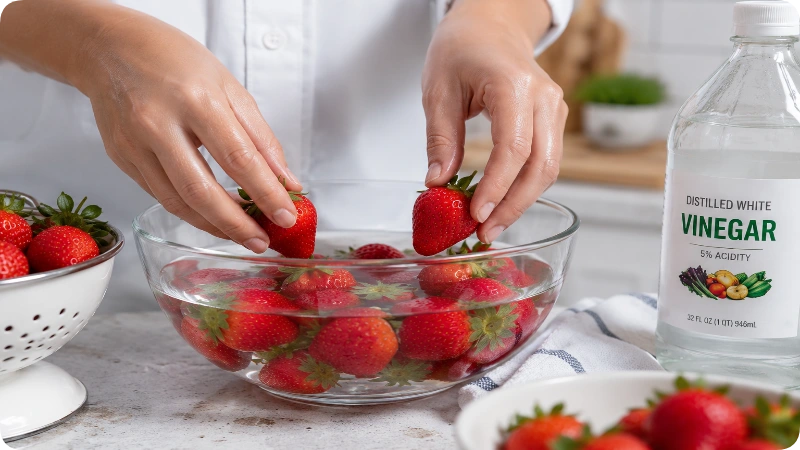
Step 1: Sort the Strawberries
Spread the strawberries on a clean countertop or tray.
Remove:
- Moldy berries
- Mushy strawberries
- Damaged fruit
- Berries leaking juice
Why this matters
Mold spreads quickly between strawberries. Removing spoiled berries first helps prevent healthy fruit from deteriorating faster.
Step 2: Leave the Stems Attached
Do not remove the green tops before washing.
Keeping the stems attached prevents excess water from entering the fruit, which helps preserve flavor and texture.
Common mistake
Many people hull strawberries first. This allows water to soak inside, making the berries softer and reducing their shelf life.
Step 3: Prepare the Vinegar Solution
Fill a large bowl with:
- 1 cup white distilled vinegar
- 3 cups cold water
If you’re cleaning a larger batch, simply maintain the same 1:3 ratio.
Mix gently.
The solution should smell mildly of vinegar without being overpowering.
Step 4: Soak the Strawberries
Place the strawberries into the bowl.
Allow them to soak for 5 to 10 minutes.
During the soak:
- Stir gently once or twice.
- Avoid pressing down on the berries.
- Make sure all fruit is submerged.
Why this matters
The vinegar solution loosens dirt, dust, and surface residue while helping reduce microorganisms that contribute to spoilage.
Step 5: Rinse Thoroughly
Transfer the strawberries into a colander.
Rinse them under cool running water for about 30–60 seconds.
Rotate the berries with your hands to ensure every side is rinsed.
This step removes:
- Remaining vinegar
- Loosened dirt
- Surface debris
A thorough rinse prevents any lingering vinegar flavor.
Step 6: Dry Completely
Drying is the step many people overlook, yet it’s one of the most important.
Lay the strawberries in a single layer on:
- Paper towels
- A clean kitchen towel
Gently pat each berry dry.
If available, use a salad spinner first to remove excess water before towel drying.
Allow the berries to air-dry for another 15–30 minutes if storing them in the refrigerator.
Why this matters
Excess moisture encourages mold growth much faster than clean, dry berries.
Step 7: Store Properly
Once the strawberries are completely dry:
- Line an airtight container with a dry paper towel.
- Arrange strawberries in a single layer if possible.
- Avoid packing them tightly.
- Leave the lid slightly open if condensation forms.
Store the container in the refrigerator.
For best flavor, eat the strawberries within several days.
Common mistake
Putting damp strawberries directly into a sealed container traps moisture, creating ideal conditions for mold to develop.
Step 8: Remove Stems Only Before Eating
Hull or slice strawberries only when you’re ready to eat or use them in recipes.
Keeping the stems attached during storage helps the berries retain moisture naturally without becoming waterlogged.
This simple habit can noticeably improve both texture and freshness.
How to Know You Did It Correctly
After cleaning your strawberries with vinegar, there are a few signs that indicate you’ve done the process properly.
- The berries look bright, clean, and free of visible dirt.
- There is no noticeable vinegar smell after rinsing.
- The strawberries remain firm rather than soft or mushy.
- The green caps are still fresh and attached.
- The berries are completely dry before being placed in the refrigerator.
- No water collects in the bottom of the storage container after several hours.
If your strawberries meet these conditions, they’re ready to eat immediately or store for later use.
Expected Timeline and Results
Here’s what you can expect throughout the process.
| Time | What Happens |
| 1–2 minutes | Sort and discard damaged berries. |
| 2 minutes | Prepare the vinegar solution. |
| 5–10 minutes | Soak the strawberries. |
| 1 minute | Rinse thoroughly under cold water. |
| 5–10 minutes | Pat dry with a clean towel. |
| 15–30 minutes (optional) | Air-dry before refrigerating for the best storage results. |
Expected Results
When cleaned and stored correctly:
- Strawberries taste fresh with no vinegar flavor.
- Surface dirt and debris are removed.
- The berries stay firm and appealing.
- Proper drying helps reduce excess moisture, one of the biggest causes of mold during storage.
Keep in mind that no cleaning method can restore strawberries that were already beginning to spoil when purchased.
Alternative Methods
While the vinegar method is one of the most popular, it isn’t the only option.
1. Cold Water Rinse
Simply rinse strawberries under cool running water while gently rubbing the surface with your fingers.
Best for:
- Eating immediately
- Small batches
- Quick preparation
Pros
- Fast
- No additional ingredients
- No rinsing after washing
Cons
- Doesn’t help with longer-term storage as effectively as the vinegar method.
2. Baking Soda Solution
Mix approximately one teaspoon of baking soda into several cups of cold water and soak strawberries for a few minutes before rinsing thoroughly.
Best for:
- Those who prefer not to use vinegar.
Pros
- Gentle cleaning method
- Uses common pantry ingredients
Cons
- Requires thorough rinsing.
- Doesn’t offer the same freshness-preserving reputation as diluted vinegar.
3. Commercial Produce Wash
Store-bought produce washes are another option.
Pros
- Convenient
- Ready to use
Cons
- More expensive
- Offers little advantage for everyday home use compared to properly diluted vinegar or plain water.
Common Mistakes to Avoid
Avoid these common errors to get the best results.
Washing Before You’re Ready
If you plan to eat strawberries within a day or two, washing them in advance is fine—as long as you dry them completely. If you can’t dry them thoroughly, it’s often better to wait until you’re ready to use them.
Using Too Much Vinegar
A stronger solution doesn’t clean better.
Using undiluted vinegar may leave an unpleasant taste and can affect the texture of delicate berries.
Stick with the recommended 1:3 vinegar-to-water ratio.
Soaking Too Long
Leaving strawberries in the solution for more than ten minutes can soften the fruit.
Set a timer if needed.
Forgetting to Rinse
Always rinse strawberries after soaking.
Skipping this step can leave behind a noticeable vinegar flavor.
Storing Damp Strawberries
This is the biggest mistake people make.
Even perfectly cleaned strawberries can develop mold quickly if moisture remains on the surface.
Drying is just as important as washing.
Removing the Stems Too Early
The green tops help protect the inside of the berry.
Remove them only when you’re ready to eat, slice, or cook the strawberries.
Troubleshooting & Common Problems
| Problem | Likely Cause | Solution |
| Strawberries taste like vinegar | They weren’t rinsed enough | Rinse under cold running water for another 30–60 seconds. |
| Berries became soft | Soaked too long or handled roughly | Limit soaking to 5–10 minutes and stir gently. |
| Mold appeared after one day | Strawberries were stored while damp or already had hidden spoilage | Dry thoroughly before refrigerating and remove damaged berries before washing. |
| Water pooled inside the container | Excess moisture remained | Replace the paper towel and allow berries to air-dry longer next time. |
| Strawberries lost flavor | Overripe fruit or improper storage | Buy firm berries and refrigerate them promptly after drying. |
| Vinegar smell remains | Insufficient rinsing | Rinse again with cool water until the odor disappears. |
Expert Tips
A few small habits can make a noticeable difference in freshness and quality.
- Buy strawberries that are bright red with fresh-looking green caps.
- Avoid containers containing crushed or leaking berries.
- Clean only as many strawberries as you’ll use within several days if you don’t have time to dry a large batch properly.
- Store berries in a shallow container instead of stacking them deeply.
- Replace damp paper towels in the storage container if they become wet.
- Keep strawberries refrigerated, but allow them to sit at room temperature for about 15–20 minutes before serving for the best flavor.
- Handle strawberries gently throughout the process to avoid bruising.
- Inspect stored berries every day and remove any that begin to soften before they affect the rest.
When to Call a Professional
Cleaning strawberries is a straightforward household task, so professional help isn’t necessary.
However, if you’re handling strawberries for a commercial kitchen, catering business, or food service operation, always follow your local food safety regulations and workplace sanitation procedures.
What to Do Next
Now that your strawberries are clean:
- Enjoy them fresh as a healthy snack.
- Slice them for yogurt or oatmeal.
- Add them to smoothies.
- Use them in fruit salads.
- Bake them into muffins, cakes, or pies.
- Freeze them for future recipes.
- Make homemade strawberry jam or sauce.
If freezing, dry the strawberries completely before placing them in freezer bags to help reduce ice crystals.
FAQs
Should I wash strawberries as soon as I bring them home?
You can, provided you dry them completely before refrigerating. If you can’t dry them thoroughly, it’s often better to wait until shortly before eating.
Can I use apple cider vinegar instead of white vinegar?
Yes. Apple cider vinegar can be used in the same diluted ratio, although white distilled vinegar has a milder flavor and is more commonly recommended for cleaning produce.
What is the best vinegar-to-water ratio?
Mix 1 part white vinegar with 3 parts cold water.
Do strawberries taste like vinegar afterward?
No. When rinsed thoroughly under cold water, strawberries should have no noticeable vinegar taste.
Is soaking strawberries safe?
Yes. A short soak of 5–10 minutes in diluted food-grade vinegar is safe when followed by a thorough rinse.
Should I remove the stems before washing?
No. Leave the stems attached until you’re ready to eat or prepare the strawberries.
Can I freeze strawberries after cleaning them?
Yes. Dry them completely first, remove the stems if desired, then freeze them in a single layer before transferring them to freezer bags.
Does vinegar remove pesticides?
A vinegar wash helps remove dirt and some surface residues, but it should not be considered a guaranteed method for removing all pesticide residues. Thorough rinsing and purchasing produce from trusted sources remain important.
Final Thoughts
Knowing how to clean strawberries with vinegar is a simple kitchen skill that helps you enjoy cleaner, fresher fruit with minimal effort. The process takes only a few minutes, requires inexpensive ingredients, and can help reduce surface dirt while supporting better storage when the berries are dried properly.
Remember the essentials: use a 1:3 vinegar-to-water ratio, soak for 5–10 minutes, rinse thoroughly, and dry completely before refrigerating. These small steps make a big difference in keeping strawberries firm, flavorful, and ready to enjoy in your favorite recipes.
