
Soil that’s too alkaline locks up iron, manganese, and other nutrients that acid-loving plants like blueberries, azaleas, rhododendrons, and hydrangeas need to thrive. Yellowing leaves with green veins, stunted growth, and poor flowering are common signs your soil pH is working against you instead of for you.
This guide walks you through testing your soil, choosing the right amendment, and lowering pH safely and gradually without shocking your plants or wasting money on products that won’t work for your soil type. By the end, you’ll know exactly how to bring your soil into the acidic range your plants actually need, and how to keep it there.
Featured Snippet
To lower soil pH, test your soil first, then apply elemental sulfur (slowest, safest, longest-lasting) or aluminum sulfate (fastest, but riskier in large doses). Work the amendment into the top 6 inches of soil, water it in, and retest after 8–12 weeks. Adjust dosage based on your soil type and current pH.
Before You Begin
| Factor | Details |
| Difficulty | Moderate requires testing and patience |
| Time to complete task | 30–60 minutes of active work |
| Time to see results | 1–6 months, depending on method |
| Cost | $10–$40 for a soil test kit; $15–$30 per amendment bag |
| DIY vs. Pro | DIY-friendly for home gardens; consider a soil lab or landscaper for large properties or persistent problems |
| Prerequisite | A current soil pH test don’t skip this step |
Before adding anything to your soil, confirm your starting pH and your target pH for the specific plant you’re growing. Blueberries want 4.5–5.5, while most azaleas and rhododendrons prefer 5.0–6.0. Applying acidifier without knowing your baseline is the single most common reason gardeners overcorrect and damage their plants.
Choosing the Right Approach
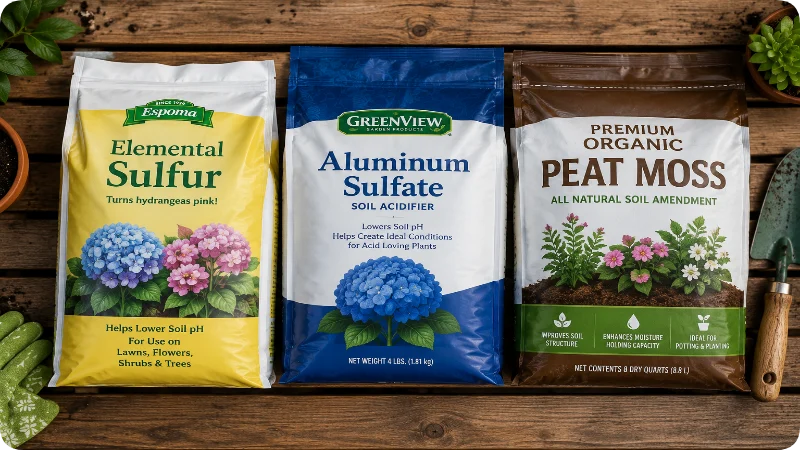
There are three genuinely different ways to lower soil pH, and each fits a different situation.
| Method | Speed | Best For | Drawback |
| Elemental sulfur | Slow (2–6 months, needs soil microbes to convert it) | Long-term correction in established beds | Doesn’t work well in cold or waterlogged soil |
| Aluminum sulfate | Fast (days to weeks) | Quick fixes for potted plants or small areas | Can build up aluminum to toxic levels if overused |
| Organic matter (peat moss, pine bark, composted pine needles) | Very slow, mild effect | Maintaining pH once it’s already in range | Not strong enough to correct significantly alkaline soil alone |
Most gardeners get the best long-term results by using elemental sulfur for the initial correction and organic mulch to maintain the level afterward. Aluminum sulfate is worth reserving for container plants or situations where you need a fast result and can closely control the dose.
At a Glance
| Category | Details |
| Skill level | Beginner to intermediate |
| Time investment | Low ongoing effort after initial application |
| Cost range | $25–$70 total for testing and amendment |
| Best for | Gardeners with alkaline or neutral soil growing acid-loving plants |
| Tools required | Soil test kit, garden fork or tiller, gloves |
Things You’ll Need
| Item | Purpose |
| Soil pH test kit or digital meter | Establishes your baseline and tracks progress |
| Elemental sulfur or aluminum sulfate | The active amendment that lowers pH |
| Garden gloves | Protects skin from amendment dust and residue |
| Garden fork or tiller | Works the amendment into the root zone |
| Watering can or hose | Activates sulfur-oxidizing bacteria and dissolves aluminum sulfate |
| Mulch (pine bark, pine needles, or peat moss) | Helps maintain lowered pH over time |
| Notebook or garden log | Tracks application dates and retest results |
Safety Precautions
Aluminum sulfate and elemental sulfur are both low-risk to handle but shouldn’t be treated casually. Wear gloves when applying either product, since both can irritate skin with prolonged contact. Avoid inhaling sulfur dust; apply on a calm day, not a windy one. Keep both products away from pets and children until watered in, and never exceed label application rates; aluminum sulfate in particular can cause aluminum toxicity in plants and harm soil organisms if overapplied. Store leftover product in its original, labeled container.
Step-by-Step Guide
- Test your current soil pH. Use a digital meter or a lab test from your local extension office for the most accurate reading. Test in 3–4 spots across the area and average the results, since pH can vary within the same yard.
- Identify your target pH. Check the ideal range for your specific plant. Most vegetables and lawns prefer 6.0–7.0, while acid-loving ornamentals and berries need 4.5–6.0.
- Calculate how much amendment you need. Amendment rates depend on both how far you need to shift the pH and your soil texture. Sandy soil needs less sulfur than clay soil to achieve the same shift, because clay holds onto minerals more tightly. Product labels and extension office charts give per-square-foot rates based on these two variables. Common mistake: using a flat rate without adjusting for soil texture, which leads to under- or over-treating.
- Apply the amendment evenly. Spread elemental sulfur or aluminum sulfate by hand or with a spreader across the treatment area, avoiding direct contact with plant stems and foliage.
- Work it into the top 4–6 inches of soil. Use a garden fork or tiller to mix the amendment into the root zone, where it can actually affect the plants. Surface application alone works much more slowly.
- Water thoroughly. Watering activates the sulfur-oxidizing bacteria that convert elemental sulfur into sulfuric acid, or dissolves aluminum sulfate so it can start working immediately.
- Mulch with acidic organic matter. A 2–3 inch layer of pine bark, pine needles, or peat moss helps maintain the lower pH as it breaks down and slows the soil’s tendency to drift back toward alkaline.
- Wait and retest. Elemental sulfur needs 8–12 weeks of warm, moist soil to show its full effect, since it depends on microbial activity. Aluminum sulfate shows results in days but should still be retested before adding more.
- Reapply only if needed, and only based on a retest. If your pH hasn’t reached target range, apply a follow-up dose at a lower rate rather than repeating the full initial application, since overcorrection is harder to reverse than undercorrection.
How to Know You Did It Correctly
You’ll know the treatment worked when a fresh soil test shows pH within your plant’s target range, and when previously yellowing foliage begins greening up over the following weeks, a sign that iron and other micronutrients are now available to the plant again. New growth should look healthier and more vigorous than growth that emerged before treatment.
Expected Timeline and Results
Elemental sulfur typically produces a noticeable pH shift within 6–12 weeks in warm, moist soil, though full stabilization can take a full growing season. Aluminum sulfate acts within 1–2 weeks but requires more careful monitoring to avoid overshooting your target. Visible plant recovery greener leaves and stronger growth usually follows 2–4 weeks behind the soil chemistry change, since the plant needs time to take up newly available nutrients.
Alternative Methods
If you’d rather avoid mineral amendments entirely, a few slower, gentler options exist:
- Composted pine needles or oak leaves: Mildly acidic and safe to use liberally as mulch, though too weak to correct strongly alkaline soil on their own.
- Peat moss worked into the topsoil: Lowers pH slightly while improving moisture retention, best for container gardens or small beds.
- Ammonium-based fertilizers (such as ammonium sulfate): Acidify soil as a side effect of nitrogen fertilization, useful for lawns and vegetable beds already on a regular feeding schedule.
None of these methods work as fast or as predictably as elemental sulfur or aluminum sulfate, but they’re lower-risk for beginners and useful for maintenance once your target pH is reached.
Common Mistakes to Avoid
- Skipping the soil test. Guessing at your starting pH means you’re guessing at the dose, which leads to under- or over-treatment.
- Applying too much aluminum sulfate at once. This is the fastest way to damage roots and push aluminum to toxic levels.
- Expecting instant results from sulfur. It’s a biological process, not a chemical reaction, so it needs weeks of warm, moist soil to work.
- Treating the whole yard instead of the target bed. Acid-loving plants usually don’t need the entire landscape acidified; treat the specific planting area.
- Not retesting before reapplying. Reapplying blind compounds any errors from the first application.
Troubleshooting & Common Problems
| Problem | Cause | Solution |
| pH hasn’t moved after 3 months | Cold or dry soil slowed microbial conversion of sulfur | Water consistently and wait for warmer soil temperatures before reapplying |
| Plants show new leaf burn or wilting | Aluminum sulfate applied at too high a dose | Flush the area with water and stop further applications until retesting |
| pH drops too low | Overcorrection from repeated applications without retesting | Add garden lime in small amounts to raise pH back toward target range |
| pH creeps back up within a year | Alkaline irrigation water or limestone-heavy native soil | Switch to acidic mulch maintenance and retest twice a year |
| Uneven results across the bed | Amendment applied unevenly or soil texture varies across the area | Retest multiple spots and spot-treat based on individual readings |
Expert Tips
- Apply elemental sulfur in fall rather than spring; cooler soil still supports microbial activity over winter, and you’ll see results right as the growing season starts.
- If you’re irrigating with hard, alkaline tap water, factor that into your maintenance plan, since it will slowly counteract your acidification over time.
- Use a dedicated soil pH meter rather than a one-time strip test kit if you’re treating the same beds repeatedly; the upfront cost pays off in tracking accuracy.
- For container plants, aluminum sulfate is usually the better choice over sulfur, since containers don’t retain enough biological activity for sulfur to convert efficiently.
When to Call a Professional
Bring in a soil testing lab or landscaping professional if your soil pH is more than 1.5–2 points away from your target, if you’re treating a large area like an orchard or commercial planting bed, or if repeated DIY applications haven’t produced results after two full seasons. A lab test can also rule out other issues like poor drainage or nutrient imbalances that mimic high-pH symptoms but won’t respond to acidification.
What to Do Next
Once your soil reaches its target pH, shift into maintenance mode: mulch annually with acidic organic matter, retest every 6–12 months, and avoid liming the area unless a test specifically calls for it. If you’re planting new acid-loving species, test and adjust the new bed before planting rather than after you notice symptoms.
FAQs
How long does it take to lower soil pH?
Elemental sulfur typically takes 8–12 weeks to show a measurable shift, while aluminum sulfate can act within 1–2 weeks. Full stabilization for either method can take a full growing season.
Can I lower soil pH without chemicals?
Yes, though more slowly. Composted pine needles, oak leaves, and peat moss all have a mild acidifying effect and are useful for maintenance rather than major correction.
Does coffee ground application actually lower soil pH?
Fresh coffee grounds are mildly acidic, but the effect on soil pH is minor and inconsistent. They’re better used as a soil conditioner than a reliable pH-lowering method.
How much sulfur do I need per square foot?
This depends on your soil texture and how much you need to shift the pH. Sandy soil needs less than clay soil for the same result. Extension office charts or product labels provide precise rates based on both variables.
Can I over-acidify my soil?
Yes. Over-application, especially of aluminum sulfate, can push pH too low and cause aluminum toxicity. Always retest before adding more.
How often should I retest my soil pH?
Every 6–12 months once you’ve reached your target range, and again 8–12 weeks after any new amendment application.
Is vinegar a good way to lower soil pH?
Vinegar produces a very short-lived pH drop and breaks down quickly in soil, so it isn’t a reliable long-term method compared to sulfur or aluminum sulfate.
Will lowering soil pH hurt my lawn or nearby plants?
It can, if the treated area isn’t well-defined or if runoff carries the amendment into neighboring beds. Treat only the specific area your target plants occupy.
Final Thoughts
Lowering soil pH isn’t a one-time fix; it’s a cycle of testing, amending, and retesting until you land in your plant’s ideal range, then maintaining it from there. Elemental sulfur is the safest long-term choice for most garden beds, while aluminum sulfate suits fast fixes in containers or small areas. Whichever method you choose, let your soil test- not guesswork- drive every application, and you’ll avoid the overcorrection problems that trip up most first-time gardeners.
