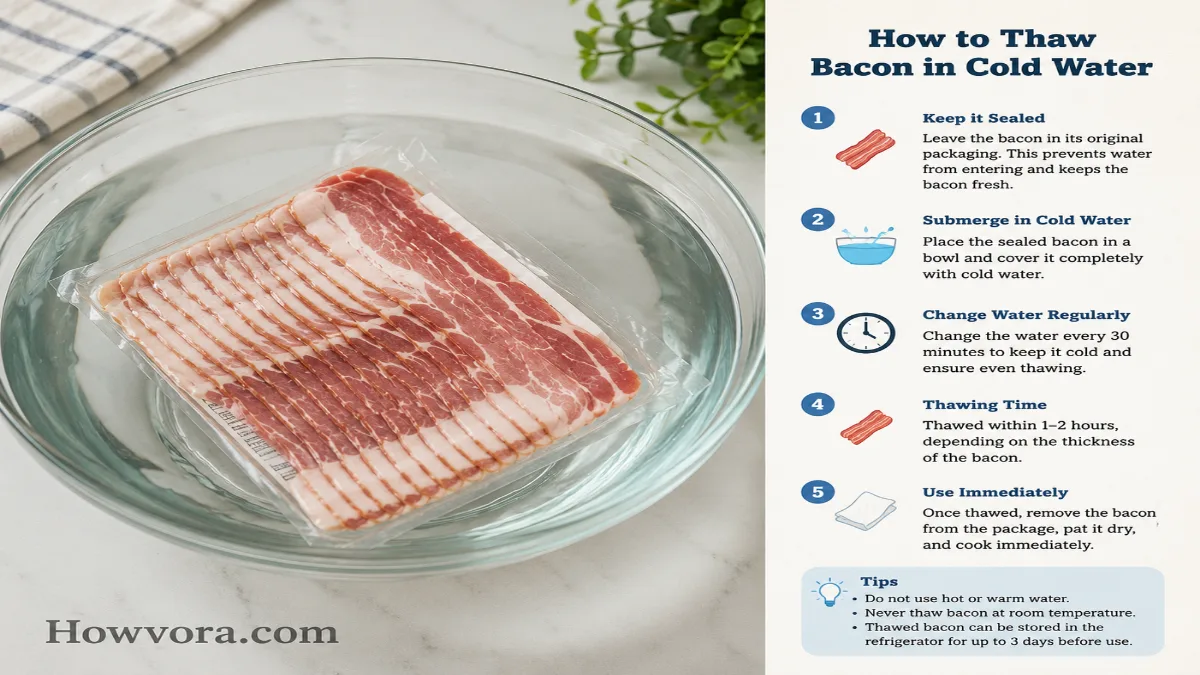
Frozen bacon doesn’t have to derail breakfast. Whether you forgot to move it to the fridge last night or you’re working with a vacuum-sealed block straight from the freezer, you can thaw bacon safely in well under an hour using nothing but cold water.
This guide is for anyone who needs bacon ready to cook today, not tomorrow, without risking food safety or ending up with rubbery, unevenly cooked strips. By the end, you’ll know the fastest safe method, two solid backups, and exactly how to tell when your bacon is ready for the pan.
Featured Snippet
The fastest safe way to thaw bacon is a cold water bath: submerge the sealed package in cold tap water, changing the water every 30 minutes. A 1-pound package typically thaws in 20–40 minutes. Never thaw bacon at room temperature or in hot water.
Before You Begin
Difficulty: Easy Time: 20–40 minutes (cold water method); 5–10 minutes (microwave); 0 minutes prep (cook from frozen) Cost: Free DIY vs. Pro: Fully DIY no special equipment required Prerequisites: A sealed or resealable package of bacon, a sink or large bowl, and access to cold tap water
Choosing the Right Approach
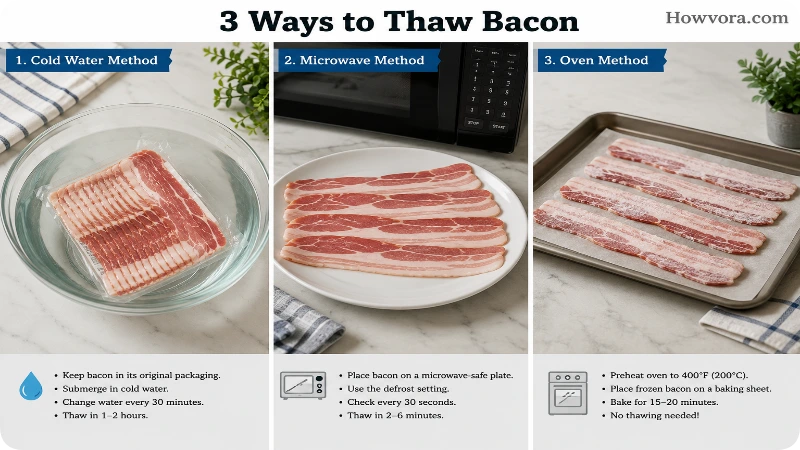
Not every method fits every situation. Use this table to pick based on how much time you actually have and how you plan to cook the bacon.
| Method | Speed | Best For | Trade-Off |
| Cold water bath | 20–40 min | Whole package, frying or baking as normal strips | Requires occasional water changes |
| Microwave | 5–10 min | Small portions, single servings | Uneven thawing, risk of partially cooked edges |
| Cook from frozen | 0 min prep | Oven-baked or skillet bacon when you’re short on time | Longer total cook time, harder to separate strips |
| Refrigerator | 12–24 hours | Planning is not a “fast” option | Too slow if you need it today |
The refrigerator method is the gold standard for food safety and flavor, but it’s not fast; it’s included here only for comparison. If speed is the priority, the cold water bath gives you the best balance of safety and convenience.
At a Glance
| Category | Details |
| Difficulty | Easy |
| Time | 20–40 minutes |
| Cost | $0 |
| Skill Level | Beginner |
| Best For | Same-day cooking when bacon is still frozen |
Things You’ll Need
| Item | Purpose |
| Sealed bacon package (original or resealable bag) | Keeps water out and bacon sanitary during the soak |
| Sink or large bowl | Holds the cold water bath |
| Cold tap water | Thaws bacon evenly without entering unsafe temperatures |
| Plate or paper towels | Catches condensation once the bacon is thawed |
| Timer or clock | Tracks 30-minute water change intervals |
Safety Precautions
Bacon is raw pork, and thawing it incorrectly can let it sit in the temperature “danger zone” (40°F–140°F) long enough for bacteria to multiply. Follow these rules:
- Keep it sealed. The package must be airtight during the water bath so bacon doesn’t absorb water or come into contact with bacteria from the sink.
- Use cold water only. Warm or hot water speeds thawing but pushes the outer layer of bacon into unsafe temperatures while the inside is still frozen.
- Change the water every 30 minutes. Standing water warms up over time, slowing the thaw and raising the risk of bacteria.
- Cook immediately after thawing. Bacon thawed by the cold water or microwave method should go straight into the pan or oven; do not refreeze or refrigerate it for later use.
- Never thaw at room temperature. Leaving bacon on the counter allows the outer surface to sit in the danger zone for hours, even if the center is still frozen.
Step-by-Step Guide
- Check the packaging. Confirm the bacon is in its original sealed wrapper or a leak-proof resealable bag. If the package is torn, transfer the bacon to a zip-top bag and press out excess air before sealing.
- Fill a bowl or sink with cold tap water. Use enough water to fully submerge the package. Avoid warm water; it may feel like a shortcut, but it compromises food safety and can start cooking the edges of the bacon.
- Submerge the sealed bacon. Push the package under the water. If it floats, weigh it down with a plate.
- Set a timer for 30 minutes. Why it matters: the water absorbs cold from the bacon and gradually warms, so refreshing that it keeps the thaw moving efficiently.
- Change the water at the 30-minute mark if not yet thawed. Drain the bowl and refill with fresh cold water. A 1-pound package is usually fully thawed within one to two water changes (20–40 minutes total).
- Check for flexibility. The package should bend easily with no hard, frozen center. If you can separate individual strips without resistance, it’s ready.
- Pat the package dry and open it. Removing surface moisture keeps water from splattering when the bacon hits a hot pan.
- Cook immediately. Move straight to frying, baking, or air-frying; don’t let thawed bacon sit out.
Common mistake: Skipping the water change. Letting bacon sit in one bowl of water for over an hour without refreshing it slows thawing and increases the time spent at unsafe temperatures.
How to Know You Did It Correctly
Properly thawed bacon should:
- Bend without cracking or snapping
- Separate into individual strips with light pressure
- Feel cold, not warm, to the touch
- Show no ice crystals or frozen patches in the center
If any part of the package still feels stiff or solid, return it to the cold water for another 10–15 minutes rather than moving it to the pan.
Expected Timeline and Results
| Package Size | Cold Water Bath Time |
| Individual strips (2–4 slices) | 10–15 minutes |
| 1-pound standard package | 20–40 minutes |
| Thick-cut or 2-pound package | 40–60 minutes |
Thawed bacon from this method cooks and crisps the same way as fresh refrigerator-thawed bacon, with no noticeable difference in texture or flavor.
Alternative Methods
Microwave thawing: Place bacon on a microwave-safe plate and use the defrost setting in 30-second bursts, flipping and separating strips between each. This works well for a few slices but tends to thaw unevenly on larger packages, sometimes partially cooking thin edges. Cook the bacon immediately after.
Cook from frozen: Skip thawing entirely. Lay frozen strips on a parchment-lined baking sheet and bake at 400°F, adding 5–8 extra minutes to the normal cook time. This works best when strips are already separated or only lightly stuck together; solid frozen blocks are hard to portion this way.
Common Mistakes to Avoid
- Thawing on the counter. Room temperature thawing leaves the outer layer of the bacteria in the danger zone for too long.
- Using hot water “to speed things up.” This partially cooks the exterior while the inside stays frozen, creating uneven texture and a safety risk.
- Leaving the package unsealed in water. Water can seep in, waterlogging the bacon and diluting flavor.
- Refreezing after thawing in water or microwave. Once bacon leaves the freezer via these methods, it needs to be cooked, not refrozen.
- Walking away from the water bath. Forgetting the timer means the water can sit too long without a refresh, slowing the process.
Troubleshooting & Common Problems
| Problem | Cause | Solution |
| Bacon is still frozen in the center after 40 minutes | The water wasn’t changed, or the water was too warm to start | Drain, refill with fresh cold water, and continue checking every 10–15 minutes |
| Strips are waterlogged or slimy | The package leaked or wasn’t fully sealed | Discard the water-exposed portion if the texture is off; pat dry thoroughly before cooking |
| Edges look cooked or grayish after microwaving | The defrost setting ran too long in one burst | Use shorter 15–20-second bursts and separate strips sooner next time |
| Strips won’t separate | Thawed unevenly, with ice still between layers | Return to cold water for a few more minutes, rather than forcing them apart. |
Expert Tips
- Portion bacon into meal-sized amounts before freezing. Next time, smaller packages thaw in under 15 minutes with this method.
- If you’re baking bacon on a sheet pan, cooking from frozen with a slightly longer bake time often saves more total time than waiting to thaw.
- Keep a bowl in the sink instead of running water continuously; it thaws just as fast and uses far less water.
What to Do Next
Once your bacon is thawed, cook it right away using your preferred method skillet, oven, or air fryer and store any cooked leftovers in the refrigerator for up to 4–5 days. If you regularly run into frozen bacon at mealtime, consider portioning future packages into smaller freezer bags so you only need to thaw what you’ll actually use.
FAQs
Can I thaw bacon in hot water to make it faster?
No. Hot water pushes the outer surface of the bacon into the unsafe temperature range while the center is still frozen, increasing bacterial risk and affecting texture.
Is it safe to refreeze bacon after thawing it in cold water?
It’s not recommended. Bacon thawed using the cold water or microwave method should be cooked right away, not refrozen raw.
How long does bacon last in the freezer before thawing?
Vacuum-sealed bacon can stay at peak quality in the freezer for about 6 months; opened packages are best used within 1–2 months for the best texture and flavor.
Can I cook bacon straight from frozen without thawing at all?
Yes. Baking frozen strips at 400°F with a few extra minutes of cook time works well, especially if the strips are already separated.
Why does my bacon feel rubbery after thawing?
This usually happens when bacon sits too long in warm or standing water, or when it’s microwaved too long in one burst, which begins cooking the fat unevenly.
Does the cold water method work for thick-cut bacon?
Yes, though thick-cut and larger packages take closer to 40–60 minutes and may need two or three water changes.
Final Thoughts
The cold water bath is the fastest method that keeps bacon both safe and evenly textured, typically getting a standard package ready in under 40 minutes. When you’re really pressed for time, cooking straight from frozen is a reliable shortcut that skips thawing altogether. Whichever method you choose, the rule that matters most is simple: keep bacon cold until the moment it hits the heat.







1 thought on “How to Thaw Bacon Fast: Safely Ready to Cook in 30 Minutes.”