Total alkalinity that’s too high makes your pool water resistant to pH changes, which leads to cloudy water, scale buildup on tile and equipment, and chemicals that seem to stop working no matter how much you add. If your test kit shows a reading above 120 parts per million (ppm), your alkalinity is high enough to cause problems and needs to come down.
This guide is for pool owners doing their own water balancing, whether you’re new to testing chemistry or you’ve done it before and just need a refresher on the exact numbers. By the end, you’ll know how much acid to add, how to add it safely, and how to confirm the correction actually worked instead of guessing.
Featured Snippet
To lower pool alkalinity, add muriatic acid or dry acid (sodium bisulfate) directly to the water in small, calculated doses based on your pool’s volume and current alkalinity reading. Retest after 6 hours and repeat in smaller increments until total alkalinity reaches 80-120 ppm.
Before You Begin
Difficulty: Easy to moderate. The math and the acid handling are the only tricky parts. Time required: 15 minutes of active work, plus 6-24 hours of waiting between doses. Cost: $10-$25 for a gallon of muriatic acid or a bag of dry acid, depending on pool size. DIY vs. Pro: This is a standard DIY task. Call a pool professional only if your alkalinity stays high after two or three correction attempts, or if you’re not comfortable handling acid. Prerequisites: A current total alkalinity test result, your pool’s volume in gallons, and a way to test pH and alkalinity again after dosing (test strips or a liquid kit).
Choosing the Right Approach
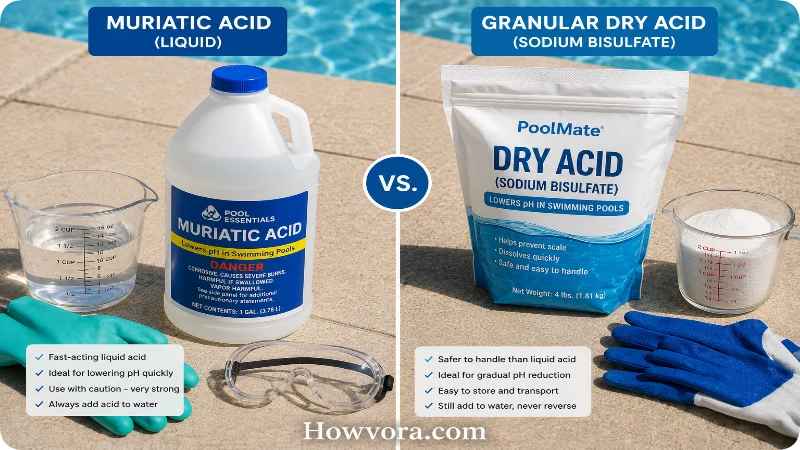
There are two acids commonly used to lower alkalinity, and picking the wrong one for your situation is one of the most common reasons people redo this job. Muriatic acid is a liquid; dry acid (sodium bisulfate) is a granular powder. Both lower total alkalinity and pH, but they behave differently in the water and carry different handling requirements.
| Method | Cost | Effect on pH | Handling | Best For |
| Muriatic acid | Lower cost per gallon; widely sold | Drops pH significantly along with alkalinity | Corrosive liquid; needs careful pouring and ventilation | Larger pools, frequent pool owners are comfortable with liquid acid |
| Dry acid (sodium bisulfate) | Higher cost per pound | Drops pH more gently than muriatic acid | Powder: easier to measure and store, but produces fumes when dissolving | Smaller pools, above-ground pools, or anyone who prefers not to handle liquid acid |
If your pH is already on the low end of normal (7.2-7.4), dry acid is the gentler choice since it won’t crash your pH as hard. If your pH is high (7.8+) along with your alkalinity, muriatic acid does double duty and corrects both faster.
At a Glance
| Category | Details |
| Difficulty | Easy-Moderate |
| Time | 15 min active, up to 24 hrs total |
| Cost | $10-$25 |
| Skill Level | Beginner-friendly with basic math |
| Best For | Pool owners managing their own weekly chemistry |
Things You’ll Need
| Item | Purpose |
| Liquid or digital test kit (not just strips, if possible) | Get an accurate current alkalinity and pH reading |
| Muriatic acid OR dry acid (sodium bisulfate) | The chemical that lowers alkalinity |
| Rubber gloves and safety goggles | Protect skin and eyes from acid splashes |
| Plastic measuring cup (acid-safe, not household) | Measure the exact dose |
| Bucket (for dry acid pre-dissolving) | Dissolve granules before adding to the pool |
| Pool calculator or the dosing chart below | Determine the correct dose for your pool volume |
Safety Precautions
Muriatic acid and dry acid are both corrosive and require real precautions, not just casual care.
- Always add acid to water, never water to acid. Adding water to concentrated acid can cause violent splashing.
- Wear gloves and eye protection every time you handle either product, including when mixing dry acid into a bucket.
- Add acid in a well-ventilated outdoor area. Fumes from muriatic acid are sharp and can irritate your lungs and eyes.
- Never mix muriatic acid with chlorine products in the same container or storage area; the combination can produce toxic chlorine gas.
- Keep both products in their original, labeled containers, away from kids, pets, and direct sunlight.
- Pour slowly near a return jet with pumps running so the acid disperses rather than pooling on the pool floor, which can damage vinyl liners or plaster.
Step-by-Step Guide
1. Test your current total alkalinity and pH. Use a liquid test kit for the most reliable reading; test strips can be off by 10-20 ppm, which matters for dosing accuracy. Write down both numbers.
2. Calculate how much acid you need. As a general guideline for a 10,000-gallon pool:
- To lower total alkalinity by 10 ppm using muriatic acid (31.45% concentration), add approximately 26 fluid ounces.
- To lower total alkalinity by 10 ppm using dry acid, add approximately 1.4 pounds.
Scale the amount up or down based on your actual pool volume and how many ppm you need to reduce. Why it matters: Adding acid without calculating the dose first is the single biggest cause of overcorrection, which sends you chasing pH swings for days.
3. Turn on the pump and locate a return jet. Circulation helps distribute the acid evenly instead of it settling in one spot, which can etch plaster or bleach vinyl.
4. Predissolve dry acid (skip this step for muriatic acid). Mix the measured dry acid into a bucket of water and stir until fully dissolved. Never pour dry granules directly into the pool.
5. Add the acid slowly near the return jet. For muriatic acid, pour it in a slow, steady stream directly into the water, staying upwind of the fumes. For dry acid, pour the pre-dissolved solution in the same way.
6. Let the water circulate for at least 30 minutes before doing anything else, and avoid swimming during this window.
7. Wait 6 hours minimum before retesting. Alkalinity and pH need time to stabilize after a chemical addition. Testing too soon gives you a false reading and leads to overdosing. Common mistake: Retesting within the first hour and adding more acid because the number “looks high”; the water hasn’t fully mixed yet.
8. Retest and repeat only if still above 120 ppm. If alkalinity is still high, calculate a smaller follow-up dose based on the new reading rather than repeating the full amount.
How to Know You Did It Correctly
Your total alkalinity should read between 80 and 120 ppm on a retest taken at least 6 hours after dosing, with pH settling between 7.2 and 7.8. The water should also look clearer within a day, since balanced alkalinity helps other sanitizers and clarifiers work as intended. If both numbers land in range and hold steady on a follow-up test the next day, the correction worked.
Expected Timeline and Results
Most single doses shift total alkalinity within 6-24 hours. Because acid also lowers pH, expect your pH to dip along with alkalinity; this is normal and often needs a small, separate pH-raising correction afterward using soda ash, once alkalinity is confirmed in range. Full stabilization across both readings typically takes 24-48 hours if only one dose was needed, or up to a few days if you’re correcting a severely high starting number in stages.
Common Mistakes to Avoid
- Dosing by feel instead of calculation. Eyeballing the amount is the top cause of overshooting into low alkalinity, which causes pH bounce.
- Retesting too early. Test at minimum 6 hours after adding acid, not immediately.
- Pouring acid in one spot with the pump off. This concentrates the acid and can damage the pool surface.
- Mixing dry acid granules directly into the pool instead of pre-dissolving them, which can leave undissolved granules sitting on the floor.
- Ignoring pH after fixing alkalinity. Acid affects both readings; check pH again once alkalinity is corrected and adjust separately if needed.
Troubleshooting & Common Problems
| Problem | Cause | Solution |
| Alkalinity barely moved after dosing | The dose was too small for the pool volume, or was tested too soon | Recalculate using an accurate gallon count and wait a full 6 hours before retesting |
| Alkalinity dropped, but pH crashed below 7.2 | Too much acid added at once, or muriatic acid used when dry acid would’ve been gentler | Raise pH gradually with soda ash in small doses, then retest both |
| Alkalinity keeps climbing back up within days | Source water has naturally high alkalinity, or a high-alkalinity chemical (like some chlorine types) is being used regularly | Test fill water separately; consider switching to a lower-alkalinity sanitizer or dosing more frequently in smaller amounts |
| Cloudy water after correction | Acid was added too fast in one spot, disturbing debris, or the pump wasn’t running. | Run the filter continuously for 24 hours and retest once clear. |
Expert Tips
- Dose with acid in the evening rather than midday. Cooler temperatures and lower sun exposure reduce chemical off-gassing and give the water overnight to circulate before your next test.
- If you’re correcting a large swing (over 40 ppm above target), split the total dose into two applications 24 hours apart rather than adding it all at once; this prevents pH from crashing too hard in a single step.
- Keep a written log of your dose amounts and resulting readings. Pools with the same fill water tend to need nearly identical doses each time, which saves you from recalculating from scratch every time alkalinity drifts up.
When to Call a Professional
Call a pool service professional if your alkalinity stays outside the 80-120 ppm range after two or three correction attempts, if you notice etching, staining, or surface damage you suspect is acid-related, or if you’re not confident handling concentrated acid safely. A professional can also test for underlying causes, like a leak introducing high-alkalinity groundwater or a chemical feeder dosing incorrectly.
What to Do Next
Once alkalinity is holding steady in range, recheck your pH and adjust it separately if the acid pulled it too low. From there, retest both alkalinity and pH weekly, since alkalinity is one of the more stable readings but still drifts with rain, fill water, and heavy chemical use.
FAQs
How often should I test pool alkalinity?
Weekly is standard for most pools, and after any heavy rain, refill, or chlorine shock treatment.
Can I use vinegar or lemon juice to lower alkalinity?
No. These are far too weak and inconsistent to safely or reliably adjust pool chemistry at pool volume.
Will lowering alkalinity also lower my chlorine level?
Not directly, but acid additions can temporarily disrupt chlorine’s effectiveness until pH restabilizes, so retest chlorine after your alkalinity correction is confirmed.
Is it safe to swim while correcting alkalinity?
Wait until the acid has fully circulated, generally 30-60 minutes minimum, and confirm pH is above 7.0 before swimming.
What happens if my alkalinity is too low instead of too high?
Low alkalinity causes pH to swing unpredictably and can lead to corrosion of metal fixtures and etching of plaster; raise it with baking soda if this happens.
Can I use muriatic acid and dry acid interchangeably?
Yes, both lower alkalinity and pH, but they require different dosing amounts and different handling, so don’t mix or substitute mid-calculation without redoing the math.
Why does my alkalinity keep coming back high every week?
This usually points to consistently high-alkalinity fill or source water, or regular use of an alkaline chemical like certain chlorine tablets. Test your fill water directly to confirm.
Final Thoughts
Lowering pool alkalinity comes down to accurate testing, correct dosing, and patience between doses; the acid itself does the work, but rushing the retest or guessing at the amount is what causes most redo jobs. Calculate before you pour, wait the full 6 hours, and you’ll typically have your water balanced within a day.