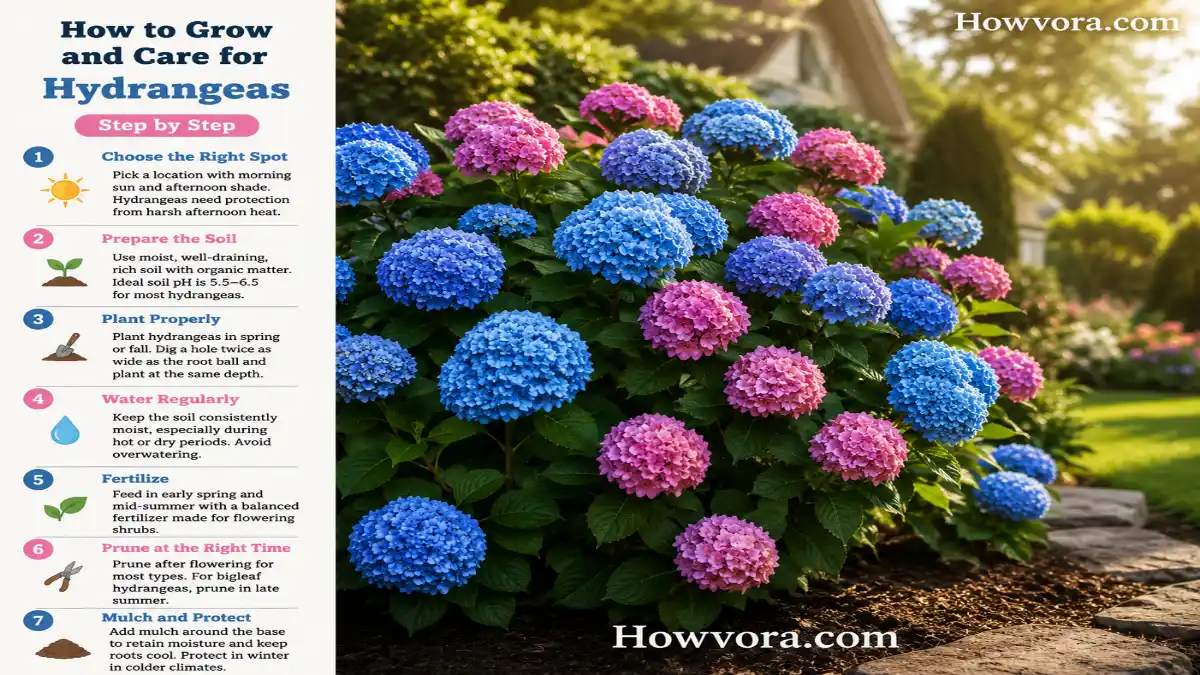
Hydrangeas reward the right care with some of the biggest, longest-blooming flower clusters in the garden, but they’re also one of the most misdiagnosed shrubs; most “my hydrangea won’t bloom” problems trace back to pruning at the wrong time or planting in the wrong light, not a lack of skill.
This guide is for anyone with a new hydrangea (in a pot or freshly planted in the ground) or an established one that isn’t performing the way it should. Follow it, and you’ll know exactly how to water, feed, prune, and troubleshoot your specific hydrangea type so it blooms reliably year after year.
Featured Snippet
Water hydrangeas deeply 2–3 times a week to keep soil consistently moist, plant them where they get morning sun and afternoon shade, feed lightly in spring, and prune only after confirming whether your variety blooms on old or new wood. Getting the pruning timing right is the single biggest factor in reliable blooming.
Before You Begin
Difficulty: Beginner-friendly for watering and feeding; moderate for pruning, since it requires identifying your hydrangea type first. Time commitment: 10–15 minutes of care per week during the growing season; pruning takes 20–30 minutes once or twice a year. Cost: Low. A bag of balanced fertilizer, mulch, and pruning shears covers most needs ($20–$40 total if starting from scratch). DIY vs. Pro: Fully DIY. Professional help is rarely needed unless you’re dealing with a large, overgrown, decades-old shrub or a persistent disease issue. Prerequisites: Know which hydrangea species you have (bigleaf, panicle, smooth, oakleaf, climbing, or mountain), since watering tolerance, sun needs, and critical pruning timing differ by type. Check the plant tag, receipt, or compare leaf and bloom shapes if you’re unsure.
Choosing the Right Approach: In-Ground vs. Container Care
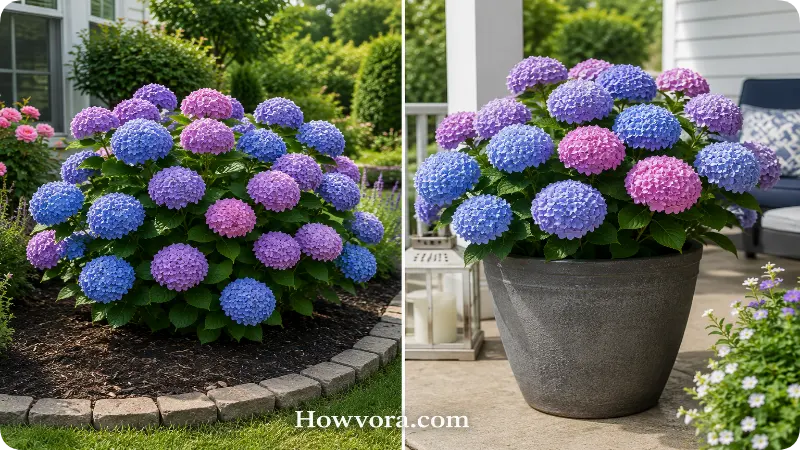
Both approaches work well, but they change your watering and winter-prep routine.
| Factor | In-Ground Planting | Container Growing |
| Watering frequency | 2–3x/week, less in cool climates | Daily to every other day in summer (pots dry faster) |
| Soil control | Harder to amend after planting | Full control via potting mix |
| Winter protection | Usually none needed (zone-dependent) | Roots are more exposed to cold; you may need to move the pot to a sheltered spot |
| Best for | Permanent garden beds, larger mature shrubs | Patios, small spaces, renters, or controlling bloom color |
| Mobility | None | Can relocate for sun/shade or frost protection |
If you want to control bloom color on a bigleaf hydrangea (blue vs. pink), containers make it far easier to manage soil pH precisely, since you’re not fighting the native garden soil chemistry.
At a Glance
| Category | Details |
| Difficulty | Beginner to Moderate |
| Time per week | 10–15 minutes |
| Best season to plant | Early spring or early fall |
| Sun needs | Morning sun, afternoon shade (most types) |
| Soil | Moist, well-draining, rich in organic matter |
| Water needs | High “hydrangea” literally references its water needs |
| Bloom time | Late spring through fall, depending on the type |
| Best for | Gardeners who want big, showy blooms with moderate maintenance |
Things You’ll Need
| Item | Purpose |
| Balanced slow-release fertilizer (10-10-10 or similar) | Feeds the plant without forcing excess leaf growth over blooms |
| Mulch (bark or pine straw) | Retains soil moisture and moderates root temperature |
| Sharp bypass pruning shears | Clean cuts that reduce disease risk and stress on the plant |
| Garden fork or hand trowel | Loosening soil and working in amendments |
| Soil pH test kit (optional) | Needed only if you’re adjusting bloom color on bigleaf varieties |
| Watering can or soaker hose | Delivers deep, consistent moisture to the root zone |
| Aluminum sulfate or garden lime (optional) | Shifts soil pH to turn bigleaf hydrangea blooms blue or pink |
Step-by-Step Guide
1. Identify your hydrangea type before doing anything else.
This single step prevents the most common mistake: pruning off next year’s flower buds. Bigleaf (Hydrangea macrophylla), oakleaf, climbing, and mountain hydrangeas bloom on “old wood” (last year’s stems). Panicle and smooth hydrangeas bloom on “new wood” (this year’s growth). Pruning old-wood varieties in fall or early spring removes the buds that would have flowered.
2. Plant or position for morning sun and afternoon shade.
Most hydrangeas want 4–6 hours of morning sun and protection from harsh afternoon heat, which causes wilting and scorched leaf edges. Panicle hydrangeas tolerate more full sun than bigleaf types.
3. Water deeply, 2–3 times per week.
Aim for the soil to stay consistently moist but not waterlogged. Water at the base rather than overhead to reduce fungal leaf spot. Increase frequency during heat waves or for container plants, which dry out faster. Common mistake: Light, frequent sprinkling encourages shallow roots that wilt fast in heat. Water less often but more deeply instead.
4. Feed lightly in early spring and again in early summer if growth looks weak.
Use a balanced, slow-release fertilizer. Avoid high-nitrogen formulas, which push leafy growth at the expense of blooms. Stop feeding by mid-to-late summer so the plant can harden off before winter.
5. Mulch with a 2–3-inch layer around the base.
Keep mulch a few inches away from the stem itself to prevent rot. Mulch conserves moisture, suppresses weeds, and insulates roots.
6. Prune according to your hydrangea’s wood type (from Step 1).
- Old-wood bloomers (bigleaf, oakleaf, climbing, mountain): prune immediately after flowering, removing only dead or spent stems. Never prune in fall, winter, or early spring.
- New-wood bloomers (panicle, smooth): prune in late winter or early spring while dormant, cutting back by up to one-third to encourage strong new stems. Why it matters: Getting this timing wrong is the number one reason healthy hydrangeas fail to bloom.
7. Adjust soil pH if you want to change bigleaf bloom color (optional).
Acidic soil (pH below 6) produces blue blooms; alkaline soil (pH above 7) produces pink. Add aluminum sulfate to lower pH or garden lime to raise it, applied gradually over a season. This doesn’t apply to white varieties, which stay white regardless of pH.
8. Prepare for winter in cold climates.
For old-wood bloomers in zones where buds are exposed to hard freezes, loosely wrap the shrub in burlap or pile mulch over the crown after the first frost. Remove coverings in spring once hard freezes pass.
How to Know You Did It Correctly
You’re on track if leaves stay a healthy deep green without scorched or crispy edges, the plant produces new stem growth each spring, and buds set and open into full blooms rather than staying tight or dropping. A hydrangea that wilts badly by midday but recovers by evening is normal in hot weather; one that stays wilted after watering signals a root or watering problem, not a sun problem.
Expected Timeline and Results
Newly planted hydrangeas typically take one to two growing seasons to establish a full root system before producing their best bloom show. Established shrubs bloom annually from late spring through fall, depending on type, with panicle hydrangeas often blooming latest and longest. Pruned old-wood varieties may skip blooming the following year if pruned at the wrong time, but they’ll recover with correct timing the year after.
Alternative Methods
Rejuvenation pruning for old, overgrown shrubs:
For a bigleaf or oakleaf hydrangea that has become leggy or unproductive after many years, cut one-third of the oldest stems to the ground each year over three years instead of pruning the whole shrub at once. This renews the plant gradually without sacrificing an entire season’s blooms.
Drying blooms for indoor use:
Cut stems for drying in late summer when petals feel papery to the touch rather than soft, then hang upside down in a dark, dry space. This is an alternative to deadheading purely for continued garden appearance.
Common Mistakes to Avoid
- Pruning old-wood hydrangeas in fall or early spring, removing next year’s flower buds
- Planting in full, all-day sun, which causes wilting and scorching even with adequate water
- Overfeeding with high-nitrogen fertilizer, which produces leaves at the expense of blooms
- Watering shallowly and frequently instead of deeply and less often
- Assuming all hydrangea varieties respond to soil pH changes for color (only bigleaf types do)
Troubleshooting & Common Problems
| Problem | Cause | Solution |
| No blooms despite healthy foliage | Pruned at the wrong time, removing flower buds | Identify the wood type and shift pruning to the correct season next year |
| Wilting even with regular watering | Root rot from overwatering or poor drainage | Check soil drainage; let soil dry slightly between waterings; improve drainage with organic matter |
| Scorched, brown leaf edges | Too much direct afternoon sun or heat stress | Relocate container plants or add afternoon shade; increase watering during heat waves |
| Blooms are green or brown instead of the expected color | Natural aging of blooms, or extreme heat/cold stress | Usually cosmetic and temporary; ensure consistent watering and shade during heat spikes |
| Bloom color won’t change despite pH treatment | Wrong variety (white types don’t change) or pH shift not yet fully absorbed | Confirm you have a bigleaf variety; reapply pH amendments gradually over a full season.n |
| Yellowing leaves with green veins | Iron deficiency from alkaline soil | Apply a chelated iron supplement or lower the soil pH slightly |
Expert Tips
- Test soil moisture with a finger 2 inches deep before watering. Hydrangeas wilt in both drought and waterlogged soil, so don’t assume wilting always means “add more water.”
- If you’re unsure of your hydrangea’s wood type, skip pruning for one full year and just observe where new blooms form on the stem; this alone will tell you which category it belongs to.
- Group multiple hydrangeas together rather than isolating them; the shade they cast on each other’s root zones helps retain soil moisture in hot climates.
- For container hydrangeas, choose a pot at least 2 inches wider in diameter than the nursery pot each time you repot, rather than jumping to an oversized container, which holds excess water around the roots.
When to Call a Professional
Most hydrangea care is manageable without help. Consider consulting a local extension office or certified arborist if you’re dealing with a large, decades-old shrub that needs major structural pruning, a recurring disease (such as persistent fungal leaf spot or root rot) that doesn’t respond to adjusted watering, or if you need help identifying an unfamiliar variety before making pruning decisions.
What to Do Next
Confirm your hydrangea’s wood type this week if you haven’t already, and mark your calendar for the correct pruning window based on that type. If you’re planning to change bloom color, start soil pH amendments now, since color shifts take a full season to show results.
FAQs
Do hydrangeas need full sun or shade?
Most varieties do best with morning sun and afternoon shade. Panicle hydrangeas tolerate more full sun than bigleaf types, which scorch easily in intense afternoon heat.
Why did my hydrangea stop blooming after years of flowering fine?
The most common cause is pruning at the wrong time of year for that variety, which removes the following season’s flower buds. A hard freeze after bud formation can also damage buds on old-wood types.
Can I change my hydrangea’s bloom color?
Only on bigleaf hydrangeas, and only if the variety isn’t white. Acidic soil produces blue blooms, alkaline soil produces pink, and this is done by adjusting soil pH with aluminum sulfate or garden lime over a season.
How often should I water a potted hydrangea?
Check soil moisture daily in summer, since containers dry out faster than garden beds. Water when the top inch of soil feels dry, which may mean daily watering in hot weather.
Is it too late to prune my hydrangea?
It depends on your variety’s wood type. Old-wood bloomers should only be pruned right after flowering; new-wood bloomers are pruned in late winter or early spring while dormant. Pruning outside these windows risks removing next year’s blooms.
Do hydrangeas come back every year?
Yes, hydrangeas are perennial shrubs that return and bloom annually when planted in the right conditions and pruned at the correct time for their type.
Why are my hydrangea leaves turning yellow?
Yellowing with green veins usually points to an iron deficiency linked to alkaline soil, while overall yellowing can signal overwatering or poor drainage. Check soil moisture and pH to narrow down the cause.
Final Thoughts
Hydrangea care comes down to a few consistent habits: deep watering, dappled sun, light feeding, and pruning at the right moment for your specific variety. Once you’ve identified whether your hydrangea blooms on old or new wood, the rest of the maintenance schedule becomes straightforward, and you’ll avoid the single mistake that causes most bloom failures.