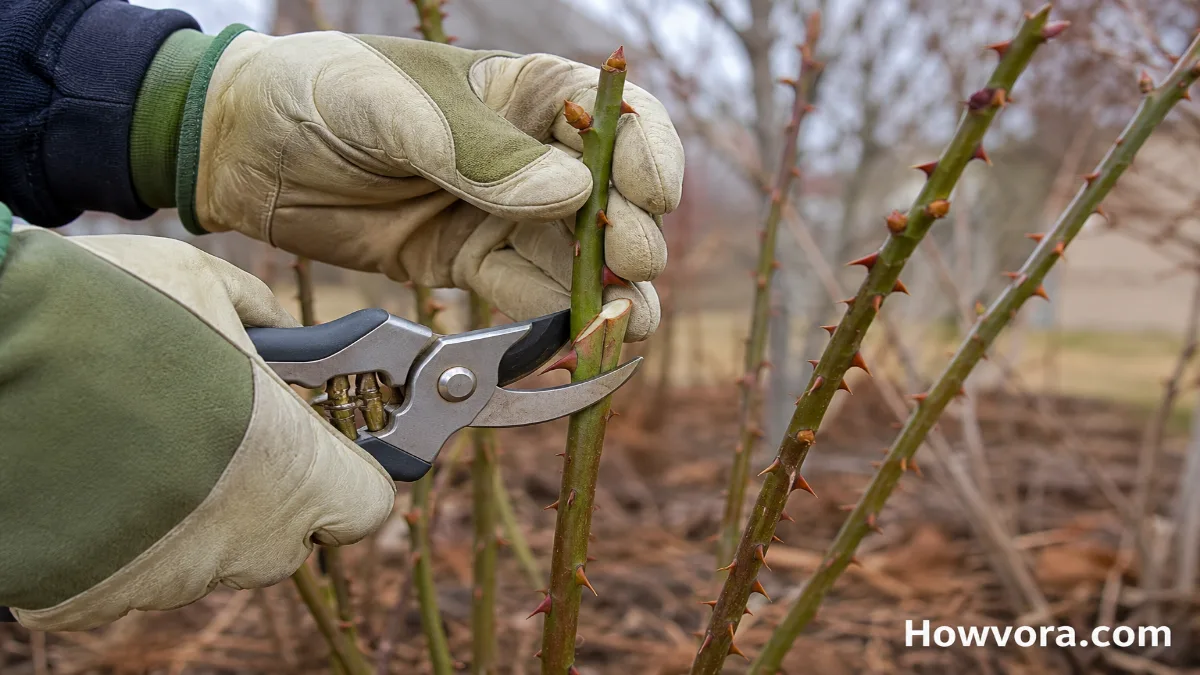
Trimming a rose bush controls its shape, removes dead or diseased wood, and redirects the plant’s energy into producing more and bigger blooms. Left unpruned, roses grow leggy, tangled, and more prone to fungal disease because air can’t move through the crowded canes.
This guide is for home gardeners with an established rose bush, whether a hybrid tea, shrub, floribunda, or climbing variety, who want a clear, correct pruning process rather than generic “just cut it back” advice. Do it right, and within one growing season, you’ll see a fuller, more productive bush with stronger stems and healthier foliage.
Featured Snippet
To trim a rose bush, prune in late winter or early spring while the plant is dormant. Remove dead, damaged, and crossing canes first, then cut healthy canes at a 45-degree angle above an outward-facing bud, leaving 3–5 strong canes shaped like an open vase.
Before You Begin
Difficulty: Moderate requires clean cuts at the right angle and location, but no special training. Time: 20–40 minutes for a mature bush. Cost: $20–$50 if you need to buy bypass pruners and gloves; $0 if you already own them. DIY vs. Pro: Fully DIY for most home roses. Consider a professional only for very old, overgrown climbing roses trained on structures or large hedge-style rose plantings. Prerequisites: A dormant or nearly dormant bush (most regions: late winter to very early spring), dry weather, and clean tools.
One thing worth knowing before you start: the timing and the angle of your cuts matter more to next season’s bloom count than how much total wood you remove. Many guides focus on “how much to cut back,” but the real driver of bloom quality is where each cut sits relative to a healthy, outward-facing bud.
Choosing the Right Approach

Not all roses are pruned the same way. Matching the method to your rose type is a step most general guides skip.
| Rose Type | When to Prune | Pruning Style | Cut Severity |
| Hybrid Tea / Grandiflora | Late winter/early spring | Hard prune to open vase shape | Cut back to 3–5 canes, 12–18 inches tall |
| Floribunda | Late winter/early spring | Moderate prune, similar vase shape | Cut back to 8–10 canes, 18–24 inches tall |
| Shrub / Landscape Rose | Late winter/early spring | Light shaping only | Remove 1/3 of growth, keep natural form |
| Climbing Rose | After the first spring flush | Prune side shoots, not main canes | Trim laterals to 2–3 buds; leave main canes |
| Old Garden / Once-Blooming | Right after flowering ends | Light shaping only | Remove spent wood, minimal shaping |
If you’re not sure what type you have, look at the growth habit: a single-flush climber trained on a trellis is pruned differently from a repeat-blooming bush rose, and pruning a climber at the wrong time can remove the wood that would have flowered.
At a Glance
| Category | Detail |
| Difficulty | Moderate |
| Time Required | 20–40 minutes |
| Cost | $0–$50 |
| Skill Level | Beginner to intermediate |
| Best For | Established rose bushes, one growing season or older |
Things You’ll Need
| Item | Purpose |
| Bypass pruners | Makes clean, angled cuts without crushing stems |
| Loppers | Cuts thick, older canes, bypass pruners can’t handle |
| Thorn-resistant gardening gloves | Protects hands from thorns |
| Rubbing alcohol or disinfectant wipes | Sterilizes blades between cuts to prevent disease spread |
| Long sleeves | Protects arms from scratches |
| Pruning sealant (optional) | Deters cane borers in areas where they’re a known problem |
Safety Precautions
Rose thorns cause more injuries than any other step in this process, and dirty tools are the leading cause of the spread of plant disease from bush to bush.
- Wear thorn-resistant gloves and long sleeves before you touch the plant.
- Sterilize pruner and lopper blades with rubbing alcohol before you start and again if you cut into visibly diseased wood. This prevents spreading fungal infections like black spot or canker to healthy canes.
- Never prune with dull blades; they crush stems instead of cutting cleanly, creating entry points for disease.
- If working near a support structure or ladder for a tall climber, secure your footing before making cuts.
Step-by-Step Guide
- Confirm timing. Prune bush and shrub roses in late winter to early spring, just as buds begin to swell but before major leaf-out. Prune once-blooming climbers right after their single spring flush instead, since they set next year’s flowers on this year’s growth.
- Remove dead and damaged wood first. Cut out any canes that are black, brown, shriveled, or clearly broken. Cut back into healthy tissue; you’ll know it’s healthy when the pith (center) is white or pale green, not brown. Common mistake: Stopping the cut at the first sign of green bark without checking the pith. A cane can look alive on the outside and be dead in the center.
- Remove crossing and inward-growing canes. Canes that rub against each other create wounds that invite disease, and inward growth blocks airflow through the center of the bush.
- Select 3–5 strong, healthy canes to keep (more for floribundas and shrub roses, as shown in the table above). Choose canes that are thick, evenly spaced, and growing outward.
- Make each cut at a 45-degree angle, about ¼ inch above an outward-facing bud. The angle sheds water away from the cut, and the outward-facing bud directs new growth away from the center of the bush, keeping it open. Why it matters: A cut too close to the bud can damage it; a cut too far above it leaves a stub that dies back and can invite rot into the healthy cane below.
- Cut remaining canes down to the target height for your rose type (see the comparison table above).
- Remove any thin, weak, “twiggy” growth thinner than a pencil; it rarely produces strong blooms and drains the plant’s energy.
- Clear all pruned material away from the base of the plant. Leaving cuttings on the ground can harbor fungal spores that reinfect the bush.
How to Know You Did It Correctly
A correctly pruned rose bush should have an open, vase-like center you can see through, 3–8 strong canes (depending on type) with no crossing branches, and every cut ending just above an outward-facing bud at a clean 45-degree angle. Within 2–4 weeks of dormant-season pruning, you should see new red or green shoots emerging from the buds just below your cuts; this is the clearest sign that the plant responded well.
Expected Timeline and Results
New growth typically appears 2–4 weeks after pruning, depending on climate and rose variety. First blooms on repeat-flowering roses generally arrive 8–10 weeks after pruning. A properly pruned bush should produce more blooms per cane and better airflow-driven disease resistance than an unpruned one by the end of the same growing season.
Common Mistakes to Avoid
- Pruning at the wrong time of year: cutting a once-blooming climber in late winter removes the wood that would have flowered.
- Using dull or dirty tools crushes stems and spreads disease between plants.
- Leaving stubs above the bud, dead stub tissue invites rot into the cane.
- Over-pruning shrub roses,s like hybrid teas, reduces total bloom production and stresses the plant.
- Ignoring the center of the bush and skipping crossing-cane removal leads to poor airflow and recurring fungal problems.
Troubleshooting & Common Problems
| Problem | Cause | Solution |
| No new growth after 4–6 weeks | Pruned too late, cold snap, or the bush was already stressed | Check cane pith for health; wait through one more warm cycle before assuming failure |
| Blackened tips on new cuts | Cane borer entry or frost damage | Cut back further into healthy wood; seal cut ends in borer-prone regions |
| Few blooms despite healthy growth | Over-pruning removed too much flowering wood, or the wrong type of pruning was done on a climber | Prune more lightly next season; confirm rose type before cutting |
| Recurring black spot or fungal disease | Debris left at base, tools not sterilized, poor airflow | Clear all cuttings, disinfect tools between cuts, and re-open the center of the bush |
| Cane dies back after pruning | Cut made too far from or too close to the bud | Always cut ¼ inch above an outward-facing bud at a 45-degree angle |
Expert Tips
- Prune on a dry day; wet conditions increase the chance of fungal spores entering fresh cuts.
- Step back and look at the whole bush every few cuts rather than pruning cane by cane without reassessing the shape.
- If two canes are close in health and position, keep the one that’s thicker and more upright; it will support more blooms.
- For repeat bloomers, deadheading (removing spent flowers just above the first five-leaflet leaf) through the season keeps the bush producing without waiting for the next major pruning.
When to Call a Professional
Consider hiring a professional if you’re dealing with a very old, heavily overgrown climbing rose trained onto a structure, a large hedge of roses that would take several hours to prune correctly, or a bush with extensive disease that needs diagnosis beyond simple dead-wood removal.
What to Do Next
After pruning, apply a balanced, slow-release fertilizer as new growth begins, and refresh mulch around the base to retain moisture and suppress weeds. Watch for the first flush of new shoots over the following weeks, and thin out any overly crowded new growth once it’s a few inches long.
FAQs
How often should I trim a rose bush?
Most roses need one major dormant-season pruning per year, plus light deadheading through the growing season.
Can I prune roses in the fall?
Avoid hard fall pruning in cold climates; it can stimulate new growth that gets damaged by frost. Save major pruning for late winter or early spring.
How far back should I cut a rose bush?
This depends on the type: hybrid teas go down to 12–18 inches, floribundas to 18–24 inches, and shrub roses need only about a third of their growth removed. See the comparison table above.
Will pruning too much kill my rose bush?
Over-pruning rarely kills an established rose but can significantly reduce blooming for a season. Roses are resilient and generally recover the following year.
Do I need to seal every cut?
No sealant is optional and is mainly useful in regions with known cane borer problems. Most cuts heal fine on their own.
What’s the difference between deadheading and pruning?
Deadheading is the light, ongoing removal of spent blooms during the growing season. Pruning is the major structural cutback done once a year while the plant is dormant.
Final Thoughts
Trimming a rose bush comes down to three things: timing the cut to the plant’s dormant cycle (or its bloom cycle, for climbers), removing dead and crossing wood to open up the center, and making every cut at the right angle above an outward-facing bud. Get those three right, and the rest, more blooms, stronger canes, better disease resistance, follow naturally over the season.