
Introduction
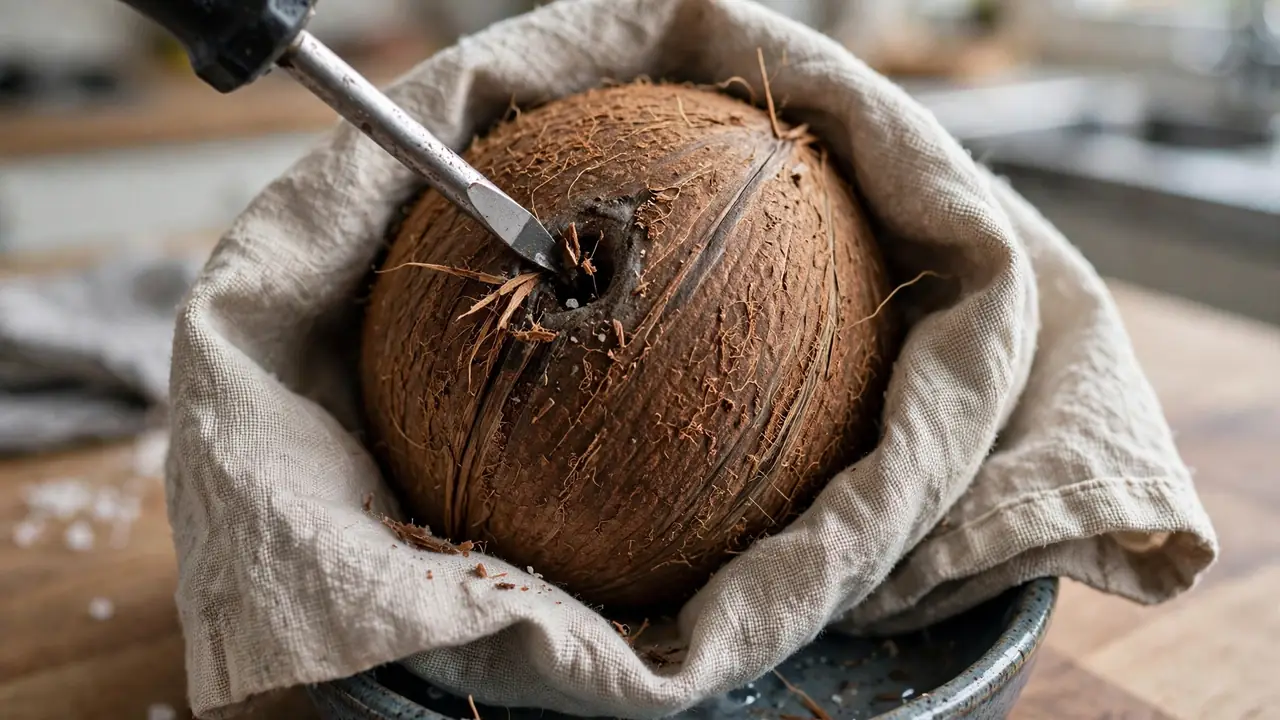
A whole coconut is one of the most intimidating items in the produce aisle: rock hard, no obvious seams, and full of water that sloshes when you shake it. The good news is that a mature brown coconut is built with weak points. Find the three dark eyes at one end and the natural seam around its middle, and the whole job becomes a few minutes of simple work with tools you already own.
This guide covers the full process, from picking a good coconut at the store to draining the water without losing a drop, cracking the shell cleanly with three different methods, and getting the white meat out in usable pieces. Pick the method that matches your tools and comfort level; all three end at the same place.
Featured Snippet Answer
To open a coconut, pierce two of the three dark eyes at one end with a screwdriver or corkscrew and drain the water into a bowl. Then tap firmly around the coconut’s middle seam with the back of a heavy knife or a hammer, rotating it as you go, until the shell cracks open. Pry the halves apart and lever the meat out with a blunt knife.
Before You Begin
Start with the right coconut. A good mature coconut feels heavy for its size and sloshes clearly when shaken, which tells you it is full of water and the meat inside is fresh. Check the three eyes: they should look dry and firm, with no mold, dark weeping, or sour smell. Avoid any coconut with cracks in the shell, since air and bacteria get in the same way.
Set up a stable work surface, a bowl for the water, and a towel to cradle the coconut so it does not roll. The whole job takes 10 to 15 minutes the first time and about half that once you have done it once. If you only want the water, stop after the draining step; a pierced coconut keeps for a day or two in the fridge.
Choosing the Right Approach
Three methods open a coconut reliably. They differ in tools, effort, and how clean the break is.
| Method | Tools | How It Works | Best For |
|---|---|---|---|
| Tap and crack | Hammer or the back of a heavy knife | Repeated taps around the middle seam until the shell splits along it | Most people; clean halves and no oven time |
| Oven method | Oven, then a hammer | Heat makes the shell brittle and separates it slightly from the meat | Getting meat out in larger pieces with less prying |
| Freezer method | Freezer, then a hammer | Freezing overnight cracks and loosens the shell from the meat | Planning ahead; the easiest meat release of all |
The tap-and-crack method below is the default. Use heat or freezing when your priority is removing the meat in big, clean pieces for grating or presentation.
At a Glance
| Detail | What to Expect |
|---|---|
| Difficulty | Easy to moderate; the shell is hard but the technique is simple |
| Time | 10–15 minutes (oven and freezer methods add waiting time) |
| Cost | Nothing beyond the coconut if you own basic tools |
| Skill level | Beginner |
| Best for | Fresh coconut water, cooking, baking, and snacking |
Things You’ll Need
| Item | Purpose |
|---|---|
| Screwdriver, corkscrew, or a clean nail | Pierces the eyes so you can drain the water |
| A bowl and a fine strainer | Catches the water and filters out shell bits |
| A hammer or heavy chef’s knife | Cracks the shell along its seam |
| A folded kitchen towel | Cradles the coconut so it stays put while you work |
| A blunt dinner knife or spoon | Levers the meat away from the shell |
| A vegetable peeler | Removes the thin brown skin from the meat if you want pure white pieces |
Safety Precautions
- Keep your holding hand out of the strike zone. Cradle the coconut in a towel or hold it steady on the board, and tap with controlled force rather than swinging.
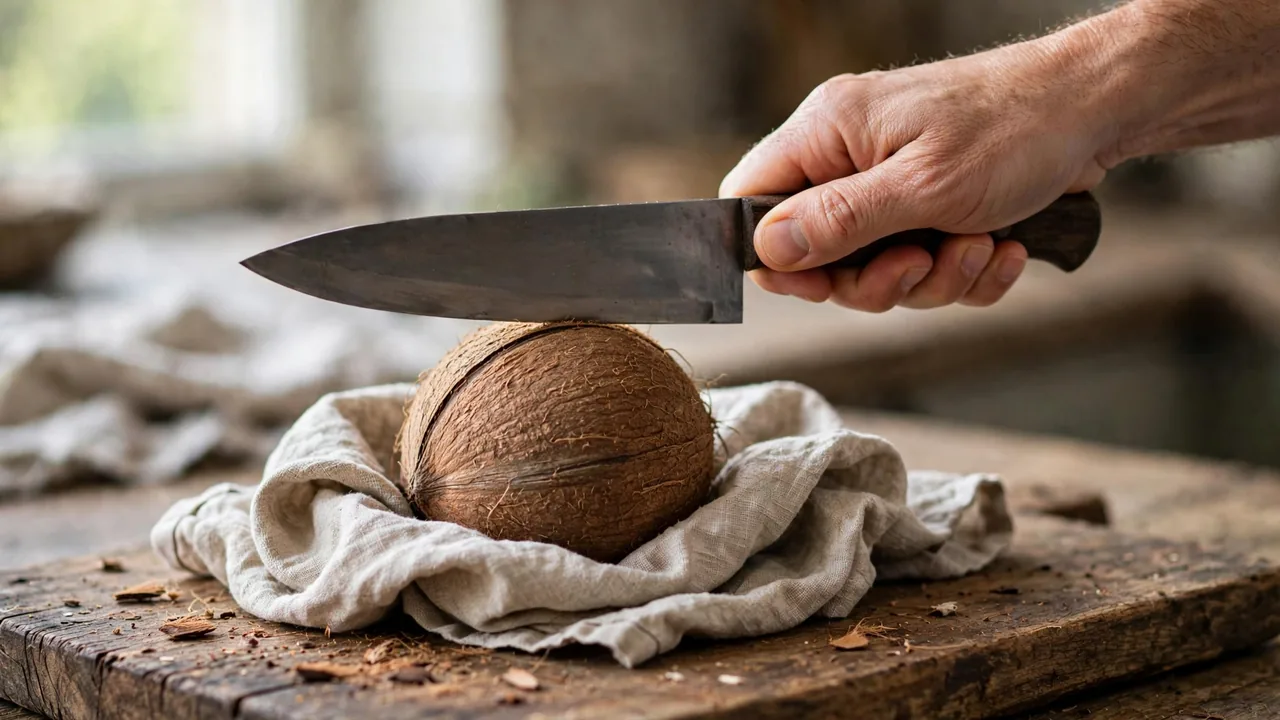
- If you use a knife, strike with the spine, never the edge. The back of a heavy chef’s knife does the work; the blade edge is for cutting, not hammering, and it will chip.
- Drain the water first, always. A full coconut is heavier, messier, and harder to control when it cracks.
- Smell the water and meat before using them. Fresh coconut water smells mild and sweet. Sour, fizzy, or pink-tinged water means the coconut is spoiled; discard it.
- Mind shell fragments. Check meat pieces for small shell shards before eating or serving.
Step-by-Step Guide
Step 1: Pierce the Eyes
Find the three dark spots at one end of the coconut. One of them is noticeably softer than the others. Push a screwdriver or corkscrew through that soft eye, wiggle it to widen the hole, then pierce a second eye so air can enter and the water flows freely. If the tool meets resistance, a light tap with the hammer starts the hole.
Step 2: Drain the Water
Turn the coconut upside down over a bowl and let the water drain through a strainer. Shake gently at the end to get the last of it. Taste a sip: fresh coconut water is mildly sweet. If it tastes sour or fizzy, stop here and discard the coconut, since the meat will be off too.
Step 3: Find the Seam and Start Tapping
Look for the faint line running around the coconut’s widest middle, its equator. Rest the coconut in the folded towel in one hand, or on the towel on your board. With the hammer or the spine of the knife, tap firmly along that line, rotating the coconut a little after each tap. You are not trying to smash it; steady, repeated taps along the seam do the work.
Step 4: Crack and Pry the Halves Apart
After one or two full rotations of tapping, you will hear the sound change and see a crack open along the seam. Work the tip of the screwdriver or a blunt knife into the crack and twist gently to lever the two halves apart. If the crack stalls, return to tapping along the line of the crack rather than forcing the tool.
Step 5: Remove the Meat
Slide a blunt dinner knife between the meat and the shell and work it around the curve, levering gently until the meat pops free. It often comes out in a few large pieces. For stubborn meat, score the surface in a crosshatch with the knife first and pry out one section at a time.
Step 6: Peel and Rinse the Meat
The meat carries a thin brown skin where it touched the shell. It is edible, but peel it off with a vegetable peeler if you want clean white meat for desserts or smooth coconut milk. Give the pieces a quick rinse to remove any shell dust, pat them dry, and they are ready to eat, grate, or blend.
How to Know You Did It Correctly
A clean job shows three signs: the coconut split into two rough halves along its middle instead of shattering into shards, you saved a bowl of clear, sweet-smelling water instead of wearing it, and the meat came away in large pieces with no shell fragments stuck to it. If your first coconut breaks unevenly, that is normal; the seam tap is a rhythm you feel by the second or third try.
Expected Timeline and Results
Budget 10 to 15 minutes from whole coconut to ready meat. One mature coconut yields roughly a cup to a cup and a half of water and several cups of meat pieces, depending on size. Fresh meat keeps about four to five days in an airtight container in the fridge, and it freezes well for months, which makes opening two or three coconuts in one session an efficient habit.
Common Mistakes to Avoid
- Whacking the coconut as hard as possible. Brute force shatters the shell into the meat. Repeated moderate taps along the seam split it cleanly.
- Skipping the draining step. Cracking a full coconut sprays water everywhere and makes the shell slippery to hold.
- Using the knife’s edge to strike. It chips the blade and risks a slip. The spine of the knife or a hammer is the tool.
- Prying meat with a sharp knife toward your hand. Use a blunt knife and lever away from your body.
- Ignoring the smell test. A spoiled coconut wastes more than time; when the water tastes sour, throw the whole thing out.
- Buying a coconut that sounds dry. No slosh usually means old, dried-out meat. Shake before you buy.
Troubleshooting & Common Problems
| Problem | Cause | Solution |
|---|---|---|
| The eyes will not pierce | You are pushing on one of the two hard eyes | Test all three; one is always softer. Start there and use a light hammer tap if needed |
| The shell cracks into many pieces | Strikes too hard or off the seam line | Slow down, tap along the equator line only, and rotate steadily |
| Meat refuses to release from the shell | Meat is tightly bonded, common in very fresh coconuts | Use the oven method next time, or warm the opened halves briefly and pry again |
| Water tastes sour or looks pink | The coconut is spoiled | Discard it entirely; do not use the meat either |
| Brown skin is tedious to peel | Peeling large cold pieces | Peel smaller pieces with a vegetable peeler; the skin comes off faster in short strokes |
Expert Tips
- Freeze the drained coconut overnight for the cleanest meat release. The shell contracts differently than the meat, and one tap often splits it with the meat nearly falling out.
- For the oven method, bake the drained coconut at 350°F (about 175°C) for 10 to 15 minutes. Let it cool just enough to handle, then tap; the shell often cracks on its own as it heats.
- Save the water even if you only wanted the meat. It is excellent in smoothies, rice, and curries, and it freezes perfectly in ice cube trays.
- Grate meat with the skin on for toasted coconut. The brown skin adds color and a nuttier flavor when toasted; peel only when appearance matters.
- Work over a rimmed baking sheet. It catches shell bits and stray water and makes cleanup a one-minute job.
What to Do Next
Use the meat within a few days or freeze it grated, since grated coconut thaws fast and drops straight into recipes. If coconut is becoming a habit, the freezer method plus a small stock of coconuts when they are cheap turns this from a project into a five-minute routine. And if you ever face a young green coconut instead, the approach differs: slice the top off with a heavy knife to make a drinking opening rather than cracking it like a mature one.
FAQs
How do you open a coconut without a hammer?
Use the spine of a heavy chef’s knife to tap around the seam, exactly as you would with a hammer. On a hard surface like concrete steps, you can also strike the coconut’s equator firmly against the edge of the step while rotating it.
How can you tell if a coconut is bad?
Warning signs are mold or moisture around the eyes, a cracked shell, no sloshing sound when shaken, and water that smells sour or tastes fizzy. Any one of these is reason enough to discard it.
Do you have to drain the water before cracking a coconut?
You do not have to, but you should. Draining first keeps the water for drinking, makes the coconut lighter and easier to control, and prevents a splashy mess when the shell splits.
Can you eat the brown skin on coconut meat?
Yes, it is edible and adds a slightly nuttier flavor. Peel it when you want pure white meat for presentation or a smoother texture in desserts and coconut milk.
How long does fresh coconut meat last?
About four to five days refrigerated in an airtight container. For longer storage, freeze it; grated meat freezes especially well and keeps for several months.
What is the easiest way to get coconut meat out in one piece?
The freezer method. Freezing the drained coconut overnight loosens the bond between meat and shell, so after cracking, the meat usually releases with minimal prying.
Final Thoughts
Opening a coconut is a technique problem, not a strength problem. Drain the water through the soft eye, tap along the seam with patience instead of force, and lever the meat out with a blunt knife. The first coconut teaches your hands the rhythm; every one after that opens in minutes, and fresh coconut water and meat beat the packaged versions by a wide margin.