
Introduction
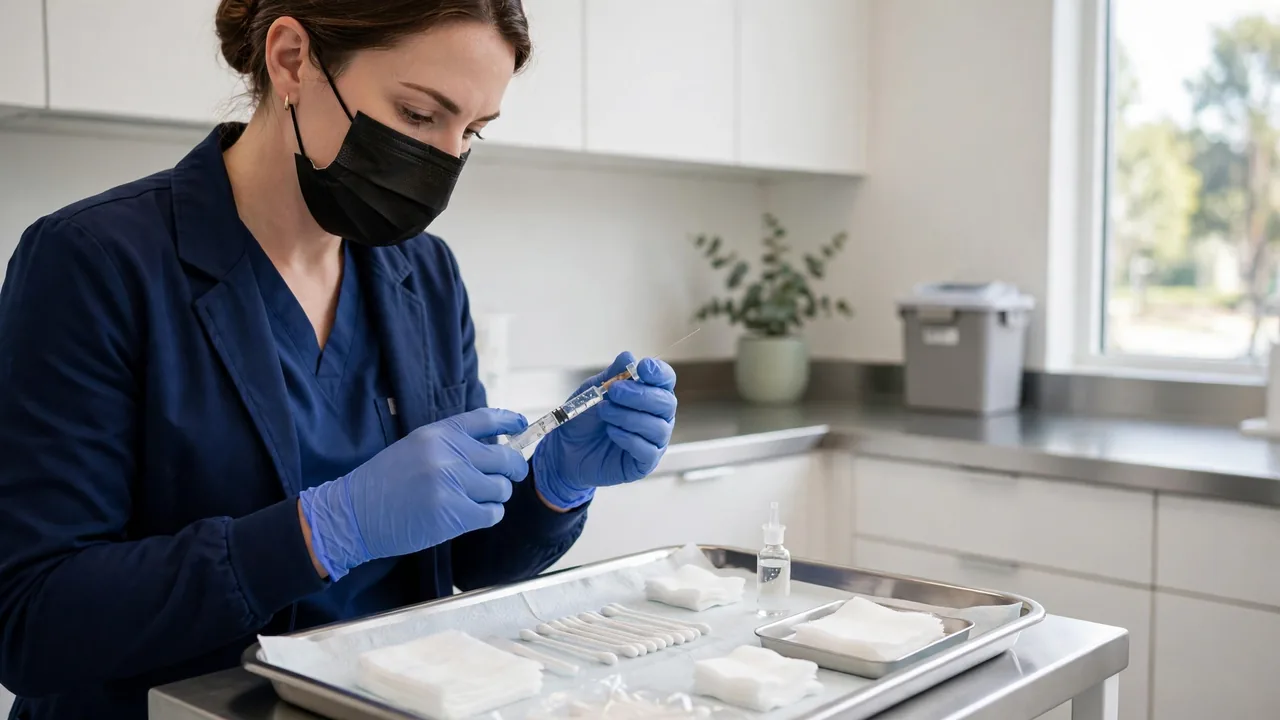
You got Dysport injections, checked the mirror that evening, and saw… exactly the same forehead. The worry creeps in: did it not work? Almost certainly it is working on schedule, because Dysport does not flip a switch. It gradually relaxes the targeted muscles over days, and judging it in the first 24 hours is like judging a cake after one minute in the oven.
This guide maps the real timeline: when the first softening usually appears, when results peak, how long they last, and the factors that make one person’s results arrive faster than another’s. You will also learn what is normal along the way, which signs mean you should call your injector, and why the two-week mark, not day two, is when you evaluate the outcome.
Featured Snippet Answer
Dysport usually starts working within 2 to 3 days, with early softening of lines as the treated muscles begin to relax. Full results appear at 10 to 14 days, which is when your injector will judge the final outcome. Effects typically last 3 to 4 months before muscle movement gradually returns.
Before You Begin

Dysport is a brand of botulinum toxin type A, a purified protein injected in tiny amounts into specific facial muscles. It works by temporarily blocking the nerve signals that tell those muscles to contract. The wrinkles caused by repeated expressions, frown lines, forehead lines, and crow’s feet, soften because the muscle underneath them can no longer fold the skin as forcefully.
That mechanism explains the delay. The protein needs time to be taken up at the nerve endings and to interrupt signaling, and the muscle relaxes progressively rather than all at once. Nothing about a slower start means a weaker result; onset speed and final quality are different things, and both Dysport and its competitors build to a peak over about two weeks.
Set your evaluation date now: 14 days after treatment. Before that day, changes are in progress and can look uneven, with one side relaxing ahead of the other. Asymmetry in the first week is common and usually resolves as the product settles. Scheduling a follow-up around two weeks, which most injectors offer, is the correct moment to judge and to fine-tune.
Choosing the Right Approach

If you are still deciding between treatments, expectations differ mainly in onset and spread. This comparison covers the general timeline picture your injector would discuss with you.
| Treatment | First visible effect | Full result | Typical duration | Notes |
|---|---|---|---|---|
| Dysport | 2 to 3 days | 10 to 14 days | 3 to 4 months | Often noted for slightly quicker onset and natural spread across the forehead |
| Botox | 3 to 5 days | 10 to 14 days | 3 to 4 months | The most widely known brand; very similar overall timeline |
| Xeomin | 3 to 4 days | About 14 days | About 3 months | A “naked” formula without accessory proteins |
| Dermal fillers (for contrast) | Immediate | After swelling settles, about 2 weeks | 6 to 18 months depending on product | Adds volume rather than relaxing muscle; a different tool for different lines |
Units are not interchangeable between brands, so a Dysport dose number and a Botox dose number cannot be compared directly. Your injector converts based on training and experience, which is one more reason the practitioner matters more than the product name.
At a Glance
| Factor | Details |
|---|---|
| First results | Usually 2 to 3 days |
| Full results | 10 to 14 days |
| Duration of effect | Typically 3 to 4 months |
| Downtime | Minimal; most people return to normal activities immediately |
| Best for | Moderate to severe frown lines, forehead lines, and crow’s feet from muscle movement |
The Day-by-Day Timeline
| Timeframe | What most people notice |
|---|---|
| Day 0 | Tiny injection marks or mild redness that fade within hours; no visible smoothing yet |
| Days 1 to 2 | Usually nothing visible; some people feel the treated area is subtly “quieter” when they try to frown |
| Days 2 to 3 | First softening appears, often in the frown lines first; expressions start to feel less forceful |
| Days 4 to 7 | Clear improvement; lines are shallower, makeup sits more smoothly, mild unevenness between sides is normal |
| Days 10 to 14 | Full result. The treated muscles are at peak relaxation and the outcome can be judged fairly |
| Months 3 to 4 | Movement gradually returns as nerve signaling recovers; lines slowly reappear, signaling it is time to plan the next session |
Things You’ll Need
| Item | Purpose |
|---|---|
| A licensed, experienced injector | Placement and dosing accuracy decide both speed and quality of results |
| Before photos in consistent light | The only honest way to compare day 0 with day 14 |
| A two-week follow-up appointment | The correct checkpoint for judging results and requesting a touch-up if needed |
| A list of your medications and supplements | Some products affect bruising risk; your injector should review them beforehand |
| Patience for the full 14 days | Judging early leads to unnecessary worry and premature extra units |
Safety Precautions
- Follow aftercare for the first hours. Stay upright for about 4 hours after treatment, avoid rubbing or massaging the treated areas, and skip strenuous exercise for the rest of the day, as your injector directs.
- Use only licensed providers. Botulinum toxin is a prescription product. Unlicensed sellers and counterfeit product are genuine safety hazards, not bargains.
- Know the warning signs. Drooping of an eyelid or brow, double vision, or trouble swallowing, speaking, or breathing after treatment needs immediate medical contact. These are uncommon but serious.
- Disclose your full history. Neuromuscular conditions, allergies to cow’s milk protein (relevant to Dysport’s formulation), pregnancy, and planned surgery all change if treatment is appropriate.
Step-by-Step: What to Do While You Wait
Step 1: Protect the first few hours. Keep your head upright, do not press on the injection sites, and postpone the gym, facials, and tight hats until the next day. This reduces the chance of the product migrating from where it was placed.
Step 2: Take a baseline photo on day 0. Same light, same expression: raise your brows, frown hard, smile wide. Repeat under matching conditions later. Without photos, memory exaggerates both failure and success.
Step 3: Test movement, not lines, on day 3. Try to frown or raise your brows in the mirror. Reduced force in the movement is the earliest real sign the treatment is engaging, and it shows up before the skin surface changes.
Step 4: Do nothing corrective during week one. No extra units, no other treatments layered in, no aggressive facial massage. Early unevenness is the product still distributing its effect across the muscle, and intervening now is how overcorrection happens.
Step 5: Compare photos at day 7. Expect obvious improvement but not the final picture. If one side lags, note it for the follow-up rather than worrying; sides commonly catch up by day 14.
Step 6: Judge at day 14 and use your follow-up. If a line still moves more than expected, or an eyebrow sits unevenly, your injector can place a small touch-up precisely because the full result is now visible. This appointment is part of the treatment, not an admission of failure.
Factors That Change How Fast It Works
- Dose and placement: Adequate units placed precisely in the target muscle act faster and last longer than a light dose that misses part of the muscle.
- Muscle strength and size: Stronger, bulkier muscles, common in men and in people with very expressive faces, often need more product and can take a day or two longer to quiet down.
- Treatment area: The frown complex often shows change first; larger forehead areas can take slightly longer to settle evenly.
- Metabolism and activity level: Individual biology governs how quickly the effect fades more than how fast it starts, but very active people often report results wearing off sooner.
- Treatment history: Regular patients sometimes notice onset feels quicker, partly because muscles are already trained down and partly because they know what early change looks like.
- Product handling: Properly stored, correctly reconstituted product performs as expected, which is another reason provider quality matters.
How to Know It Worked
By day 14, compare your expressions with the baseline photos. The treated movement should be visibly weaker, the lines formed during that expression shallower or gone, and your resting face should look smoother without looking frozen or unlike yourself. People often report that makeup applies more evenly and that they look less tired or stern, which is the actual goal of treatment, not a face that cannot move.
Expected Timeline and Results
First change at 2 to 3 days, peak at 2 weeks, then a plateau that holds for roughly 3 to 4 months. The fade is gradual: movement returns over several weeks rather than overnight, so there is no morning when the result suddenly vanishes. Planning your next session as movement returns keeps results continuous, and consistent treatment intervals are also what many injectors credit for results lasting better over time.
Alternative Methods
If needles are not for you, the alternatives trade strength for gentleness. Retinoid creams improve skin texture and fine lines over months of consistent use, though they cannot stop the muscle movement that creates expression lines. Chemical peels and laser resurfacing improve the skin surface itself and pair well with injectables but follow their own recovery timelines. For etched-in lines that remain even when the muscle is fully relaxed, your injector may discuss a small amount of filler, because a static groove is a volume problem, not a movement problem. None of these match the speed of a toxin treatment for dynamic wrinkles, and a good provider will tell you plainly which category your lines fall into.
Common Mistakes to Avoid
- Judging the result on day one. Nothing visible should happen yet. Early panic is the most common and most avoidable mistake.
- Demanding a touch-up in the first week. Extra units placed before the full result shows can overshoot into heaviness or drooping.
- Comparing your timeline to a friend’s. Dose, muscle mass, and area treated differ. Their day-two result says nothing about your day-two.
- Rubbing, massaging, or exercising hard right after. Aftercare exists because product placement in the first hours is still settling.
- Lying face-down for a facial or massage the same week. Pressure on freshly treated areas in the first days is worth avoiding; reschedule by a few days.
Troubleshooting and Common Problems
| Problem | Likely cause | Solution |
|---|---|---|
| No change at all by day 5 | Still early for some people, or dose was conservative | Wait to day 14 before concluding anything; then raise it at follow-up |
| One side works faster than the other | Normal variation in muscle size and product uptake | Usually evens out by day 14; persistent asymmetry is a classic touch-up fix |
| Brow or eyelid feels heavy or droops | Product affecting a nearby muscle | Contact your injector promptly; effects are temporary and they have ways to balance it while it wears off |
| Headache in the first day or two | Common early reaction as muscles adjust | Usually resolves quickly; use the pain relief your injector recommends and mention it at follow-up |
| Results faded by month two | Low dose, strong muscles, fast individual metabolism, or product issue | Discuss dose adjustment at the next session; do not shorten intervals without your injector’s agreement |
Expert Tips
- Book your follow-up before you leave. Two-week slots fill quickly, and the follow-up is where good results become great ones.
- Keep a simple treatment log. Date, product, areas, and when you first noticed change. Patterns in your own responses are the best predictor of your next timeline.
- Judge by expression photos, not the resting mirror. Dysport treats movement lines. A frown comparison tells the truth; a neutral face can look identical even when treatment worked perfectly.
- Time treatments around big events with a buffer. For a wedding or photos, schedule about a month ahead so the two-week peak and any touch-up are complete well before the day.
When to Call a Professional
Call your injector’s office if you notice eyelid or brow drooping, marked asymmetry that persists past two weeks, or any result that concerns you; adjustments are routine and easiest when assessed in person. Seek urgent medical care for difficulty swallowing, speaking, or breathing, muscle weakness away from the injection site, or vision changes. These serious effects are rare, but they are the reason treatment belongs with licensed medical professionals who can respond properly.
What to Do Next
If you are mid-wait, the prescription is simple: hands off, photos on schedule, judgment reserved for day 14. If you are planning treatment, choose the injector before the product, book a month before any event that matters, and put the follow-up in your calendar at the same time as the appointment itself.
FAQs
How long does Dysport take to work on the forehead?
Forehead treatment usually shows its first softening in 2 to 3 days and reaches its full effect by 10 to 14 days. The forehead is a wide muscle, so the change can look gradual and settle unevenly during the first week before evening out.
Does Dysport work faster than Botox?
Many patients and injectors report Dysport’s onset is slightly quicker, often by a day or so, with first changes at 2 to 3 days compared with 3 to 5 for Botox. Both reach full effect around two weeks and last a similar length of time.
Why is my Dysport not working after a week?
A week is mid-process, not the finish line. Full results take 10 to 14 days. If day 14 arrives with minimal change, the dose may have been conservative for your muscle strength, which your injector can adjust at the follow-up.
How long does Dysport last?
Typically 3 to 4 months. Movement then returns gradually over several weeks as nerve signaling recovers. Dose, muscle strength, and individual metabolism all shift the number modestly in either direction.
Can I speed up how fast Dysport works?
Not meaningfully. Some injectors suggest moving the treated muscles in the first hour, though evidence for a real effect is thin. The honest accelerators are correct dosing and placement from the start; after that, the biology runs on its own clock.
What if my results look uneven?
Wait until day 14 first, because early unevenness frequently resolves as the effect completes. If it persists, a small, precisely placed touch-up at your follow-up is the standard and usually simple correction.
When should I get Dysport before an event?
About 3 to 4 weeks before. That timing puts you at peak result with the two-week follow-up and any touch-up already behind you, and it leaves a buffer if your onset runs slower than average.
Final Thoughts
Dysport works on a two-week clock: first whispers of change at 2 to 3 days, the full result at 10 to 14 days, and a gradual fade across months three and four. Almost every worried question about it comes from judging day two as if it were the outcome. Protect the first hours, photograph honestly, and let day 14 deliver the verdict. It nearly always does.