Introduction
Your dog has an upset stomach, the medicine cabinet has a pink bottle in it, and the question arrives fast: how much Pepto-Bismol can a dog have? Pepto is one of the human medications vets sometimes use for dogs, but “sometimes” and “some dogs” are doing heavy lifting in that sentence. The dose depends on weight, the safety depends on your dog’s health and other medications, and a few dogs should never get it at all.
This guide gives you the commonly referenced dosing by weight, explains how to measure and give it, and, just as important, walks through the safety checks to run first. A two-minute call to your vet beats every article on the internet, including this one, so treat the numbers here as the standard reference to confirm, not a prescription.
Featured Snippet Answer
The commonly referenced Pepto-Bismol dose for dogs is about 1 teaspoon (5 ml) per 10 pounds of body weight, given every 6 to 8 hours for no more than a day or two. Never give it to puppies, pregnant dogs, dogs with bleeding disorders, or dogs taking NSAIDs or steroids, and check the label for xylitol first.
Before You Begin
Pepto-Bismol’s active ingredient is bismuth subsalicylate. The bismuth coats the digestive tract and has mild antibacterial action, while the subsalicylate part is related to aspirin. That aspirin connection is the reason for nearly every warning in this article: salicylates affect blood clotting, irritate stomachs at the wrong dose, and interact with common dog medications like carprofen and other NSAIDs, steroids, and blood thinners.
Pepto also treats symptoms, not causes. Mild stomach upset from a dietary indiscretion often settles on its own within a day, and Pepto’s real role is comfort during that window. Vomiting, diarrhea, or appetite loss that persists, worsens, or comes with blood, lethargy, or a swollen belly is a different situation, and masking it with pink medicine delays the care your dog actually needs.
One more heads-up that saves panic later: bismuth turns stool dark green or black. That is expected and harmless during use. The catch is that black, tarry stool is also a sign of internal bleeding, so if the dark color continues after you stop the medicine, or your dog seems weak or pale-gummed, that is a vet call, not a wait-and-see.
Choosing the Right Approach

Pepto comes in several forms, and they are not equally practical for dogs.
| Form | Dosing accuracy | Ease of giving | Notes |
|---|---|---|---|
| Regular liquid (original formula) | Best; measured in ml with a syringe | Moderate; most dogs resist the taste | The standard choice; check the label for xylitol before use |
| Chewable tablets | Good; each tablet matches a fixed dose unit | Easier for dogs that take pills in food | Count tablets by weight; confirm strength on the label |
| Caplets | Good; fixed dose per caplet | Hard for small dogs to swallow whole | Do not crush unless your vet approves; sizes suit medium and large dogs |
| Any sugar-free or variant formula | Varies | Varies | Read the full ingredient list; some products contain xylitol, which is toxic to dogs |
At a Glance
| Factor | Details |
|---|---|
| Difficulty | Easy to give; the hard part is confirming it is appropriate for your dog |
| Time | A minute or two per dose, every 6 to 8 hours |
| Cost | A few dollars; most homes already own a bottle |
| Skill level | Beginner, with an oral dosing syringe |
| Best for | Short-term mild stomach upset in healthy adult dogs, ideally with your vet’s okay |
Dosing Chart by Weight
The commonly referenced guideline is 1 teaspoon (5 ml) of regular-strength liquid Pepto-Bismol per 10 pounds of body weight, repeated every 6 to 8 hours as needed, for no more than 24 to 48 hours. When in doubt, dose for the lower end and call your vet.
| Dog weight | Liquid dose | In ml | Frequency |
|---|---|---|---|
| 10 lb | 1 teaspoon | 5 ml | Every 6 to 8 hours |
| 20 lb | 2 teaspoons | 10 ml | Every 6 to 8 hours |
| 30 lb | 1 tablespoon | 15 ml | Every 6 to 8 hours |
| 40 lb | 1 tablespoon plus 1 teaspoon | 20 ml | Every 6 to 8 hours |
| 50 lb | 1 tablespoon plus 2 teaspoons | 25 ml | Every 6 to 8 hours |
| 60 lb | 2 tablespoons | 30 ml | Every 6 to 8 hours |
For dogs under 10 pounds, do not guess fractions at home. Small dogs are the easiest to overdose by volume error, and dosing for them belongs in a conversation with your vet. If your dog’s upset stomach needs more than a day or two of treatment, that is also a vet conversation, because the question has changed from “how much” to “why is this still happening.”
Things You’ll Need
| Item | Purpose |
|---|---|
| Regular Pepto-Bismol, label checked for xylitol | The medication itself; the ingredient check is non-negotiable |
| Oral dosing syringe (needle-free) | Measures ml accurately and delivers the dose into the cheek pouch |
| Your dog’s current weight | Every dose calculation starts here; use a recent vet weight or a home scale |
| A list of your dog’s current medications | To check against salicylate interactions before dosing |
| Your vet’s phone number | For the confirmation call and any turn for the worse |
Safety Precautions: When NOT to Give Pepto
- Puppies: Do not give Pepto to young puppies unless a vet directs it. Their margin for dosing error and dehydration is small.
- Pregnant or nursing dogs: Skip it. Salicylates are not considered safe in pregnancy.
- Dogs on NSAIDs, steroids, or blood thinners: Combining salicylates with carprofen, meloxicam, prednisone, or anticoagulants raises the risk of stomach ulcers and bleeding.
- Dogs with bleeding disorders or upcoming surgery: The aspirin-like effect on clotting makes Pepto a poor choice.
- Dogs allergic to aspirin: A known salicylate sensitivity rules Pepto out entirely.
- Any dog with blood in vomit or stool, a swollen or painful belly, or repeated vomiting: These are vet-first symptoms, not home-treatment symptoms.
- Never give it to cats. Cats process salicylates dangerously slowly. In a multi-pet home, dose the dog away from feline reach.
Step-by-Step Guide
Step 1: Run the safety check. Confirm your dog is an adult, not pregnant, not on an NSAID, steroid, or blood thinner, and showing only mild symptoms: soft stool or mild diarrhea, slight appetite dip, no blood, no repeated vomiting, still drinking and reasonably bright.
Step 2: Check the bottle. Use the regular original formula and read the ingredient list for xylitol (sometimes listed among inactive ingredients or in sugar-free variants). If you find it, do not use that product; xylitol can cause a dangerous drop in a dog’s blood sugar.
Step 3: Weigh and calculate. Use your dog’s current weight and the chart above. Measure with the dosing syringe in milliliters rather than a kitchen spoon; household teaspoons vary enough to matter for a 12-pound dog.
Step 4: Give the dose slowly. Slip the syringe into the side of the mouth, into the cheek pouch, and dispense slowly so your dog can swallow. Tilting the head back and flooding the mouth risks aspiration and a dog who fights every future dose.
Step 5: Offer water and observe. Keep fresh water available. Mild diarrhea plus poor drinking is how dogs slide into dehydration, so note how much your dog drinks over the next hours.
Step 6: Reassess before every repeat dose. Improving? Continue up to the 24 to 48 hour limit. Unchanged after a day, or worse at any point? Stop and call your vet. Pepto that “isn’t working” is information, not a reason to increase the dose.
How to Know You Did It Correctly
You dosed correctly if you verified the label, matched the amount to your dog’s weight with a syringe, spaced doses 6 to 8 hours apart, and stopped within two days. Stools firming up, appetite returning, and your dog acting like itself again are the signs the approach worked. Dark stool during use is expected; it should return to normal color within a day or so of stopping.
Expected Timeline and Results
For simple dietary upset, owners usually see firmer stool within 12 to 24 hours. If there is no improvement in 24 hours, or symptoms stretch past 48 hours even mildly improved, the situation has outgrown home treatment. Call your vet with the timeline, doses given, and what the stool looked like; that record genuinely helps them decide the next step.
Alternative Methods
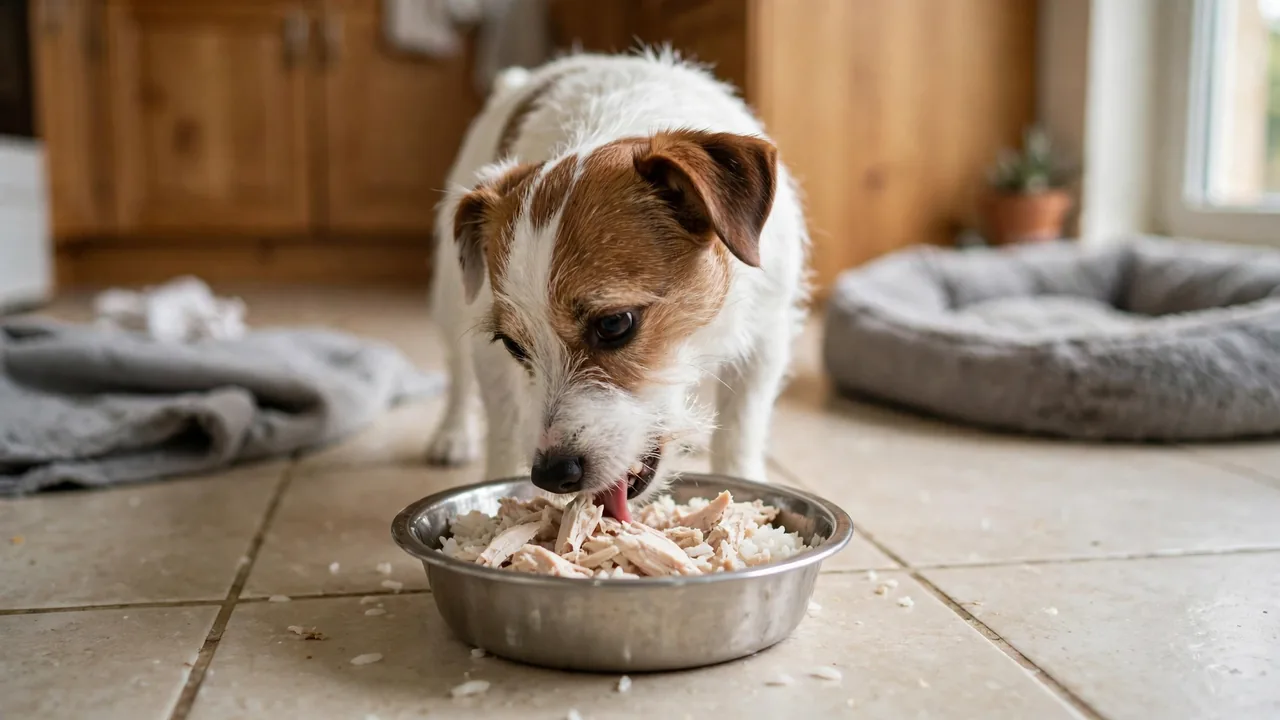
For mild stomach upset, several gentler options often come before medication. A short fast of 12 hours for an adult dog (never for puppies or tiny breeds without vet advice), followed by small meals of plain boiled chicken and white rice, is the classic home approach. Plain canned pumpkin, the pure pumpkin kind rather than pie filling, adds soluble fiber that firms stool in both diarrhea and constipation. Probiotics made for dogs support gut recovery without any salicylate concerns. And the most underrated alternative is simply time plus hydration for a bright, drinking dog whose symptoms are already improving. If none of these fit because symptoms are significant, the alternative is not another home remedy; it is the vet.
Common Mistakes to Avoid
- Scaling the human dose by vibes. “Half a capful for a medium dog” is how overdoses happen. Weigh, look up the chart, measure in milliliters.
- Using a kitchen spoon. Household teaspoons range widely. A dosing syringe costs almost nothing and removes the guesswork.
- Grabbing a variant formula without reading it. Flavor and sugar-free variants differ in ingredients; the xylitol check takes twenty seconds.
- Dosing on top of an NSAID. A dog who got carprofen for arthritis this morning should not get Pepto tonight without a vet’s explicit okay.
- Continuing for days because it helps a little. Partial improvement over 48 hours still deserves a vet call; chronic issues hide behind temporary relief.
- Panicking over black stool during use, or ignoring it after. During treatment it is the bismuth. After treatment ends, black tarry stool is a bleeding sign until a vet says otherwise.
Troubleshooting and Common Problems
| Problem | Cause | Solution |
|---|---|---|
| Dog spits out most of the liquid | Taste and fast delivery trigger rejection | Give smaller amounts at a time into the cheek pouch, or ask your vet about the tablet form |
| Stool turned black | Normal bismuth effect during use | Expected while dosing; call the vet if it stays black and tarry a day or more after stopping, or comes with weakness |
| Constipation after diarrhea stops | Pepto’s firming effect overshooting | Stop dosing, offer water and a walk; if no stool in 48 hours, call the vet |
| Symptoms return when you stop | The underlying cause was never resolved | Book a vet visit rather than restarting cycles of Pepto |
| You gave a dose and then remembered the NSAID | Medication overlap | Do not give more, call your vet or an emergency line now and explain the timing and amounts |
Expert Tips
- Call the vet before the first dose, not the third. A nurse can confirm the dose for your dog’s weight and medication list in one short call, and it creates a record if things worsen.
- Note the dose and time on your phone. In a stressed evening, nobody remembers if the last dose was at six or nine. A written log prevents double-dosing.
- Warn anyone else in the house. Two family members dosing the same dog independently is a real and common accident.
- Mention Pepto before any vet X-ray. Bismuth shows up on imaging and can mimic or mask findings, so tell the clinic you gave it and when.
When to Call a Professional
Skip home treatment and call a vet promptly if your dog vomits repeatedly, has blood in vomit or stool, stops drinking, seems lethargic or weak, has a swollen or painful abdomen, is a puppy, or is small enough that dehydration is a fast risk. Diarrhea lasting beyond 48 hours, or any symptom in a dog with an existing health condition, also belongs to a professional. Emergency signs, struggling to breathe, collapse, pale gums, or suspected poisoning, mean an emergency clinic now, not in the morning.
What to Do Next
If your dog passed the safety check, confirm the dose with your vet’s office, measure carefully, and reassess at each interval. Keep meals bland and small while the stomach settles, keep water fresh, and write down what you gave and when. If the story is not clearly improving by tomorrow, trade the pink bottle for a proper diagnosis.
FAQs
How much Pepto can a 20 pound dog have?
Using the commonly referenced guideline of 1 teaspoon (5 ml) per 10 pounds, a 20 pound dog gets 2 teaspoons (10 ml) per dose, every 6 to 8 hours, for no more than a day or two. Confirm with your vet, especially if your dog takes any other medication.
How often can you give a dog Pepto-Bismol?
Every 6 to 8 hours is the standard interval, and total use should stay within 24 to 48 hours. Needing it longer means the problem needs a diagnosis, not a refill.
Can puppies have Pepto?
Not without a vet’s direction. Puppies dehydrate quickly, their dosing margin is thin, and puppy diarrhea can signal parasites or parvovirus. A sick puppy is a vet visit, full stop.
Why did Pepto turn my dog’s stool black?
The bismuth in Pepto reacts in the gut and darkens stool to green-black or black. It is expected during use and clears after you stop. Black, tarry stool that persists after stopping, or comes with weakness, needs a vet because bleeding looks the same.
Can I give my dog Pepto for vomiting?
Pepto is used mainly for mild diarrhea and stomach upset. Repeated vomiting is a stronger warning sign with causes ranging from obstruction to pancreatitis, and it should be assessed by a vet rather than coated with medicine at home.
Is Pepto safe for dogs on other medications?
Not automatically. Its salicylate component interacts with NSAIDs like carprofen, steroids, and blood thinners, and can affect how some other drugs absorb. If your dog takes anything regularly, the confirmation call to your vet is essential, not optional.
Final Thoughts
How much Pepto to give a dog has a simple numerical answer, about a teaspoon per 10 pounds every 6 to 8 hours, wrapped in a more important judgment call: confirming your dog is one of the dogs it suits. Check the label, check the medication list, measure carefully, and keep the two-day limit sacred. Used that way, Pepto is a reasonable short bridge to a settled stomach. Used casually, it hides problems that deserve better. When in doubt, the vet’s number is the dose that matters most.