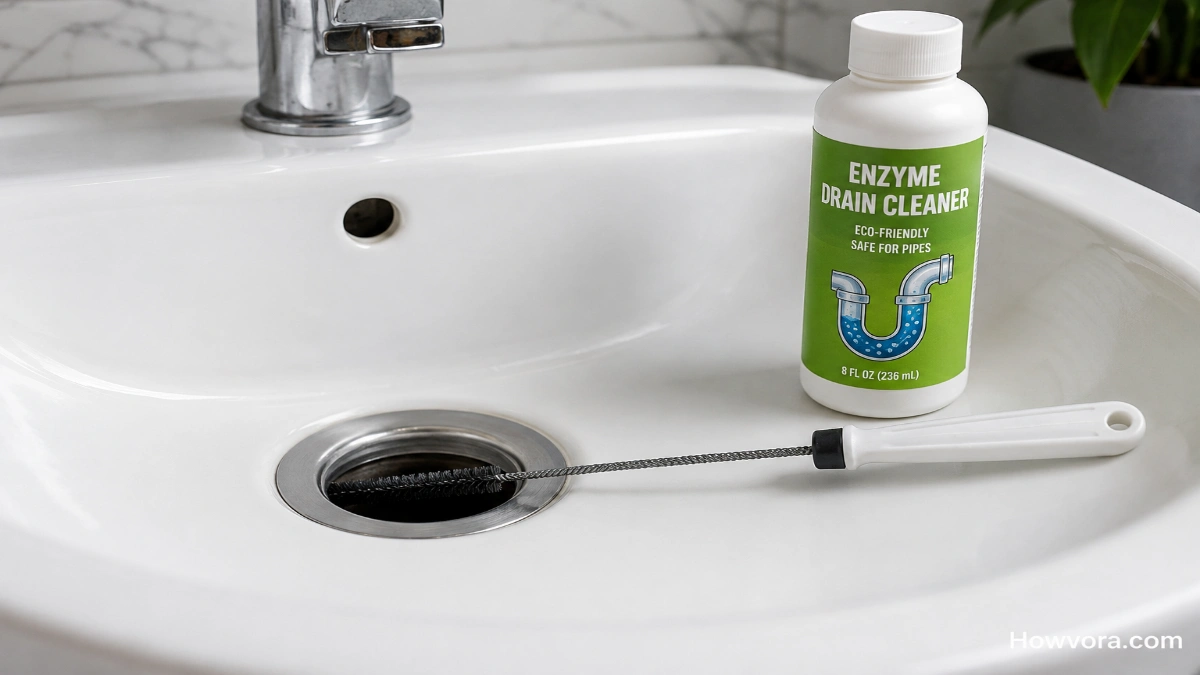
Drain flies, those small, fuzzy, moth-like insects hovering around your sink, shower, or floor drain, breed in the gel-like organic buildup that lines old or dirty pipes. Killing the adults you see flying around does almost nothing if that buildup stays put, which is why so many people spray insecticide for weeks and still see new flies every morning.
This guide is for homeowners and renters dealing with an active drain fly problem who want a fix that actually lasts, not just a temporary knockdown. By the end, you’ll know how to find the breeding source, clear it out completely, and confirm the flies are gone for good.
Featured Snippet
To get rid of drain flies, remove the organic gunk they breed in by scrubbing the drain with a pipe brush, then treat it with a biological drain gel or a baking-soda-and-vinegar flush. Repeat every 1–3 days for two weeks, since drain fly eggs hatch faster than adults die off.
Before You Begin
Difficulty: Easy to moderate Time: 15–20 minutes per treatment, 1–3 weeks for full elimination Cost: $0–$25 (household items) or $10–$20 for an enzyme drain cleaner DIY or Pro: DIY in nearly all cases; a plumber is only needed if the infestation points to a cracked pipe, a dry P-trap, or a sewer line issue Prerequisites: Access to the affected drain, a flashlight, and a flexible pipe brush or bottle brush
Choosing the Right Approach
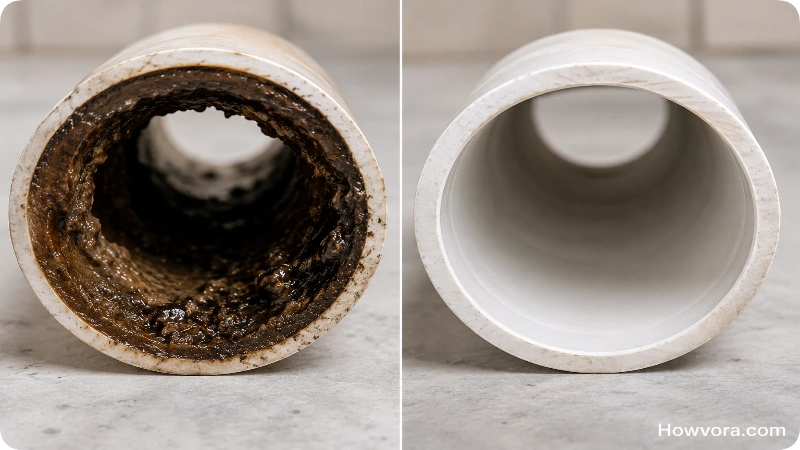
Several methods work, but they don’t all address the same part of the problem. Pick based on how bad the buildup is and whether you want a same-day fix or a permanent one.
| Method | Best For | Kills Eggs? | Removes Buildup? | Time to Results |
| Baking soda + vinegar flush | Light buildup, quick maintenance | Partial | Partial | Same day, needs repeats |
| Manual pipe brush scrubbing | At any severity, this is the core fix | Yes (physically removed) | Yes | Immediate for what’s reached |
| Enzyme/biological drain gel | Moderate to heavy buildup, hands-off treatment | Yes, over several days | Yes, gradually digests it | 3–7 days |
| Boiling water | Mild cases, prevention | No | Minimal | Not a standalone fix |
| Bleach poured down drain | Not recommended | No | No coats gunk, doesn’t remove it | Ineffective long-term |
The differentiator competitors often skip: bleach and most store-bought fly sprays don’t work because they kill adults or sit on top of the organic film without breaking it down; the larvae underneath survive and keep hatching. The brush-plus-enzyme combination below is the only approach that removes the breeding material itself.
At a Glance
| Difficulty | Time Investment | Cost | Skill Level | Best For |
| Easy–Moderate | 15–20 min/session, 1–3 weeks total | $0–$25 | Beginner | Kitchen, bathroom, floor, or basement drains with visible fly activity |
Things You’ll Need
| Item | Purpose |
| Flexible pipe/bottle brush | Physically scrubs organic film off pipe walls |
| Flashlight | Let’s inspect the drain opening and P-trap for gunk and standing water |
| Baking soda and white vinegar | Loosens residue and helps flush debris |
| Enzyme or biological drain cleaner | Digests organic matter that scrubbing can’t reach |
| Rubber gloves | Protects hands during scrubbing and cleaning |
| Duct tape or a drain cover | Used for the sticky-tape test to confirm the source drain |
| Old container or jar | For the apple cider vinegar trap, to catch remaining adults |
Safety Precautions
- Never mix bleach with vinegar or ammonia-based cleaners this produces toxic fumes. Stick to one product type per treatment.
- Ventilate the room when using any chemical drain cleaner, enzyme product, or bleach.
- Wear gloves when scrubbing drains; buildup can harbor bacteria and mold.
- If a drain is slow, gurgling, or backing up, in addition to having flies, treat it as a possible clog or plumbing issue first. Forcing chemicals into a blocked line can cause overflow or pipe damage.
Step-by-Step Guide
Step 1: Identify the source drain
Drain flies can come from any drain with standing organic matter, such as a kitchen sink, bathroom sink, shower, floor drain, or even a rarely used utility sink. Cover each suspect drain with clear tape overnight, sticky side down, with a small hole poked in it. Check in the morning: flies trapped on the underside confirm that the rain is breeding them. Common mistake: Treating the drain where you see flies flying around, instead of the one they’re breeding in. Fliess often rest on nearby surfaces after emerging.
Step 2: Remove the drain cover or stopper
Unscrew or pop out the strainer/stopper and set it aside. Inspect it directly. A slimy black or brown film here is often the main food source and is easy to clean separately.
Step 3: Scrub the visible pipe walls
Using the pipe brush, reach 4–6 inches down and scrub in a circular motion against the walls of the drain and P-trap. You’re physically removing the gel-like film, not just displacing it. Rinse the brush frequently and repeat until it comes out relatively clean. Why it matters: This step does what liquid treatments alone can’t. Enzyme cleaners work faster once the bulk of the film is already broken up.
Step 4: Flush with baking soda and vinegar
Pour ½ cup of baking soda down the drain, followed by 1 cup of white vinegar. Let it foam and sit for 15–30 minutes, then flush with hot (not boiling, if pipes are older PVC) water.
Step 5: Apply an enzyme or biological drain treatment
Follow the product’s label instructions, typically pouring it in at night so it has hours of undisturbed contact time with the pipe walls. Enzyme cleaners digest organic residue over several days rather than instantly, which is why this step is repeated rather than one-and-done.
Step 6: Set an apple cider vinegar trap for the remaining adults
Fill a small jar with apple cider vinegar, cover it with plastic wrap, and poke a few small holes. Place it near the drain overnight. This catches adults still emerging while the eggs and larvae are being eliminated over the following days.
Step 7: Repeat every 1–3 days for two weeks
A single treatment rarely kills every egg. Drain fly eggs hatch in 24–48 hours, so repeating the enzyme treatment (Steps 4–5) every few days breaks the breeding cycle instead of just thinning it out.
How to Know You Did It Correctly
- No new adult flies appear on the sticky tape test after 3–4 consecutive days.
- The apple cider vinegar trap stops catching flies
- The pipe brush comes out clean on a follow-up scrub, with no slimy film
- No fly larvae (tiny worm-like segments) are visible when you shine a flashlight into the drain opening
Expected Timeline and Results
Most light infestations clear up within 5–7 days of consistent treatment. Heavier, long-neglected buildup can take up to 2–3 weeks, since enzyme treatments need repeat applications to fully digest thick residue. If you’re still seeing flies after three full weeks of consistent treatment, the source likely isn’t the drain surface; see the professional section below.
Alternative Methods
- Boiling water flush: Useful as light maintenance every week or two, but boiling water alone doesn’t remove the film that eggs are laid in, so it shouldn’t replace scrubbing or enzyme treatment.
- Commercial foaming drain cleaners: Similar mechanism to enzyme gels; effective but usually costlier and not necessarily better for organic film specifically.
- Physical drain snake with brush attachment: For drains deeper than a standard pipe brush can reach, a flexible snake with a brush head extends your scrubbing range several feet further into the line.
Common Mistakes to Avoid
- Spraying insecticide on adult flies only, this doesn’t touch the eggs or larvae in the pipe, so flies keep reappearing.
- Using bleach as the main treatme,nt it doesn’t remove the organic film and can make it harder for enzyme cleaners to work afterward.
- Treating the wrong drain because flies were seen resting nearby, rather than confirming with the tape test.
- Stopping treatment after the first clean scrub without repeat enzyme application, the remaining eggs still hatch.
- Ignoring a floor drain or rarely used sink, which dries out and becomes an ideal breeding ground precisely because it’s not run regularly.
Troubleshooting & Common Problems
| Problem | Cause | Solution |
| Flies keep returning after a week | Eggs survived the first treatment | Repeat scrubbing + enzyme cleaner every 2 days for another full week |
| Tape test shows flies on multiple drains | More than one breeding site | Treat all confirmed drains simultaneously, not just the most active one |
| Enzyme cleaner doesn’t seem to work | Product used once instead of repeated per label | Reapply per instructions; most require 3–5 consecutive nightly treatments |
| Flies present but drain looks clean | Breeding site may be a cracked pipe, drain pan under a fridge/washer, or damp organic debris elsewhere | Inspect appliance drain pans and any nearby standing water sources |
| Drain is slow in addition to having flies | Partial clog trapping extra organic matter | Address the clog first with a plumbing-safe method, then proceed with fly treatment |
Expert Tips
- Run water through rarely used drains (guest bathroom, basement floor drain) at least once a week. A dry P-trap loses its water seal and lets sewer-side flies and odors into the room.
- If you have a garbage disposal, drain flies often breed in the rubber splash guard and the underside of the disposal unit itself, not just the pipe below it. Remove and scrub the splash guard separately.
- Check drain pans under refrigerators and washing machines; these collect condensation and organic debris and are a commonly overlooked breeding site outside the plumbing system entirely.
When to Call a Professional
Call a plumber if flies persist after three weeks of consistent treatment, if you notice a foul sewer smell alongside the flies (possible dry trap or venting issue), or if the drain is slow, gurgling, or backing up; these point to a deeper clog or a cracked pipe that home treatment can’t reach or fix.
What to Do Next
Once the infestation clears, keep it that way by running water through every drain in your home weekly, cleaning the garbage disposal splash guard monthly, and doing a preventive baking-soda-and-vinegar flush once a month in drains that get light use.
FAQs
Do drain flies bite?
No. Drain flies don’t bite or sting; they’re a nuisance and hygiene indicator rather than a health threat, though heavy infestations can trigger allergies in sensitive individuals.
How long do drain flies live?
Adults typically live 8–24 days, but the full egg-to-adult life cycle is only 1–3 weeks, which is why breeding-site removal matters more than killing adults.
Will drain flies go away on their own?
Rarely, as long as the organic film they breed in remains in the pipe. They’ll keep reproducing until the buildup is physically removed or fully broken down.
Are drain flies a sign of a bigger plumbing problem?
Not always; they’re most often just a sign of buildup, not damage. But persistent flies paired with slow drainage or sewer odor can indicate a clog, dry trap, or pipe crack worth having checked.
Can I use a regular fly trap instead of the vinegar trap?
Sticky fly traps can help catch adults, but they don’t address eggs or larvae, so pair any trap with the scrubbing and enzyme steps for a lasting fix.
Is it safe to use enzyme cleaners with a septic system?
Yes, enzyme and biological cleaners are generally septic-safe since they use natural digestion rather than harsh chemicals, but always confirm on the specific product label.
Final Thoughts
Drain flies are stubborn because most people treat the symptom, the adult flies, instead of the cause: the organic film lining the pipe. Scrub it out, treat with an enzyme cleaner, repeat consistently for one to two weeks, and confirm with the tape test. That combination clears the vast majority of infestations without needing a plumber or harsh chemicals.







1 thought on “How to Get Rid of Drain Flies: A Permanent Fix”