
Ticks are more than just a nuisance in your yard. They can attach to people and pets, potentially spreading diseases and making outdoor activities less enjoyable.
If you’ve noticed ticks on your property or want to prevent an infestation, taking a systematic approach is the most effective solution.
This guide is designed for homeowners who want to reduce tick populations, protect their families and pets, and maintain a safer yard throughout the year. By following these steps, you can significantly lower the risk of ticks returning.
Featured Snippet
To get rid of ticks in your yard, remove leaf litter and tall grass, trim vegetation, create a barrier between wooded areas and lawns, discourage wildlife hosts, and apply a suitable tick-control treatment when needed. Regular maintenance and prevention are essential because ticks often return if favorable conditions remain.
Before You Begin
| Factor | Details |
| Difficulty | Easy to Moderate |
| Time Required | 1–3 days initially |
| Ongoing Maintenance | Weekly to Monthly |
| Estimated Cost | $20–$300+ |
| DIY or Professional | DIY for most yards; professional for severe infestations |
For most homeowners, DIY tick control works well when combined with regular yard maintenance. Professional treatment may be necessary for large properties, heavily wooded lots, or recurring infestations.
Choosing the Right Approach
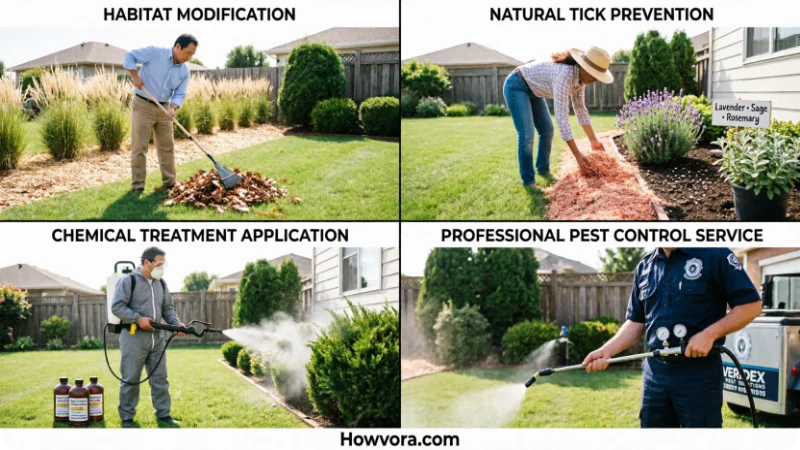
| Method | Pros | Cons | Best For |
| Habitat Modification | Long-lasting, affordable | Requires ongoing maintenance | Most homeowners |
| Chemical Treatments | Fast reduction in tick numbers | Requires careful application | Moderate to severe infestations |
| Natural Control Methods | Lower chemical exposure | May work more slowly | Small yards and prevention |
| Professional Treatment | Comprehensive coverage | Higher cost | Large or persistent infestations |
Habitat modification is usually the best starting point because it removes the conditions ticks need to survive. Chemical or professional treatments can be added if tick activity remains high.
At a Glance
| Category | Information |
| Difficulty | Easy to Moderate |
| Initial Time | 4–8 hours |
| Maintenance Time | 15–30 minutes weekly |
| Cost Range | $20–$300+ |
| Best Season | Spring through Fall |
Things You’ll Need
| Item | Purpose |
| Lawn mower | Keep the grass short |
| Leaf rake or blower | Remove tick habitat |
| Pruning tools | Trim dense vegetation |
| Gloves | Personal protection |
| Trash bags | Dispose of yard debris |
| Mulch or gravel | Create tick barriers |
| Tick-control product (optional) | Reduce populations |
| Pet tick prevention products | Protect pets |
Safety Precautions
Ticks can carry diseases and may be active even when temperatures are mild.
- Wear long sleeves, long pants, and closed-toe shoes while working.
- Use an EPA-registered tick repellent on exposed skin if appropriate.
- Check yourself, children, and pets for ticks after yard work.
- Follow all product label directions when applying pesticides.
- Keep children and pets away from treated areas until products have dried or as directed.
Step-by-Step Guide
Step 1: Remove Leaf Litter and Yard Debris
What to Do
Rake up leaves, grass clippings, brush piles, and other organic debris throughout the yard.
Why It Matters
Ticks thrive in cool, moist environments. Leaf litter provides ideal shelter and protection.
What Success Looks Like
The ground is visible, dry, and free of heavy debris accumulations.
Common Beginner Mistakes
- Leaving debris along fences
- Ignoring shaded corners
- Allowing brush piles to remain
Step 2: Mow and Maintain the Lawn
What to Do
Keep grass short and trim overgrown areas regularly.
Why It Matters
Tall grass provides humidity and cover for ticks waiting for hosts.
What Success Looks Like
Grass remains consistently trimmed throughout the property.
Common Beginner Mistakes
- Waiting too long between mowings
- Overlooking edges and pathways
- Ignoring vacant sections of the yard
Step 3: Trim Shrubs and Increase Sunlight
What to Do
Prune shrubs, trim low-hanging branches, and thin dense vegetation.
Why It Matters
Ticks prefer shaded, humid environments. Increased sunlight helps dry the area.
What Success Looks Like
More sunlight reaches the ground, and air circulation improves.
Common Beginner Mistakes
- Leaving dense shrub bases untouched
- Allowing vegetation to contact structures
Step 4: Create a Tick Barrier
What to Do
Install a 3-foot-wide strip of gravel, mulch, or wood chips between wooded areas and the lawn.
Why It Matters
Barriers reduce tick migration into commonly used yard spaces.
What Success Looks Like
A clearly defined separation exists between tick-prone habitats and recreational areas.
Common Beginner Mistakes
- Creating barriers that are too narrow
- Failing to maintain the barrier
Step 5: Discourage Wildlife Hosts
What to Do
Reduce food and shelter sources for deer, rodents, and other wildlife.
Why It Matters
Ticks depend on animal hosts for survival and reproduction.
What Success Looks Like
Less wildlife activity is observed around the property.
Common Beginner Mistakes
- Leaving pet food outdoors
- Allowing birdseed to accumulate
- Maintaining unmanaged brush piles
Step 6: Apply Tick-Control Treatments if Needed
What to Do
Use a suitable tick-control product according to label instructions.
Why It Matters
Treatments can quickly reduce existing tick populations.
What Success Looks Like
Noticeably fewer ticks appear during inspections.
Common Beginner Mistakes
- Treating only part of the yard
- Applying products at the wrong time
- Ignoring label directions
How to Know You Did It Correctly
Signs of successful tick control include:
- Fewer ticks are found on people and pets
- Reduced tick sightings during yard inspections
- Cleaner, drier yard conditions
- Decreased wildlife activity near living areas
- Maintained grass and vegetation heights
A simple method is to perform regular tick checks along property edges and shaded areas.
Expected Timeline and Results
| Timeframe | Expected Results |
| 1–7 Days | Yard becomes less hospitable to ticks |
| 2–4 Weeks | Tick activity begins declining |
| 1–3 Months | Significant reduction in tick populations |
| Ongoing | Prevention maintains low numbers |
Properties near forests may require ongoing monitoring because new ticks can migrate into the area.
Alternative Methods
Natural Approaches
Advantages
- Reduced chemical exposure
- Environmentally friendly
Disadvantages
- May require more frequent applications
- Results vary
Best Use Case
Preventive maintenance and low-level infestations.
Professional Tick Control
Advantages
- Comprehensive treatment
- Expert assessment
Disadvantages
- Higher cost
Best Use Case
Large properties or recurring infestations.
Common Mistakes to Avoid
| Mistake | Why It Happens | Consequence | Prevention |
| Ignoring leaf litter | Underestimating its impact | Tick habitat remains | Remove regularly |
| Mowing infrequently | Lack of maintenance | Tick populations rebound | Maintain schedule |
| Treating only visible areas | Missing hidden zones | Continued infestations | Cover all risk areas |
| Forgetting pet protection | Focus only on the yard | Ticks re-enter the property | Use veterinarian-approved prevention |
| Skipping inspections | Assuming success too early | Problems go unnoticed | Monitor regularly |
Why Many Attempts Fail
Most tick-control efforts fail because homeowners focus on killing ticks rather than eliminating tick habitat.
Other common reasons include:
- Inconsistent maintenance
- Failure to address wildlife hosts
- Ignoring property edges
- Treating only once
- Lack of follow-up inspections
Successful control combines habitat management, prevention, monitoring, and treatment when necessary.
Troubleshooting & Common Problems
| Problem | Possible Cause | Solution |
| Ticks keep returning | Nearby wildlife or woods | Improve barriers and wildlife control |
| High tick activity in one area | Dense vegetation | Increase pruning and sunlight |
| Pets continue bringing in ticks | Inadequate pet protection | Consult a veterinarian |
| Tick treatment seems ineffective | Incorrect application | Reapply according to label directions |
| The yard remains damp | Poor drainage or shade | Improve drainage and trim vegetation |
Expert Tips
- Focus on shaded yard edges first because tick activity is often highest there.
- Keep children’s play areas away from wooded borders.
- Store firewood in dry, elevated locations.
- Inspect pets after every outdoor outing.
- Schedule routine property inspections during peak tick season.
- Combine habitat modification with treatment for faster results.
When to Call a Professional
DIY methods are usually sufficient for small to medium-sized yards.
Consider professional help when:
- Tick populations remain high after several weeks.
- The property borders extensive woodland.
- You have a large acreage property.
- Multiple family members or pets frequently encounter ticks.
- Specialized treatment equipment is needed.
What to Do Next
Once tick numbers decline:
- Continue mowing regularly.
- Remove leaves and debris promptly.
- Maintain barriers annually.
- Monitor pets for ticks.
- Inspect high-risk areas every few weeks.
- Reapply treatments when necessary.
Consistent prevention is easier and less expensive than dealing with a major infestation later.
FAQs
What kills ticks in a yard quickly?
Tick-control products can reduce active populations relatively quickly, but habitat modification is necessary for long-term success.
What time of year should I treat my yard for ticks?
Spring is often ideal because tick activity increases as temperatures rise, but treatments may be needed throughout the warmer months.
Can ticks survive in short grass?
Yes. Short grass reduces favorable conditions but does not eliminate ticks.
Do wood chips help keep ticks away?
Wood chip or gravel barriers can reduce movement from wooded areas into lawns when properly maintained.
Will removing leaves reduce ticks?
Yes. Leaf litter is one of the most common tick hiding places and should be removed regularly.
How often should I inspect my yard for ticks?
During peak tick season, inspect high-risk areas every few weeks.
Can pets bring ticks into the yard?
Pets can transport ticks around the property and into the home, making pet protection important.
Do ticks live in sunny areas?
Ticks generally prefer humid, shaded environments, although they may occasionally be found in sunnier locations.
Is professional tick treatment worth it?
It can be worthwhile for large properties, severe infestations, or situations where DIY methods have not been successful.
Final Thoughts
Learning how to get rid of ticks in yard areas starts with changing the environment that allows them to thrive. Removing leaf litter, maintaining short grass, increasing sunlight, creating barriers, and controlling wildlife hosts provide the strongest long-term results. When necessary, targeted treatments can further reduce tick populations. Consistent maintenance and regular inspections are the keys to keeping your yard safer for family members and pets throughout the year.
