
Choosing a watermelon should be simple, yet many people end up taking home fruit that’s bland, underripe, or disappointingly dry. Unlike peaches or avocados, a watermelon doesn’t continue ripening after it’s harvested. That means the melon you choose at the store or farmers market is the one you’ll eat.
The good news is that you don’t have to rely on luck. By learning a handful of visual and physical clues, you can dramatically improve your chances of picking a ripe, juicy, and naturally sweet watermelon every time.
This guide explains exactly how to tell if a watermelon is ripe and sweet using proven techniques, what each sign actually means, common mistakes shoppers make, and how to combine multiple indicators instead of depending on a single trick.
Featured Snippet
To tell if a watermelon is ripe and sweet, look for a large creamy-yellow field spot, a dull rather than shiny rind, a symmetrical shape, noticeable weight for its size, and a dry brown stem if attached. When several of these signs appear together, the watermelon is much more likely to be juicy, flavorful, and fully ripe.
Before You Begin
Before heading to the produce section, it’s helpful to understand one important fact:
Watermelons stop ripening once they’re picked.
Unlike bananas, peaches, or tomatoes, they won’t become sweeter on your kitchen counter. Your goal is to identify one that reached peak maturity before harvest.
Difficulty
Very Easy
Time Required
2–5 minutes per watermelon
Cost
Free
DIY or Professional?
Entirely DIY; no special tools or experience required.
What You’ll Need
- Access to good lighting
- Both hands to compare weight
- A few watermelons of similar size for comparison
- A couple of minutes of careful inspection
Knowing these basics makes the selection process much easier and prevents impulse purchases based only on appearance.
Choosing the Right Approach
No single test can guarantee a perfect watermelon. The best results come from combining several indicators.
| Method | Reliability | Best For | Limitations |
| Check the field spot | Excellent | Grocery stores and markets | Doesn’t work well if the spot is hidden |
| Compare weight | Excellent | Choosing between similar melons | Requires multiple melons for comparison |
| Examine rind finish | Very Good | Quick screening | Can vary slightly by variety |
| Look for sugar spots and webbing | Good | Fresh market melons | Not every ripe melon has them |
| Check shape | Very Good | Eliminating poor choices | Doesn’t confirm sweetness alone |
| Tap test | Moderate | Additional confirmation | Often misunderstood and inconsistent by itself |
Why Combining Signs Works Better
Many shoppers focus only on the “thump test,” but experienced growers rarely rely on a single cue. A watermelon with a creamy field spot, dull rind, heavy weight, and symmetrical shape is usually a much safer choice than one that passes only a single test.
This combination approach helps avoid one of the biggest mistakes competing guides often overlook: judging a watermelon by one characteristic instead of the complete picture.
At a Glance
| Factor | Details |
| Difficulty | Easy |
| Time | 2–5 minutes |
| Cost | Free |
| Skill Level | Beginner |
| Best For | Grocery stores, supermarkets, farmers’ markets, roadside stands |
| Success Rate | Highest when multiple ripeness signs are used together |
Things You’ll Need
| Item | Purpose |
| Good lighting | Makes the field spot and rind easier to inspect |
| Both hands | Helps compare the watermelon’s weight |
| Similar-sized melons | Makes weight comparisons more accurate |
| A few extra minutes | Allows careful inspection instead of rushing |
Optional
| Item | Purpose |
| Shopping cart | Helpful when comparing several large melons |
| Clean cloth | Wipes away dirt hiding the field spot |
Step-by-Step Guide
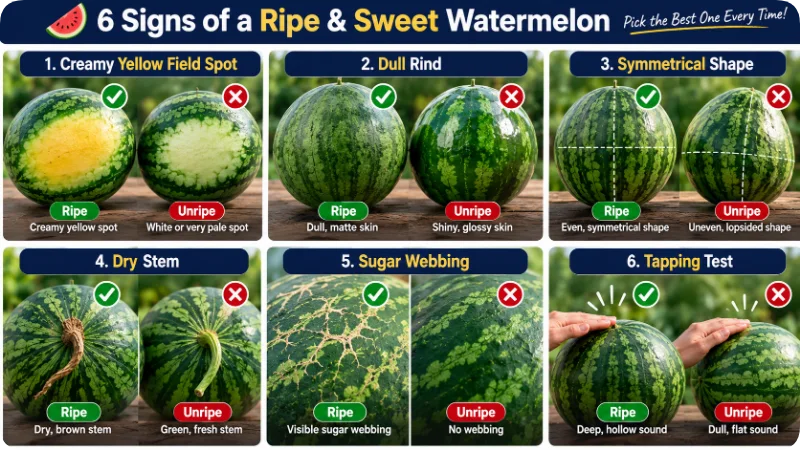
Choosing a ripe watermelon isn’t about finding one perfect sign; it’s about evaluating several clues together. Follow these steps for the best chance of bringing home a sweet, juicy melon.
Step 1: Look for a Large Creamy Yellow Field Spot
The field spot (also called the ground spot) is where the watermelon rested on the ground while growing.
What You’re Looking For
- A creamy yellow or deep buttery yellow spot
- A large, clearly visible patch
- A color that looks mature rather than bright white
Why It Matters
As the watermelon ripens in the field, the side touching the ground receives no sunlight and gradually changes from white to creamy yellow. The longer it matures on the vine, the richer this color usually becomes.
A pale white or light green field spot often indicates the melon was harvested too early.
Good vs. Bad
✅ Deep creamy yellow
✅ Golden yellow
❌ Bright white
❌ Light green
Common Mistake
Many shoppers mistake a white field spot for freshness. In reality, it often suggests the watermelon didn’t spend enough time ripening before harvest.
Step 2: Choose a Dull, Not Shiny, Rind
A ripe watermelon should have a matte or dull appearance instead of a glossy shine.
What to Look For
- Soft, muted finish
- Slightly rough texture
- Natural-looking skin
Avoid melons that look overly glossy or polished.
Why It Matters
As watermelons mature, the rind loses much of its shiny appearance. A glossy rind is frequently a sign that the fruit hasn’t fully matured.
Common Mistake
Don’t confuse dirt with dullness. Some shoppers reject dusty-looking melons even though they may actually be perfectly ripe.
Step 3: Pick One That Feels Heavy for Its Size
This is one of the most reliable indicators.
Pick up two or three watermelons of similar size.
Choose the one that feels noticeably heavier.
Why It Matters
Extra weight generally means:
- More water
- More juice
- Better flesh development
Since watermelons are over 90% water, a heavier melon usually contains more juicy flesh than one of the same size that’s surprisingly light.
Quick Tip
If one watermelon makes you think,
“Wow, this is heavier than I expected,”
that’s often a very good sign.
Common Mistake
Don’t automatically buy the biggest watermelon.
A medium-sized melon that’s dense and heavy is often sweeter than a giant one that feels light.
Step 4: Look for a Uniform Shape
Choose watermelons that are evenly shaped.
If round or oval, they should be symmetrical.
Good Shapes
Smooth oval
Even round shape
Avoid
Large bumps
Odd bulges
Flat sides
Uneven growth
Why It Matters
Uniform growth usually means the watermelon developed consistently throughout the season.
Misshapen fruit may have experienced inconsistent watering, poor pollination, or uneven growth, which can sometimes affect texture and sweetness.
Common Mistake
Some people assume unusual shapes are sweeter because they’re “natural.” While odd shapes aren’t always bad, symmetry generally provides a safer choice.
Step 5: Check for Sugar Spots and Webbing
One clue many shoppers overlook is the presence of small brown web-like lines or dark sugar spots on the rind.
What Are They?
These rough, tan-colored markings can appear as:
- Thin brown webbing
- Light corky scars
- Small sugar spots
Why They Matter
These marks are often associated with natural pollination activity and healthy fruit development. While they don’t guarantee sweetness, they’re commonly found on well-developed, flavorful watermelons.
Don’t Overdo It
A few webbed markings are normal.
Extensive damage, deep cuts, mold, or soft spots are not.
Step 6: Examine the Stem (If It’s Still Attached)
Not every watermelon is sold with a stem.
If yours has one, take a close look.
Choose
Dry
Brown
Slightly shriveled
Avoid
Bright green
Fresh-looking
Moist stem
Why It Matters
A dry stem generally indicates the fruit matured before it was harvested.
A fresh green stem may suggest the watermelon was picked early.
Common Mistake
Don’t reject a watermelon just because it has no stem.
Many stores remove stems during harvesting and shipping, so this clue isn’t always available.
Step 7: Use the Tap Test as a Final Check
The famous “thump test” isn’t a myth,h but it shouldn’t be your only test.
Gently tap the watermelon with your knuckles.
Listen For
✅ Deep, hollow sound
Avoid
❌ Flat, dull sound
❌ Very high-pitched sound
Why It Matters
A ripe watermelon tends to produce a deeper, more resonant sound because of its water content and internal structure.
However, sound can vary by watermelon variety, size, and even the surrounding environment.
Pro Tip
Think of the tap test as the final confirmation, not the deciding factor. If a watermelon already has a creamy field spot, dull rind, heavy weight, and symmetrical shape, a deep hollow sound is simply another reassuring sign.
How to Know You Picked the Right Watermelon
Even after you’ve selected a watermelon using the best visual clues, you won’t know for certain until you cut it open. Fortunately, ripe watermelons have several unmistakable characteristics.
The Signs of a Perfectly Ripe Watermelon
- Bright red or deep pink flesh (depending on the variety)
- Crisp, firm texture that isn’t mushy
- Plenty of juice without being watery
- Sweet, refreshing flavor with little or no bitterness
- Small to medium-sized seeds (if it’s a seeded variety)
- Flesh that separates cleanly from the rind
Signs the Watermelon Was Picked Too Early
- Pale pink flesh
- Crunchy but bland taste
- Thick white layer near the rind
- Dry or grainy texture
- Very little sweetness
Signs It May Be Overripe
- Soft or mushy flesh
- Fermented or sour smell
- Mealy texture
- Hollow or split areas inside
- Excessively watery flesh with poor flavor
Quick Self-Check
If your watermelon has:
- ✔️ A rich red interior
- ✔️ Sweet flavor
- ✔️ Crisp bite
- ✔️ Lots of juice
- ✔️ No sour smell
…you made a great choice.
Expected Timeline and Results
Since a watermelon doesn’t continue ripening after harvest, the results are immediate.
| Time | What to Expect |
| At Purchase | You can judge ripeness using visual and physical clues. |
| After Cutting | The true sweetness and texture become clear. |
| Within 1–2 Days | Best flavor if stored whole at room temperature before cutting. |
| After Refrigeration | Chilled watermelon becomes more refreshing, though refrigeration won’t make it sweeter. |
How Long Does a Whole Watermelon Last?
- Whole watermelon: About 1–2 weeks at room temperature if kept in a cool place.
- Cut watermelon: 3–5 days in the refrigerator when stored in an airtight container.
For the best taste, refrigerate cut pieces promptly and avoid leaving them at room temperature for more than two hours.
Alternative Methods
While the combination of field spot, weight, rind, and shape is the most reliable approach, there are a few additional methods that can help in certain situations.
1. Buy During Peak Watermelon Season
Watermelons are generally sweetest during their natural harvest season.
Buying in peak season increases your chances of finding fruit that matured properly on the vine.
2. Purchase from Local Farmers
Farmers’ markets and roadside stands often sell watermelons harvested closer to peak ripeness because they don’t have to travel as far.
That doesn’t guarantee sweetness, but it can improve your odds.
3. Ask the Produce Staff
Experienced produce employees often know when a shipment arrived and which varieties customers consistently enjoy.
If you’re choosing between several similar melons, it never hurts to ask.
4. Learn the Variety
Different watermelon varieties naturally vary in sweetness, color, size, and texture.
For example:
| Variety | Known For |
| Crimson Sweet | Very sweet, classic red flesh |
| Sugar Baby | Small, dark green, exceptionally sweet |
| Jubilee | Large fruit with crisp flesh |
| Seedless Varieties | Convenient and consistently juicy |
Knowing the variety helps set realistic expectations for flavor and appearance.
Common Mistakes to Avoid
Even experienced shoppers make these errors.
Choosing the Shiniest Watermelon
A glossy rind often indicates the fruit wasn’t fully mature.
Ignoring the Field Spot
The field spot is one of the strongest ripeness indicators.
Skipping this check means missing valuable information.
Buying the Largest Melon
Bigger doesn’t automatically mean sweeter.
Density is more important than overall size.
Depending Only on the Tap Test
Many people rely exclusively on sound.
The tap test should support your decision, not make it.
Selecting Damaged Fruit
Avoid watermelons with:
- Soft spots
- Deep cuts
- Cracks
- Mold
- Leaking juice
These signs may indicate bruising or spoilage.
Expecting It to Ripen at Home
This is one of the most common misconceptions.
Once harvested, a watermelon won’t become sweeter or riper, no matter how long it sits on the counter.
Troubleshooting & Common Problems
| Problem | Likely Cause | Solution |
| Watermelon tastes bland | Picked before fully ripening | Look for a creamy yellow field spot next time. |
| Flesh is pale pink | Immature fruit | Choose a heavier melon with a dull rind. |
| Texture is mushy | Overripe or damaged | Avoid soft spots and damaged rinds when shopping. |
| Watermelon has little juice | Low water content | Compare weights and choose the heaviest melon of similar size. |
| Sour or fermented smell | Spoilage | Discard the fruit and do not eat it. |
| Hollow center | Natural growth split or uneven development | Safe to eat if it smells and tastes normal, though texture may vary. |
Expert Tips
These practical tips can make the difference between choosing a good watermelon and an exceptional one.
Compare Several Watermelons
Don’t grab the first one you see. Compare at least three or four similar-sized melons before making your choice. Small differences in weight, field spot color, and rind appearance can reveal the better option.
Prioritize Weight Over Size
If two watermelons are the same size, always choose the heavier one. Greater weight typically indicates higher water content and a juicier interior.
Inspect the Entire Rind
Rotate the watermelon and check every side. Even if the field spot looks perfect, avoid fruit with:
- Deep cuts
- Soft spots
- Cracks
- Mold
- Leaking juice
Minor surface scratches are usually harmless, but damaged areas can affect quality and shelf life.
Don’t Fear Natural Imperfections
Light webbing, minor scuffs, or slight color variations are often signs of natural growth and handling. They don’t necessarily mean the watermelon is poor quality.
Store It Properly
- Keep a whole watermelon in a cool, dry place if you’ll eat it within a few days.
- Refrigerate cut watermelon immediately in an airtight container.
- For the best flavor, chill cut slices for a few hours before serving.
Use Multiple Clues Every Time
The most reliable way to tell if a watermelon is ripe and sweet is to combine these signs:
- ✔ Creamy yellow field spot
- ✔ Heavy for its size
- ✔ Dull rind
- ✔ Symmetrical shape
- ✔ Dry stem (if present)
- ✔ Deep hollow sound
No single clue is perfect, but together they greatly improve your chances of choosing a delicious watermelon.
What to Do Next
Now that you know how to identify a ripe watermelon, put these tips into practice on your next shopping trip.
Here’s a simple checklist to remember:
- Find a creamy yellow field spot.
- Choose a watermelon that feels heavy.
- Look for a dull, matte rind.
- Pick a symmetrical shape.
- Check for a dry stem if attached.
- Use the tap test as a final confirmation.
With a little practice, you’ll be able to spot high-quality watermelons in just a few minutes.
FAQs
1. What color should the field spot be on a ripe watermelon?
A ripe watermelon should have a creamy yellow or buttery yellow field spot. A white or pale green spot often indicates it was harvested before reaching full maturity.
2. Does a heavier watermelon mean it’s sweeter?
Not always, but a heavier watermelon of the same size usually contains more water and has a better chance of being juicy and flavorful.
3. Should I buy a watermelon with a shiny or dull rind?
A dull, matte rind is generally a better sign of ripeness than a shiny one.
4. Does the tapping test actually work?
Yes, but it shouldn’t be your only method. A deep, hollow sound can support other signs of ripeness, such as a creamy field spot and heavy weight.
5. Can a watermelon ripen after it’s picked?
No. Watermelons stop ripening once they’re harvested, so choosing a ripe one at the store is essential.
6. Are sugar spots and webbing good signs?
Small web-like markings and sugar spots are commonly associated with healthy fruit development and can indicate a well-matured watermelon, although they don’t guarantee sweetness.
7. Is an odd-shaped watermelon bad?
Not necessarily, but evenly shaped watermelons tend to develop more consistently and are generally a safer choice.
8. How long does a whole watermelon stay fresh?
A whole watermelon can typically last 1–2 weeks in a cool place. Once cut, refrigerate it and eat it within 3–5 days.
Final Thoughts
Learning how to tell if a watermelon is ripe and sweet doesn’t require guesswork. By focusing on several reliable indicators instead of relying on just one, you can consistently choose watermelons that are juicy, crisp, and naturally sweet.
Remember the winning combination: a creamy yellow field spot, heavy weight, dull rind, symmetrical shape, and a deep hollow sound. While no method is foolproof, using these clues together gives you the best chance of bringing home a watermelon that’s ready to enjoy.
The next time you’re standing in front of a pile of watermelons, take a few extra minutes to inspect them carefully. That small investment of time can make all the difference between an average melon and one that’s bursting with flavor.
