
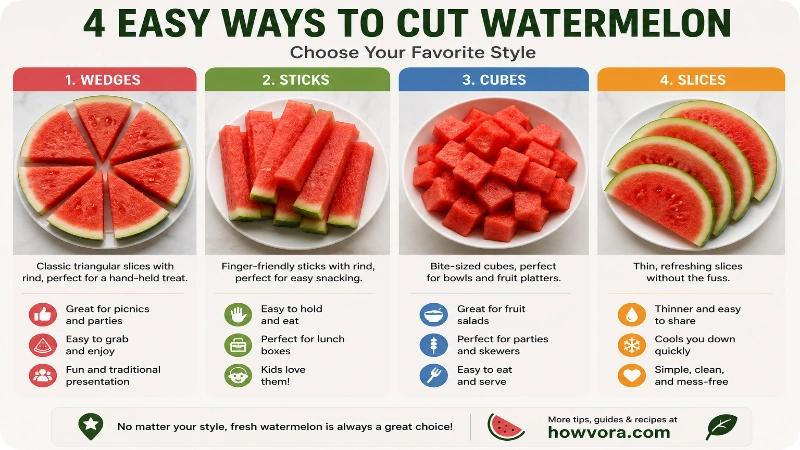
Learning how to cut watermelon sticks is one of the easiest ways to serve fresh watermelon for snacks, picnics, lunchboxes, parties, or meal prep. Instead of messy wedges, watermelon sticks are easy to hold, less likely to drip, and ideal for kids and adults alike.
Messy counters, sticky fingers, and uneven slices can make cutting a large watermelon feel like a chore. Thankfully, there is a better way. This guide walks you through the simplest method, the tools you’ll need, common mistakes to avoid, and pro tips for getting perfectly even watermelon sticks every single time.
Featured Snippet
To cut watermelon sticks, wash the watermelon, slice it in half crosswise, place one half cut-side down, trim off both ends if needed, then make evenly spaced vertical and horizontal cuts through the flesh. Separate the sticks by hand or with a knife. This method creates clean, easy-to-eat watermelon sticks that are perfect for snacks, parties, and meal prep.
Before You Begin
Cutting watermelon sticks is beginner-friendly and requires only a sharp knife and a stable cutting board.
- Difficulty: Easy
- Time: 5 to 10 minutes
- Estimated Cost: None (beyond the watermelon)
- DIY or Professional: DIY
Choose a watermelon that:
- Feels heavy for its size
- Has a creamy yellow field spot
- Has a dull, not shiny, rind
- Sounds hollow when tapped
Choosing the Right Approach
| Method | Pros | Cons | Best For |
| Half-and-grid method (Recommended) | Fast, consistent, easy | Requires a large cutting board | Everyday use, meal prep |
| Quarter-and-slice method | Easier to handle | Slightly slower | Small watermelons |
| Whole watermelon slicing | Very fast | Harder to control | Experienced cooks |
| Using a watermelon slicer | Uniform sticks | Requires a special tool | Frequent fruit preparation |
Why the Half-and-Grid Method Is Best
The half-and-grid method balances speed, safety, and consistency. It keeps the watermelon stable while making evenly sized sticks with minimal waste.
Choose the quarter method if the watermelon is too large to handle comfortably.
At a Glance
| Detail | Information |
| Difficulty | Easy |
| Time Required | 5-10 minutes |
| Estimated Cost | None |
| Skill Level | Beginner |
| Best For | Snacks, lunchboxes, parties, meal prep |
Things You’ll Need
| Item | Purpose |
| Watermelon | Main ingredient |
| Large cutting board | Stable cutting surface |
| Sharp chef’s knife | Clean, safe cuts |
| Kitchen towel | Prevents slipping |
| Storage container | Refrigerating leftovers |
Safety Precautions
Although cutting watermelon is low-risk, the fruit’s size and slippery surface can increase the likelihood of accidents.
- Wash the watermelon before cutting.
- Use a sharp knife rather than a dull one.
- Place a damp towel beneath the cutting board to prevent movement.
- Keep fingers away from the knife’s cutting path.
- Cut slowly if you’re handling a large watermelon.
Step-by-Step Guide
Step 1: Wash the Watermelon
Rinse the rind under cool running water and dry it with a clean towel.
Why it matters
Even though you don’t eat the rind, bacteria or dirt can transfer into the fruit when the knife cuts through it.
Success looks like
The watermelon is clean and dry, reducing slipping.
Common beginner mistakes
- Skipping the wash
- Cutting while the rind is still wet
Step 2: Cut the Watermelon in Half
Place the watermelon on the cutting board and carefully slice it in half across the middle.
Why it matters
A flat cut creates a stable base for the next steps.
Success looks like
Each half sits firmly without wobbling.
Common beginner mistakes
- Trying to cut too quickly
- Using a knife that is too small
Step 3: Place One Half Cut-Side Down
Turn one-half so the cut surface rests on the cutting board.
Why it matters
This greatly improves stability while slicing.
Success looks like
The watermelon stays in place during cutting.
Common beginner mistakes
- Leaving the rounded side down
- Holding the fruit with excessive force
Step 4: Make Vertical Cuts
Slice straight down every 1 to 1½ inches across the watermelon.
Why it matters
Even spacing creates uniform sticks.
Success looks like
Parallel slices run evenly across the fruit.
Common beginner mistakes
- Uneven spacing
- Pressing too hard
Step 5: Make Horizontal Cuts
Rotate your knife 90 degrees and make another set of evenly spaced cuts.
Why it matters
These intersecting cuts create the stick shape.
Success looks like
Rectangular watermelon sticks form naturally.
Common beginner mistakes
- Making the cuts too close together
- Uneven depth
Step 6: Separate the Watermelon Sticks
Lift the sticks apart with your hands or use the knife to loosen them gently.
Why it matters
Separating carefully keeps the sticks intact.
Success looks like
Straight, clean watermelon sticks that are easy to grab.
Common beginner mistakes
- Pulling too forcefully
- Crushing softer pieces
How to Know You Did It Correctly
You have successfully cut watermelon sticks when:
- The sticks are similar in size.
- They separate easily.
- They are easy to hold without falling apart.
- There is very little wasted fruit.
- The watermelon remains juicy and intact.
Expected Timeline and Results
| Stage | Expected Result |
| 2 minutes | Watermelon washed and halved |
| 5 minutes | Grid cuts completed |
| 5-10 minutes | Watermelon sticks ready to serve |
Properly stored watermelon sticks usually stay fresh for 3 to 5 days in an airtight container in the refrigerator.
Alternative Methods
Quarter Method
Advantages
- Easier to handle
- Safer with large watermelons
Disadvantages
- Requires more cuts
Best for
Large or heavy watermelons.
Watermelon Slicer Tool
Advantages
- Very consistent pieces
- Quick for large batches
Disadvantages
- Requires purchasing an additional tool
Best for
Frequent entertaining or meal prep.
Traditional Wedges
Advantages
- Fast
- Familiar serving style
Disadvantages
- Messier
- Harder for children to eat
Best for
Outdoor gatherings.
Common Mistakes to Avoid
- Using a dull knife that crushes the fruit.
- Cutting on an unstable surface.
- Making uneven slices.
- Trying to hold the watermelon in the air while cutting.
- Forgetting to wash the rind.
- Storing cut watermelon uncovered.
Why Many Attempts Fail
Many people struggle because they:
- Choose an unstable cutting position.
- Use a knife that is too short.
- Cut unevenly without planning the grid.
- Rush through the process.
- Buy an overripe watermelon that breaks apart easily.
Working slowly and using a stable cutting surface produces cleaner, safer results.
Troubleshooting & Common Problems
| Problem | Possible Cause | Solution |
| Sticks fall apart | Overripe watermelon | Choose a firmer watermelon next time |
| Uneven pieces | Inconsistent spacing | Mark cuts visually before slicing |
| The knife gets stuck | Dull blade | Sharpen the knife |
| Watermelon slides | Wet cutting board | Place a damp towel underneath |
| Pieces are too large | Cuts spaced too far apart | Reduce spacing between cuts |
Expert Tips
- Chill the watermelon before cutting for firmer slices.
- Use a long chef’s knife to make smooth cuts.
- Wipe the knife occasionally to reduce sticking.
- Cut sticks about 1 inch wide for the easiest grip.
- Store sticks in airtight containers lined with a paper towel to absorb excess moisture.
- For fruit platters, keep stick sizes consistent for a cleaner presentation.
When to Call a Professional
Professional help is not necessary.
However, if you’re preparing watermelon for a large catered event, commercial kitchen, or food service operation, proper food safety procedures and commercial cutting equipment may improve efficiency and consistency.
What to Do Next
Once you’ve cut your watermelon sticks:
- Refrigerate leftovers promptly.
- Enjoy them plain or with a fruit dip.
- Add them to fruit trays.
- Freeze them for smoothies.
- Sprinkle with lime juice and a pinch of salt or chili seasoning for extra flavor.
FAQs
Can you cut watermelon sticks ahead of time?
Yes. Store them in an airtight container in the refrigerator for up to 3 to 5 days for the best texture and flavor.
Should watermelon be cold before cutting?
Cold watermelon is firmer, making it easier to slice neatly and produce cleaner sticks.
Do you leave the rind on?
Most watermelon sticks are served with a small section of rind at the bottom, creating a natural handle. You can also remove the rind completely if preferred.
What’s the best knife for cutting watermelon sticks?
A sharp 8- to 10-inch chef’s knife works well because it is long enough to make clean, controlled cuts through the fruit.
How thick should watermelon sticks be?
About 1 inch wide is ideal. This size is easy to hold and less likely to break.
Can you freeze watermelon sticks?
Yes. Frozen watermelon sticks are great for smoothies or frozen snacks, although they become softer after thawing.
How do you keep watermelon sticks fresh longer?
Store them in an airtight container in the refrigerator and avoid leaving them at room temperature for more than 2 hours.
Final Thoughts
Knowing how to cut watermelon sticks makes serving fresh fruit cleaner, easier, and more enjoyable. The half-and-grid method is quick, beginner-friendly, and produces evenly sized sticks that are perfect for snacks, lunchboxes, picnics, and parties. With a sharp knife, a stable cutting board, and a few simple techniques, you can prepare attractive watermelon sticks in just a few minutes.
