
Picking a ripe cantaloupe can be frustrating if you don’t know what to look for. Some melons look perfect on the outside but turn out bland, hard, or overripe once you cut them open. Fortunately, you don’t need to guess. By checking a few key signs, including color, aroma, weight, texture, and stem appearance, you can consistently choose a sweet, juicy cantaloupe.
If you’re shopping at a grocery store, farmers market, or picking one from your own garden, this guide will show you exactly how to identify a ripe cantaloupe and avoid common mistakes.
Featured Snippet
To pick a ripe cantaloupe, choose one with a creamy golden-beige rind beneath the netting, a sweet fruity aroma at the blossom end, a slightly soft blossom end, and a heavy feel for its size. Avoid melons with green undertones, bruises, mold, or overly soft spots, as these are signs the fruit is underripe or overripe.
Before You Begin
Knowing what ripeness looks, smells, and feels like makes shopping much easier. Unlike some fruits, cantaloupes stop gaining sweetness after they’re harvested. They may soften slightly, but they won’t become significantly sweeter if picked too early. That’s why selecting a ripe melon at the store is so important.
Before You Start
| Category | Details |
| Difficulty | Easy |
| Time Required | 2–5 minutes |
| Cost | No additional cost |
| Skill Level | Beginner |
| Best For | Grocery stores, farmers markets, home gardens |
| DIY or Professional | DIY |
Prerequisites
Before choosing a cantaloupe:
- Know you’re buying true cantaloupe (or North American muskmelon).
- Inspect melons individually rather than grabbing the first one you see.
- If possible, compare several melons side by side.
Choosing the Right Approach
Different shopping situations require slightly different methods. Here’s the best approach depending on where you’re buying your cantaloupe.
| Shopping Location | Best Method | Why It Works |
| Grocery Store | Use color, smell, weight, and stem inspection | You usually can’t taste before buying. |
| Farmers Market | Ask when the melon was harvested and inspect ripeness | Freshly harvested melons often have better flavor. |
| Home Garden | Watch rind color, stem separation, and aroma | You can harvest at peak maturity. |
Which Method Is Most Reliable?
Many people rely on tapping the melon and listening for a hollow sound. While this may help experienced growers, it’s far less reliable than combining several indicators.
The most accurate method is using this five-point checklist:
- Creamy golden background color
- Strong sweet aroma
- Heavy weight
- Slight softness at the blossom end
- Clean, well-formed stem scar
Using all five together dramatically improves your chances of bringing home a perfectly ripe cantaloupe.
At a Glance
| Feature | Information |
| Difficulty | Easy |
| Total Time | Less than 5 minutes |
| Special Tools | None |
| Cost | Free |
| Best Season | Late spring through early fall |
| Success Rate | High when multiple ripeness signs are checked together |
Things You’ll Need
| Item | Purpose |
| Your hands | Feel the melon and test firmness |
| Your nose | Check for sweetness and aroma |
| Good lighting | Inspect rind color accurately |
| A few cantaloupes to compare | Makes differences easier to spot |
You don’t need any special equipment. Your senses provide all the information necessary to identify a ripe cantaloupe.
Safety Precautions
Although picking a cantaloupe is a low-risk task, following a few simple precautions helps ensure you bring home a safe, fresh fruit.
- Avoid melons with mold. Even if mold appears only around the stem or blossom end, it may indicate spoilage inside.
- Skip heavily bruised or cracked melons. Damaged rinds can allow bacteria to enter the fruit.
- Wash the rind before cutting. Dirt and bacteria on the outside can transfer to the flesh when slicing.
- Don’t buy leaking melons. Sticky liquid or juice on the rind is often a sign the fruit is overripe or beginning to spoil.
- Refrigerate after cutting. Once sliced, store cantaloupe in an airtight container in the refrigerator and eat it within a few days for the best quality.
Step-by-Step Guide
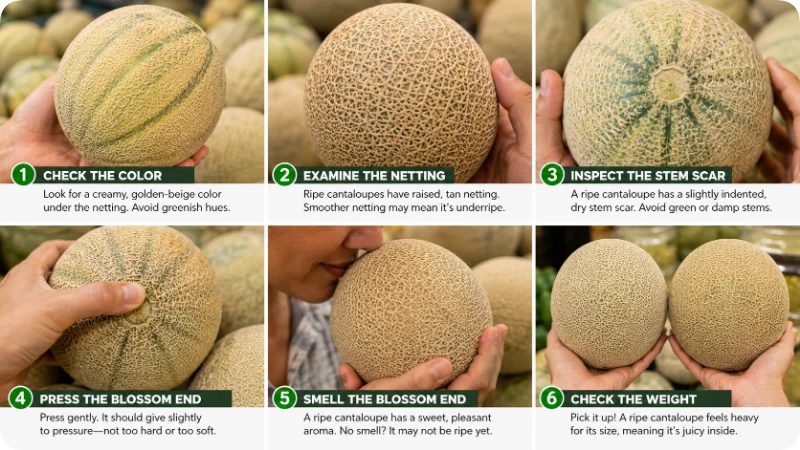
Step 1: Look for a Creamy Golden Background Color
The rind color is one of the easiest and most reliable indicators of ripeness.
A ripe cantaloupe should have:
- Creamy beige or golden-tan background color
- Thick, raised netting
- Little to no green beneath the netting
Why It Matters
Green coloring usually means the melon was harvested before reaching full maturity, so it may lack sweetness.
Common Mistake
Many shoppers choose the brightest-looking melon, but a greener rind often signals an underripe fruit.
Choose:
- Creamy tan
- Warm golden color
Avoid:
- Bright green
- Grayish green
- Dark green patches
Step 2: Examine the Netting
The rough, web-like texture covering the rind is called netting.
A high-quality ripe cantaloupe usually has:
- Thick, raised netting
- Even coverage around the fruit
- Well-defined texture
Thin, flat, or patchy netting may indicate the melon developed poorly.
Why It Matters
Healthy netting often develops as the fruit matures on the vine and can be a sign of good growing conditions.
Common Mistake
Don’t confuse heavy netting with rough damage. Netting should feel natural and evenly distributed, not cracked or peeling.
Step 3: Inspect the Stem End
The stem end tells you a great deal about how the melon was harvested.
A ripe cantaloupe naturally slips off the vine when mature, leaving behind a smooth, slightly indented stem scar.
Look for:
- Smooth circular scar
- Slight depression
- Clean appearance
Avoid melons with:
- Pieces of stem still attached
- Torn or jagged stem area
- Deep cracks
Why It Matters
A melon picked before it naturally detached from the vine often won’t develop its best flavor.
Common Mistake
Some shoppers think a stem still attached means the fruit is fresher. In reality, a clean “slip” scar usually indicates better maturity.
Step 4: Press the Blossom End
The blossom end is opposite the stem.
Using your thumb, apply gentle pressure.
A ripe cantaloupe should feel:
- Slightly soft
- Springy
- Firm overall
If the blossom end is rock hard, the melon likely isn’t ripe.
If it feels mushy or collapses under light pressure, it’s probably overripe.
Why It Matters
Softening begins naturally as the fruit reaches peak eating quality.
Common Mistake
Don’t squeeze the entire melon. Press only the blossom end gently. Excessive squeezing bruises the fruit and makes it harder for other shoppers to judge ripeness.
Step 5: Smell the Blossom End
One of the most dependable tests is the aroma.
Hold the blossom end close to your nose.
A ripe cantaloupe smells:
- Sweet
- Fruity
- Fresh
- Pleasant
An underripe melon has very little scent.
An overripe melon may smell:
- Fermented
- Sour
- Alcohol-like
- Overly strong
Why It Matters
The aroma becomes more noticeable as sugars and flavor compounds fully develop.
Common Mistake
Many people smell the stem end instead. The blossom end usually provides a stronger and more accurate indication of ripeness.
Step 6: Feel the Weight
Pick up several cantaloupes that are about the same size.
Choose the one that feels heavier.
Why It Matters
Extra weight usually means:
- More juice
- Better moisture content
- Denser flesh
While weight alone doesn’t guarantee sweetness, it’s an excellent sign when combined with the other ripeness indicators.
Common Mistake
Don’t assume the largest melon is the best. A medium-sized melon that’s heavy for its size often has better texture and flavor than a larger but lighter one.
Step 7: Check for Bruises, Cracks, and Soft Spots
Inspect the entire surface before placing the melon in your cart.
Avoid fruit with:
- Large bruises
- Deep cuts
- Mold
- Wet or sticky spots
- Cracks
- Sunken areas
Small surface scratches are usually harmless, but serious damage can affect the quality of the flesh inside.
Why It Matters
A damaged rind shortens shelf life and increases the chance of spoilage.
Common Mistake
Don’t ignore tiny leaking spots. Even a small amount of moisture can signal internal breakdown.
Step 8: Compare Several Melons Before Choosing
Instead of selecting the first decent-looking cantaloupe, compare at least three to five.
Use this quick checklist:
Creamy golden rind ✔
Thick, raised netting ✔
Sweet aroma ✔
Slight softness at the blossom end ✔
Heavy for its size ✔
Smooth stem scar ✔
No bruises or mold ✔
The melon that checks the most boxes is usually your best choice.
Why This Final Comparison Matters
No single sign guarantees perfect ripeness. The best cantaloupes consistently show multiple ripeness indicators at the same time. Combining visual, tactile, and aroma checks gives you the highest chance of taking home a sweet, juicy melon instead of relying on guesswork.
How to Know You Did It Correctly
After cutting into your cantaloupe, several signs confirm you chose a ripe one. While you can’t see these characteristics until the melon is opened, they’re useful for judging if your selection method worked.
A perfectly ripe cantaloupe should have:
- Deep orange flesh throughout
- Juicy but not watery texture
- Sweet, fragrant aroma
- Smooth, tender flesh that isn’t mushy
- Easily removable seeds gathered in the center cavity
- Rich, refreshing flavor with little or no bitterness
If your melon has pale orange flesh, feels dry, or tastes bland, it was likely harvested before reaching peak maturity. Unfortunately, cantaloupes don’t become sweeter after harvest.
Signs of an Underripe Cantaloupe
- Green or pale rind when purchased
- Very little aroma
- Hard blossom end
- Firm, dry flesh
- Mild or bland flavor
Signs of an Overripe Cantaloupe
- Strong fermented smell
- Mushy texture
- Sticky or leaking rind
- Dark watery flesh
- Sour or unpleasant taste
The goal is to find the sweet spot between these two extremes.
Expected Timeline and Results
Knowing what to expect after purchasing your cantaloupe helps you enjoy it at its best.
| Condition at Purchase | What to Expect |
| Fully ripe | Ready to eat immediately |
| Slightly underripe | May soften over 1–3 days at room temperature but won’t become significantly sweeter |
| Refrigerated whole | Keeps about 5–7 days after ripening |
| Cut and refrigerated | Best eaten within 3–4 days in an airtight container |
| Frozen | Good for smoothies and recipes for several months, though texture changes after thawing |
Storage Tips
- Keep uncut ripe cantaloupes at room temperature if you’ll eat them within a day or two.
- Refrigerate once fully ripe to slow further softening.
- Store cut pieces in an airtight container to prevent them from drying out or absorbing odors from other foods.
Alternative Methods
While the five-point ripeness check is the most reliable, there are a few other methods people use.
1. The Tap Test
Some shoppers gently tap the melon and listen for the sound.
- A slightly hollow sound may indicate maturity.
- A dull, solid sound may suggest the melon isn’t fully ripe.
Pros
- Quick
- Doesn’t require touching multiple areas
Cons
- Difficult for beginners
- Results vary depending on melon size and variety
2. Buy During Peak Season
Cantaloupes purchased during their natural growing season are generally more flavorful than those shipped long distances during the off-season.
Seasonal melons often have:
- Better sweetness
- Stronger aroma
- Improved texture
3. Ask at Farmers Markets
If you’re buying directly from a grower, ask questions like:
- Was this harvested today?
- Was it picked at full slip?
- Which ones are ready to eat now?
Growers often know exactly which melons are at peak ripeness.
4. Compare Multiple Melons
Even if several cantaloupes look similar, subtle differences in weight, aroma, and color can make one noticeably better than another.
Choosing the best from several options greatly increases your chances of getting a sweet melon.
Common Mistakes to Avoid
Many disappointing cantaloupes are the result of relying on just one indicator. Avoid these common mistakes.
Buying the Greenest Melon
Green backgrounds usually indicate the fruit was harvested too early.
Instead: Choose a creamy beige or golden background.
Ignoring the Smell
A ripe cantaloupe should have a pleasant, sweet fragrance.
Instead: Always smell the blossom end before buying.
Picking Based Only on Size
Large doesn’t always mean better.
Instead: Choose the melon that’s heaviest for its size.
Squeezing Too Hard
Pressing too firmly can bruise the fruit and doesn’t provide better information.
Instead: Use gentle thumb pressure only on the blossom end.
Ignoring Stem Appearance
A torn stem often means the melon didn’t naturally separate from the vine.
Instead: Look for a smooth, clean stem scar.
Buying Damaged Fruit
Cracks, bruises, leaking juice, or mold reduce quality and shelf life.
Instead: Inspect the entire rind before making your choice.
Troubleshooting & Common Problems
| Problem | Possible Cause | Solution |
| Melon tastes bland | Harvested too early | Next time, prioritize aroma and creamy rind color over size. |
| Flesh is hard | Underripe melon | Leave at room temperature for 1–2 days to soften slightly, though sweetness won’t increase much. |
| Flesh is mushy | Overripe fruit | Use immediately in smoothies or discard if it has an off smell or taste. |
| No sweet smell | Fruit isn’t ripe yet | Choose another melon with a stronger fragrance if possible. |
| Melon leaks juice before cutting | Internal breakdown | Avoid purchasing leaking melons; discard if spoilage is evident. |
| Uneven ripeness | Inconsistent growing or early harvest | Compare several melons and select those showing multiple ripeness indicators. |
Expert Tips
These practical tips can help you choose consistently sweet cantaloupes, even when the selection is limited.
Compare at Least Three Melons
Never grab the first cantaloupe you see. Compare several similar-sized melons for color, weight, aroma, and firmness. Even small differences can indicate better flavor.
Trust Multiple Ripeness Signs
No single test is foolproof. Instead, use this checklist:
- Creamy golden-beige rind
- Thick, raised netting
- Sweet aroma
- Slight softness at the blossom end
- Heavy for its size
- Smooth stem scar
A melon that checks all or most of these boxes is usually the best choice.
Smell Before You Squeeze
A sweet fragrance is one of the strongest indicators of ripeness. If a melon has little or no smell, it’s likely not ready, even if it looks good.
Don’t Judge by Size Alone
Large cantaloupes aren’t automatically sweeter. Medium-sized melons that feel dense and heavy often have better texture and flavor.
Buy During Peak Season
Cantaloupes are generally at their best during the summer months when they’re harvested closer to full maturity. While they’re available year-round in many stores, peak-season melons typically have better sweetness and aroma.
Plan When You’ll Eat It
- Eating today? Choose a fully ripe melon with a strong aroma.
- Eating in a day or two? Pick one that’s almost ripe with only slight firmness at the blossom end.
Wash Before Cutting
Even though you don’t eat the rind, washing it under running water before slicing helps prevent bacteria from being transferred to the flesh by your knife.
Store It Properly
- Whole ripe cantaloupe: Refrigerate if you won’t eat it within a day.
- Cut cantaloupe: Store in an airtight container and refrigerate promptly.
When to Call a Professional
Most people never need professional help when choosing a cantaloupe. However, there are situations where expert advice can be useful.
Consider asking a produce specialist or local grower if:
- You’re selecting cantaloupes for a large event or catering order.
- You’re buying directly from a farm and want to know which melons are ready to eat immediately.
- You’re growing cantaloupes and need help identifying the correct harvest stage.
- Your home-grown melons repeatedly split, fail to ripen, or develop poor flavor despite proper care.
Experienced growers can often identify subtle ripeness cues based on local growing conditions and harvest timing.
What to Do Next
Now that you know how to pick a ripe cantaloupe, you’re ready to enjoy sweeter, more flavorful fruit every time you shop.
Here’s a quick recap before you head to the produce aisle:
- ✔ Look for a creamy golden-beige rind.
- ✔ Check for thick, raised netting.
- ✔ Smell the blossom end for a sweet fragrance.
- ✔ Press the blossom end gently for slight softness.
- ✔ Choose the melon that’s heavy for its size.
- ✔ Inspect the stem scar for a smooth, clean appearance.
- ✔ Avoid bruises, cracks, mold, or leaking juice.
Once you’ve chosen a ripe cantaloupe, wash the rind, refrigerate it if needed, and enjoy it fresh, in fruit salads, smoothies, yogurt bowls, or desserts.
Frequently Asked Questions
1. How can you tell if a cantaloupe is ripe without cutting it?
Check for a creamy golden-beige rind, a sweet aroma at the blossom end, slight softness when gently pressed, a clean stem scar, and a heavy feel for its size. These are the most reliable signs of ripeness.
2. Will a cantaloupe ripen after you buy it?
It may soften slightly at room temperature, but it won’t become significantly sweeter after harvest. That’s why choosing a ripe melon at the store is important.
3. What color should a ripe cantaloupe be?
A ripe cantaloupe should have a creamy beige or golden-tan background beneath its raised netting. Avoid melons with noticeable green coloring.
4. Should a cantaloupe smell sweet before you buy it?
Yes. A pleasant, fruity aroma at the blossom end is one of the best indicators that the melon is ripe and flavorful.
5. Why does my cantaloupe taste bland?
The melon was likely harvested before reaching full maturity. Since cantaloupes don’t gain much sweetness after being picked, an underripe melon often remains bland.
6. Is a soft cantaloupe overripe?
Not always. The blossom end should have a slight give when gently pressed. If the entire melon feels soft, mushy, or leaks juice, it’s probably overripe.
7. What’s the difference between the stem end and the blossom end?
The stem end is where the melon was attached to the vine. The blossom end is the opposite side and is the best place to check for aroma and slight softness.
8. Should I refrigerate a whole cantaloupe?
A ripe whole cantaloupe can stay at room temperature for a day or two, but refrigeration helps preserve freshness if you won’t eat it right away.
9. Does heavier always mean sweeter?
Not necessarily, but a melon that’s heavy for its size usually contains more juice. For the best results, combine weight with color, aroma, firmness, and stem appearance.
10. Can I freeze cantaloupe?
Yes. Peel, seed, and cut the melon into cubes before freezing. Frozen cantaloupe works well in smoothies and frozen desserts, although its texture becomes softer after thawing.
Final Thoughts
Choosing a ripe cantaloupe doesn’t have to be a guessing game. By learning a handful of reliable ripeness indicators, you can confidently select melons that are sweet, juicy, and ready to enjoy.
Instead of relying on a single trick like tapping the melon or judging its size, use a combination of signs. Look for a creamy golden-beige rind, thick raised netting, a clean stem scar, a sweet aroma at the blossom end, slight softness when gently pressed, and a melon that feels heavy for its size. These characteristics work together to give you the best chance of picking a flavorful cantaloupe.
Remember that cantaloupes don’t become significantly sweeter after they’re harvested. While they may soften slightly at room temperature, the sugar content is already set. That’s why choosing the right melon in the store or at the farmers market makes all the difference.
The next time you’re shopping, take an extra minute to compare a few melons using the checklist from this guide. That small effort can mean the difference between a bland fruit and one that’s bursting with sweetness.
If you’re serving fresh slices, adding cantaloupe to a fruit salad, blending it into smoothies, or pairing it with savory dishes, selecting a ripe melon is the first step toward enjoying its best flavor.
