
Gnats are tiny flying insects that often gather around houseplants, fruit bowls, trash cans, and damp areas inside the home. While a few gnats may seem harmless, they can quickly multiply and become a frustrating nuisance.
Learning how to make a gnat trap is an easy, affordable way to reduce adult gnat populations and help break their breeding cycle.
This guide is designed for beginners and homeowners who want a simple DIY solution. By the end, you’ll know how to build effective homemade gnat traps, place them correctly, and prevent future infestations.
Featured Snippet
To make a gnat trap, fill a small bowl or jar with apple cider vinegar, add a few drops of dish soap, and cover it with plastic wrap pierced with small holes. The vinegar attracts gnats, while the soap breaks the surface tension of the liquid, causing the insects to sink and drown after entering the trap.
Before You Begin
Making a gnat trap is one of the easiest DIY pest-control projects.
| Factor | Details |
| Difficulty | Easy |
| Time Required | 5–10 minutes |
| Cost | Under $10 |
| DIY or Professional? | DIY for most household pest problems |
Before starting, identify where the gnats are coming from. Common sources include overwatered houseplants, ripening fruit, drains, trash containers, and damp organic material.
Choosing the Right Approach
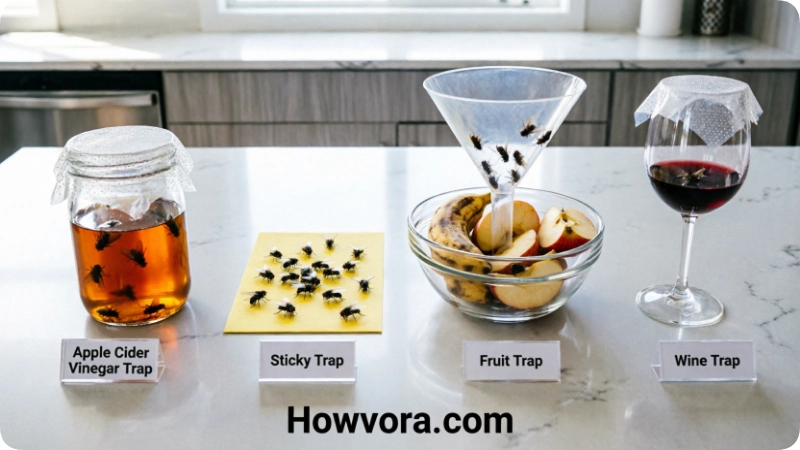
Several homemade gnat-trap methods work well, depending on the source of the infestation.
| Method | Pros | Cons | Best Use Case |
| Apple Cider Vinegar Trap | Highly attractive to gnats, inexpensive | Requires periodic replacement | General indoor gnat infestations |
| Wine Trap | Uses leftover wine | Less effective than vinegar | Kitchen gnats |
| Fruit Trap | Uses ripe fruit as bait | Can become messy | Severe fruit fly or gnat activity |
| Sticky Trap | Captures visible adults immediately | Doesn’t attract gnats from a distance | Houseplants and windows |
| Drain Trap | Targets drain-breeding gnats | Limited to drains | Bathroom and kitchen drains |
For most situations, the apple cider vinegar trap provides the best balance of cost, simplicity, and effectiveness.
At a Glance
| Item | Details |
| Difficulty | Easy |
| Active Time | 5–10 minutes |
| Monitoring Time | Daily |
| Cost | $2–$10 |
| Expected Results | 24–72 hours |
Things You’ll Need
| Item | Purpose |
| Apple cider vinegar | Attracts gnats |
| Dish soap | Breaks surface tension |
| Small bowl or jar | Holds bait solution |
| Plastic wrap | Creates entry barrier |
| Toothpick or fork | Makes entry holes |
| Sticky traps (optional) | Additional monitoring and capture |
Safety Precautions
Although homemade gnat traps are generally safe, keep these precautions in mind:
- Place traps away from children and pets.
- Avoid placing traps near food preparation surfaces.
- Clean spilled vinegar immediately.
- Dispose of trapped insects regularly.
- Use caution when handling glass containers.
Step-by-Step Guide
Step 1: Prepare the Container
Choose a small bowl, cup, or jar and clean it thoroughly.
Why It Matters
A clean container prevents contamination and helps maximize the scent of the attractant.
Success Looks Like
The container is clean, dry, and positioned where gnats are active.
Common Beginner Mistakes
- Using oversized containers
- Placing traps far from infestation sources
Step 2: Add the Attractant
Pour approximately ½ to 1 inch of apple cider vinegar into the container.
Why It Matters
The vinegar’s fermented smell attracts gnats searching for food and breeding sites.
Success Looks Like
A noticeable vinegar scent is present.
Common Beginner Mistakes
- Using too little attractant
- Using plain water instead of vinegar
Step 3: Add Dish Soap
Mix in 2–3 drops of liquid dish soap.
Why It Matters
Soap breaks the liquid’s surface tension, preventing gnats from escaping.
Success Looks Like
The soap mixes evenly throughout the vinegar.
Common Beginner Mistakes
- Adding too much soap
- Forgetting this step entirely
Step 4: Cover and Create Entry Holes
Stretch plastic wrap over the container and secure it. Poke several small holes using a toothpick.
Why It Matters
The cover guides gnats into the trap while reducing escape opportunities.
Success Looks Like
Small holes allow entry but discourage exit.
Common Beginner Mistakes
- Making holes too large
- Leaving gaps around the edges
Step 5: Place the Trap Strategically
Set the trap near houseplants, fruit bowls, trash bins, or other gnat hotspots.
Why It Matters
Location is often more important than trap design.
Success Looks Like
Gnats begin gathering around the trap within hours.
Common Beginner Mistakes
- Hiding traps in low-activity areas
- Moving traps too frequently
How to Know You Did It Correctly
Your trap is working if:
- Dead gnats appear in the liquid.
- Gnat activity decreases within a few days.
- Fewer insects fly around plants and food.
- New gnats continue entering the trap.
A successful trap usually catches insects within the first 24 hours.
Expected Timeline and Results
| Timeframe | Expected Result |
| First 24 Hours | Initial captures |
| 2–3 Days | Noticeable reduction |
| 1 Week | Significant improvement |
| 2 Weeks | Most infestations controlled if breeding sources are removed |
If activity remains high after a week, inspect for hidden breeding areas.
Alternative Methods
Sticky Traps
Advantages
- Immediate visual results
- Excellent near houseplants
Disadvantages
- Less attractive from long distances
Red Wine Trap
Advantages
- Uses household ingredients
Disadvantages
- Usually less effective than vinegar
Ripe Fruit Trap
Advantages
- Strong attractant
Disadvantages
- Can create odors if not replaced regularly
Drain Treatment
Advantages
- Targets drain-breeding gnats
Disadvantages
- Won’t affect gnats breeding elsewhere
Common Mistakes to Avoid
Ignoring the Source
A trap catches adults but does not eliminate breeding sites.
Overwatering Houseplants
Wet soil creates ideal fungus gnat breeding conditions.
Reusing Old Bait
Attractants lose effectiveness after several days.
Poor Placement
Traps placed away from activity zones catch fewer insects.
Expecting Instant Elimination
Even effective traps need time to reduce populations.
Why Many Attempts Fail
Most DIY gnat control efforts fail because:
- Breeding sources remain untreated.
- Traps are placed incorrectly.
- Bait is not replaced regularly.
- Houseplants remain overly wet.
- Multiple infestation sources exist.
The best results come from combining trapping with sanitation and moisture control.
Troubleshooting & Common Problems
| Problem | Possible Cause | Solution |
| No gnats caught | Poor placement | Move the trap closer to the activity |
| Gnats still increasing | Active breeding source remains | Identify and eliminate source |
| Trap dries out quickly | Warm environment | Refill more often |
| Gnats avoid trap | Weak attractant | Replace vinegar |
| Houseplant gnats persist | Soil remains wet | Reduce watering frequency |
| Drain gnats continue | Organic buildup in drain | Clean and treat drain |
Expert Tips
- Place multiple traps in heavily infested rooms.
- Replace vinegar every 3–5 days.
- Use yellow sticky cards near houseplants for additional control.
- Allow houseplant soil to dry slightly between waterings.
- Empty the trash frequently during infestations.
- Store ripe fruit in the refrigerator when possible.
When to Call a Professional
DIY traps are usually sufficient for small household infestations.
Consider professional pest control if:
- Gnats persist for several weeks despite treatment.
- Infestations affect multiple rooms.
- Moisture problems or hidden leaks exist.
- You cannot identify the breeding source.
A professional can locate hidden infestations and moisture issues that traps alone cannot solve.
What to Do Next
After reducing the gnat population:
- Continue monitoring for new activity.
- Eliminate standing water.
- Clean drains regularly.
- Avoid overwatering plants.
- Store food properly.
- Replace traps as needed.
Preventing breeding is the key to long-term success.
FAQs
What is the best liquid for a homemade gnat trap?
Apple cider vinegar is generally the most effective because its fermented scent strongly attracts many gnat species.
Can I make a gnat trap without apple cider vinegar?
Yes. Red wine, beer, fruit juice, or pieces of overripe fruit can also attract gnats.
How long does a homemade gnat trap take to work?
Many traps begin catching gnats within a few hours, with noticeable reductions often occurring within several days.
Why are gnats attracted to vinegar?
Gnats are drawn to fermented smells because they resemble decaying organic matter and potential breeding locations.
Do homemade gnat traps kill eggs and larvae?
No. Homemade traps primarily target adult gnats. Breeding sites must also be treated to stop future generations.
How often should I replace the trap solution?
Replace the solution every 3–5 days or sooner if it becomes filled with insects or loses its scent.
Are sticky traps better than vinegar traps?
Sticky traps are excellent for monitoring and catching visible adults, while vinegar traps actively attract gnats from surrounding areas.
Can fungus gnats come from houseplants?
Yes. Fungus gnats commonly breed in consistently moist potting soil.
Final Thoughts
Learning how to make a gnat trap is one of the simplest and most cost-effective ways to reduce annoying indoor gnat populations. A basic apple cider vinegar trap can begin catching adults within hours, but lasting success requires eliminating breeding sites, controlling moisture, and maintaining good sanitation practices. Combine trapping with prevention measures, and you can keep your home significantly more gnat-free over the long term.
