Introduction

After wisdom teeth removal, your mouth feels like a construction zone you are not allowed to touch, but your other teeth still need cleaning, and the stale, unpleasant taste that develops after surgery makes you want to brush more, not less. The concern is real: brush too hard or too close to the extraction sites and you can disturb the blood clots that protect the sockets, which is the main cause of the painful complication called dry socket. Skip cleaning entirely, though, and bacteria build up exactly where healing tissue needs a clean environment.
This guide gives you the day-by-day approach dentists and oral surgeons recommend: what to do in the first 24 hours, how to reintroduce brushing gently, how to clean near the sockets without harming them, and the warning signs that mean you should call your surgeon instead of pushing through. Follow your own surgeon’s written instructions first if they differ, since they know exactly what your surgery involved.
Featured Snippet Answer
For the first 24 hours after wisdom teeth removal, do not brush near the extraction sites and do not rinse or spit. After 24 hours, brush gently twice a day with a soft toothbrush, staying away from the sockets at first, and rinse gently with warm salt water after meals. Work back toward normal brushing over about a week as tenderness fades.
Before You Begin
Understand what you are protecting. After an extraction, a blood clot forms in each socket, and that clot is the foundation of healing: it protects the bone and nerve underneath while new tissue grows. Anything that dislodges it, vigorous rinsing, forceful spitting, drinking through a straw, smoking, or direct brushing, can expose the socket and cause dry socket, which typically shows up as worsening pain a few days after surgery.
Timing also matters. The first 24 hours are a rest period for your mouth. After that, gentle hygiene becomes part of healing rather than a threat to it. Your difficulty opening your mouth fully is normal in the first days, so plan on shorter, slower brushing sessions and a mirror with good light.
Choosing the Right Approach

Your approach changes by stage. This timeline is the structure most post-surgery instructions follow.
| Stage | Brushing | Rinsing | Key Rule |
|---|---|---|---|
| First 24 hours | Skip brushing near the sites; front teeth only if your surgeon allows, very gently | None. Do not rinse, spit, or use straws | Protect the forming blood clots |
| Days 2–3 | Gentle brushing twice daily, staying clear of the sockets | Warm salt water, let it fall from your mouth instead of spitting | Clean teeth, zero pressure on the sites |
| Days 4–7 | Brush closer to the back teeth as comfort allows | Salt water after meals; a syringe rinse if your surgeon provided one | Keep food debris out of the sockets |
| After 1 week | Nearly normal routine with a soft brush | Normal gentle rinsing as tolerated | Follow up as your surgeon directs |
At a Glance
| Detail | What to Expect |
|---|---|
| Difficulty | Easy, but requires patience and a light hand |
| Time | 2–3 minutes per session, twice a day |
| Cost | A soft toothbrush and salt; a few dollars at most |
| Skill level | Beginner |
| Best for | Anyone in the first two weeks after wisdom teeth removal |
Things You’ll Need
| Item | Purpose |
|---|---|
| A new soft-bristled toothbrush | Cleans effectively with minimal pressure; a small head reaches back teeth in a sore, stiff mouth |
| Regular fluoride toothpaste | Your normal paste is fine once brushing resumes; use a small amount to limit foam |
| Table salt and warm water | The standard gentle rinse for the first week |
| An irrigation syringe, if provided | Many surgeons include one for flushing the lower sockets starting a few days after surgery |
| A mirror and good lighting | Lets you see the back teeth and avoid the sockets instead of guessing |
Safety Precautions
- No vigorous rinsing, spitting, or straws for at least the first day, and longer if your surgeon says so. Suction and force are what pull clots loose.
- Do not brush directly over the sockets or stitches in the first days. Clean around them, not on them.
- Skip alcohol-based mouthwash in the first week. It irritates healing tissue; salt water is the safer rinse unless your surgeon prescribed a specific rinse.
- Do not smoke or vape during early healing. The suction and the chemicals both raise dry socket and infection risk.
- Stop and call your surgeon if pain sharply worsens after day two or three. Escalating pain is the classic dry socket pattern and needs treatment, not patience.
Step-by-Step Guide
Step 1: Day One, Leave the Sites Alone
For the first 24 hours, do not brush the back teeth near the extraction sites, and do not rinse your mouth at all. If your surgeon permits it, you may very gently brush the front teeth only. Let saliva and any rinse simply fall from your mouth into the sink rather than spitting. This quiet first day is when the clots stabilize, and nothing you skip today will harm your teeth.
Step 2: From Day Two, Brush Gently Twice a Day
Starting about 24 hours after surgery, brush twice daily with the soft brush and a pea-sized amount of toothpaste. Use small, slow strokes and light pressure. Clean the front and middle teeth normally, and approach the back teeth cautiously, brushing the teeth next to the sockets without touching the sockets themselves.
Step 3: Angle Around, Never Across, the Sockets
Keep bristles pointed at the teeth, not into the openings. If you have stitches, brush up to them and no further. A smaller, child-size brush head genuinely helps here: it fits a mouth that cannot open wide and keeps you from bumping tender areas with the back of a full-size brush.
Step 4: Rinse With Salt Water After Brushing and Meals
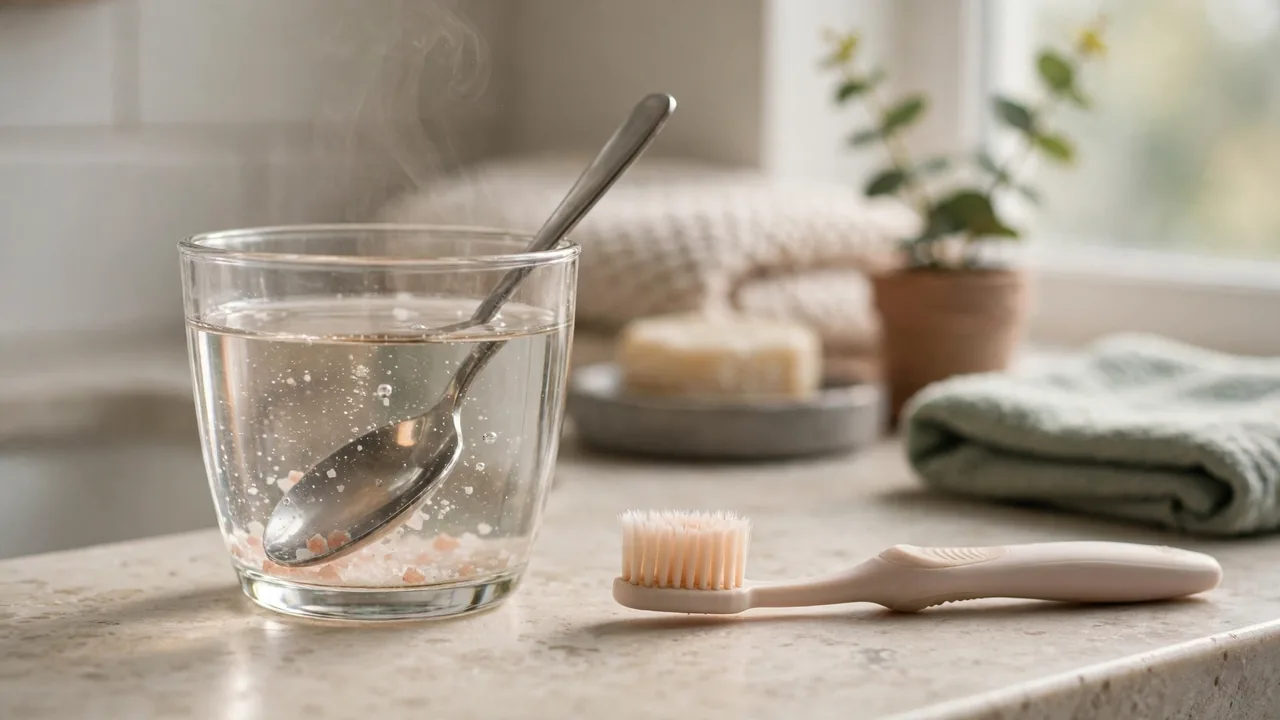
Mix about half a teaspoon of salt into a cup of warm water. Take a small sip, tilt your head gently side to side to move the water around, then open your mouth over the sink and let it drain out. Repeat until the cup is empty. Do this after meals as well, since food debris settling into a socket is a common source of bad taste and irritation.
Step 5: Use the Irrigation Syringe if You Were Given One
Many surgeons send patients home with a curved-tip syringe and instructions to begin gentle irrigation of the lower sockets a few days after surgery, often around day three to five, or at the first follow-up. Fill it with warm salt water, place the tip just at the socket opening without forcing it in, and flush gently. Follow the timing your surgeon gave you rather than a generic schedule.
Step 6: Expand Your Routine as Comfort Allows
Over the first week, brush a little closer to the healing areas each day as tenderness allows. By about a week, most people are back to a near-normal routine with a soft brush, still being a bit careful at the back. Introduce flossing near the sites last, and gently, once brushing feels routine again.
How to Know You Did It Correctly
You are doing it right if your teeth feel clean, your pain decreases a little each day, and the sockets stay undisturbed: no fresh bleeding after brushing, no sudden spike in pain, and a bad taste that gradually improves with rinsing rather than getting stronger. Healing sockets often look grayish or whitish inside, which is normal tissue, not a problem. Progress should feel boring and steady.
Expected Timeline and Results
Expect the first two to three days to be the most swollen and sore, with things easing from day three or four. Gentle brushing starts on day two, salt water rinses run through the first week, and most people resume a normal routine around the one-week mark, sometimes confirmed at a follow-up visit. The gums close over the sockets over a few weeks, while the bone underneath fills in over months, long after your brushing routine has returned to normal.
Alternative Methods
If brushing feels impossible in the first days because of stiffness or soreness, the acceptable fallback is not skipping hygiene altogether; it is leaning on gentle salt water rinses after the first 24 hours and wiping the front teeth with a clean, damp gauze or cloth. Some surgeons prescribe an antibacterial rinse to use in place of brushing near the sites for the first week; use that exactly as directed if you received one. Water flossers are not an early-healing alternative: the pressure stream can disturb clots, so leave the water flosser in the drawer until your surgeon clears it.
Common Mistakes to Avoid
- Rinsing or spitting on day one. The fastest route to a dislodged clot. Let liquid fall from your mouth instead.
- Brushing the sockets directly to “clean them out.” The clot inside is supposed to be there. Cleaning it away causes the very pain you are trying to avoid.
- Using a medium or hard brush, or your electric brush on full power. Switch to a soft manual brush for the first week.
- Drinking through a straw. Suction endangers clots even though it feels unrelated to brushing.
- Skipping hygiene entirely for a week. Bacteria and food debris around healing tissue invite infection and terrible breath.
- Probing the socket with your tongue, fingers, or a toothpick. If something feels stuck, rinse gently and call the office if it persists.
Troubleshooting & Common Problems
| Problem | Cause | Solution |
|---|---|---|
| Pain sharply worsens on day three or four | Possible dry socket: the clot was lost and bone is exposed | Call your surgeon promptly; dry socket is treated in the office and improves fast once dressed |
| Persistent bad taste or odor | Food debris collecting in a socket | Gentle salt water rinses after meals; syringe irrigation if provided; call if it continues |
| A little bleeding after brushing | Bristles brushed too close to a site | Back off that area, bite gently on clean gauze if needed, and call if bleeding does not stop |
| Cannot open mouth wide enough to brush | Normal jaw stiffness after surgery | Use a small-head brush, shorter sessions, and warm compresses on the jaw as your surgeon advises |
| Stitches feel loose or one falls out | Dissolving stitches often loosen as they do their job | Usually not an emergency; mention it to the office, and call sooner if pain or bleeding increases |
Expert Tips
- Brush before the pain medication wears off, not after. A comfortable window makes you slower and gentler, which is exactly the technique healing tissue needs.
- Use less toothpaste than usual. Less foam means less urge to spit forcefully, which protects the clots.
- Brush at the sink with a mirror, sitting down if you feel lightheaded. Post-surgery wooziness is real in the first days.
- Keep the salt water lukewarm, never hot. Hot water near fresh surgical sites increases bleeding risk and discomfort.
- Note your pain level each morning. A simple 1-to-10 note tells you objectively if you are improving and gives your surgeon useful information if you call.
When to Call a Professional
Call your oral surgeon’s office if pain worsens after initially improving, if you develop swelling that increases after day three, fever, difficulty swallowing, bleeding that does not stop with gentle pressure, pus, or a bad taste that rinsing does not touch. These are the signs of dry socket or infection, and both are handled quickly in the office and poorly at home. If swelling affects breathing, treat that as an emergency and seek urgent care immediately.
What to Do Next
Keep the follow-up appointment even if everything feels fine; the surgeon checks socket healing and clears you for normal brushing, flossing, and diet. Once cleared, replace your recovery toothbrush with a fresh one and return to your normal routine. If your wisdom teeth came out because of crowding or repeated infections, this is also a good moment to ask about a longer-term hygiene plan, since the back of the mouth is easier to keep clean from here on.
FAQs
When can I brush my teeth after wisdom teeth removal?
Wait 24 hours before brushing near the surgical area, and some surgeons allow very gentle front-teeth brushing the first evening. From day two, brush gently twice a day, avoiding the sockets, and expand gradually over the week.
Can I use toothpaste after wisdom teeth removal?
Yes, once you resume brushing after the first 24 hours. Use a small amount of your regular fluoride toothpaste, since less foam makes gentle rinsing easier.
Can I use mouthwash after wisdom teeth removal?
Avoid regular alcohol-based mouthwash during the first week; it irritates healing tissue. Use warm salt water instead, or a prescribed rinse if your surgeon gave you one, exactly as directed.
What happens if I brush the extraction site by accident?
A single gentle contact is usually harmless. Watch for fresh bleeding or a pain increase over the following days, and call your surgeon if pain sharply worsens around day three or four.
How do I get food out of the wisdom tooth holes?
With gentle salt water rinses after meals, and with the irrigation syringe if your surgeon provided one, starting on the day they specified. Never dig at the socket with tools or fingers.
When can I brush normally again?
Most people return to a near-normal routine at about one week, with a little extra care at the back until the follow-up visit confirms healing is on track.
Is it normal for the socket to look white or gray?
Yes. Healing tissue over a socket often appears whitish or grayish. It is the look of new tissue forming, not infection, as long as pain is steadily decreasing.
Final Thoughts
Brushing after wisdom teeth removal is a balancing act for about a week: clean enough to keep bacteria down, gentle enough to leave the blood clots untouched. Nothing on day one, gentle brushing and salt water from day two, and a slow return to normal as the week goes on. That rhythm protects the sockets, prevents the bad taste and infection that come from skipping hygiene, and keeps you out of dry socket territory.