
Geraniums are among the easiest flowering plants to grow, but even healthy plants will eventually produce faded blooms. Learning how to deadhead geraniums is one of the simplest ways to encourage continuous flowering, keep plants looking tidy, and direct their energy toward producing new blooms rather than seeds.
If you’re growing geraniums in garden beds, hanging baskets, patio containers, or window boxes, regular deadheading can make a noticeable difference throughout the growing season. The process takes only a few minutes and requires little more than your fingers or a pair of clean pruning shears.
This guide explains exactly when and how to deadhead geraniums, which stems to remove, common mistakes to avoid, and how to encourage even more flowers after pruning.
Featured Snippet
To deadhead geraniums, follow the faded flower stem down to its base where it meets the main stem, then snap or cut the entire flower stalk off. Removing the complete stem instead of just the flower encourages the plant to produce new blooms, improves airflow, and keeps geraniums flowering throughout the growing season.
Before You Begin
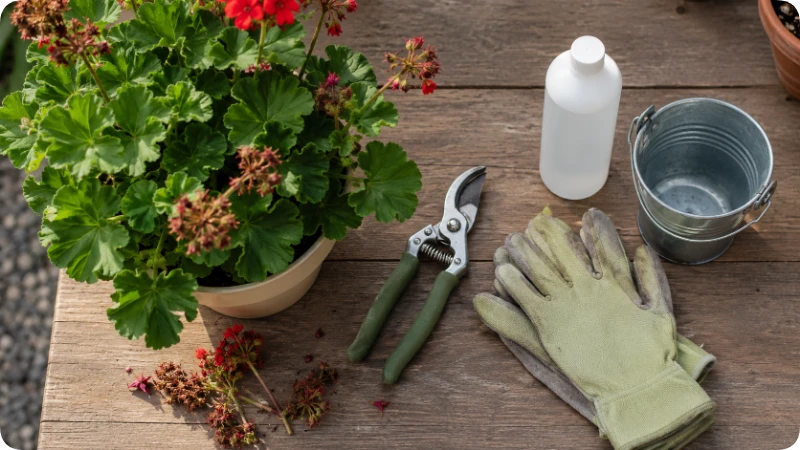
Deadheading geraniums is a beginner-friendly gardening task that requires very little time or equipment. Understanding what to remove and what to leave alone will help you avoid accidentally cutting healthy growth.
| Factor | Details |
| Difficulty | Easy |
| Time Required | 5–15 minutes per plant |
| Estimated Cost | Free if using fingers; minimal if using pruning snips |
| Skill Level | Beginner |
| DIY or Professional | DIY |
| Best Time | Throughout the flowering season as blooms fade |
| Frequency | Every few days during peak blooming |
Prerequisites
Before starting, make sure you:
- Identify flowers that are completely faded or beginning to wilt.
- Have clean hands or sanitized pruning snips.
- Check the plant for healthy flower buds so you don’t remove unopened blooms.
- Water the plant if it’s severely dry before performing heavier pruning.
Choosing the Right Approach
There are two common ways to deadhead geraniums. Both work well, but one generally produces better long-term results.
| Method | Best For | Advantages | Drawbacks |
| Pinching with fingers | Soft, young stems | Fast, requires no tools | Can be difficult on thick stems |
| Pruning with garden snips | Mature or woody stems | Clean cuts, easier on larger plants | Requires clean tools |
Which Method Is Best?
For most gardeners, removing the entire flower stalk at its base is the preferred approach. It keeps the plant cleaner and encourages stronger new flowering compared with removing only the faded petals.
If the stem snaps easily, use your fingers. If it resists or has become woody, use sanitized pruning shears for a clean cut.
At a Glance
| Category | Information |
| Plant Type | Annual or perennial geranium (depending on climate) |
| Main Goal | Encourage more blooms |
| Best Season | Spring through early fall |
| Best Time of Day | Morning or early evening |
| Tool Needed | Fingers or pruning snips |
| Result | Healthier plants with longer flowering periods |
Things You’ll Need
| Item | Purpose |
| Clean hands | Pinch off soft flower stems |
| Sharp pruning snips | Remove thicker flower stalks cleanly |
| Gardening gloves (optional) | Protect hands from sap and dirt |
| Small bucket or garden bag | Collect spent flowers |
| Rubbing alcohol | Sanitize pruning tools before and after use |
Safety Precautions
Although deadheading geraniums is a low-risk gardening task, following a few simple precautions helps protect both you and your plants.
- Always sanitize pruning tools before moving between plants to reduce the chance of spreading disease.
- Avoid pulling aggressively on stems, as this can damage healthy growth.
- Wear gloves if you have sensitive skin because some people may experience mild irritation from plant sap.
- Deadhead during dry weather whenever possible to reduce moisture on fresh cuts.
- Never remove large amounts of healthy foliage unless you’re intentionally pruning the plant.
Proper tool hygiene and gentle handling help keep geraniums healthy while reducing unnecessary stress.
Step-by-Step Guide
Deadheading geraniums is more than simply pulling off faded petals. The key is to remove the entire spent flower stalk, which encourages the plant to redirect its energy into producing fresh flowers instead of seeds.
Follow these steps for the best results.
Step 1: Inspect the Plant Carefully
Start by examining the entire geranium. Look for flower clusters that have finished blooming or are beginning to turn brown. Healthy flower buds should remain untouched.
You’ll typically find three types of blooms:
- Fresh flowers that are fully open
- Fading flowers with a few wilted petals
- Completely spent flower heads that are brown and dry
Focus on removing only the faded or finished blooms.
Why it matters: Leaving healthy buds intact ensures the next round of flowers opens normally.
Common mistake: Removing unopened flower buds because they resemble spent blooms.
Step 2: Find the Base of the Flower Stem
Instead of cutting just beneath the flower head, trace the flower stalk downward until it meets the main stem of the plant.
Geranium flower stalks are usually long, smooth, and leafless, making them easy to identify.
Removing the entire stalk prevents the plant from wasting energy maintaining an empty stem.
Why it matters: Geraniums bloom from new flower stalks, not from old ones.
Step 3: Remove the Entire Flower Stalk
Once you’ve located the base:
- Pinch the stem cleanly with your fingers if it’s soft.
- Or cut it with clean pruning snips.
Make the cut as close to the main stem as possible without damaging nearby leaves or shoots.
Do not leave several inches of bare stem behind.
A clean removal keeps the plant tidy and encourages faster regrowth.
Step 4: Remove Yellow or Dead Leaves
After deadheading the flowers, inspect the foliage.
Remove leaves that are:
- Yellow
- Brown
- Wilted
- Diseased
- Torn
Healthy green leaves should remain.
Old leaves consume energy while contributing little to the plant’s growth.
Removing them improves airflow and reduces the chance of fungal problems.
Common mistake: Removing too many healthy leaves. Geraniums still need plenty of foliage to produce energy through photosynthesis.
Step 5: Check for Hidden Spent Blooms
Large geranium plants often hide faded flowers beneath the canopy.
Lift the leaves gently and inspect the center of the plant.
Look for:
- Brown flower stalks
- Wilted blooms
- Fallen petals trapped among leaves
Removing hidden blooms improves air circulation and gives the plant a cleaner appearance.
Step 6: Clean Up Around the Plant
Collect all removed flowers and leaves from:
- The soil surface
- Containers
- Hanging baskets
- Garden beds
Leaving decaying plant material around the base can encourage pests and fungal diseases.
Dispose of healthy garden waste in compost if appropriate, but discard diseased material separately.
Step 7: Water if Needed
Deadheading itself doesn’t require watering, but it’s a good opportunity to check soil moisture.
Water only when the top inch of soil feels dry.
Avoid constantly wet soil, which can lead to root problems.
Container-grown geraniums generally dry out faster than those planted in garden beds.
Step 8: Feed the Plant During the Blooming Season
Deadheading removes old flowers, but nutrients are still needed to produce new ones.
During active growth, apply a balanced flowering fertilizer according to the product instructions.
Avoid overfeeding, especially with fertilizers high in nitrogen, as excessive leafy growth often comes at the expense of flowers.
Step 9: Repeat Throughout the Season
Deadheading isn’t a one-time job.
Inspect your geraniums every few days during peak blooming.
Regular maintenance prevents large numbers of faded flowers from accumulating and keeps plants blooming continuously.
As a general guideline:
- Peak summer bloom: check every 3–5 days.
- Moderate growth: once each week.
- Cooler weather: as needed.
Frequent light maintenance is easier than removing many spent blooms at once.
Step 10: Perform a Mid-Season Refresh if Needed
If your geranium becomes leggy or produces fewer flowers despite regular deadheading, consider giving it a light trim.
Cut back a few longer stems by about one-third while leaving plenty of healthy foliage.
This encourages:
- Bushier growth
- Better branching
- More flowering stems
- A fuller appearance
Avoid heavy pruning during periods of extreme heat or when the plant is already stressed.
Seasonal Deadheading Tips
Spring
- Begin removing faded blooms as soon as flowering starts.
- Encourage vigorous early-season growth.
- Watch for new buds developing rapidly.
Summer
- Deadhead more frequently since flowers fade faster.
- Water consistently during hot weather.
- Remove heat-damaged blooms promptly.
Early Fall
- Continue deadheading while temperatures remain mild.
- Reduce fertilizing as growth slows.
- Prepare perennial geraniums for dormancy in colder climates.
Container vs. Garden Geraniums
Container Geraniums
Plants grown in pots often flower more heavily but dry out faster.
Pay extra attention to:
- Soil moisture
- Fertilizing schedule
- Frequent deadheading
Because containers are viewed up close, removing faded blooms also keeps displays attractive.
Garden Bed Geraniums
Geraniums planted in borders generally need less frequent watering but still benefit from regular deadheading.
Inspect them after rainstorms, as wet petals can decay quickly and encourage disease.
Signs Your Geranium Is Responding Well
Within the following weeks, you should notice:
- New flower buds forming.
- Fresh green growth.
- Strong upright stems.
- Cleaner-looking plants.
- Longer flowering periods.
- More evenly distributed blooms.
These are good indicators that deadheading is helping redirect the plant’s energy into healthy new growth rather than seed production.
How to Know You Did It Correctly
After deadheading your geraniums, you won’t see new flowers overnight, but the plant should begin responding within a couple of weeks under the right growing conditions.
Here are the signs that you’ve deadheaded correctly:
- New flower buds begin forming where healthy growth is developing.
- The plant looks tidier with no brown or shriveled flower heads.
- Healthy green leaves remain while dead foliage has been removed.
- New side shoots appear, creating a bushier plant.
- The plant continues producing flowers throughout the growing season instead of slowing down after the first bloom.
If the plant looks healthy but isn’t flowering again, the issue may be related to sunlight, watering, or fertilization rather than the deadheading process.
Expected Timeline and Results
Every geranium grows at its own pace, depending on the variety, weather, and growing conditions.
| Time After Deadheading | What to Expect |
| Immediately | Plant looks cleaner and more attractive. |
| 3–7 Days | Plant redirects energy from seed production to new growth. |
| 1–2 Weeks | New shoots and flower buds begin developing. |
| 2–4 Weeks | Fresh blooms appear under favorable conditions. |
| Throughout the Season | More continuous flowering with regular maintenance. |
Keep in mind that adequate sunlight, proper watering, and occasional feeding are just as important as deadheading for long-lasting blooms.
Alternative Methods
While removing the entire flower stalk is the most effective method, there are a few other approaches gardeners sometimes use.
1. Removing Only the Flower Head
Some gardeners pinch off only the faded petals.
Pros
- Very quick
- Requires no tools
Cons
- Leaves the empty flower stalk behind
- Doesn’t encourage reblooming as effectively
- Can make the plant look untidy over time
Best for:
Temporary cleanup before a full deadheading session.
2. Light Pruning
Instead of removing individual flowers, lightly prune several stems once flowering slows.
Pros
- Encourages bushier growth
- Helps rejuvenate leggy plants
- Promotes another flush of flowers
Cons
- Removes some healthy blooms
- Requires a short recovery period
Best for:
Mid-season maintenance.
3. Shearing Overgrown Plants
If a geranium has become very overgrown, some gardeners shear it back lightly.
Pros
- Quickly refreshes the plant
- Encourages compact growth
Cons
- Removes many flowers at once
- Plant needs time to recover
Best for:
Mature plants with excessive leggy growth.
Common Mistakes to Avoid
Avoiding these mistakes will help your geraniums bloom longer and stay healthier.
Cutting Only the Flower Petals
Removing petals without taking the flower stalk leaves unnecessary growth behind.
Instead, remove the entire flower stem.
Removing Healthy Buds
Always check carefully before pinching.
Healthy buds are firm, green, and developing, while spent blooms appear brown, dry, or wilted.
Using Dirty Tools
Pruning shears can spread diseases between plants.
Clean blades with rubbing alcohol before moving from one plant to another.
Deadheading Too Infrequently
Waiting several weeks allows seed heads to develop, reducing the plant’s energy for producing new flowers.
A quick inspection every few days during peak blooming works best.
Over-Pruning
Removing too much healthy foliage can temporarily reduce flowering because leaves produce the energy the plant needs.
Only remove:
- Spent flowers
- Dead stems
- Yellow leaves
- Damaged growth
Forgetting Plant Care
Deadheading alone won’t produce continuous flowers if the plant lacks:
- Six or more hours of sunlight
- Proper watering
- Occasional fertilizer
- Good drainage
Healthy growing conditions work together with regular deadheading.
Troubleshooting & Common Problems
| Problem | Possible Cause | Solution |
| Few new flowers | Not enough sunlight | Move the plant to a sunnier location with at least 6 hours of direct light. |
| Flowers fade quickly | Heat or drought stress | Water consistently and avoid allowing soil to become completely dry. |
| Yellow leaves | Overwatering or poor drainage | Let soil dry slightly between waterings and improve drainage if necessary. |
| Brown stems after cutting | Stem wasn’t removed completely | Cut the remaining flower stalk back to its base. |
| Plant becomes leggy | Insufficient light or lack of pruning | Increase sunlight and lightly prune long stems. |
| Buds drop before opening | Temperature stress or inconsistent watering | Maintain even soil moisture and protect plants from extreme heat when possible. |
| Mold on old flowers | Spent blooms left on plant | Remove faded flowers promptly and improve airflow around the plant. |
Expert Tips
These simple techniques can help your geraniums bloom even more consistently.
- Deadhead while inspecting for pests, so you catch problems early.
- Morning is the best time to prune because plants are well hydrated.
- Rotate container plants weekly so all sides receive even sunlight.
- Remove faded blooms before they produce seed heads.
- Feed container-grown geraniums more regularly than those planted in the ground, as nutrients wash out of pots faster.
- Don’t wait until every flower has faded. Remove individual spent blooms as they appear.
- Pair regular deadheading with occasional pinching of leggy stems to encourage fuller, bushier plants.
When to Call a Professional
Most home gardeners can successfully deadhead geraniums without professional help.
However, consider contacting a local garden center or horticulture expert if:
- The plant repeatedly fails to flower despite proper care.
- Most stems are turning black or soft.
- Disease spreads rapidly through multiple plants.
- Root rot is suspected.
- You’re unsure if your geranium should be heavily pruned or replaced.
Professional advice can help identify problems such as fungal diseases, pest infestations, or unsuitable growing conditions that deadheading alone cannot solve.
What to Do Next
Now that your geranium has been deadheaded:
- Remove all spent blooms from the surrounding soil.
- Check the plant’s watering needs.
- Place it where it receives plenty of sunlight.
- Feed lightly during the active growing season if needed.
- Inspect the plant every few days for newly faded flowers.
- Continue regular maintenance throughout spring, summer, and early fall.
With just a few minutes of routine care each week, your geraniums can remain healthy, tidy, and full of colorful blooms for much longer.
FAQs
1. Should I cut off just the flower or the entire stem?
Remove the entire flower stalk down to where it joins the main stem. This encourages the geranium to produce new blooms instead of wasting energy on developing seeds.
2. How often should I deadhead geraniums?
Check your plants every 3–7 days during the growing season. Remove faded flowers as they appear to keep the plant blooming continuously.
3. Do all geranium varieties need deadheading?
Most zonal and ivy geraniums benefit from regular deadheading. Some modern self-cleaning varieties naturally drop spent flowers, but removing old blooms can still improve the plant’s appearance and overall health.
4. Can I deadhead geraniums with scissors?
Yes. Clean, sharp pruning scissors or garden snips work well, especially for thicker or woody flower stalks. Always sanitize your tools before and after use to reduce the risk of spreading disease.
5. Why isn’t my geranium flowering after deadheading?
Deadheading alone won’t guarantee new flowers. Geraniums also need:
- Well-draining soil
- Consistent watering
- Occasional fertilizer during the growing season
- At least six hours of direct sunlight
If these conditions aren’t met, flowering may remain limited.
6. Can I deadhead geraniums after it rains?
Yes, but it’s best to wait until the foliage has mostly dried. Cutting wet stems can increase the chance of fungal diseases in humid conditions.
7. Is deadheading the same as pruning?
No. Deadheading removes spent flowers, while pruning removes larger portions of stems and foliage to shape the plant, encourage bushier growth, or rejuvenate older geraniums.
8. What happens if I never deadhead geraniums?
The plant will usually continue growing, but it may produce fewer flowers over time because it directs more energy into producing seeds instead of creating new blooms. The plant can also appear untidy as faded flowers accumulate.
Final Thoughts
Deadheading geraniums is one of the easiest ways to extend their blooming season and keep them looking their best. By removing faded flower stalks at their base, you’re helping the plant redirect its energy into producing fresh buds rather than seeds.
The process takes only a few minutes, yet it can make a noticeable difference in the number of blooms, the plant’s appearance, and its overall health throughout spring, summer, and early fall.
For the best results, combine regular deadheading with proper watering, adequate sunlight, occasional feeding, and good air circulation. With consistent care, your geraniums will reward you with vibrant flowers for months.
