
Ticks are more than a nuisance: they carry diseases like Lyme disease, Rocky Mountain spotted fever, and ehrlichiosis, making prompt and effective removal important for anyone dealing with an infestation in their yard, on pets, or on their own body.
This guide is for homeowners, pet owners, and anyone who’s found ticks on their property or person and wants a clear, safe plan to get rid of them and keep them from coming back.
Featured Snippet
To kill ticks, treat your yard with a pesticide containing permethrin or use natural options like diatomaceous earth, mow grass short, clear leaf litter, and create a barrier of wood chips between lawns and wooded areas. For ticks on skin or pets, remove with fine-tipped tweezers, then dispose of them in alcohol or by flushing.
Before You Begin
Difficulty ranges from easy (removing a single tick) to moderate (treating a yard). Costs range from under $20 for tweezers and basic sprays to $300 to $600 for professional yard treatment. DIY works well for small yards and individual tick removal; professional pest control is worth considering for large properties, heavy infestations, or known tick-borne disease risk in your area. Before starting, identify whether you’re dealing with ticks on a person, a pet, or in your yard, since the approach differs for each.
Choosing the Right Approach
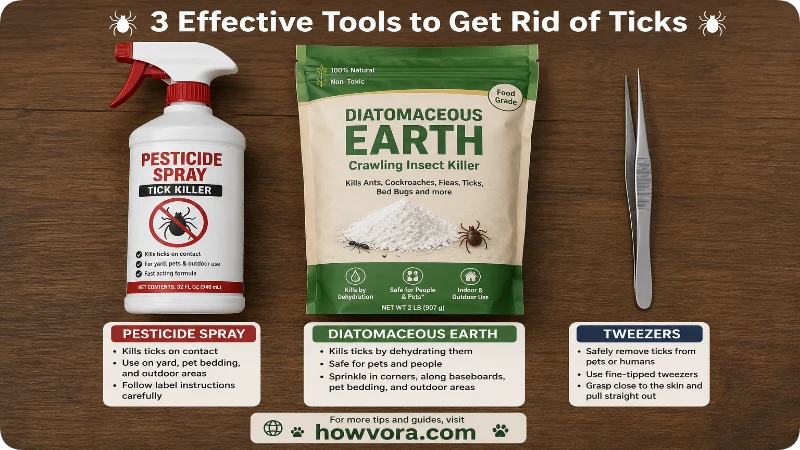
There are several valid ways to address a tick problem, and the best one depends on your situation, budget, and how comfortable you are with chemical treatments.
| Method | Pros | Cons | Best Use Case |
| Chemical pesticide (permethrin, bifenthrin) | Fast-acting, long-lasting (4–8 weeks) | Not pet-safe until dry, requires careful application | Heavy infestations, larger yards |
| Natural/DIY (diatomaceous earth, cedar oil) | Lower toxicity, safe around kids/pets once dry | Slower, needs reapplication after rain | Light infestations, chemical-sensitive households |
| Professional pest control | Thorough, often includes inspection and guarantee | Most expensive option | Large properties, recurring infestations, high-risk areas |
| Manual removal (tweezers) | Immediate, no chemicals | Only addresses individual ticks, not the source | Single tick on person or pet |
For most yards with an active tick problem, a combination of habitat modification (mowing, clearing debris) plus a targeted pesticide application offers the best balance of effectiveness and cost. Natural methods work but typically require more frequent reapplication, and professional treatment is worth the expense if you’ve had a tick-borne illness scare or live in a high-incidence region.
At a Glance
| Factor | Detail |
| Difficulty | Easy to Moderate |
| Time | 1 to 3 hours for yard treatment; minutes for individual removal |
| Estimated Cost | $20 to $50 DIY; $300 to $600 professional |
Things You’ll Need
| Item | Purpose |
| Fine-tipped tweezers | Removing ticks from skin or fur |
| Rubbing alcohol or sealed container | Disposing of removed ticks |
| Permethrin or bifenthrin spray | Killing ticks on contact in yards |
| Diatomaceous earth (optional) | Natural tick killer for lawns and cracks |
| Garden sprayer | Applying liquid pesticide evenly |
| Gloves and long sleeves | Protecting skin during application and removal |
| Lawn mower | Keeping grass short to reduce tick habitat |
Safety Precautions
Permethrin is toxic to cats until fully dry, so keep cats indoors during and immediately after application. Always wear gloves when applying pesticides or removing ticks, and wash hands afterward. Never use a lit match, petroleum jelly, or nail polish to remove an attached tick; these outdated methods can cause the tick to release more saliva and increase infection risk. If you develop a rash, fever, or flu-like symptoms within a few weeks of a tick bite, contact a doctor promptly, since early treatment of tick-borne illness is far more effective than late treatment.
Step-by-Step Guide
Step 1: Remove ticks from people or pets immediately
Use fine-tipped tweezers to grasp the tick as close to the skin’s surface as possible, then pull upward with steady, even pressure. Avoid twisting or jerking, which can leave mouthparts embedded in the skin.
Why it matters: The longer a tick stays attached, the higher the risk of disease transmission. Most pathogens require at least 24 to 48 hours of attachment to transfer, so quick removal significantly lowers risk.
What success looks like: The entire tick, including the head, comes out cleanly, and no dark fragments remain embedded in the skin.
Common beginner mistakes: Squeezing the tick’s body, using fingers instead of tweezers, or applying heat/chemicals before removal, all of which can cause the tick to regurgitate infected fluid into the bite.
Step 2: Mow your lawn and clear yard debris
Cut grass to 3 inches or shorter, remove leaf litter, tall weeds, and brush piles, and trim back vegetation along walkways and yard edges.
Why it matters: Ticks rely on humidity and shade from tall grass and leaf litter; removing this habitat is one of the most effective non-chemical ways to reduce tick populations, according to guidance from the U.S. Centers for Disease Control and Prevention.
What success looks like: Grass stays consistently short, and yard edges are free of leaf piles and overgrown brush.
Common beginner mistakes: Mowing once and stopping; habitat control needs to be ongoing through the tick season (typically spring through fall).
Step 3: Apply pesticide or natural tick killer to your yard
Spray permethrin or bifenthrin (following label directions) around the yard’s perimeter, especially where lawn meets woods, along fences, and in shaded areas. For a natural option, apply food-grade diatomaceous earth to the same areas when dry weather is expected.
Why it matters: Targeted spraying of these “tick zones” rather than the entire lawn is recommended by university extension offices, since most ticks stay within a few feet of woodland edges and don’t roam into open, sunny lawn areas.
What success looks like: Treated areas show no live ticks when checked with a white cloth drag (dragging a light-colored cloth over grass and inspecting it for ticks) one to two days after application.
Common beginner mistakes: Spraying the whole yard instead of focusing on edge zones, applying right before rain (which washes the product away), or skipping reapplication every 4 to 8 weeks during peak season.
Step 4: Create a barrier zone
Lay a 3-foot-wide strip of wood chips or gravel between your lawn and any wooded or brushy areas.
Why it matters: This barrier discourages ticks from migrating into recreational areas of your yard, a method specifically recommended by the CDC’s tick-control guidelines.
What success looks like: The barrier strip stays clear of grass and leaf buildup, maintaining its function as a tick deterrent.
Common beginner mistakes: Letting grass grow over the barrier or placing it too close to play areas without enough separation from the woods.
How to Know You Did It Correctly
A successful tick-control effort shows no live ticks on a white cloth drag test across treated areas, no new tick bites on people or pets who spend time in the yard, and visibly maintained habitat (short grass, no debris). If you continue finding ticks two weeks after treatment, the application likely missed key zones or was washed away by rain.
Expected Timeline and Results
Pesticide treatments typically start killing ticks within 24 hours and remain effective for 4 to 8 weeks. Natural treatments like diatomaceous earth take a few days longer and need reapplication after any rain. Full habitat-based control (mowing, clearing, barriers) shows results over several weeks as tick populations decline due to lost shelter. Plan to repeat yard treatments monthly during peak tick season, which runs roughly from April through September in most of the US, depending on region and climate.
Alternative Methods
Cedar oil and essential oil sprays: Lower toxicity and pleasant scent, but require frequent reapplication and are generally less effective against established infestations than synthetic pesticides.
Nematodes (beneficial insects): Naturally target tick larvae in soil; effective for long-term prevention but slower to show results and requiring specific soil conditions to thrive.
Tick tubes (permethrin-treated cotton): Target ticks indirectly by treating rodents that carry them; useful as a supplementary method but not a standalone solution for an active infestation.
Common Mistakes to Avoid
Treating only the lawn while ignoring wooded edges leaves the primary tick habitat untouched, since most ticks live in shaded, humid border zones rather than open grass. Skipping yard maintenance between pesticide applications allows tick habitat to regenerate quickly. Using tick removal methods involving heat or chemicals on attached ticks increases the risk of pathogen transmission rather than reducing it. Forgetting pet treatment alongside yard treatment lets pets continue bringing new ticks into the home.
Why Many Attempts Fail
Most failed tick-control efforts come down to incomplete coverage: treating the whole yard instead of focusing on tick-dense edge zones, stopping treatment after one application instead of maintaining a seasonal schedule, or addressing the yard without also treating pets that travel between wooded areas and the house.
Troubleshooting & Common Problems
| Problem | Possible Cause | Solution |
| Ticks return a few weeks after treatment | Pesticide effectiveness wore off | Reapply every 4 to 8 weeks during tick season |
| Ticks still found after spraying | Treatment missed edge/border zones | Re-treat with focus on lawn-woods interface |
| Pesticide washed away quickly | Applied right before rain | Reapply and check weather forecast before next treatment |
| Pets keep bringing ticks indoors | No pet-specific tick prevention used | Add vet-recommended tick collar or topical treatment |
| Tick mouthparts left in skin after removal | Improper removal technique | Use tweezers to extract remaining parts; clean area with antiseptic |
Expert Tips
Focus pesticide application on the outer 3 feet of your lawn bordering woods, since this is where the vast majority of ticks are found, rather than wasting product on open lawn. Treat pets and yards at the same time rather than separately, since pets that travel between treated and untreated areas can reintroduce ticks. Keep a tick removal kit (tweezers and a small alcohol-filled container) easily accessible during high season rather than searching for supplies after a bite is discovered.
When to Call a Professional
DIY treatment is generally sufficient for small to medium yards with light tick activity. Consider professional pest control if you have a large property, a heavy infestation that doesn’t improve after two DIY treatment cycles, or if a family member or pet has contracted a tick-borne illness, since professionals can apply treatments more thoroughly and may offer monitoring services.
What to Do Next
Maintain a seasonal schedule of mowing, debris clearing, and pesticide reapplication every 4 to 8 weeks through tick season. Check pets for ticks after outdoor time, and do a personal tick check after spending time in grassy or wooded areas. Reassess your yard’s tick pressure each spring before the season ramps up.
FAQs
Do ticks die in winter?
Most tick species become dormant rather than die in cold weather; many can survive freezing temperatures by sheltering in leaf litter or soil, becoming active again once temperatures rise above about 45°F.
Does rubbing alcohol kill ticks instantly?
Yes, submerging a removed tick in rubbing alcohol kills it quickly and is a standard, reliable disposal method recommended after removal.
Can vinegar kill ticks in the yard?
Vinegar isn’t an effective large-scale yard treatment; while it may kill ticks on direct contact, it lacks the residual effect of proper pesticides or diatomaceous earth needed for ongoing control.
How long do ticks live without a host?
Depending on species and humidity, ticks can survive several months to over a year without feeding, which is why habitat removal is as important as direct treatment.
Will one pesticide application get rid of ticks completely?
No single application provides permanent control; effective tick management requires repeated treatments through the season combined with ongoing habitat maintenance.
Are natural tick repellents as effective as chemical ones?
Natural options can reduce tick activity but generally don’t match the residual killing power of synthetic pesticides like permethrin, making them better suited to prevention than to active infestations.
Final Thoughts
Killing ticks effectively comes down to combining habitat control, targeted treatment, and consistent maintenance rather than relying on a single fix. Focus your efforts on yard edges and shaded zones, treat pets alongside your yard, and stick to a seasonal reapplication schedule. With these steps in place, you can significantly reduce tick activity on your property and lower the risk of tick-borne illness for your family and pets.
