
Mosquitoes can quickly make outdoor spaces uncomfortable and frustrating. Whether you want to enjoy your backyard, patio, deck, garden, or outdoor gatherings, reducing mosquito populations is essential for comfort and health.
The good news is that effective mosquito control usually involves a combination of habitat removal, targeted treatments, and ongoing prevention.
This guide explains exactly how to get rid of mosquitoes outside, including the most effective methods, common mistakes to avoid, and how to prevent mosquitoes from returning.
Featured Snippet
To get rid of mosquitoes outside, eliminate standing water where they breed, trim overgrown vegetation, apply appropriate mosquito treatments to resting areas, and use outdoor repellents or barriers. Combining source reduction with prevention provides the fastest and longest-lasting results while helping keep mosquito populations under control throughout the season.
Before You Begin
| Factor | Details |
| Difficulty | Easy to Moderate |
| Time Required | 1–3 hours initially |
| Ongoing Maintenance | 15–30 minutes weekly |
| Estimated Cost | Low to Moderate |
| DIY Friendly | Yes |
| Professional Needed | Only for severe infestations |
Most homeowners can successfully reduce outdoor mosquito populations without professional help. However, properties with extensive standing water, dense vegetation, or recurring infestations may benefit from professional mosquito management services.
Choosing the Right Approach
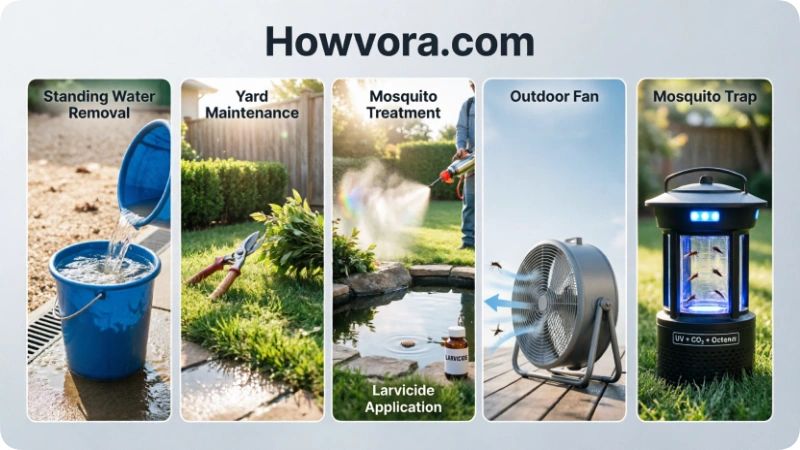
| Method | Pros | Cons | Best For |
| Remove Standing Water | Targets breeding source | Requires regular monitoring | Long-term control |
| Yard Maintenance | Reduces resting areas | Ongoing work required | Most properties |
| Mosquito Sprays | Fast results | Temporary effect | Active infestations |
| Larvicides | Stops mosquito development | Only works in water sources | Water features |
| Outdoor Repellents | Immediate protection | Doesn’t reduce the population | Patios and gatherings |
| Professional Treatment | Comprehensive coverage | Higher cost | Severe infestations |
The most effective approach combines breeding-site elimination, vegetation management, and targeted treatments. Relying on sprays alone often provides only short-term relief because new mosquitoes continue emerging from nearby breeding sites.
At a Glance
| Category | Details |
| Primary Goal | Eliminate breeding and resting areas |
| Fastest Method | Targeted mosquito treatment plus repellents |
| Most Effective Method | Integrated mosquito management |
| Long-Term Solution | Source reduction and prevention |
| Maintenance Frequency | Weekly |
Things You’ll Need
| Item | Purpose |
| Work gloves | Yard cleanup |
| Trash bags | Remove debris |
| Pruning shears | Trim vegetation |
| Mosquito treatment product | Reduce adult mosquitoes |
| Larvicide (if needed) | Treat standing water |
| Garden hose | Drain containers |
| Outdoor fan | Increase comfort and deterrence |
| Mosquito repellent | Personal protection |
Safety Precautions
- Follow all pesticide label instructions carefully.
- Keep children and pets away during product application.
- Wear gloves when handling yard debris or treatment products.
- Avoid spraying during windy conditions.
- Never apply products directly to ponds, streams, or water sources unless specifically labeled for that use.
- Store mosquito-control products in their original containers.
Step-by-Step Guide
Step 1: Eliminate Standing Water
What to Do
Inspect your property for any containers or areas that hold water, including
- Flowerpot saucers
- Bird baths
- Buckets
- Tarps
- Clogged gutters
- Children’s toys
- Wheelbarrows
- Tires
Empty, clean, or remove water-holding items.
Why It Matters
Mosquitoes lay eggs in standing water. Removing breeding sites interrupts their life cycle before they become biting adults.
What Success Looks Like
Most sources of standing water are eliminated or refreshed regularly.
Common Beginner Mistakes
- Overlooking clogged gutters
- Forgetting hidden containers
- Leaving water standing for several days
Step 2: Reduce Mosquito Resting Areas
What to Do
Trim
- Tall grass
- Dense shrubs
- Overgrown weeds
- Ground cover near patios
Remove yard debris and leaf piles.
Why It Matters
Mosquitoes rest in cool, shaded, humid areas during the day.
What Success Looks Like
Vegetation appears tidy, and air circulation improves throughout the yard.
Common Beginner Mistakes
- Focusing only on water sources
- Ignoring shaded corners
- Allowing vegetation to become overgrown again
Step 3: Treat Active Mosquito Areas
What to Do
Apply a mosquito treatment to
- Shrubs
- Fence lines
- Shaded landscaping
- Undersides of leaves
Follow product instructions carefully.
Why It Matters
Adult mosquitoes commonly rest in these locations between feeding periods.
What Success Looks Like
Noticeably fewer mosquitoes within several days.
Common Beginner Mistakes
- Spraying during rain
- Applying treatments at the wrong time
- Treating only open lawn areas
Step 4: Use Larvicides Where Water Cannot Be Removed
What to Do
Treat unavoidable water sources such as
- Decorative ponds
- Rain barrels
- Drainage areas
Use products specifically labeled for mosquito larvae.
Why It Matters
Larvicides prevent immature mosquitoes from becoming adults.
What Success Looks Like
Mosquito populations gradually decline over time.
Common Beginner Mistakes
- Using larvicides in inappropriate locations
- Forgetting retreatment schedules
Step 5: Protect Outdoor Living Areas
What to Do
Add
- Outdoor fans
- Mosquito repellents
- Screened enclosures
- Strategic seating away from dense vegetation
Why It Matters
Even after reducing mosquito populations, some mosquitoes may remain nearby.
What Success Looks Like
Improved comfort during outdoor activities.
Common Beginner Mistakes
- Depending solely on repellents
- Ignoring nearby breeding areas
How to Know You Did It Correctly
Signs of successful mosquito control include
- Fewer mosquito bites outdoors
- Reduced mosquito activity at dawn and dusk
- Minimal standing water around the property
- Improved comfort on patios and decks
- Fewer mosquitoes are visible around the landscaping
Expected Timeline and Results
| Timeframe | Expected Result |
| Immediate | Standing water removed |
| 1–3 Days | Improved outdoor comfort |
| 1–2 Weeks | Significant population reduction |
| 3–4 Weeks | Noticeable long-term improvement |
| Ongoing | Continued prevention with maintenance |
If mosquito activity remains high after several weeks, reassess for hidden breeding sites.
Alternative Methods
Natural Mosquito Control
Advantages
- Lower chemical use
- Environmentally friendly
Disadvantages
- Often slower
- Requires consistency
Best For
- Light mosquito activity
Professional Mosquito Services
Advantages
- Comprehensive treatment
- Expert assessment
Disadvantages
- Higher cost
- Ongoing service may be needed
Best For
- Severe infestations
Mosquito Traps
Advantages
- Supplemental control
- Continuous operation
Disadvantages
- Not a standalone solution
Best For
- Larger properties
Common Mistakes to Avoid
Ignoring Small Water Sources
Even a small amount of water can support mosquito development.
Treating Without Cleaning
Sprays work better when breeding sites are eliminated first.
Inconsistent Maintenance
Mosquito control requires ongoing monitoring.
Overlooking Neighboring Sources
Nearby breeding areas can contribute to recurring problems.
Applying Products Incorrectly
Always follow label directions for safe and effective use.
Why Many Attempts Fail
- Standing water remains hidden.
- Only adult mosquitoes are targeted.
- Vegetation remains dense and overgrown.
- Maintenance stops too soon.
- Outdoor repellents are used without source reduction.
- Treatment areas are incomplete.
- Weather conditions reduce treatment effectiveness.
Successful mosquito management focuses on both preventing breeding and reducing adult mosquito populations.
Troubleshooting & Common Problems
| Problem | Possible Cause | Solution |
| Mosquitoes return quickly | Hidden breeding sites | Reinspect the property thoroughly |
| Bites continue near the patio | Nearby resting areas | Trim vegetation and treat shrubs |
| Treatment seems ineffective | The rain washed the product away | Reapply according to label directions |
| Mosquitoes increase after rain | New standing water | Remove water promptly |
| Persistent infestation | Nearby external sources | Consider professional treatment |
Expert Tips
- Check your yard weekly after rainfall.
- Clean gutters regularly throughout mosquito season.
- Position outdoor fans near seating areas because mosquitoes struggle in moving air.
- Focus treatment efforts on shaded vegetation rather than open lawn.
- Refresh the bird bath water frequently.
- Inspect neighboring fence lines where mosquitoes often rest.
- Combine multiple control methods for best results.
When to Call a Professional
DIY mosquito control is usually sufficient when
- Mosquito activity is light to moderate.
- Breeding sites are easily accessible.
- The property is relatively small.
Consider professional help when
- Infestations persist despite repeated efforts.
- Large water features exist.
- Extensive vegetation surrounds the property.
- Mosquito activity significantly affects outdoor use.
What to Do Next
To keep mosquitoes away long-term
- Inspect for standing water every week.
- Maintain trimmed landscaping.
- Monitor gutters after storms.
- Refresh water features regularly.
- Apply preventive treatments when necessary.
- Use personal protection during peak mosquito activity.
Consistent prevention is easier than dealing with a major infestation later.
FAQs
What is the fastest way to get rid of mosquitoes outside?
Combining source reduction with targeted mosquito treatments and outdoor fans typically provides the quickest improvement.
What attracts mosquitoes to my yard?
Standing water, dense vegetation, shade, humidity, and nearby hosts attract mosquitoes.
Do mosquito-repellent plants work?
They may provide limited support, but should not replace proven mosquito-control methods.
How often should I remove standing water?
Inspect and eliminate standing water at least once per week.
Can mosquitoes breed in very small amounts of water?
Yes. Some species can develop in surprisingly small water containers.
Are outdoor mosquito sprays effective?
They can reduce adult mosquito populations when used correctly, especially as part of a broader control strategy.
Why are mosquitoes worse after rain?
Rain creates new breeding sites and increases moisture levels that mosquitoes prefer.
Will a fan keep mosquitoes away?
Fans can help because mosquitoes are poor flyers and struggle in strong airflow.
How long does mosquito control take to work?
Many homeowners notice improvement within a few days, with more substantial results after one to two weeks.
Can I completely eliminate mosquitoes from my yard?
Complete elimination is difficult, but significant population reduction is usually achievable with consistent control efforts.
Final Thoughts
If you want to know how to get rid of mosquitoes outside, focus first on eliminating standing water, then reduce resting areas, apply targeted treatments when necessary, and maintain your yard regularly. A combination of prevention, habitat management, and strategic control methods delivers the best long-term results. With consistent maintenance, you can greatly reduce mosquito activity and enjoy your outdoor spaces more comfortably.
