
Groundhogs can cause serious damage by digging burrows under sheds, decks, driveways, and around gardens. They often eat vegetables, flowers, and young plants, making them a frustrating pest for homeowners and gardeners.
This guide explains how to get rid of a groundhog safely, legally, and effectively while reducing the chances of it returning.
Featured Snippet
To get rid of a groundhog, identify active burrows, remove food sources, install fencing around gardens, use safe deterrents, and block burrow entrances only after confirming the animal has left. If the groundhog refuses to leave or local regulations restrict removal, contact a licensed wildlife removal professional for assistance.
Before You Begin
| Factor | Details |
|---|---|
| Difficulty | Moderate |
| Time | Several days to several weeks |
| Estimated Cost | $20 to $300+ depending on the method |
| DIY or Professional | DIY works for most situations; professionals are best for difficult infestations or structural risks |
Before starting:
- Confirm that the animal is actually a groundhog and not another burrowing animal.
- Check local wildlife regulations before trapping or relocating wildlife.
- Inspect the property for multiple burrow entrances.
- Decide whether deterrence, exclusion, or professional removal is the best option.
Choosing the Right Approach
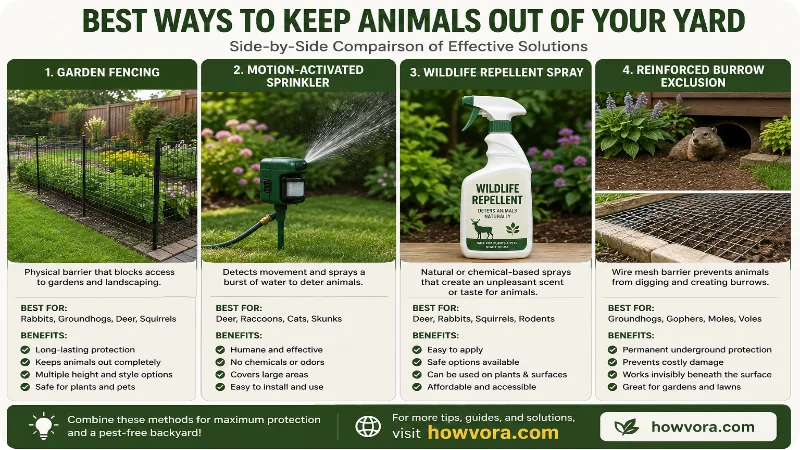
| Method | Pros | Cons | Best For |
|---|---|---|---|
| Habitat modification | Long-lasting | Takes time | Mild activity |
| Garden fencing | Highly effective | Initial installation cost | Protecting gardens |
| Motion-activated sprinklers | Humane | May require repositioning | Small yards |
| Scent repellents | Easy to apply | Require frequent reapplication | Temporary control |
| Live trapping (where legal) | Can remove persistent animals | Regulations vary; requires experience | Difficult cases |
| Professional wildlife removal | Fast and reliable | Higher cost | Large infestations or structural damage |
For most homeowners, combining habitat modification, exclusion fencing, and humane deterrents provides the most reliable long-term results. Trapping should only be considered where permitted and when other methods fail.
At a Glance
| Category | Details |
|---|---|
| Best Method | Exclusion combined with habitat modification |
| Time Until Results | Several days to 2 weeks |
| Long-Term Success | High when food sources and burrows are managed |
| Maintenance | Monthly inspections and seasonal prevention |
Things You’ll Need
| Item | Purpose |
|---|---|
| Work gloves | Personal protection |
| Shovel | Inspecting and filling burrows |
| Heavy-gauge wire mesh | Burrow exclusion |
| Garden fencing | Plant protection |
| Motion-activated sprinkler | Humane deterrence |
| Commercial animal repellent | Discourages feeding |
| Flashlight | Burrow inspection |
| Gravel or coarse stone | Reinforcing filled burrows |
Safety Precautions
Groundhogs generally avoid people but may bite if cornered.
Follow these precautions:
- Never place your hands inside a burrow.
- Wear gloves when working around burrows.
- Keep children and pets away from active burrows.
- Avoid blocking burrow entrances until you’re certain the groundhog has left.
- Never use poisons or illegal wildlife control methods.
- Be cautious around unstable soil near large burrows.
Step-by-Step Guide
Step 1: Confirm Groundhog Activity
Look for:
- Large burrow openings about 8 to 12 inches wide
- Fresh dirt piles
- Well-worn paths
- Plant damage near the burrow
Why it matters
Correct identification prevents the use of ineffective control methods.
Success looks like
You’ve located every active burrow entrance.
Common beginner mistake
Treating mole or rabbit damage as a groundhog problem.
Step 2: Remove Food Sources
Harvest ripe vegetables promptly.
Clean fallen fruit.
Store birdseed securely.
Reduce dense vegetation that provides cover.
Why it matters
Groundhogs stay where food is plentiful.
Success looks like
The property becomes much less attractive.
Common beginner mistake
Leaving compost or vegetables exposed.
Step 3: Install Garden Fencing
Use sturdy wire fencing.
- At least 3 to 4 feet tall
- Bury the bottom 10 to 12 inches underground
- Bend the buried section outward to discourage digging
Why it matters
Groundhogs are strong diggers.
Success looks like
No new feeding damage appears.
Common beginner mistake
Installing fencing without burying the bottom edge.
Step 4: Use Humane Deterrents
Try:
- Motion-activated sprinklers
- Commercial animal repellents
- Noise or movement devices
Rotate deterrents occasionally so the animal does not become accustomed to them.
Why it matters
Groundhogs quickly adapt to a single deterrent.
Success looks like
The animal visits less frequently.
Common beginner mistake
Using only one deterrent for months.
Step 5: Monitor Burrow Activity
Watch the entrance for several days.
Signs that the burrow may be inactive include:
- No fresh soil
- No footprints
- Cobwebs across the entrance
- Leaves remaining undisturbed
Why it matters
You should never seal an occupied burrow.
Success looks like
You have reasonable confidence that the burrow is vacant.
Common beginner mistake
Closing the entrance too soon.
Step 6: Block the Burrow
Once you’re sure the burrow is empty:
- Fill tunnels with gravel and soil.
- Reinforce the entrance using heavy wire mesh.
- Repair damaged lawn areas.
Why it matters
Open burrows often attract new wildlife.
Success looks like
No reopening occurs after several weeks.
Common beginner mistake
Using loose dirt alone without reinforcement.
How to Know You Did It Correctly
Successful groundhog removal usually includes:
- No fresh digging
- No new plant damage
- Burrow entrances remain sealed
- No visible groundhog activity for several weeks
- Lawn and garden remain undisturbed
Expected Timeline and Results
| Time | Expected Results |
|---|---|
| The first few days | Reduced visits after removing food sources |
| 1 week | Deterrents begin working |
| 2 weeks | Little or no feeding damage |
| Several weeks | Burrows remain inactive |
| Ongoing | Continue maintenance and inspections |
If activity continues after several weeks, combine additional exclusion methods or seek professional help.
Alternative Methods
Motion-Activated Sprinklers
Advantages
- Humane
- Easy installation
Disadvantages
- Less effective during freezing weather
Best for
Home gardens.
Commercial Animal Repellents
Advantages
- Widely available
- Easy application
Disadvantages
- Need regular reapplication after rain
Best for
Supplementing fencing.
Live Trapping
Advantages
- May remove persistent animals
Disadvantages
- Laws vary by location
- Relocation may be restricted
- Requires experience
Best for
Situations where permitted by local regulations.
Common Mistakes to Avoid
- Ignoring secondary burrow entrances
- Using only repellents without removing food
- Sealing occupied burrows
- Installing shallow fencing
- Failing to inspect the property regularly
- Expecting overnight results
Why Many Attempts Fail
Many homeowners struggle because they:
- Leave gardens easily accessible.
- Use a single control method.
- Stop prevention too early.
- Ignore habitat improvements.
- Fail to monitor for returning animals.
Successful control usually requires combining several humane methods.
Troubleshooting & Common Problems
| Problem | Possible Cause | Solution |
|---|---|---|
| Groundhog keeps returning | Food source remains | Remove food and improve fencing |
| A new burrow appears | Property still attractive | Continue habitat modification |
| Repellent stops working | Animal became accustomed | Rotate products and methods |
| Fence breached | Fence too short or shallow | Bury fencing deeper |
| Burrow reopens | Animal still present | Confirm vacancy before sealing |
Expert Tips
- Install fencing before planting vegetables whenever possible.
- Inspect sheds and decks regularly for new burrows.
- Keep grass trimmed to reduce cover.
- Reinforce vulnerable areas with buried wire mesh.
- Monitor your property in early spring, when groundhogs become active.
- Combine exclusion and deterrence for better long-term success.
When to Call a Professional
DIY methods are usually enough if there is only one active burrow and no structural damage.
Consider hiring a wildlife removal professional if:
- The burrow threatens your home’s foundation.
- Multiple groundhogs are present.
- The animal repeatedly returns.
- Local laws restrict trapping or relocation.
- You are uncomfortable handling wildlife situations.
What to Do Next
Once the groundhog is gone:
- Inspect your property monthly.
- Repair damaged lawns promptly.
- Maintain fencing.
- Remove fallen fruit and garden debris.
- Check for new burrows each spring and summer.
- Continue using deterrents when needed.
FAQs
What attracts groundhogs to my yard?
Groundhogs are attracted to gardens, fruit trees, birdseed, dense vegetation, and safe places to dig burrows.
What smell do groundhogs dislike?
Commercial repellents containing predator scents or strong odors may temporarily discourage groundhogs, but they work best when combined with fencing and habitat changes.
Is it safe to fill a groundhog hole?
Only after confirming the burrow is no longer occupied. Filling an active burrow can trap wildlife inside.
Can a groundhog damage my home’s foundation?
Yes. Large burrows beneath foundations, patios, sheds, or driveways can contribute to soil instability over time.
Do motion-activated sprinklers work?
Yes. They can effectively discourage groundhogs, especially when combined with other control methods.
Will groundhogs leave on their own?
Sometimes, especially if food becomes scarce or the habitat is no longer suitable. However, relying solely on this is unpredictable.
Are groundhogs dangerous?
Groundhogs usually avoid humans but may defend themselves if cornered. Avoid handling them directly.
How can I stop groundhogs from coming back?
Remove food sources, maintain fencing, inspect for new burrows, and keep the property less attractive to burrowing wildlife.
Final Thoughts
Learning how to get rid of a groundhog is mostly about making your property an unattractive place to live. Combining habitat modification, sturdy fencing, humane deterrents, and careful burrow management provides the best long-term results. Be patient, monitor your yard regularly, and follow local wildlife regulations when choosing any removal method.
