
Fleas in your bed create sleepless nights, itchy bites, and anxiety about contamination spreading throughout your home. Unlike fleas on pets, which veterinarians can treat, bed fleas require a different strategy involving bedding treatment, environmental control, and often pet treatment simultaneously.
This guide provides practical, tested methods to eliminate fleas from your bed completely, from immediate steps to long-term prevention, ensuring you can sleep peacefully again without reinfestation.
Featured Snippet
To get rid of fleas in bed, wash all bedding in hot water (at least 130 degrees Fahrenheit) and dry on high heat for 30 minutes minimum. Vacuum the mattress thoroughly, then apply food-grade diatomaceous earth or use a commercial flea spray. Treat your pets simultaneously, or fleas will return within days. Repeat treatments every 7 days for 3 weeks to eliminate new fleas from surviving eggs.
Before You Begin
Difficulty Level: Beginner to Intermediate
Time Required: 2-4 hours initial treatment; ongoing maintenance for 3 weeks
Estimated Cost: $20-$100 DIY; $300-$800 for professional heat treatment
DIY vs. Professional: DIY works for most infestations; hire professionals for severe cases or if pet treatment fails
Critical Prerequisite: Your pets must be treated simultaneously with your bed, or reinfestation is guaranteed within 3-7 days
Choosing the Right Approach
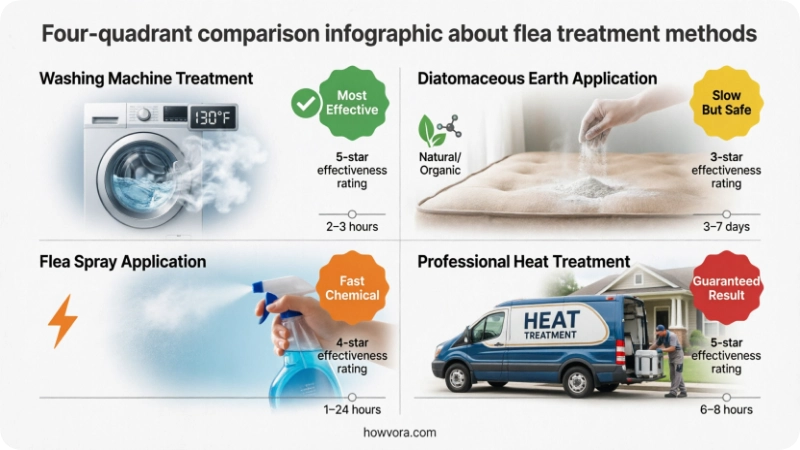
Different methods suit different situations and severity levels. Understanding your options prevents wasted time and failed treatments.
Method Comparison
Hot Water Washing and Drying (Mechanical)
Pros: Kills all flea life stages instantly, inexpensive, no chemicals, immediate results
Cons: Requires access to washer/dryer, damages delicate fabrics, limited to washable items
Best for: Initial treatment, all bed types, immediate flea elimination
Vacuuming (Preparation)
Pros: Removes adult fleas and some eggs, prepares surface for other treatments, no chemicals
Cons: Doesn’t kill all fleas, temporary relief only, must be combined with other methods
Best for: Preliminary step before chemical or heat treatment
Diatomaceous Earth (Natural)
Pros: Non-toxic, safe for children and pets, inexpensive, long-lasting, environmentally friendly
Cons: Slow acting (5-7 days), requires dry application, ineffective if wet, must be reapplied
Best for: Homes with chemical sensitivities, mattresses that can’t be washed
Commercial Flea Sprays (Chemical)
Pros: Fast results (24-48 hours), targets multiple life stages, penetrates fabrics
Cons: Chemical odors, potential toxicity if misused, expensive, requires ventilation
Best for: Severe infestations, when speed is critical, supplementary treatment
Professional Heat Treatment (Guaranteed)
Pros: Kills all life stages simultaneously, thoroughly treats entire bedroom, guaranteed results, long-lasting
Cons: Very expensive ($300-$800+), requires vacating home, scheduling needed
Best for: Severe infestations, failed DIY attempts, rental properties
Why Hot Water Washing is Recommended: Hot water washing (130 degrees Fahrenheit or higher) kills all flea life stages instantly on contact, including eggs, larvae, and adults. This is the most reliable, fastest, and safest method for items that can withstand heat. Combined with simultaneous pet treatment, it eliminates 85-95% of bed fleas within 24 hours.
At a Glance
| Aspect | Details |
| Difficulty | Beginner (washing) to Intermediate (heat/chemicals) |
| Time to Results | 24 hours (heat) to 7-14 days (diatomaceous earth) |
| Cost | $20-$100 DIY; $300-$800+ professional |
| Repeat Frequency | Every 7 days for 3 weeks (to eliminate new hatchlings) |
| Success Rate | 90-95% with pet treatment; 30-40% without pet treatment |
| Critical Factor | Pet treatment must happen simultaneously |
Things You’ll Need
| Item | Purpose |
| Hot water access | Wash bedding at 130+ degrees Fahrenheit |
| Clothes dryer | Heat dry to kill remaining fleas |
| Vacuum with HEPA filter | Remove fleas from mattress surfaces |
| Food-grade diatomaceous earth (optional) | Natural flea elimination on mattress |
| Commercial flea spray (optional) | Fast chemical treatment for bedding |
| Mattress protector or zippered cover | Seal mattress after treatment |
| Plastic bags | Seal treated items during treatment |
| Pet flea medication | Treat pets simultaneously (from veterinarian) |
| Gloves | Protect hands during application |
| Flashlight | Inspect for fleas on mattress surfaces |
Safety Precautions
For Hot Water Washing:
Use care with delicate fabrics; check labels before washing. Ensure water temperature reaches at least 130 degrees Fahrenheit (most home washers reach 140 degrees). Avoid mixing clothing with treated bedding to prevent cross-contamination if using chemical treatments.
For Diatomaceous Earth:
Use food-grade only (never pool-grade, which is toxic). Wear a dust mask when applying powder to avoid inhalation. Apply thin, dry layers; thick applications reduce effectiveness. Keep away from children’s faces. The powder loses effectiveness when wet; reapply after washing or if humidity is high.
For Commercial Flea Sprays:
Follow label instructions exactly; misuse causes health hazards. Ensure adequate ventilation (open windows, run fans) for 24 hours after application. Keep children and pets away from treated areas during drying (typically 2-4 hours). Never mix different flea products. Wash hands thoroughly after application. Check for skin sensitivity; some sprays cause reactions in sensitive individuals.
For All Treatments:
Do not sleep on treated mattresses until products dry completely (minimum 4-8 hours). Do not cover treated items with plastic for extended periods if using diatomaceous earth (traps moisture). Ensure pets receive veterinarian-approved flea treatments; never apply dog products to cats or vice versa.
Step-by-Step Guide
Step 1: Confirm You Have Fleas and Identify Infestation Severity
What to do:
Inspect your mattress surface, sheets, and pillowcases using a flashlight. Look for small dark specks (flea droppings) or tiny jumping insects. Use a white sheet to collect debris from the mattress; dark specs on white fabric are flea droppings. Check yourself for bite patterns (small red, itchy bumps typically in lines or clusters on legs and lower body). Document severity: few bites and minimal droppings indicate mild infestation; widespread bites and visible insects indicate severe infestation.
Why it matters:
Severity determines whether DIY treatment is sufficient or professional help is needed. Mild infestations respond to home treatment within 7-14 days. Severe infestations affecting your entire bedroom require more aggressive treatment or professional intervention.
What success looks like:
You’ve confirmed fleas are present (not other insects like bed bugs), documented their location and severity, and understand whether you’re treating a localized mattress problem or an entire room infestation.
Common beginner mistakes:
Confusing flea bites with bed bug bites (bed bugs bite in more linear patterns), assuming visible droppings mean a large population when small numbers produce visible debris, not checking pet bedding and furniture where fleas hide, underestimating infestation because pets show no obvious flea symptoms.
Step 2: Begin Immediate Pet Treatment
What to do:
Contact your veterinarian immediately and begin prescribed flea medication for all pets in the household. Flea treatments work best when started on a schedule (typically monthly topical applications or oral medications). Do not use over-the-counter flea products without veterinary approval; potency and safety vary widely.
Why it matters:
Fleas in your bed originated from infested pets. Treating the bed without treating pets guarantees reinfestation within 3-7 days as fleas jump from pets back to bedding. This single mistake causes 60-70% of failed treatments. Pets are the primary flea source; the bed is secondary.
What success looks like:
Your veterinarian has prescribed flea medication appropriate for each pet’s species, age, and weight. You’ve applied the first dose and established a treatment schedule (typically monthly for 3-6 months during flea season).
Common beginner mistakes:
Delaying pet treatment, assuming one flea spray protects pets for weeks (most protect only 2-4 weeks), treating only the pet with visible fleas while ignoring other household pets, not mentioning the home infestation to the vet (they may recommend stronger medications), stopping pet treatment after one month instead of continuing through flea season.
Step 3: Wash All Bedding in Hot Water
What to do:
Remove all bedding from the mattress, including sheets, pillowcases, blankets, mattress pad, and duvet. Place items in washable bags to contain fleas during transport (optional but recommended for severe infestations). Wash on the hottest cycle your washer allows (at least 130 degrees Fahrenheit, ideally 140+ degrees). Use standard detergent; no special flea-killing detergent is necessary,y as heat does the killing. Wash in groups by fabric type to prevent damage.
Why it matters:
Heat above 130 degrees Fahrenheit kills all flea life stages (eggs, larvae, pupae, and adults) within seconds. This eliminates the majority of fleas on your bedding immediately. Washing also removes flea droppings and allergens.
What success looks like:
All bedding has completed a full hot water wash cycle. Items feel clean and smell fresh.
Common beginner mistakes:
Washing in warm or cold water (fleas survive temperatures below 130 degrees Fahrenheit), skipping certain items like pillowcases or mattress pads, ds thinking they’re less infested, washing with other household laundry and spreading fleas to other areas, not washing mattress pads and blankets that also harbor fleas.
Step 4: Dry Bedding on High Heat for a Minimum of 30 Minutes
What to do:
Transfer all washed bedding to the dryer immediately (don’t let items sit damp, as fleas can survive moisture). Set the dryer to the highest heat setting safe for the fabrics. Run for a minimum of 30 minutes. Items can stay in the dryer longer if needed; additional heat ensures flea elimination even if some survived washing.
Why it matters:
Heat in the dryer provides a second kill stage. Even if a few fleas survived the wash cycle, the dryer’s temperature ensures complete elimination. This combination (washing plus drying) is over 99% effective.
What success looks like:
All bedding is completely dry and hot when removed from the dryer. No moisture remains.
Common beginner mistakes:
Using low or medium heat to protect fabrics (defeats flea elimination), air-drying instead of using the dryer (allows fleas to survive), running the dryer for only 10-15 minutes (insufficient time for deep heat penetration), returning damp items to the mattress.
Step 5: Thoroughly Vacuum the Mattress
What to do:
Using a vacuum with a HEPA filter (important for flea egg containment), vacuum every surface of the mattress, including top, bottom, sides, seams, and crevices. Make multiple passes over each area. Vacuum the box spring if present. Vacuum the bedroom floor around the bed, focusing on corners and under furniture where fleas hide. After vacuuming, immediately seal the vacuum bag in a plastic bag and dispose of it outdoors (fleas can escape from a full vacuum).
Why it matters:
Vacuuming removes adult fleas, eggs, and flea droppings that escaped washing. While vacuuming alone doesn’t kill fleas (they can escape the vacuum), it prepares the mattress for follow-up treatments and removes allergens. The HEPA filter prevents fleas from escaping back into your room through the vacuum exhaust.
What success looks like:
Mattress surfaces are visibly clean. No debris is visibleon thee white cloth pressed against the mattress. The vacuum has removed visible specks and debris.
Common beginner mistakes:
Using a vacuum without a HEPA filter (fleas escape back into the room), not vacuuming the mattress bottom or box spring, failing to seal and dispose of the vacuum bag immediately, not vacuuming thoroughly in seams and crevices where flea eggs hide.
Step 6: Apply Diatomaceous Earth or Flea Spray to the Mattress
What to do:
Choose one approach: Apply food-grade diatomaceous earth in a thin, even layer across the entire mattress surface, paying special attention to seams, folds, and crevices. Use a duster or salt shaker to apply evenly; avoid thick clumping. Alternatively, apply commercial flea spray according to label instructions, holding the spray bottle 6-8 inches from the surface and covering all areas. Ensure adequate ventilation if using spray (open windows and doors, run fans for at least 2 hours).
Why it matters:
Diatomaceous earth works slowly but kills fleas for weeks by damaging their exoskeleton. Spray works faster, typically killing fleas within 24-48 hours. Choose based on your timeline and tolerance for chemicals. Many people combine both for maximum coverage.
What success looks like:
The mattress is evenly coated with your chosen treatment. All areas are covered, especially seams and crevices. If using spray, the mattress is damp but not soaked.
Common beginner mistakes:
Applying diatomaceous earth too thick (reduces effectiveness and creates a mess), applying diatomaceous earth to a damp mattress (it won’t work when wet), not covering seams and edges thoroughly, using spray on upholstered items without checking if it damages fabric, not ventilating adequately after spray application.
Step 7: Leave the Mattress Undisturbed for Drying and Treatment Time
What to do:
Do not sleep on the mattress or disturb the treatment for 4-8 hours (if using spray) or 24-48 hours (if using diatomaceous earth). This allows the treatment to dry and begin working. If using diatomaceous earth, leave it on the mattress for 24-48 hours before vacuuming; longer is acceptable (up to a week if the mattress stays dry). If using spray, ensure complete drying before contact.
Why it matters:
Premature disturbance spreads treatment unevenly and reduces effectiveness. Diatomaceous earth requires time to damage flea exoskeletons; rushed removal prevents killing slower-acting fleas. Spray requires dry time to work properly.
What success looks like:
The mattress has sat undisturbed for the appropriate time. You can smell dry treatment or see that the coating has set.
Common beginner mistakes:
Sleeping on the mattress while treatment is still wet or active, vacuuming diatomaceous earth off before 24 hours have passed, moving the mattress, or making the bed during treatment.
Step 8: Vacuum the Mattress Again (if Using Diatomaceous Earth)
What to do:
After 24-48 hours, vacuum the mattress thoroughly again to remove the diatomaceous earth coating. Make multiple passes. This step applies only if you used diatomaceous earth. If you used spray only, skip this step.
Why it matters:
Removing the diatomaceous earth coating allows you to assess treatment effectiveness. You’ll see if fleas are dead (no movement when disturbed). This also prepares the mattress for use. Leaving diatomaceous earth on indefinitely reduces sleeping comfort and can irritate the respiratory system with prolonged exposure.
What success looks like:
The mattress is visibly free of powder. No diatomaceous earth remains visible on the surface.
Common beginner mistakes:
Vacuuming before the 24-hour minimum (wastes the product), not vacuuming thoroughly enough (leaving residue behind), forgetting this step entirely, and sleeping on a powder-coated mattress.
Step 9: Place Fresh, Heat-Treated Bedding on the Mattress
What to do:
Retrieve your hot-water-washed and high-heat-dried bedding from the dryer. Place directly on the treated mattress without letting bedding touch the floor. Use fresh pillowcases and sheets. If you have a mattress protector, use one now to contain any remaining fleas and prevent reinfestation from pets.
Why it matters:
Fresh, heat-treated bedding ensures you’re sleeping on flea-free surfaces. A mattress protector acts as a barrier, preventing future infestations from pet fleas and making future treatments easier.
What success looks like:
Your bed is made with fresh, clean, heat-treated bedding. The mattress feels clean and fresh.
Common beginner mistakes:
Using unwashed bedding, placing bedding on the floor before making the bed (risking re-contamination), not using a mattress protector for future prevention, not washing bedding regularly during the treatment period.
Step 10: Repeat the Full Cycle in 7 Days
What to do:
In 7 days, repeat steps 3-4 (hot water washing and high heat drying), step 5 (vacuuming), and step 6 (apply treatment). This targets any fleas that hatched from surviving eggs during the past week. Repeat the entire cycle in 14 days and 21 days for a total of four treatments spread across 21 days.
Why it matters:
Flea eggs have a 7-10 day hatching cycle. A single treatment kills adult fleas and some eggs, but surviving eggs hatch within a week. Repeating the treatment every 7 days for 3 weeks ensures you eliminate each new generation of fleas before they mature. This breaks the flea reproductive cycle completely.
What success looks like:
You complete at least three full treatment cycles (initial treatment plus two repeats at 7 and 14 days). By day 21, you see no fleas, bites decrease significantly, and your pets show no scratching.
Common beginner mistakes:
Treating only once and assuming reinfestation is a treatment failure rather than hatching eggs, stopping treatment after 7 days when no fleas appear (missing the next generation), not treating pets consistently during this period.
How to Know You Did It Correctly
Signs of Success:
New flea bites stop appearing within 24-48 hours of your first treatment. The mattress surface is visibly clean with no dark droppings visible. Your pets scratch noticeably less within one week. No jumping insects are visible on the mattress or bed. The bedroom smells clean, not musty or infested.
Verification Methods:
Use a white cloth or paper towel to wipe the mattress surface; if no dark specks appear, the mattress is clean. Place a light-colored trap on the mattress at night; if no insects are captured by morning, the treatment worked. Check yourself for new bites after two weeks; the absence of new bites indicates success. Monitor your pets; reduced scratching confirms flea control is working.
Expected Results:
After your first treatment, the adult flea population drops 85-95% within 24 hours. Visible bite activity stops for most people within 2-3 days. Complete elimination (zero fleas, no new bites, no pet scratching) occurs by day 21 with a consistent three-week treatment protocol. Some stragglers may appear for up to 30 days after treatment starts as survivors hatch from protected eggs, but their numbers should decrease with each treatment cycle.
Expected Timeline and Results
Days 1-2: Initial treatment completed. Most adult fleas die within hours. You may see dead fleas during cleaning. New bites stop appearing for most people.
Days 3-5: Significant relief from itching. Pets scratch noticeably less. No visible live fleas on the mattress. Flea droppings disappear from the mattress surface.
Days 7-8: The first repeat treatment is completed. This targets fleas hatched from eggs over the past week. You may see a few new fleas briefly before they die.
Days 9-14: Flea activity continues to decrease. New hatchlings are killed by the repeated treatment. Most people see zero fleas by day 14.
Days 14-15: The second repeat treatment is completed. This is the final generation of fleas hatching from the oldest eggs.
Days 16-21: Complete elimination expected. No new fleas appear. No new bites occur. Pets show normal behavior with no scratching. Success is confirmed.
Days 21-30: Post-treatment verification period. Continue monitoring for any returning fleas. If the infestation was severe, occasional stragglers may appear but quickly die from treated bedding and pet protection. Maintain pet treatment and wash bedding weekly for one month.
When to Repeat or Switch Methods:
If you see fleas returning after day 21, your pet’s treatment may have failed (change medications and consult a veterinarian). Unless you see persistent fleas despite pet treatment, you may have missed entry points in your bedroom (check furniture, wash all bedroom items). If diatomaceous earth isn’t working by day 7, switch to a commercial spray or hire a professional. If spray treatment fails, the infestation may be more severe; consider professional heat treatment.
Alternative Methods
Baking Soda (Mild Natural Treatment)
How it works:
Baking soda dehydrates fleas. Sprinkle on the mattress, leave for 24-48 hours, then vacuum thoroughly. The method is slow and requires multiple applications.
Advantages:
Non-toxic, inexpensive, safe for all household members, and a household item most people already have.
Disadvantages:
Much slower than diatomaceous earth (10-14 days), less reliable, requires frequent reapplication as it loses effectiveness when exposed to moisture, doesn’t work well in humid environments.
Best use case:
Mild infestations, when you prefer using household items, supplementary treatment only.
Essential Oil Sprays (Repellent)
How it works:
Mix essential oils (lavender, cedarwood, peppermint) with water and spray on bedding. The strong smell repels fleas temporarily but doesn’t kill them.
Advantages:
Pleasant smell, natural, non-toxic, inexpensive.
Disadvantages:
Only repels, doesn’t eliminate fleas, requires application every 1-2 days, ineffective against eggs and larvae, unreliable effectiveness, fleas return when smell fades.
Best use case:
Prevention after successful elimination, supplementary repellent between treatments, not suitable as primary treatment.
Commercial Powder Treatments (Faster Chemical)
How it works:
Powders containing permethrin or other insecticides are applied to the mattress. They kill fleas on contact and provide residual protection for several weeks.
Advantages:
Faster acting than diatomaceous earth, longer lasting protection, targets all life stages, relatively inexpensive ($15-$30).
Disadvantages:
Chemical odor, potential skin sensitivity in some people, requires ventilation, not safe for very young children if not used carefully, must be applied exactly per label directions.
Best use case:
When you want faster results than diatomaceous earth, for moderate infestations, supplementary to hot water washing.
Enzyme-Based Treatments (Specialized)
How it works:
Enzyme products break down the protective coating of flea eggs and larvae, killing them without traditional insecticides.
Advantages:
Targets eggs specifically, non-toxic, safe for all household members, novel mechanism of action (useful if fleas show resistance to other products).
Disadvantages:
Very slow acting (14-21 days), expensive ($30-$50), less available than other products, must be reapplied weekly.
Best use case:
Homes with chemical sensitivities, when other products have failed, are environmentally conscious households.
Professional Heat Treatment (Guaranteed)
How it works:
Pest control professionals heat an entire bedroom to 120-130 degrees Fahrenheit for several hours, killing all flea life stages simultaneously. Your home is cleared before treatment.
Advantages:
Kills all fleas in one application, guaranteed results, treats entire room including furniture and hidden areas, long-lasting, no chemicals in your bed, fastest method available.
Disadvantages:
Expensive ($300-$800+), requires vacating the home for 4-6 hours, scheduling needed, must prepare home before service, not available in all areas.
Best use case:
Severe infestations, failed DIY attempts, rental properties requiring guaranteed solutions, when you value guaranteed results over cost savings.
Common Mistakes to Avoid
Mistake 1: Treating the Bed Without Treating Pets
What it is:
Washing and treating your mattress while your pets remain infested.
Why it happens:
Focus on the bed infestation, assuming pet treatment is separate or not realizing pets are the source.
Consequences:
Fleas jump from pets to the bed within 3-7 days, completely undoing your treatment efforts. Reinfestation is guaranteed.
How to prevent it:
Begin pet flea treatment immediately when you discover bed fleas. Ensure your veterinarian prescribes medication for the appropriate duration (typically 3-6 months during flea season). Treat all pets simultaneously, not sequentially.
Mistake 2: Using Inadequate Water Temperature
What it is:
Wash bedding in warm or lukewarm water instead of hot.
Why it happens:
Concern about fabric damage, water heater limitations, or not understanding temperature requirements for flea elimination.
Consequences:
Fleas survive washing. Eggs survive and hatch days later. Treatment appears to fail.
How to prevent it:
Use the hottest setting on your washer (typically 140 degrees Fahrenheit). If your home water heater doesn’t reach 130 degrees, use a laundromat with commercial washers that heat water to appropriate temperatures. For delicate fabrics, use a secondary heat source (dryer) instead of hot washing.
Mistake 3: Waiting Too Long Between Treatments
What it is:
Treating once and waiting longer than 7 days to repeat treatment.
Why it happens:
Assuming a single treatment is sufficient, forgetfulness, or lack of understanding about the flea life cycle.
Consequences:
New fleas hatch from protected eggs and mature before the next treatment, reestablishing the infestation.
How to prevent it:
Schedule treatments every 7 days for 3 weeks on a calendar. Set phone reminders. Understand that eggs hatch in 7-10 days; waiting longer misses the critical window for eliminating new generations.
Mistake 4: Not Using a HEPA Vacuum
What it is:
Vacuuming the mattress with a standard vacuum instead of one with a HEPA filter.
Why it happens:
Using whatever vacuum is available, not understanding the importance of containment.
Consequences:
Fleas escape back into your room through the vacuum exhaust, partially undoing the vacuum’s benefit.
How to prevent it:
Use only HEPA-filter vacuums for flea treatment. These filters trap fleas and prevent escape. If you don’t have a HEPA vacuum, borrow one or rent one inexpensively.
Mistake 5: Sleeping on the Mattress During Treatment
What it is:
Returning to bed before treatment has dried or worked.
Why it happens:
Impatience, not understanding drying time requirements, or lack of sleeping alternatives.
Consequences:
You distribute treatment unevenly, reduce effectiveness, and potentially expose yourself to chemical residues.
How to prevent it:
Wait 4-8 hours after spray treatment or 24-48 hours after diatomaceous earth before sleeping on the mattress. Sleep elsewhere during this period. Ensure all bedding is completely dry before sleeping.
Why Many Attempts Fail
Reason 1: Skipping Pet Treatment
The single most common cause of failure is treating the bed without treating pets. Pets are the flea reservoir; the bed is secondary. Without pet treatment, reinfestation is guaranteed. Many people believe pet flea medication is too expensive or that they’ll treat the pet later; both assumptions lead to failure. Treating the bed alone has less than a 40% success rate; combined bed and pet treatment has a 90%+ success rate.
Reason 2: Single Treatment Expectation
Many people expect one treatment to eliminate fleas permanently. This misunderstands the flea lifecycle. Eggs and pupae survive initial treatment; the second and third generations hatch 7-14 days later. People who treat once, see fleas disappear, stop treatment, and then reinfestation appears 2-3 weeks later, believe their treatment failed when actually they simply quit too early.
Reason 3: Water Temperature Below 130 Degrees Fahrenheit
Fleas die at temperatures above 130 degrees; below this, they survive. Many home washing machines don’t reliably reach 130 degrees. People washing in warm or medium-hot water believe they’re using hot water when actually it’s insufficient. This is particularly common in modern, energy-efficient washers designed to use lower temperatures.
Reason 4: Moisture Sensitivity of Diatomaceous Earth
Diatomaceous earth is ineffective when wet and loses potency in humid environments. People apply diatomaceous earth to slightly damp mattresses or in humid rooms and see no results. They believe the product doesn’t work when actually they applied it incorrectly.
Reason 5: Incomplete Bedroom Treatment
Fleas hide in furniture, carpets, baseboards, and other bedroom items beyond the mattress. Treating only the bed while leaving infested furniture allows fleas to survive and recontaminate the bed.
Reason 6: Inconsistent Pet Medication Schedule
Even if people start pet flea medication, they often miss doses or stop after one month. Pet flea medications prevent reinfestation only while actively protecting the pet. Gaps in coverage allow fleas to restart the cycle.
Troubleshooting and Common Problems
| Problem | Possible Cause | Solution |
| Fleas reappear 3-5 days after treatment | Pet treatment was inadequate or skipped, missed entry points (furniture, carpets), incomplete mattress treatment | Begin/restart pet medication immediately, treat all bedroom furniture, repeat full mattress treatment cycle. |
| Diatomaceous earth isn’t working by day 5 | Applied to damp mattress, too thick (clumped), humidity preventing effectiveness, ineffective brand | Reapply to completely dry mattress in thin layer, run room dehumidifier, switch to food-grade from reliable brand, consider spray as alternative. |
| New fleas appear after day 10 of treatment | Expected hatching from protected eggs, pet treatment failed, new infestation from pets | Continue with scheduled repeat treatment every 7 days, verify pet medication dosage with veterinarian, isolate pets from other animals that might be infested. |
| Mattress has visible flea droppings still after washing | Vacuum removal was incomplete, fleas entered from pets after washing, application area was missed | Vacuum thoroughly again, paying special attention to seams and crevices. Reapply treatment. Ensure pets are treated. |
| Spray treatment caused skin irritation or respiratory reaction | Chemical sensitivity, over-application, inadequate ventilation, contact with skin | Stop using that product, switch to natural alternatives. Open windows and run fans for 24 hours. Shower and change clothes. Consult healthcare provider if reaction persists. |
| Bedroom floor has more fleas than mattress | Severe infestation, fleas are using floorboards as refuge, infestation spread beyond mattress | Treat entire bedroom (vacuum all floors, apply diatomaceous earth or spray to baseboards). Consider professional heat treatment. |
| Pets continue scratching despite flea treatment | Medication dose too low, fleas resistant to that product, other parasites present, medication timing off schedule | Contact veterinarian, request stronger medication, confirm pet has no other parasites, establish firm medication schedule. |
| Mattress remains damp 24 hours after spray application | Over-application, inadequate ventilation, humidity in room | Increase ventilation (open windows, use fans), run dehumidifier, allow additional drying time (up to 48 hours acceptable). |
| Treatment was successful but fleas returned 4 weeks later | Pets not receiving ongoing medication (flea season continues), new infestation from visiting infested animals | Resume/continue pet medication through the entire flea season (often 6+ months in warm climates), and prevent pets from contact with infested animals. |
Expert Tips
Tip 1: Use a Mattress Protector Immediately After Treatment
A zippered, flea-proof mattress protector seals your mattress, preventing future flea infestations and making future treatments simpler (you treat the exterior protector, not the mattress itself). This one purchase eliminates 80% of flea bed problems going forward.
Tip 2: Extend Pet Flea Treatment Into Off-Season
Most people stop pet flea medication when the weather cools, assuming flea season has ended. However, fleas live year-round in heated homes. Continue pet medication consistently for 12 months, not just the summer months, to prevent recurring bed infestations.
Tip 3: Wash Bedroom Fabrics Weekly During Treatment
Wash sheets, pillowcases, blankets, and pet bedding in hot water every 7 days for 4 weeks during the treatment period. This removes newly hatched fleas and eggs before they cause problems. Normal maintenance is monthly washing; during treatment, increase to weekly.
Tip 4: Use a Flea Trap to Track Progress Objectively
A simple flea trap (a sticky trap placed on the mattress overnight with a small light source above it) captures live fleas, giving you objective proof of declining flea populations. This prevents guessing and reveals if treatment is working. Fewer fleas on the trap over successive nights confirm success.
Tip 5: Treat Pet Bedding Simultaneously with Human Bedding
Pet beds harbor massive numbers of fleas. Wash all pet bedding in hot water and high heat simultaneously with your own bedding. If you skip pet bedding, fleas survive there and reinfest your bed.
Tip 6: Seal Baseboards and Cracks with Caulk
After treatment, seal any cracks or gaps in baseboards where fleas hide. This prevents surviving fleas from accessing crevices and makes future infestations less likely. Small gaps are flea highways; sealing them disrupts their movement patterns.
Tip 7: Monitor Pet Behavior Weekly
Track your pet’s scratching behavior with a simple chart (rate scratching as 1-10 daily). Improvements in scratching before you see improvements in yourself confirm that pet treatment is working and bed treatment is progressing. Lack of improvement in pet scratching after one week indicates pet treatment failure.
Tip 8: Distinguish Flea Bites from Other Causes
Flea bites appear as small red bumps, often in lines or clusters, typically on lower legs. They itch intensely. If your bite pattern doesn’t match this (for example, if bites are large and random, or only on the upper body), you may have a different pest problem. Correct identification prevents wasted treatment.
When to Call a Professional
Call a professional if:
Infestation persists after three full weeks (21 days) of consistent treatment. You’ve treated both bed and pets, but reinfestation continues, suggesting a secondary infestation source. Bedding damage prevents hot water washing (antique or delicate mattress). Fleas have spread throughout your entire home, not just the bedroom. You experience severe allergic reactions to flea bites or flea allergy dermatitis in yourself or your pets. Severe scratching in pets has caused open wounds or skin infections. You suspect fleas in walls, crawlspaces, or other inaccessible areas. You’re in a rental property and need documented professional treatment for liability purposes. DIY chemical treatments have caused health reactions, requiring professional-grade solutions.
What to expect from professionals:
Licensed pest control services will inspect your bedroom and entire home to assess infestation severity and scope. They’ll treat the mattress, furniture, flooring, and baseboards using commercial-grade products. Many offer heat treatment, which is the only method that guarantees 100% elimination in a single application. Professionals typically schedule follow-up visits (usually 7-14 days after initial treatment) to ensure complete elimination. They’ll provide documentation of service for rental or insurance purposes. Cost typically ranges from $300-$800 for initial service plus follow-up treatments, or $500+ for whole-home heat treatment.
When DIY is sufficient:
Infestation is limited to one bedroom, not affecting other rooms. You see fleas only on the mattress and in bed, not on furniture or floors. You can commit to three weeks of repeated treatment cycles. Both you and your pets are willing to endure treatment disruption. You have access to hot water washing andhigh-heatt drying. You’re willing to follow a structured treatment schedule. Pets are receiving veterinary flea medication. Initial treatment shows rapid improvement (80%+ flea reduction within the first week).
What to Do Next
Immediate Actions (After Fleas Disappear):
Continue your scheduled repeat treatments for the full three weeks, even if fleas disappear after the first week. This eliminates any surviving eggs or pupae. Keep your pet’s flea medication active through at least the next 30 days and ideally through the entire flea season. Install a zippered mattress protector immediately after completing treatment to prevent future infestations. Inspect your bedroom for any signs of fleas daily for two weeks.
Short-Term Maintenance (Weeks 4-12):
Wash bedding in hot water and dry on high heat weekly for one month, then biweekly for a second month. Continue this schedule longer in warm climates where the flea season extends. Monitor yourself and your pets for any flea activity. Check your mattress surface weekly with a light-colored cloth to confirm that no dark specks (flea droppings) reappear. Maintain your pet’s flea medication consistently without gaps.
Long-Term Prevention (Months 3+):
Continue pet flea medication throughout the calendar year, not just summer months (fleas live year-round in heated homes). Wash bedding in hot water at least monthly year-round. Maintain the mattress protector in good condition; replace it if it develops tears. Keep your bedroom clean and vacuum wit eekly. Watch for any signs of fleas immediately and begin treatment within 24 hours if spotted. Plan to brush and inspect your pets regularly, checking for fleas.
Seasonal Preparation:
Before warm weather, when flea season intensifies, inspect all entry points where pets could bring fleas inside (pet doors, cracks around foundations). Ensure your pets are on the highest-level flea prevention suitable for your location and pets. Stock your home with flea treatment supplies (diatomaceous earth, spray, etc.) before peak season. Schedule pet check-ups with your veterinarian before flea season to establish medication plans. These preventative actions stop seasonal reinfestation before it starts.
FAQs
Q: Can I catch fleas from my bed?
A: Fleas prefer animal hosts and rarely stay on humans, but they will bite you while searching for pets. Human fleas are essentially extinct in the modern world; your bed fleas almost certainly came from an infested pet. You can’t “catch” fleas from touching your bed, but you can transport flea eggs on your clothing if you sit on an infested mattress.
Q: How long can fleas survive in a bed without a host?
A: Adult fleas die within 7-14 days without a host to feed on. However, eggs and pupae can survive for weeks in carpet, bedding, and furniture, waiting for a suitable host. This is why repeat treatments every 7 days for 3 weeks are necessary; you’re targeting the emerging adult fleas from protected pupae.
Q: Will fleas survive the washing machine?
A: Fleas die instantly in water above 130 degrees Fahrenheit. Standard hot water washing (140 degrees Fahrenheit) kills all fleas and eggs on contact. Warm or cold water is insufficient; fleas survive temperatures below 130 degrees. The dryer’s heat is equally important; even if some fleas survived washing (unlikely with proper temperature), the dryer kills them all.
Q: Do I need to throw away my mattress?
A: No, throwing away the mattress is unnecessary and wasteful. A mattress can be successfully treated and disinfected using the methods in this guide. The only exception is if the mattress is severely damaged or deteriorated; in that case, replacement is about the mattress’s condition, not flea infestation. A zippered mattress protector after treatment ensures future protection.
Q: Can my landlord make me pay for flea treatment?
A: This depends on local tenant laws and the source of the infestation. If the infestation existed before you moved in, the landlord’s responsibility is likely. If your pet caused the infestation, you bear responsibility. Review your lease and local tenant protection laws. In most jurisdictions, landlords are responsible for pest control. Document the infestation with photos and notify your landlord in writing.
Q: How do I know if my pets are flea-free?
A: A flea comb is the most reliable check; run a fine-tooth comb through your pet’s fur and wipe on a white paper towel. If dark specks appear (flea droppings) or you see live fleas, your pet still has fleas. Absence of any specks after combing confirms your pet is flea-free. Note that your veterinarian’s flea medication may still be active even if no fleas are visible, providing ongoing prevention.
Q: Should I use the same flea treatment in my bedroom as on my pets?
A: No, never. Flea treatments formulated for pets are inappropriate for bedding and can be hazardous if you sleep on them. Use pet-appropriate medication (prescribed by a veterinarian) only on pets. Use environment-appropriate treatments (diatomaceous earth, spray, heat, vacuuming) for bedding. These are separate product categories; mixing them creates safety and effectiveness problems.
Q: What if I’m allergic to diatomaceous earth?
A: Food-grade diatomaceous earth is minimally toxic, but inhaling the powder can irritate the lungs. If you’re sensitive, wear a dust mask during application and consider spraying instead. Let the spray dry completely before contact. Alternatively, hire a professional for treatment. Do not skip treatment because of allergy concerns; choose an alternative method instead.
Q: Can fleas live in memory foam or gel mattresses?
A: Yes, fleas infest all mattress types equally. Memory foam, gel, traditional spring, and hybrid mattresses all harbor fleas. The treatment approach is identical regardless of mattress type. Heat treatment works on all mattresses. Diatomaceous earth and spray work on all types. Vacuum all types thoroughly.
Q: How long after treating my pets before bed do fleas disappear?
A: Pets on flea medication will be flea-free within 24-48 hours, depending on the medication type. However, your bed may still have fleas from eggs that will hatch over the following 7-21 days. This is why treating the bed separately and repeating treatments every 7 days for 3 weeks is necessary. Your pets being flea-free doesn’t mean your bed is flea-free.
Final Thoughts
Eliminating fleas from your bed requires simultaneous treatment of your pets, your bedding, and your mattress. Hot water washing combined with pet flea medication provides the fastest, most reliable results. The key to success is understanding that fleas have a multi-stage lifecycle and committing to a three-week treatment protocol that targets each generation.
A single treatment will make fleas disappear briefly, only to have them return as eggs hatch; this is not treatment failure but incomplete understanding of flea biology. Most people see dramatic improvement within the first week and complete elimination within 14-21 days if they follow the full protocol.
The most common mistake is skipping pet treatment or stopping treatment too early. Avoid these pitfalls, maintain consistency, and you’ll achieve a completely flea-free bed within three weeks. After treatment succeeds, prevention through ongoing pet medication and regular hot water washing keeps your bed flea-free indefinitely. Start your treatment plan immediately; your first night of flea-free sleep is within reach.
