Introduction
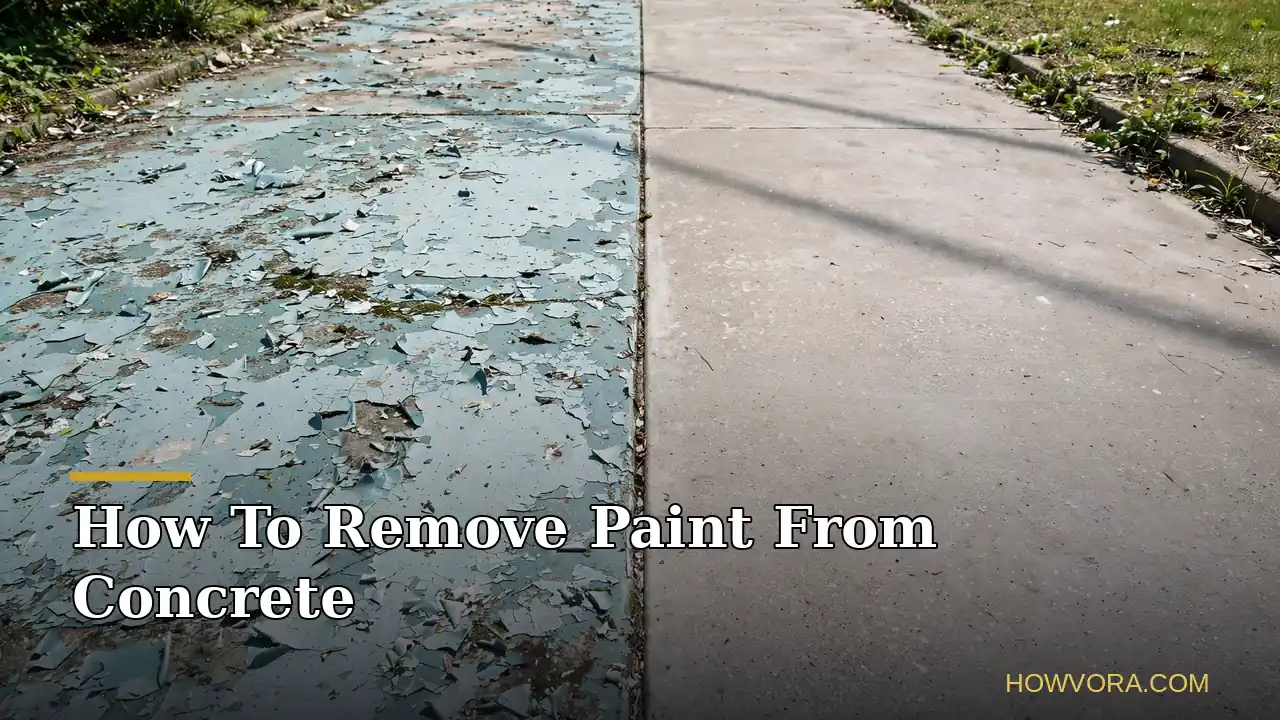
Paint lands on concrete in two ways: by accident, as drips and spills from a project, and on purpose, as an old coating on a garage floor, patio, or driveway that is now peeling and tired. Either way, getting it off is less about force than about matching the method to the paint. Fresh latex washes off with soap and effort. Old oil paint, epoxy coatings, and paint soaked into bare concrete demand stronger tools, and using the strongest tool first often damages the slab you are trying to save.
This guide walks up the ladder of methods in the right order: identify the paint, remove what is loose, wash, pressure wash within safe limits, then use a paint stripper made for masonry, with grinding as the last resort for thick coatings. It also covers two facts most quick guides skip: sealed and unsealed concrete behave very differently, and old paint can carry risks that change how you handle it.
Featured Snippet Answer
To remove paint from concrete, start with the mildest method that fits your paint: scrub fresh latex with hot soapy water, scrape and wire-brush dried paint, then move to a pressure washer or a masonry-safe paint stripper for stubborn coats. Test any stripper on a small spot first, keep it wet while it works, scrape off the softened paint, and rinse the surface well.
Before You Begin
Two quick checks decide your whole approach. First, identify the paint. Rub a hidden spot with a rag dampened with denatured alcohol: if the paint softens and color transfers to the rag, it is latex, the easier kind to remove. If nothing happens, assume oil-based paint or an epoxy coating, which usually need a stripper or grinding. Second, check for sealer by sprinkling water on the concrete. If the water beads up, the surface is sealed and paint sits mostly on top, so it releases more easily. If the water soaks in and darkens the concrete, the slab is unsealed and paint has likely soaked into the pores, which means removal takes longer and a faint stain may remain.
One more check matters on older buildings. Paint applied many decades ago can contain lead. If the paint is old and flaking, avoid dry scraping and dry grinding until you know what you are dealing with; a hardware-store lead test kit is cheap. For cost: a small spill is a free, half-hour job with tools you own, while a coated garage floor is a weekend project, with stripper as the main expense.
At a Glance
| Detail | What to know |
|---|---|
| Difficulty | Easy for fresh spills, moderate for old coatings |
| Time needed | 30 minutes for a small spill; a full day or weekend for a coated floor |
| Cost | Near zero for washing; stripper and tool rental raise it for large areas |
| Skill level | Beginner for washing and stripping; grinding suits confident DIYers |
| Best for | Garages, patios, driveways, and workshop floors |
Things You’ll Need
| Item | Purpose |
|---|---|
| Stiff broom and dustpan | Clears dirt and loose debris before you start |
| Paint scraper or long-handled floor scraper | Lifts loose, flaking, and softened paint |
| Wire brush | Scrubs dried paint edges and rough spots |
| Bucket, dish soap or trisodium phosphate substitute | Hot wash solution for fresh and latex paint |
| Pressure washer with a fan tip | Strips softened and weathered paint without chemicals |
| Paint stripper rated for masonry or concrete | Softens oil paint and stubborn coatings so they scrape off |
| Plastic sheeting | Keeps stripper wet during its working time |
| Wet vacuum | Picks up slurry and stripper residue instead of hosing it away |
| Gloves, eye protection, and sturdy shoes | Protection from chemicals, spray, and debris |
| Trash bags | Collects paint chips and used residue for proper disposal |
Safety Precautions
- Treat old paint as a possible lead hazard. If the paint predates modern lead bans or you cannot date it, test it first. If lead is present, keep the surface wet while you work, avoid dry sanding and grinding, seal the debris in bags, and strongly consider hiring a certified contractor.
- Chemical strippers burn skin and eyes and give off strong fumes. Wear chemical-resistant gloves and eye protection, work outdoors or with strong airflow, and keep the product off your skin entirely.
- A pressure washer can injure you and etch concrete. Never point the jet at skin, wear closed shoes, and keep the wand moving. A jet held too close cuts permanent lines into the slab.
- Keep children and pets off the area until every chip and chemical residue is cleaned up, and never hose stripper residue into a storm drain.
- Wet concrete and stripper gel are slippery. Watch your footing, especially on sloped driveways.
Step-by-Step Guide
- Step 1: Clear and sweep the area. Move everything off the concrete, sweep up dirt and loose grit, and protect nearby plants, walls, and door thresholds with plastic sheeting.
- Step 2: Identify the paint and test a small spot. Do the denatured alcohol test described above to learn if the paint is latex. Then test your mildest method on a hidden corner, about the size of a coaster.
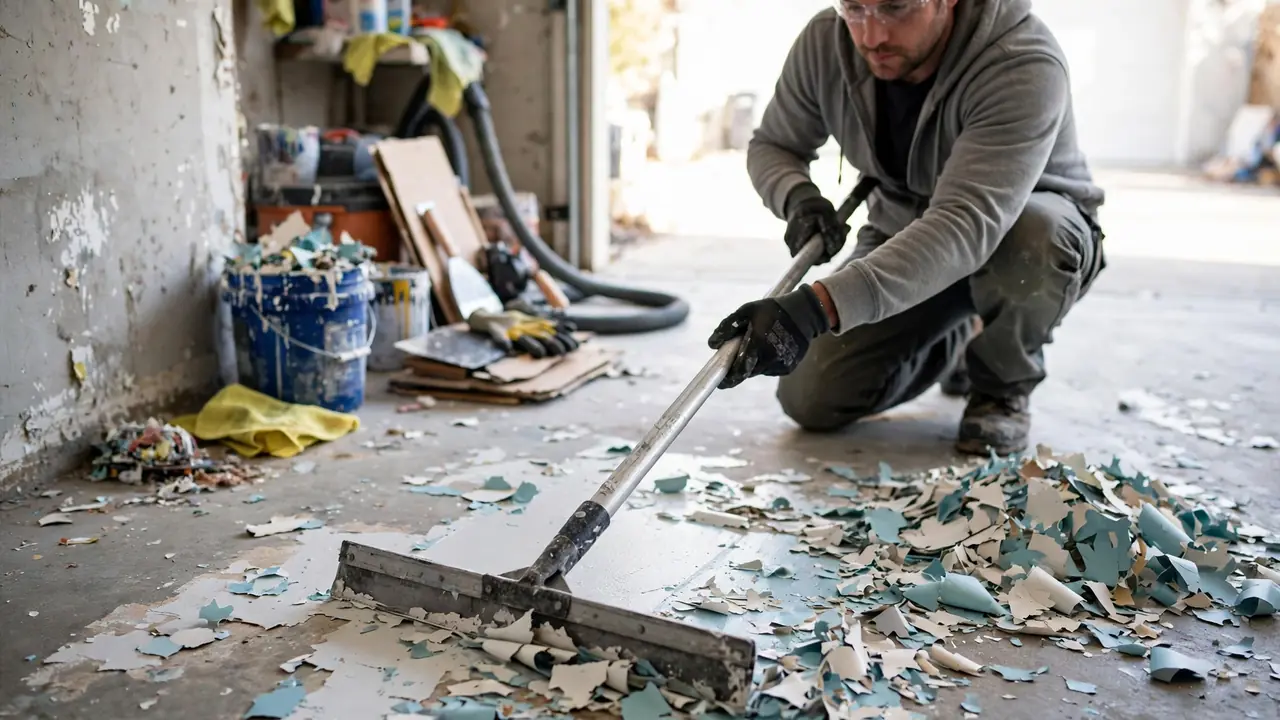
- Step 3: Scrape and brush off everything loose. Run the scraper under flaking edges and lift all paint that wants to come. Follow with the wire brush on stubborn edges. Loose paint left in place shields the paint under it from washing and stripper.
- Step 4: Wash fresh paint and latex. Mix hot water with dish soap or a trisodium phosphate substitute, flood a section, let it sit for several minutes, then scrub hard with the stiff brush. Rinse and repeat. Fresh latex often comes off at this stage with nothing stronger than hot water and cleaner.
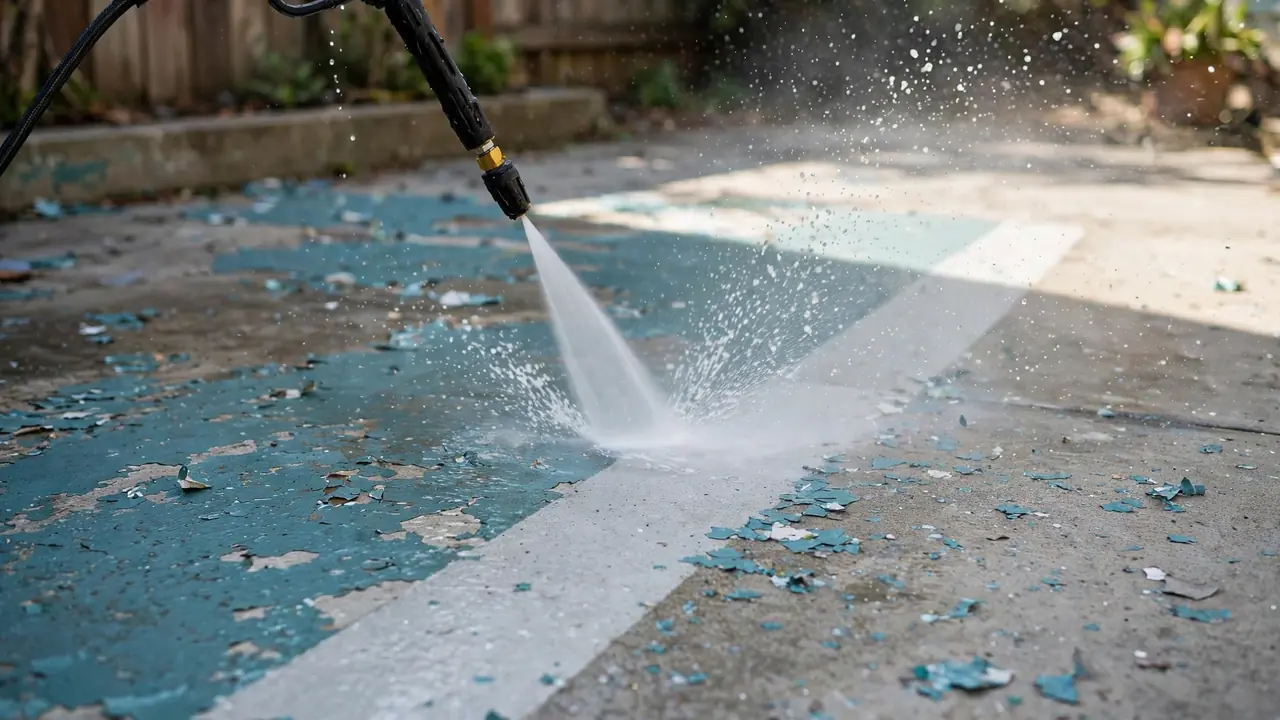
- Step 5: Pressure wash with restraint. Fit a wide fan tip, not a pinpoint jet, and start with the wand held well back, moving closer only until paint starts to lift. Most home units in the 2,000 to 3,000 PSI range handle this job; the danger is not the rating, it is distance. A jet parked in one spot etches the surface. Work in slow, overlapping passes.
- Step 6: Apply paint stripper to what remains. Choose a stripper labeled for masonry or concrete. Brush or trowel it on thick, then cover it with plastic sheeting so it stays wet for its full working time, which the label states, often 30 minutes to several hours. Stripper that dries out stops working, so the plastic is not optional.
- Step 7: Scrape the softened paint and repeat if needed. When the paint wrinkles or turns gummy, push the scraper under it and lift the sludge into a pile for the trash bag. Thick or very old coatings often need a second application on the spots that resisted.
- Step 8: Treat leftover stains with a poultice. On unsealed concrete, pigment often stays in the pores after the film is gone. Reapply a smaller amount of stripper to the stained spot, cover it, and give it a long dwell. Expect improvement, not perfection; a faint ghost in bare concrete is common.
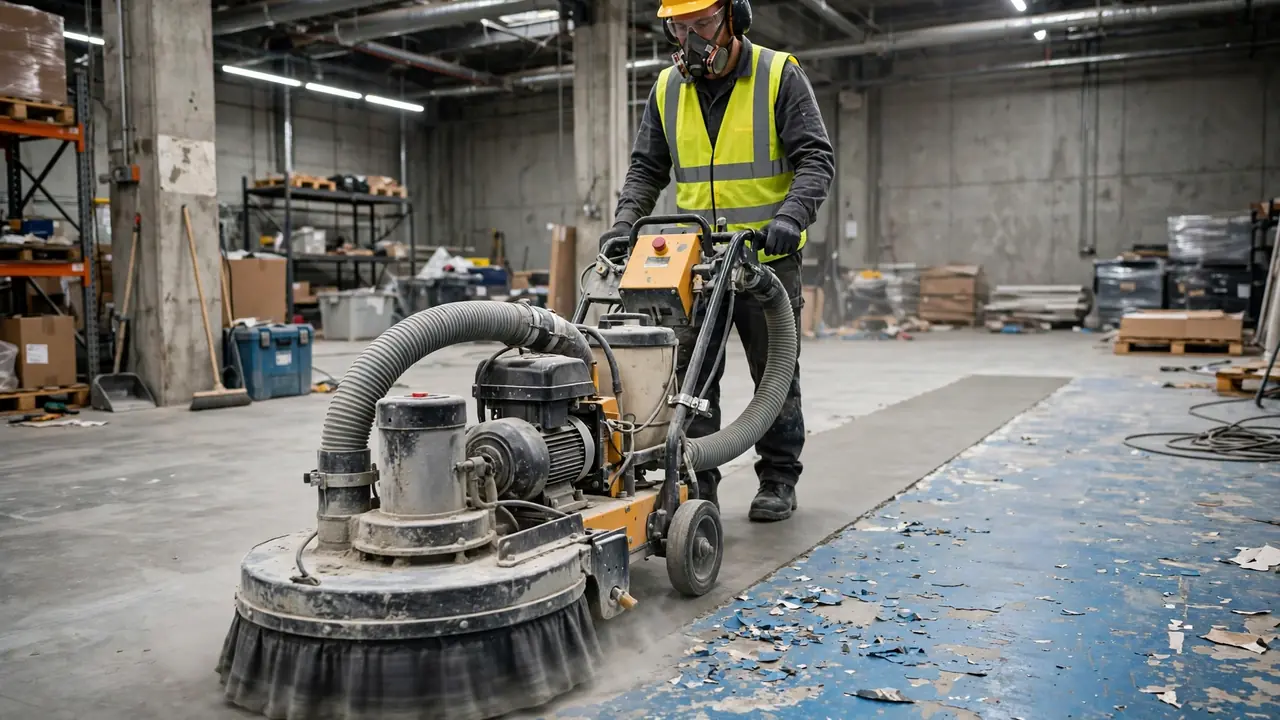
- Step 9: Use grinding only for thick, hard coatings. Two-part epoxy floors and very thick coatings laugh at strippers. A rented walk-behind grinder with a diamond cup wheel removes them mechanically, but it also removes a whisper of concrete and raises serious dust, so it calls for a respirator and dust control. This is the last resort, not the first idea.
- Step 10: Rinse, neutralize if the label requires it, and let it dry. Some strippers require a neutralizing rinse; follow your product label exactly. Finish with a plain water rinse, vacuum up the last slurry, and let the slab dry completely before you judge the result.
How to Know You Did It Correctly
Run three checks once the concrete is dry. First, drag a fingernail and then the scraper edge across the area: no film should catch, flake, or lift anywhere. Second, splash water on the surface. It should wet the concrete evenly and darken it the way it darkens bare patches; spots where water still beads are spots where paint or sealer still lives.
Expected Timeline and Results
A fresh latex spill usually takes 30 minutes including cleanup. Dried latex on a patio might take one to two hours of scraping, washing, and pressure washing. A coated garage floor is a full day to a weekend once you count stripper dwell time and drying. On sealed concrete, expect a clean result with no trace. On unsealed concrete, expect the film gone and the surface sound, with a chance of a faint color shadow in the pores.
Alternative Methods
Low-odor gel strippers. Citrus and soy-based gels work more slowly than strong solvent strippers but give off far fewer fumes, the better choice for a basement or attached garage. Give them hours instead of minutes. A heat gun, cautiously. On small, thick drips, gentle heat can soften paint so it peels, but heat can also drive softened paint deeper into bare concrete, so test first and keep the gun moving. Soda blasting and shot blasting. Professionals use these for large floors; they strip coatings fast and evenly, and for a big epoxy floor the contractor cost can beat a weekend of scraping. Cover instead of remove. If an old coating is sound and tight, a concrete resurfacer or a new coating over proper prep can be the smarter spend. Removal is only mandatory when the old paint is failing.
Common Mistakes to Avoid
- Reaching for muriatic acid as a paint remover. Acid etches concrete itself; it is not a paint stripper. Misused, it roughens and discolors the slab while the paint stays put.
- Holding the pressure washer too close. The jet etches lines and pits into concrete in seconds. Distance and a fan tip protect the surface.
- Letting stripper dry out. A dried stripper has stopped working. Apply it thick and keep it covered with plastic for the full dwell time.
- Dry scraping old paint without a thought about lead. Age is the warning sign. Test suspect paint first.
- Hosing residue into the yard or drain. Paint sludge and stripper belong in the trash or a hazardous waste collection, not in soil or storm water.
Troubleshooting & Common Problems
| Problem | Cause | Solution |
|---|---|---|
| Stripper softens the paint but it will not lift | The stripper layer was too thin or dried before finishing | Reapply a thicker coat, cover it with plastic, and give it the full label dwell time before scraping |
| A color ghost remains after the paint film is gone | Pigment soaked into the pores of unsealed concrete | Use a long-dwell poultice application on the stain; if a shadow persists, plan on a sealer or coating to hide it |
| White or rough stripes appeared after pressure washing | The jet was too close or held still, etching the surface | Blend with wider passes at a safer distance; deep etching can only be evened out by grinding or resurfacing |
| Stripper does almost nothing at all | The coating is likely a two-part epoxy or polyurethane | Switch to mechanical removal with a grinder and diamond cup wheel, or hire a floor contractor |
Expert Tips
- Work in shade when you can. Sun and wind dry stripper and wash water fast. A shaded slab keeps products wet and working.
- A long-handled floor scraper saves the day. It keeps you standing, doubles your leverage, and turns scraping into a routine.
- Vacuum slurry, do not chase it. A wet vacuum keeps dirty water out of your lawn and drains and leaves a cleaner surface for the next stage.
When to Call a Professional
Hire help if any of these apply: a lead test comes back positive on a large or flaking area, because certified contractors have the containment and disposal setup the job needs; the coating is a thick epoxy across a large floor and grinding is the only route; the concrete is stamped or colored, where one wrong pass ruins the pattern; or the slab drains toward a well, garden, or water feature that chemical runoff would harm. Professionals with shot blasters and dust-controlled grinders finish in hours floors that eat a DIY weekend.
What to Do Next
Once the slab is bare and dry, decide its future before the weather does. Bare concrete that stays outdoors benefits from a penetrating sealer, which also makes the next paint spill far easier to remove. If you plan to recoat a garage floor, confirm the surface passes the water test everywhere, since leftover stripper or sealer will fight your new coating. Bag every last chip, rinse your tools, and store leftover stripper sealed and out of reach of children.
FAQs
Will a pressure washer remove paint from concrete?
Often, yes, especially latex paint that is old, weathered, or already lifting. Use a wide fan tip, keep the wand moving, and start from a safe distance. Thick oil paint and epoxy coatings usually survive pressure washing and need a stripper or grinding instead.
What is the fastest way to remove paint from concrete?
For a small area, scraping followed by a masonry paint stripper is fastest. For a large coated floor, mechanical grinding is fastest overall. Fresh latex beats both: hot soapy water and a stiff brush remove it in minutes if you get to it before it cures.
Does vinegar remove paint from concrete?
Not reliably. Vinegar is a mild acid; it can dull or lightly etch the concrete surface, but it does not soften cured paint the way a real stripper does. Use soap and water for fresh paint and a proper masonry stripper for cured paint.
Will paint stripper damage concrete?
A stripper made for masonry, used as the label directs, does not damage sound concrete. Problems come from leaving strong products on far past the stated time, or from acid-based cleaners that etch the surface. Always test a small, hidden patch first and rinse as directed.
How do I remove spray paint or graffiti from concrete?
Work fast if you can; fresh spray paint scrubs off with hot soapy water and a stiff brush. Cured spray paint on unsealed concrete soaks in, so use a stripper or poultice made for porous surfaces, give it a long covered dwell, and scrub with a wire brush. Expect to repeat once or twice.
Can I remove an epoxy garage floor coating myself?
Yes, but expect a fight. Two-part epoxy resists most strippers; some heavy-duty epoxy removers soften it slowly, and grinding with a diamond cup wheel is the dependable route. Rent a grinder with dust control, wear a respirator, and budget a full day for an average garage.
Final Thoughts
Removing paint from concrete is a ladder, not a leap. Identify the paint, respect the difference between sealed and unsealed slabs, and climb from soap to scraper to pressure to stripper, stopping at the first rung that works. Keep stripper wet, keep the pressure washer at a respectful distance, and treat old paint with lead in mind. Do that, and the concrete underneath gets a second life instead of a scar.