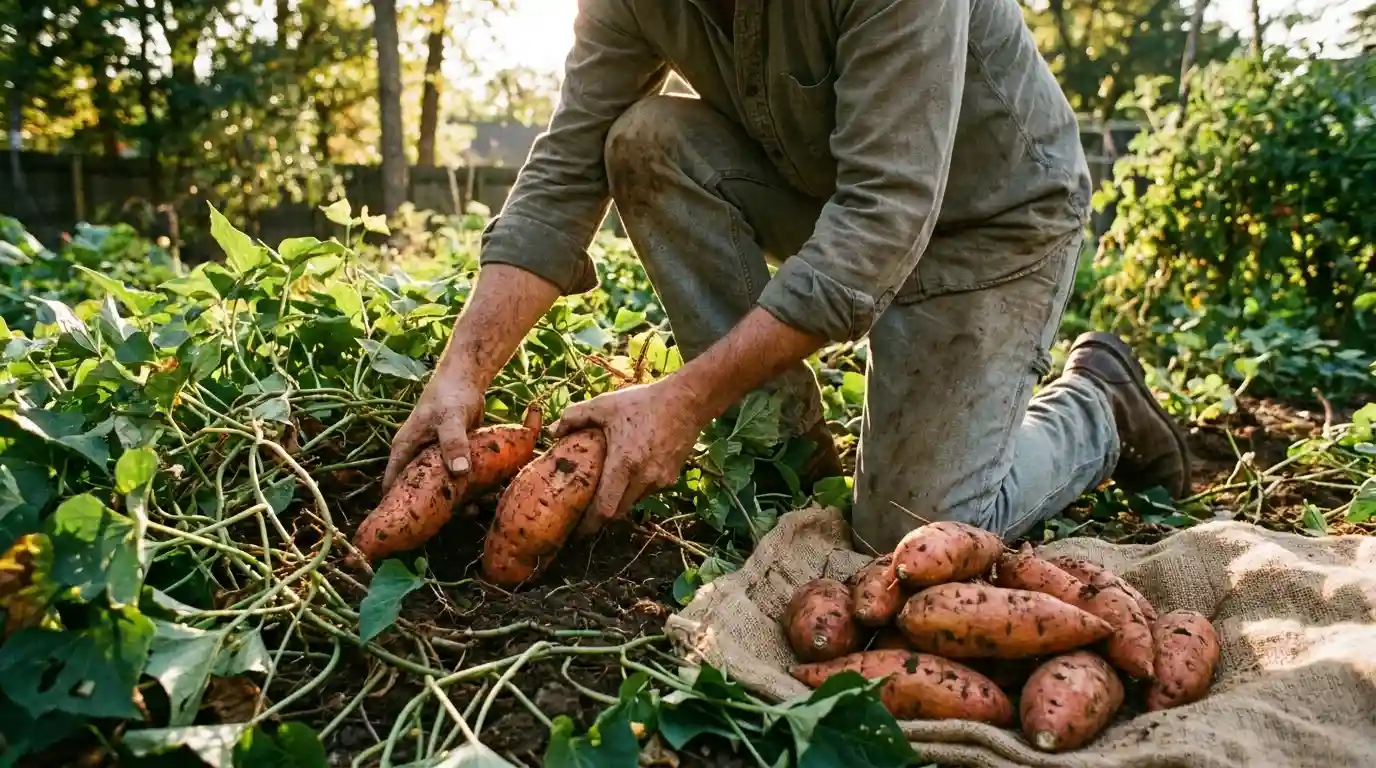
Growing sweet potatoes is easiest by planting sweet potato slips rather than planting the whole potato directly. Choose a warm, sunny location with loose soil, keep the plants watered during early growth, provide potassium-rich nutrition, and harvest after about 90–150 days when the roots reach a good size. A healthy plant can produce several sweet potatoes, depending on the variety and growing conditions.
Sweet potatoes are beginner-friendly crops because they require relatively little maintenance once established. The main keys to success are warm temperatures, deep loose soil, enough sunlight, and avoiding excessive nitrogen fertilizer.
Can You Grow a Sweet Potato From a Sweet Potato?
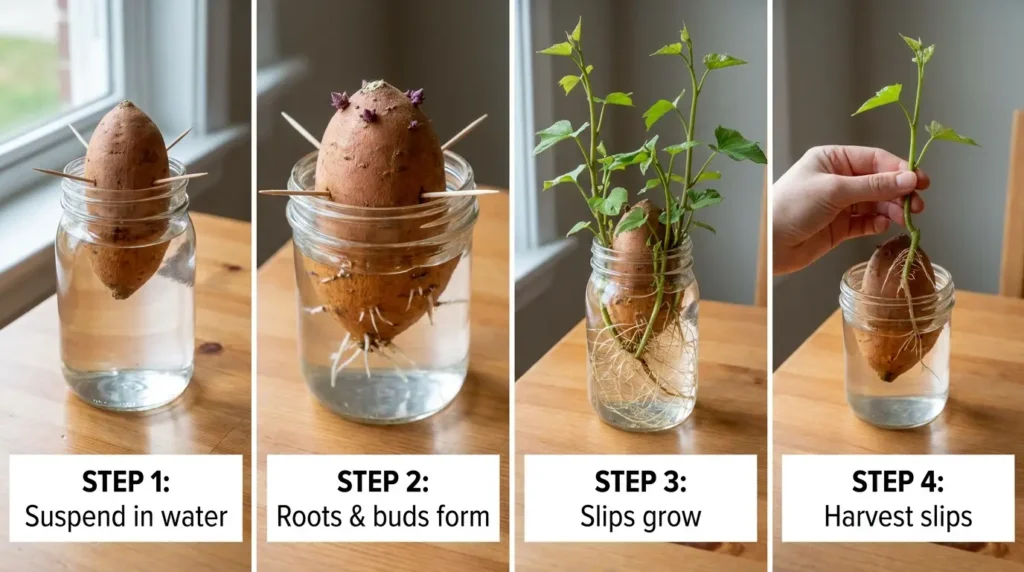
Yes, you can grow a new sweet potato plant from an existing sweet potato. However, planting a whole sweet potato directly into the garden is not usually the best approach. Gardeners typically grow slips, which are shoots that develop from the sweet potato and become new plants.
Each slip can grow into a separate sweet potato plant and produce its own underground roots.
How to Grow Sweet Potato Slips
You can produce slips using either the water method or soil method.
Method 1: Growing Slips in Water
- Select a healthy sweet potato without soft spots, mold, or damage.
- Wash it thoroughly.
- Insert toothpicks around the middle of the potato.
- Place it in a jar or glass so the bottom half sits in water.
- Keep it somewhere warm with indirect sunlight.
- Change the water regularly to prevent rot.
- Wait several weeks until green shoots appear.
When the shoots become about 6–8 inches long, gently remove them from the potato.
Place the shoots in water until roots develop, then transplant them into soil.
Method 2: Growing Slips in Soil
This method often produces stronger slips.
- Fill a container with loose potting soil.
- Place a sweet potato partially underground.
- Keep the soil warm and slightly moist.
- New shoots will grow from the buried potato.
- Remove and transplant the slips once they are large enough.
Beginner tip: Start growing slips indoors several weeks before the last expected frost date so plants are ready when outdoor temperatures become warm.
When Should You Plant Sweet Potatoes?
Sweet potatoes are warm-season crops and should be planted after cold weather has passed.
The ideal planting time is when:
- Soil temperature stays above 60°F (16°C)
- Night temperatures remain warm
- Frost danger has completely passed
Unlike many vegetables, sweet potatoes do not tolerate cold conditions well. A late frost can kill young plants, while cool soil slows root development.
In warmer climates, sweet potatoes can be planted earlier and may even grow as a long-season crop.
Choose the Right Location for Sweet Potatoes
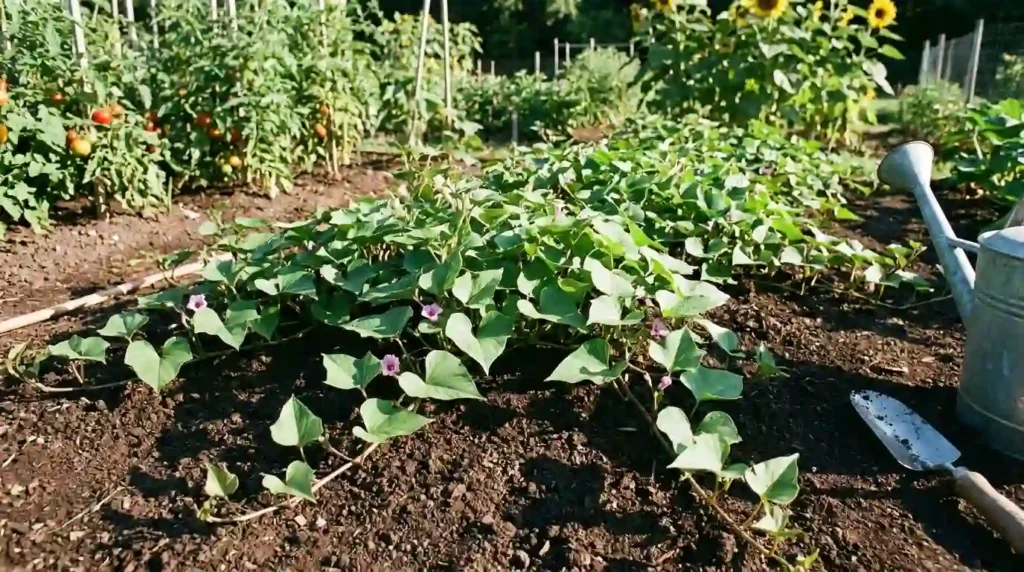
Sweet potatoes need plenty of sunlight because they use energy from their leaves to develop underground roots.
Choose a location with:
- At least 6 hours of direct sunlight
- Loose, well-draining soil
- Enough space for vines to spread
- Protection from frost
A sunny garden bed, raised bed, or large container can work well.
How Much Space Do Sweet Potatoes Need?
Sweet potato vines spread widely.
Recommended spacing:
- Plants: 12–18 inches apart
- Rows: 3–4 feet apart
If plants are crowded, they compete for nutrients and may produce smaller roots.
Prepare Soil Before Planting
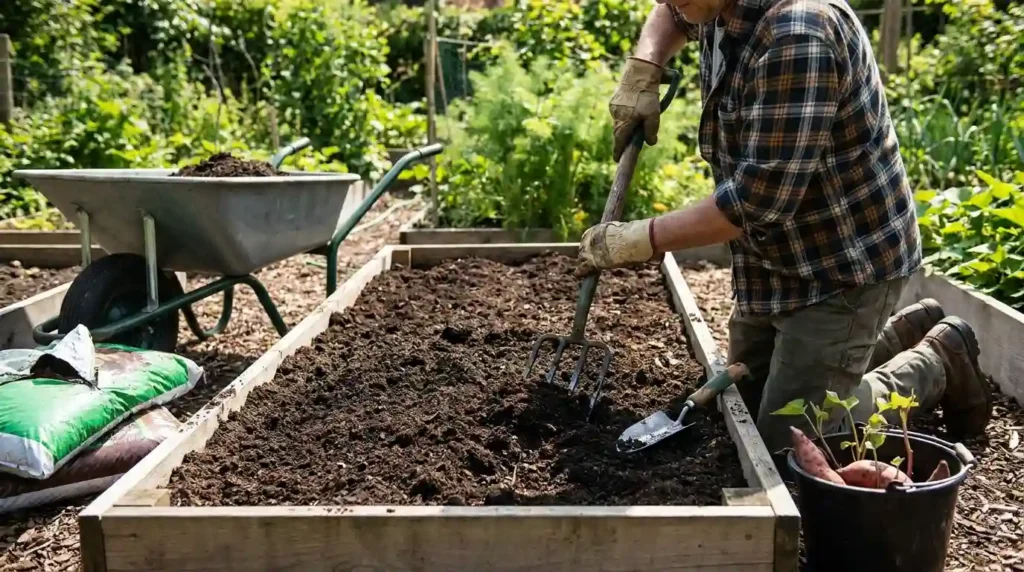
Sweet potatoes grow best in loose soil because the roots need room to expand.
Before planting:
- Remove rocks, weeds, and hard soil clumps.
- Loosen the soil about 12 inches deep.
- Mix in compost or aged organic matter.
- Create raised rows or mounds if your soil drains poorly.
Why Loose Soil Matters
Compact soil can cause:
- Small sweet potatoes
- Twisted or irregular roots
- Difficult harvesting
Sandy loam soil is often ideal because it allows roots to grow freely while preventing water from staying around the plant.
Plant Sweet Potato Slips Correctly
Once slips have developed roots, they are ready for planting.
Planting Steps
- Dig a hole about 3–4 inches deep.
- Place the slip into the soil.
- Cover the roots and lower stem with soil.
- Press gently around the plant.
- Water immediately.
The buried portion of the stem can produce additional roots, which may increase your harvest.
What Healthy Growth Looks Like
After planting, healthy sweet potato plants should:
- Recover from transplanting within several days
- Produce new leaves
- Begin spreading vines
- Develop thick green foliage
Do not worry if the plant looks slightly wilted immediately after transplanting. Young slips often need time to adjust.
Watering Sweet Potatoes
Sweet potatoes need regular moisture, especially during the first stage of growth.
Early Growth
During the first few weeks:
- Keep soil consistently moist
- Water deeply rather than lightly
- Avoid allowing young plants to dry out completely
Later Growth
Once plants are established:
- Water when the top layer of soil becomes dry
- Avoid constantly wet conditions
- Reduce watering near harvest time
Too much water late in the season may lead to:
- Cracked roots
- Poor storage quality
- Rot problems
A good balance is moist soil without waterlogged conditions.
Which Fertilizer Is Best for Sweet Potatoes?
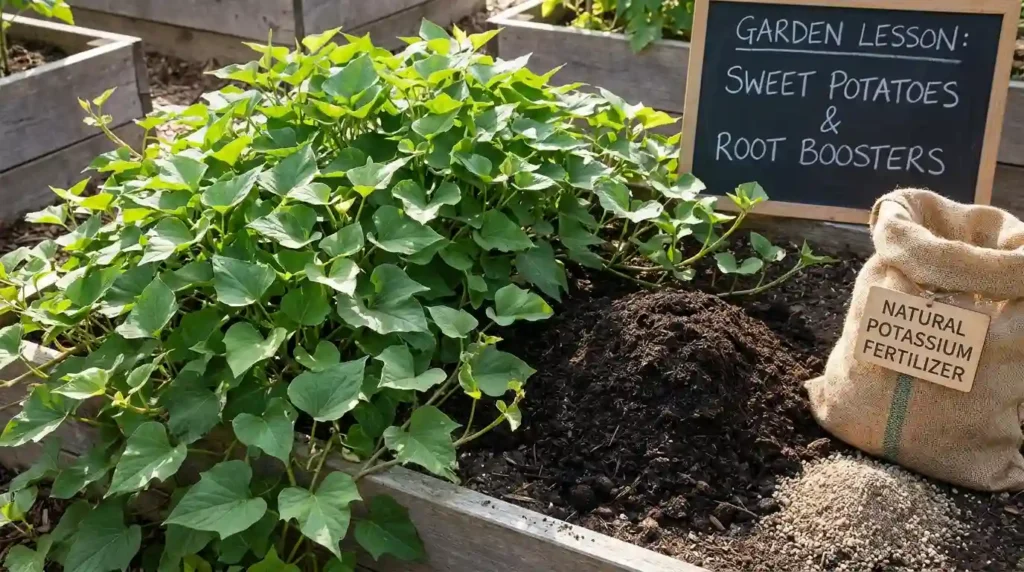
Sweet potatoes do not need extremely high fertilizer levels. The best fertilizer is usually one that provides more potassium and phosphorus while avoiding excessive nitrogen.
Good options include:
- 5-10-10 fertilizer
- Compost combined with potassium-rich amendments
- Organic fertilizers designed for root crops
Why Avoid Too Much Nitrogen?
Nitrogen encourages leaf and vine growth. While healthy leaves are important, too much nitrogen can result in:
- Large vines
- Fewer sweet potatoes
- Smaller roots
A common mistake is using lawn fertilizer because it promotes green growth but is not designed for root crops.
Do Sweet Potatoes Need Mulch?
Mulching can help sweet potatoes by:
- Keeping soil moisture consistent
- Reducing weeds
- Maintaining warmer soil conditions
Useful mulch options include:
- Straw
- Leaves
- Compost
Apply mulch around plants while keeping it slightly away from the stem to reduce moisture-related problems.
Managing Sweet Potato Vines
Sweet potato vines can spread several feet during the growing season.
You can allow them to spread naturally because the leaves provide energy for root growth.
However, control vines if:
- They invade pathways
- They grow into nearby crops
- They create excessive rooting along stems
If vines touch moist soil, they may produce additional roots. These smaller roots can compete with the main crop.
How Long Does a Sweet Potato Take to Grow?
Sweet potatoes usually take around:
- 90–120 days: Faster-growing varieties
- 120–150 days: Many common garden varieties
The exact time depends on:
- Sweet potato variety
- Temperature
- Soil quality
- Sunlight
- Water availability
Instead of relying only on days, look for harvest signs.
Signs Sweet Potatoes Are Ready to Harvest
Your sweet potatoes may be ready when:
- The growing season has reached around 3–5 months
- Leaves begin slowing down or yellowing
- Roots appear mature and well-developed
Avoid harvesting too early because small roots may not have reached their full size.
How to Harvest Sweet Potatoes
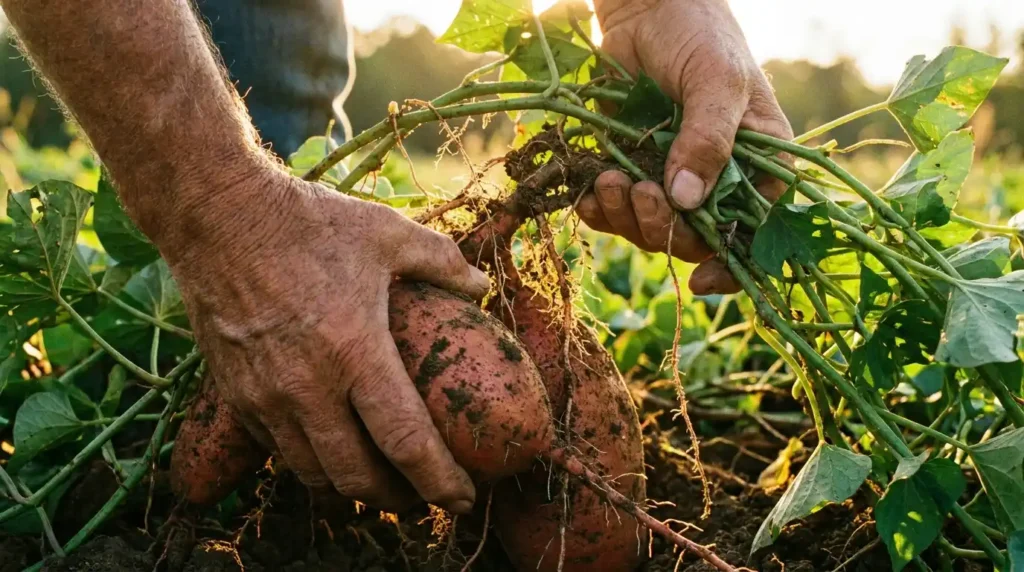
Sweet potatoes have thin skins that damage easily, so harvest carefully.
Harvest Steps
- Stop watering several days before harvest if the soil is very wet.
- Loosen the soil around the plant using a garden fork.
- Lift the roots gently.
- Remove excess soil carefully.
- Avoid cutting or scraping the skin.
Damaged sweet potatoes usually store poorly.
Curing Sweet Potatoes After Harvest
Freshly harvested sweet potatoes improve after curing.
Curing helps:
- Increase sweetness
- Heal small cuts
- Improve storage life
A common curing process:
- Keep sweet potatoes in a warm, humid area
- Allow them to cure for about 7–10 days
- Move them to a cool, dry storage location afterward
Do not wash sweet potatoes before long-term storage because moisture can encourage spoilage.
How Many Sweet Potatoes Will One Plant Produce?
One sweet potato plant commonly produces around 3–6 usable sweet potatoes, but yields vary.
A plant may produce more or fewer depending on:
- Variety
- Growing conditions
- Soil preparation
- Fertilizer management
- Length of growing season
Plants grown in loose, fertile soil with enough sunlight usually produce larger and more consistent harvests.
Common Sweet Potato Growing Problems
Problem: Lots of Vines but No Sweet Potatoes
Likely cause: Too much nitrogen.
Solution: Reduce nitrogen fertilizer and focus on balanced nutrition with enough potassium.
Problem: Small Sweet Potatoes
Likely causes:
- Harvesting too early
- Poor soil preparation
- Crowded plants
- Short growing season
Solution: Improve soil quality, give plants enough space, and allow more growing time.
Problem: Sweet Potatoes Have Strange Shapes
Likely cause: Hard or rocky soil.
Solution: Remove obstacles and loosen soil before planting.
Problem: Leaves Turning Yellow Too Early
Possible causes:
- Nutrient problems
- Water stress
- Natural end-of-season aging
Solution: Check watering and soil conditions before adding fertilizer.
Frequently Asked Questions
Can I grow sweet potatoes from a grocery store sweet potato?
Yes, many grocery store sweet potatoes can produce slips. However, some may be treated to prevent sprouting, and some varieties are better suited for growing than others.
Do sweet potatoes grow better in pots or in the ground?
Sweet potatoes usually produce better harvests in the ground or large raised beds because they need space for root development. Large containers can work if they are deep and wide enough.
Do sweet potatoes come back every year?
Sweet potatoes are usually grown as annual crops. In warm frost-free climates, they may survive as perennials, but most gardeners replant each season.
Should I remove sweet potato flowers?
No. Sweet potato flowers generally do not need to be removed. The plant’s energy is mainly focused on growing leaves and underground roots.
Conclusion
Growing sweet potatoes successfully comes down to starting with healthy slips, planting them in warm loose soil, and maintaining balanced care throughout the season. Focus on strong vines early and healthy root development later, then harvest when the roots have had enough time to mature.
Give your plants plenty of sunlight, avoid excessive nitrogen, and allow the growing season to run its course for a better harvest.