
Fine webbing on the underside of a leaf, tiny yellow speckles across the foliage, and leaves that look dusty even after you’ve wiped them down these are the calling cards of spider mites, one of the most common and most underestimated houseplant and garden pests. Left alone, a few dozen mites can multiply into thousands within two to three weeks, because a single female can lay hundreds of eggs and the entire life cycle can complete in as little as five to seven days during warm weather.
This guide is for anyone dealing with an active infestation on a houseplant, a vegetable garden, or an ornamental shrub who wants a plan that actually works, not just a list of products to buy. You’ll learn how to confirm you’re dealing with spider mites, how to knock the population down fast, how to keep it from coming back, and which of the many “miticide” options are worth your time. By the end, you’ll know exactly which method fits your situation and how to tell when the infestation is truly gone.
Featured Snippet
To get rid of spider mites, isolate infested plants, rinse them thoroughly (undersides of leaves included) with a strong water spray, then apply insecticidal soap or neem oil every 5–7 days for 2–3 weeks. Increase humidity and remove heavily webbed leaves to prevent reinfestation.
Before You Begin
Difficulty: Easy to moderate the steps are simple, but success depends on consistency over several weeks, not a single treatment.
Time: 15–30 minutes per treatment session; full elimination typically takes 2–4 weeks because you need to break the egg-hatch cycle, not just kill visible mites.
Cost: $10–$25 for insecticidal soap or neem oil if you don’t already have dish soap and rubbing alcohol on hand; $20–$40 if you opt for predatory mites on a larger infestation.
DIY vs. Professional: This is almost always a DIY job. Professional pest control is rarely necessary for spider mites and is generally reserved for large-scale greenhouse or commercial operations, or infestations that have spread across many mature outdoor trees.
Prerequisites: A spray bottle or pump sprayer, a way to isolate the affected plant from others (for houseplants), and access to the plant’s foliage including a way to reach the undersides of leaves, which is where most mites live and where most people forget to spray.
Choosing the Right Approach
Several methods work, but they aren’t interchangeable the right one depends on where the infestation is, how severe it is, and whether you’re treating one houseplant or an entire garden bed.
| Method | Best For | Speed | Plant Safety | Repeat Applications Needed |
| Water spray + insecticidal soap | Mild to moderate infestations, houseplants, vegetables | Fast knockdown, full control in 2–3 weeks | Very safe on most plants | Every 5–7 days, 3–4 times |
| Neem oil | Moderate infestations, prevention | Slower acting, disrupts feeding and reproduction | Safe but avoid in direct hot sun | Every 7 days, 3+ times |
| Rubbing alcohol (diluted) | Spot-treating small colonies on houseplants | Kills on contact, very fast | Can damage sensitive or thin-leafed plants test first | As needed on visible mites |
| Predatory mites (biological control) | Large infestations, greenhouses, organic gardens | Takes 1–2 weeks to establish, long-term control | Completely plant-safe | One release, sometimes a follow-up |
| Chemical miticides | Severe, resistant infestations after other methods fail | Fast but mites build resistance quickly | Varies always check label | Per product label |
If you’re treating a single houseplant with light webbing, start with water and insecticidal soap. If you’re managing a garden bed or greenhouse where mites keep returning, predatory mites offer the most durable fix.
At a Glance
| Category | Details |
| Difficulty | Easy–Moderate |
| Time per session | 15–30 minutes |
| Total time to resolve | 2–4 weeks |
| Cost | $10–$40 |
| Skill level | Beginner-friendly |
| Best for | Houseplants, vegetable gardens, ornamentals, greenhouse crops |
Things You’ll Need
| Item | Purpose |
| Spray bottle or pump sprayer | Applying water, soap, or oil solutions evenly, including leaf undersides |
| Insecticidal soap or mild liquid dish soap | Suffocates mites on contact without harming most plants |
| Neem oil | Disrupts feeding and reproduction; doubles as a mild repellent |
| Rubbing alcohol (70% isopropyl) | Spot-kills visible colonies on contact |
| Clean cloth or paper towels | Wiping down leaves to physically remove mites, eggs, and webbing |
| Pruning shears | Removing heavily infested or webbed leaves |
| Sealable plastic bag | Disposing of infested plant material without spreading mites |
| Humidifier or pebble tray (optional) | Raising humidity, which spider mites dislike |
Safety Precautions
Spider mite treatments are low-risk, but a few precautions prevent wasted effort or plant damage:
- Don’t treat water-stressed or heat-stressed plants. Soaps and oils can burn foliage that’s already under stress. Water the plant a day ahead if it’s dry.
- Avoid spraying in direct sun or above 90°F. Oils and soaps can scorch leaves in hot, bright conditions treat in early morning or evening instead.
- Test on one leaf first. Rubbing alcohol and some oils can damage sensitive or thin-leafed species; wait 24 hours and check for browning before treating the whole plant.
- Wear gloves when handling concentrated soap, oil, or alcohol solutions, and keep them away from pets and children until dry.
- Never place infested leaves or plants in a compost pile mites and eggs can survive and spread to future plantings.
Step-by-Step Guide
Step 1: Confirm It’s Actually Spider Mites
Before treating, check the undersides of leaves for fine, silky webbing, tiny moving specks, or a stippled, pale-yellow speckling on the leaf surface. If you’re unsure, hold a white sheet of paper under a leaf and tap it gently dislodged mites will look like tiny moving dots against the white background.
Why it matters: Other pests (thrips, aphids, powdery mildew) cause similar-looking damage but need different treatments. Treating the wrong pest wastes time while the real infestation spreads.
Step 2: Isolate the Infested Plant
If it’s a houseplant, move it away from other plants immediately. Spider mites spread easily between plants that are touching or closely grouped.
Step 3: Rinse the Plant Thoroughly
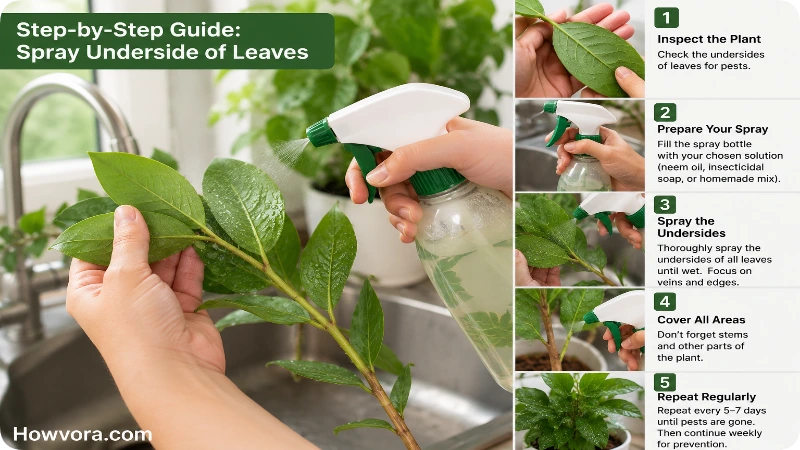
Using a hose nozzle or sink sprayer, spray the entire plant with a firm but not damaging stream of water, paying special attention to the undersides of leaves and where leaves meet stems. This physically knocks off a large percentage of the population before you apply anything else.
Common mistake: Spraying only the tops of leaves. Mites live almost exclusively on the underside, so a top-only rinse barely touches the actual colony.
Step 4: Remove Heavily Webbed or Damaged Leaves
Prune away any leaves that are thick with webbing or already yellowed and dying. Seal them in a plastic bag and throw them away not in the compost.
Step 5: Apply Insecticidal Soap or Neem Oil
Mix insecticidal soap or neem oil according to the product label (or mix 1 teaspoon of mild liquid dish soap per quart of water for a DIY version). Spray the entire plant, coating the tops and undersides of every leaf until they’re dripping.
Why it matters: These treatments work on contact only they have no effect on mites they don’t physically touch, which is why full coverage matters more than the specific product you choose.
Step 6: Spot-Treat Stubborn Colonies with Rubbing Alcohol (Optional)
For small, visible clusters that survive the soap or oil treatment, dab a cotton ball with a 1:1 rubbing alcohol and water solution and wipe directly on the colony.
Step 7: Repeat Every 5–7 Days for Two to Three Weeks
This is the step most people skip and the reason infestations come back. Spider mite eggs aren’t killed by soap, oil, or alcohol, so you have to keep treating on a schedule to catch each new generation as it hatches, before it can lay more eggs.
Step 8: Increase Humidity Around the Plant
Spider mites thrive in hot, dry air. Run a humidifier nearby, mist the plant regularly, or set the pot on a pebble tray with water. This won’t eliminate an active infestation on its own, but it makes conditions far less favorable for the mites that remain.
How to Know You Did It Correctly
- No new webbing appears after 10–14 days of consistent treatment.
- The white-paper tap test (Step 1) turns up no moving specks.
- New leaf growth emerges green and unspeckled, rather than showing fresh stippling.
- Previously yellowed leaves stop declining further (though existing damage won’t reverse you’re watching for new damage to stop).
Expected Timeline and Results
Most mild to moderate infestations are fully under control within 2 to 3 weeks of consistent treatment every 5–7 days. Severe infestations, or ones on outdoor plants exposed to reinfestation from nearby vegetation, can take 4–6 weeks. Existing leaf damage yellowing, bronzing, or stippling will not reverse, but healthy new growth should appear mite-free if treatment is working.
Alternative Methods
Predatory mites (such as Phytoseiulus persimilis) are a strong option for larger infestations, greenhouses, or gardeners who want to avoid repeated spraying. You purchase and release them directly onto affected plants; they hunt down and feed on spider mites without harming the plant. This method takes one to two weeks to show results but tends to provide longer-lasting control, since the predators keep reproducing as long as prey is available.
Chemical miticides are best reserved for severe, established infestations that haven’t responded to soap, oil, or biological control. Use them cautiously: spider mites develop resistance to chemical pesticides quickly, and some insecticides (particularly certain pyrethroids) can actually trigger mite outbreaks by killing off the natural predators that would otherwise keep mite populations in check.
Common Mistakes to Avoid
- Treating only once. A single application kills visible mites but not eggs, guaranteeing a rebound population within a week or two.
- Skipping leaf undersides. This is where the vast majority of the colony lives; spraying only the tops of leaves is close to ineffective.
- Using chemical insecticides as a first response. Broad-spectrum insecticides often kill mite predators faster than they kill the mites themselves, sometimes worsening the infestation.
- Composting infested leaves. This just relocates the problem to wherever the compost ends up.
- Ignoring plant stress. Underwatered, drought-stressed plants are far more attractive to spider mites, so ongoing prevention starts with basic plant care.
Troubleshooting & Common Problems
| Problem | Cause | Solution |
| Mites keep coming back after treatment | Eggs weren’t killed by the initial application | Stick to the full 2–3 week repeat schedule; don’t stop after the first sign of improvement |
| Leaves turned brown or crispy after spraying | Treatment applied in direct sun or on a water-stressed plant | Water the plant first, and treat only in early morning or evening |
| Infestation spread to nearby plants | Plants were touching or grouped closely together | Isolate infested plants immediately and increase spacing between healthy ones |
| Mites persist despite soap or oil treatment | Poor spray coverage, especially on leaf undersides | Redo the application with more thorough, deliberate coverage of every leaf surface |
| New leaves are speckled just days after treatment | Reinfestation from an untreated nearby plant, or eggs hatching on schedule | Check and treat all nearby plants simultaneously, and continue the weekly schedule |
Expert Tips
- Treat in the early morning or evening, not midday soap and oil solutions are more effective and less likely to burn leaves when temperatures are lower.
- If you use neem oil, know that it works primarily as a feeding disruptor and growth inhibitor rather than an instant killer don’t judge it a failure after just one application.
- Rotate between soap, oil, and mechanical removal (rinsing and wiping) rather than relying on one method alone; spider mites can develop tolerance to a single repeated treatment faster than to a varied approach.
- For houseplants prone to recurring mites (palms, alocasias, and other broad-leafed tropicals are common targets), make misting or a humidifier part of your regular care routine, not just a reaction to an active infestation.
When to Call a Professional
Most spider mite infestations don’t require a professional. Consider bringing in a licensed arborist or pest control service if the infestation has spread across multiple mature outdoor trees, if you’re managing a commercial greenhouse operation, or if repeated DIY treatments over 6+ weeks haven’t slowed the spread at that point, a professional can assess whether resistant mites or an underlying plant health issue is driving the problem.
What to Do Next
Once your plant is mite-free, shift into prevention mode: keep humidity reasonable around susceptible houseplants, avoid letting plants dry out between waterings, inspect new plants before bringing them home, and give plants enough spacing that mites can’t easily crawl from one to the next. A quick monthly check of leaf undersides especially during hot, dry stretches catches new infestations before they take hold.
FAQs
Do spider mites go away on their own? Rarely. Without intervention, populations typically grow rather than shrink, especially in warm, dry conditions where they reproduce fastest.
Can spider mites infest humans or pets? No. Spider mites feed exclusively on plant sap and cannot bite or live on people or animals.
Is it safe to keep a mite-infested plant near other houseplants? No isolate it immediately. Mites spread easily between plants that are touching or placed close together.
Will one application of neem oil or insecticidal soap get rid of spider mites? No. These treatments only kill mites they directly contact and have no effect on eggs, so repeat applications every 5–7 days for several weeks are necessary.
Why do spider mites keep coming back after I treat my plants? Usually because treatment stopped too early, missed leaf undersides, or a nearby infested plant reintroduced mites. Consistent, thorough, repeated treatment is the fix.
Can I use both neem oil and insecticidal soap together? It’s best to alternate them rather than mix them in the same application, since combining concentrated products can increase the risk of leaf damage.
Do spider mites only affect houseplants? No they’re common on outdoor vegetables, fruit trees, berries, and ornamental plants, and tend to be worse during hot, dry weather.
Final Thoughts
Spider mites are stubborn but beatable the key is consistency, not intensity. A single aggressive treatment won’t finish the job, but a simple routine of rinsing, treating leaf undersides thoroughly, and repeating every 5–7 days for a few weeks will. Pair that with better humidity and spacing going forward, and you’ll spend far less time fighting mites the next time they show up.
