Introduction
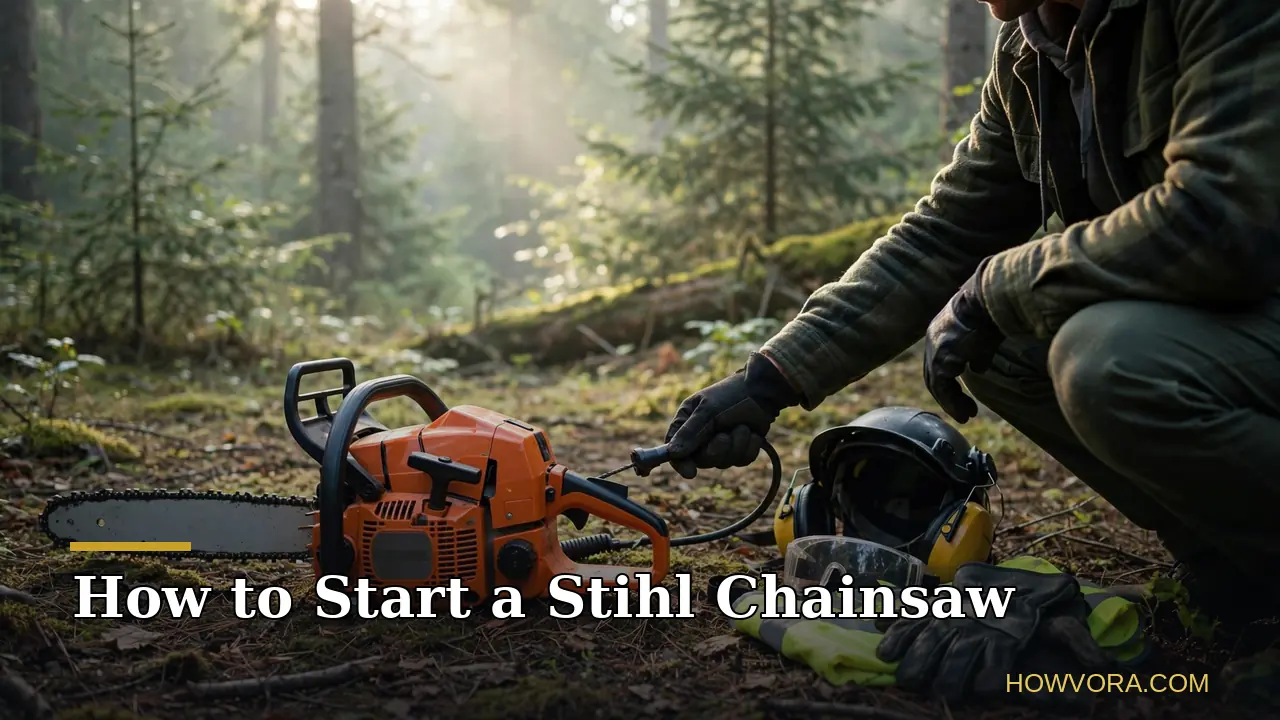
A Stihl chainsaw that refuses to start is rarely broken. It is usually just being asked in the wrong order. Stihl saws use a single master control lever that combines the stop switch, the run position, and the choke settings, and the engine expects a specific sequence: full choke until the engine fires, half choke until it runs, then a blip of the throttle to settle it into idle. Miss a step, or pull the rope twenty times on full choke, and the engine floods, turning a ten-second start into a ten-minute wait.
This guide gives the complete cold-start procedure exactly as the sequence is meant to run, plus the warm-start shortcut, the flooded-engine recovery, and the checks to do before the first pull. It applies to most Stihl petrol saws with the master control lever design, from homeowner models to professional saws. Your model’s manual is the final word for anything model-specific.
Featured Snippet Answer
To start a Stihl chainsaw, engage the chain brake, prime the fuel bulb if fitted, and set the master control lever to full choke. Hold the saw on the ground and pull the starter rope until the engine fires, then move the lever to the half-choke start position and pull again until it runs. Squeeze and release the throttle to settle the idle.
Before You Begin
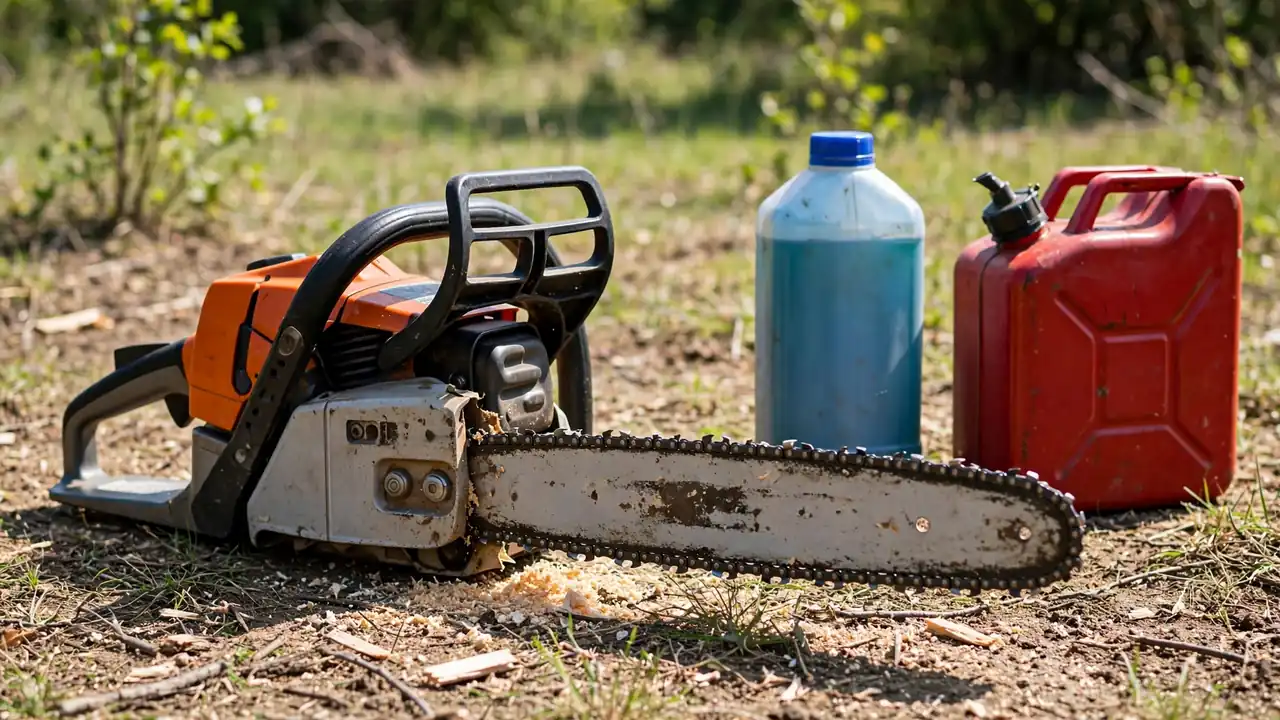
Two minutes of checks prevents most starting failures. Confirm the tank holds fresh petrol mixed with two-stroke oil at the ratio your manual specifies; stale fuel and straight, unmixed petrol are the two most common reasons a healthy saw will not run. Check the bar oil reservoir, since a saw that starts dry can damage the bar and chain in minutes. Test the chain tension: snug against the underside of the bar, yet still able to pull around by hand with a gloved grip. Inspect the air filter, and confirm the spark plug cap sits firmly.
Decide if this is a cold start or a warm start before touching the lever. Cold means the engine sits at air temperature, first use of the day or after hours of rest. Warm means it ran recently and the cylinder cover still feels warm. The difference matters: choke on a warm engine is the fastest route to a flood.
At a Glance
| Detail | What to know |
|---|---|
| Difficulty | Easy once the sequence is learned |
| Time needed | Under a minute for a healthy saw, plus 2 minutes of checks |
| Cost | Free; fresh mixed fuel and bar oil as needed |
| Skill level | Beginner, with the safety steps treated as mandatory |
| Best for | Cold and warm starts on Stihl petrol chainsaws with the master control lever |
Things You’ll Need
| Item | Purpose |
|---|---|
| Fresh petrol mixed with two-stroke oil | Fuel at the mix ratio in your manual. Old fuel is the top cause of no-starts |
| Bar and chain oil | Lubricates the chain and bar from the first second of running |
| Protective gear | Helmet with visor and ear defenders, gloves, chainsaw chaps or trousers, sturdy boots |
| Flat, clear ground | A stable starting surface away from trip hazards and other people |
| Scrench (combination tool) | For chain tension and the spark plug, if checks are needed |
Safety Precautions
- Start the saw on the ground, never drop-started. Swinging a saw by the starter cord while holding the throttle is a classic cause of leg injuries. The ground method in the steps keeps the bar away from your body and the saw under control.
- Engage the chain brake before every start. Push the hand guard forward until it clicks. When the engine catches, it idles at speed with the throttle latched in the start position, and the brake is what guarantees the chain stays still.
- Keep the area clear. No one within several metres, no pets, and nothing behind you to trip over with a running saw.
- Mind the kickback zone. The top quarter of the bar tip can kick the saw up and back if it touches wood while the chain moves. Keep the tip visible and clear until you are ready to cut.
- Never start a saw that is leaking fuel, and refuel only a cool engine, outdoors, cap replaced firmly.
Step-by-Step Guide
This is the cold-start sequence. For a warm engine, skip to the Alternative Methods section instead.
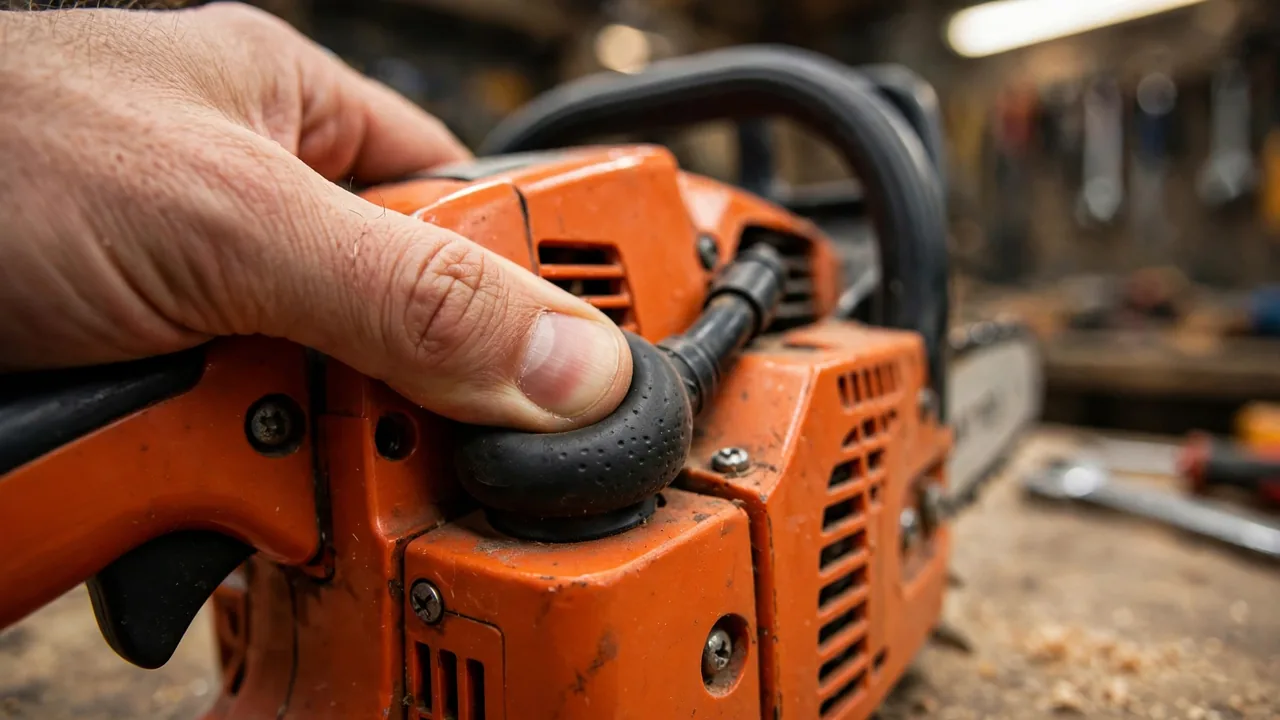
- Step 1: Engage the chain brake and prime the engine. Push the front hand guard forward until it clicks. If your model has a primer bulb, press it four to six times, until you see fuel moving in it. The primer fills the carburetor so the first pulls work with fuel, not air. Saws without a primer skip this step.
- Step 2: Set the master control lever to full choke. On most Stihl saws this means squeezing the throttle trigger and lockout together and moving the lever to its lowest position, the closed-choke setting marked with the choke symbol. Setting the lever also latches the throttle partly open, which is what a cold engine needs. Release the trigger and confirm the lever stayed put.
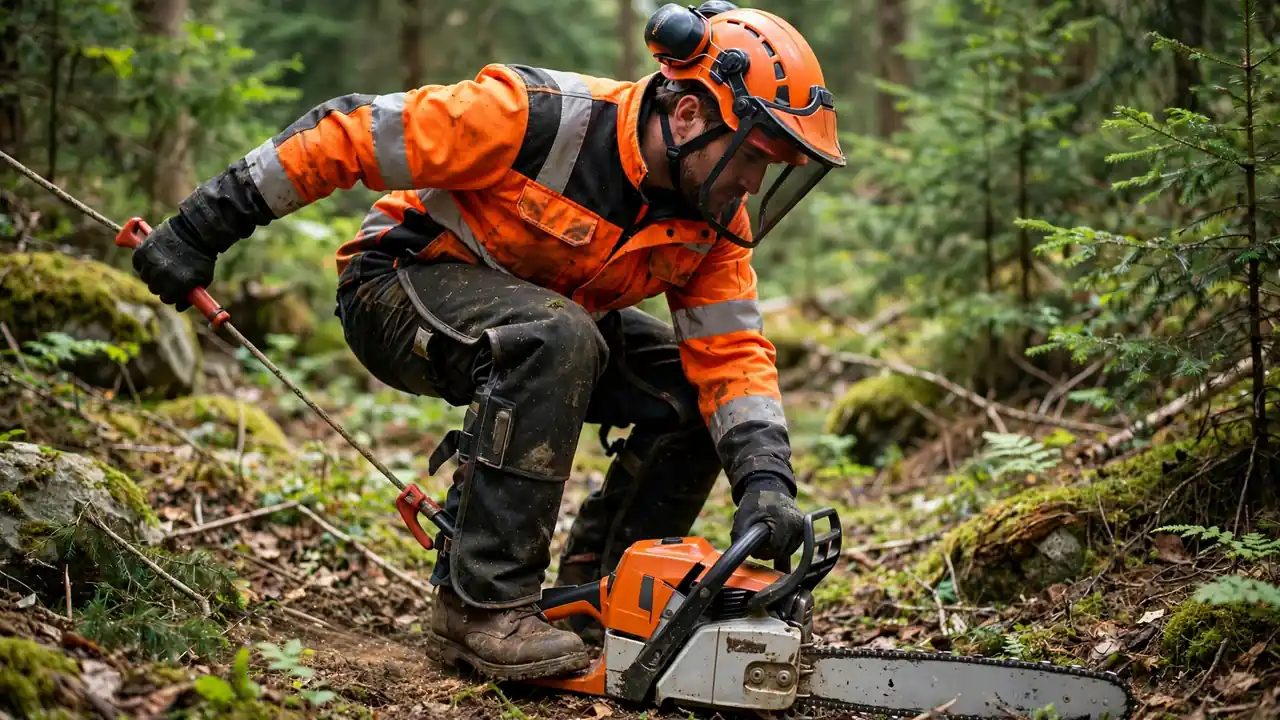
- Step 3: Take the starting position. Set the saw on flat ground. Put your right foot through the rear handle to pin it down, hold the front handle firmly with your left hand, and keep the bar clear of the ground and your legs. This position, not grip strength, makes the pull easy and safe.
- Step 4: Pull the starter rope until the engine fires. Draw the rope out slowly until you feel resistance, then give short, brisk pulls. Within a few pulls the engine should fire once, a single cough or pop, and stop. That sound is the signal, not a failure. Keep pulling on full choke after it and you pump in more fuel than the engine can burn, and flood it.
- Step 5: Move the lever to the half-choke start position. Shift the master control lever up one position, to the start setting. The choke opens halfway and the throttle stays latched where a running engine needs it.
- Step 6: Pull again until the engine runs. A few more brisk pulls and the engine should catch and run steadily. Leave it in the start position for a few seconds so it warms and clears, rather than grabbing the throttle instantly.
- Step 7: Blip the throttle and check the idle. Squeeze the throttle trigger briefly and release it. This knocks off the starting latch and drops the engine to a normal idle. The chain should not move at idle; if it creeps, the idle needs adjustment. Release the chain brake only when you are ready to cut.
How to Know You Did It Correctly
A correct start has a rhythm: a fire within a handful of pulls on full choke, a running engine within a few pulls on half choke, and a smooth drop to idle after one throttle blip. Once running, the engine should idle evenly, respond crisply to the throttle, and drip no fuel. Run it for half a minute before cutting. An engine that needed fifteen pulls is telling you something on the troubleshooting list needs attention.
Expected Timeline and Results
The checks take about two minutes and the start itself under a minute. A healthy Stihl on fresh fuel typically fires on full choke within two to five pulls and runs on half choke within five more. First-time users often take a few attempts while the sequence becomes habit; by the third or fourth outing, it turns automatic. The result you want is a saw that starts predictably every time, because a predictable saw is a safer saw: no frustration, no shortcuts, no flooded engine at the far end of a work site.
Alternative Methods
The warm start. If the engine ran recently and is still warm, skip the choke entirely. Set the chain brake, move the lever straight to the start position, take the ground position, and pull. A warm engine usually catches in one or two pulls. Full choke on a warm engine is the most common way owners flood their saws.
The between-the-legs hold. Experienced users sometimes start a saw with the rear handle clamped between the knees instead of under a boot. The ground method gives beginners a wider margin, so learn that one first and treat the knee hold as an optional variation only where your manual allows it.
Common Mistakes to Avoid
- Pulling and pulling on full choke. The choke comes off the moment the engine first fires. Every extra pull after that sound is pumping the engine toward a flood.
- Slow, half-hearted pulls. The starter needs speed to spark and draw fuel. Pull briskly through the full stroke instead of tugging gently many times.
- Starting with the chain brake off. In the start position the throttle is latched open. Without the brake, a catching engine can spin the chain while your attention is on the rope.
- Using last season’s fuel. Petrol mixes go stale, and stale fuel causes the majority of spring no-starts. Mix fresh, and store the saw as your manual directs if it will sit for months.
- Skipping the primer on models that have one. A dry carburetor can take a dozen pulls to fill itself. The bulb exists to save your shoulder those pulls.
Troubleshooting & Common Problems
| Problem | Cause | Solution |
|---|---|---|
| Engine will not fire at all | Stale fuel, empty tank, dirty air filter, or a fouled spark plug | Refill with fresh mix, clean or replace the filter, and check the plug for fuel fouling or carbon. Confirm the lever is set before each attempt |
| Engine fired once, then nothing | Flooded from staying on full choke too long | Move the lever to the start or run position and pull repeatedly to clear excess fuel, or remove the plug, pull the starter to vent the cylinder, dry the plug, refit, and retry |
| Starts, then dies when you squeeze the throttle | Engine still cold, or a fuel delivery problem | Let it warm longer in the start position and blip gently. If it persists on warm runs, the fuel filter or carburetor needs attention |
| Chain moves at idle | Idle speed set too high or a worn clutch | Stop the saw and have the idle adjusted as the manual describes, or visit a dealer. Do not cut with a chain that creeps at idle |
| Starter rope pulls with no resistance | Starter mechanism fault, often a broken spring or pawls | This is a workshop repair. Take the saw to a dealer rather than opening the starter housing without guidance |
Expert Tips
- Count your pulls. On a healthy saw, a cold engine fires within about five pulls on full choke. No fire by pull six means stop and check fuel and filter, instead of pulling to twenty and flooding it.
- Listen for the fire, do not watch for smoke. The first fire on choke is one cough. New users often miss it and keep pulling. Treat that single sound as your cue to move the lever.
- Pull with your whole arm, not your wrist. A brisk, full stroke spins the engine fast enough to spark strongly and draw fuel properly. Short snatches wear the starter and tire you out.
- Make the last job of the day the first start of the next. Clean the air filter, check chain tension, and top up bar oil when you finish cutting. Saws stored clean start like saws that were never put away.
When to Call a Professional
Take the saw to a Stihl dealer if it still will not start after fresh fuel, a clean filter, and a checked plug, since the remaining causes, carburetor faults, ignition problems, low compression, need workshop tools and gauges. Go straight to a dealer, without further attempts, if the chain creeps at idle and adjustment does not fix it, if fuel leaks anywhere, if the starter rope offers no resistance, or if the chain brake fails its check: with the engine off and a gloved hand, the chain should not pull around with the brake engaged. A starting problem is an inconvenience; a brake or fuel fault is a hazard.
What to Do Next
With the saw starting reliably, keep it that way with two habits: mix fuel in small, fresh batches and label the can with the date and ratio, and give the saw a two-minute once-over before each use, fuel, oil, tension, brake, filter. If the saw will sit for a season, follow the storage steps in your manual so the first start of spring is as uneventful as this one.
FAQs
Why does my Stihl chainsaw flood so easily?
Because the choke enriches the fuel mixture heavily, and a few pulls past the first fire overshoots it. The fix is timing: the moment the engine coughs once on full choke, move the lever to the start position. If it is already flooded, switch the lever up and pull repeatedly to clear it, or vent the cylinder through the spark plug hole.
How many times should I press the primer bulb?
Usually four to six presses, until you can see fuel in the bulb. Not every Stihl has a primer; models without one prime themselves through the starting pulls, so check your manual before searching for a bulb that is not there.
What is the master control lever on a Stihl chainsaw?
It is the single lever that combines four settings: stop, run, half choke (the start position), and full choke. You set it by squeezing the throttle trigger and lockout together, moving the lever, and releasing. Starting the saw is mostly a matter of moving this one lever through its positions in the right order.
Can I start a Stihl chainsaw without the chain brake on?
Do not. In the start position the throttle is latched partly open, so the engine catches at speed, and an unbraked chain can move the instant it fires. The brake also protects you during the flooded-engine clearing pulls. Engage it before every start, cold or warm.
My chainsaw starts but dies after a few seconds. Why?
Usually the engine is still cold and came off the start position too early. Stale fuel, a clogged fuel filter, or a dirty air filter can do it too. Let it warm longer first. If it repeats on a warm engine with fresh fuel, have the carburetor and filters checked by a dealer.
What fuel mix does a Stihl chainsaw need?
Petrol mixed with a quality two-stroke oil at the ratio printed in your model’s manual. Ratios differ by model and oil type, so use the figure for your saw rather than a general guess, and never run the saw on straight petrol, which can seize the engine in minutes.
Final Thoughts
Starting a Stihl is a sequence, not a strength contest: brake on, prime, full choke until it fires, half choke until it runs, one blip to idle. Learn the sounds as much as the lever positions, keep the fuel fresh and the filter clean, and the saw will light up in under a minute every time.